Solutions

This repository, built in collaboration with Marsh, brings together practical approaches, initiatives, and case studies showing how strengthening resilience in specific places can reduce physical risk, protect assets and communities, and support continued access to affordable insurance. 

As extreme weather events intensify, insurability is shaped not only by the resilience of individual assets, but also by the resilience of the places where those assets are located. Resilient assets therefore need resilient places, supported by local government, businesses, investors, insurers, and communities working together to manage physical risk, strengthen place-based resilience, and improve insurability.

Mapped across four intervention types — (1) data sharing, (2) financing structures, (3) recognizing resilience, and (4) realizing co-benefits — the repository highlights approaches spanning risk assessment, finance, infrastructure, and risk reduction. Together, these interventions and associated targeted actions can strengthen the business case for resilience and generate measurable insurance outcomes. 

For more information, see the World Economic Forum and Marsh Report: Addressing Insurability: A Playbook for Investing in Place-Based Resilience.

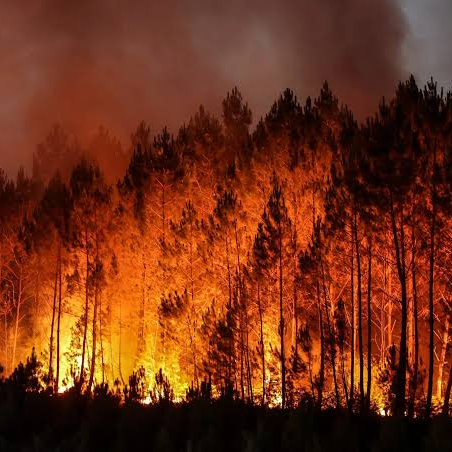
Solution: Require insurers by regulation to recognize a nationally administered community wildfire designation and provide discounts for it, with an independent non-profit maintaining the designation and pushing updated community boundary data to insurers twice a year through commercial data providers.Key challenge: Voluntary place-level designations only change outcomes if insurers actually use them, and in a market under stress - California insurers shed more than 350,000 policies, 25% of them in Los Angeles County, with non-renewals in high-risk areas rising around 800% - there is no commercial incentive to do so without a requirement.Context: California insurance is among the most heavily regulated in the country: Proposition 103 requires the Department of Insurance to approve all rate changes, increases above 7% can trigger lengthy and costly public hearings, rate filings take around 10-12 months against a national average of 2-3 months, and the inclusion of climate risk and reinsurance costs in forecasting and rate-setting is forbidden. The FAIR Plan is now the largest residual insurance market in the country, having overtaken Florida, with exposure up 317% since September 2021 and a record 35.8% rate increase requested in September 2025. The Program covers communities from as small as 8 units to as large as 2,500, across peri-urban and rural wildland-urban interface areas, focusing on retrofits for older existing homes and complementing CAL FIRE wildfire building standards that apply to new development.Solution in practice: 2022 legislation, Safer From Wildfires, requires insurance companies to recognize Firewise USA designated communities and provide discounts. The designation itself is administered independently: the National Fire Protection Association, a global non-profit, processes Firewise USA applications, provides information on communities earning the designation to companies that supply data to home insurers, and updates boundary data for all communities in good standing twice a year, making it available to insurers through those data providers. In May 2025 Table Mountain Rancheria became the 1,000th Firewise USA community in the state. The arrangement is delivered as an interagency partnership.Impact / outcome: Insurers must give discounts for Firewise USA communities; California reached its 1,000th Firewise USA community in May 2025.Next steps: The design solves two problems the Community Rating System also solved for flood: an independent body owns the standard, so recognition does not depend on any single carrier; and boundary data flows automatically to insurers through existing commercial data pipes, so the designation is machine-readable at the point of underwriting rather than a document a homeowner has to produce. The playbook identifies interoperability as the next step - mutual recognition between Firewise USA, the IBHS Wildfire Prepared designation and Australia's Bushfire Resilience Rating would support consistent assessment of portfolios spanning countries. The open constraint in California specifically is that the same regulatory environment which mandates recognition also suppresses risk-based pricing, so any discount available for a designation is set within a system where premiums are, on the Lab’s assessment, artificially low.Organizations involved: Authoring: National Fire Protection Association (NFPA)Actors: California Department of Insurance; Table Mountain RancheriaImplementation partners: Regulators & Policymakers; Insurers; Civil Society Organizations; Data Providers; Local Governments
USA
Mandating insurer recognition of community wildfire designations - Firewise USA and Safer From Wildfires, California
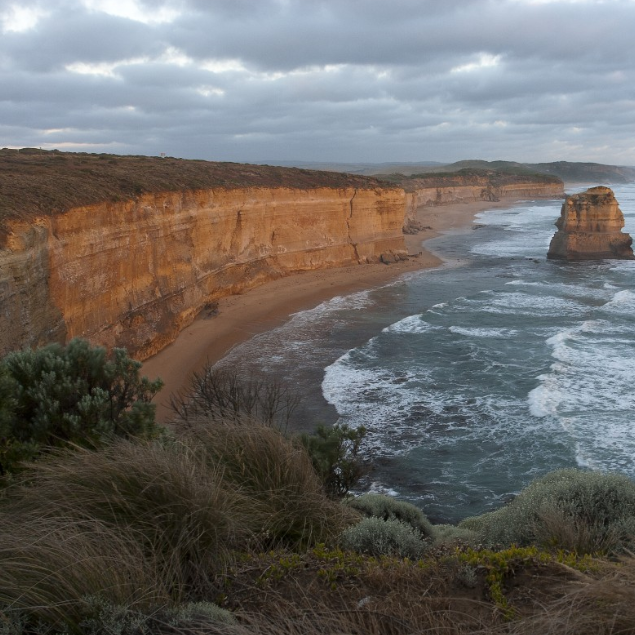
Solution: Create a mandatory reinsurance pool for a concentrated regional peril, backed by a standing government guarantee, that collects premiums consistent with expected claims and pays claims from reserves - lowering the cost of cover and restoring insurer appetite in the exposed region.Key challenge: Where a severe peril is geographically concentrated, insurers price for the concentration rather than the individual property, so cover in the exposed region becomes unaffordable or unavailable regardless of what any one owner does to reduce their own risk.Context: The pool operates Australia-wide but targets support to the Northern Australian coastline, which carries a high risk of cyclones. It covers insured residential, mixed-use and commercial properties insured for under AUD 5 million, across urban, peri-urban and rural coastal areas. Australia faces average property insurance premium increases of around 14% and a projection that 1.3 million properties will be uninsurable by 2100.Solution in practice: The Cyclone Reinsurance Pool, operated by the Australian Reinsurance Pool Corporation (ARPC), collects reinsurance premiums from insurers consistent with expected claims and operating expenses, and pays claims from those reserves. It is supported by an annually reinstated AUD 10 billion government guarantee backstop to cover extreme losses, which is increased to meet all obligations if exceeded in any year. Participation is mandatory for general insurers, with some exceptions. The data used in pricing includes geography, building characteristics and mitigation efforts, so property-level risk reduction is reflected rather than averaged away. Data published in 2025 confirms the pool has succeeded in lowering premiums: reductions of over 30% for small and medium enterprises, and greater insurer appetite to provide home insurance, with quote success rates rising from 66% to 84%.Impact / outcome: Premiums down over 30% for SMEs; home insurance quote success rose from 66% to 84%.Next steps: The measured outcomes make this unusually useful evidence: a mandatory pool with a sovereign backstop demonstrably restored both affordability and availability, and the quote success rate is a more direct measure of availability than premium alone. Two features are worth carrying into other designs. The pool prices on mitigation as well as geography and building characteristics, so it does not blunt the incentive to reduce risk - a common criticism of pooling. And the guarantee is annually reinstated and open-ended rather than capped, which is what allows private insurers to participate without holding capital against the tail. The playbook notes under action area 3b that both existing and new natural catastrophe risk pools could go further by incorporating place-level recognition, along the lines of the Community Rating System, into their design.Organizations involved: Authoring: Australian Competition and Consumer Commission (ACCC)Actors: Australian Reinsurance Pool Corporation (ARPC); Australian GovernmentImplementation partners: Regulators & Policymakers; Insurers; Investors & Banks; Data Providers
Australia
A government-backed cyclone reinsurance pool with measured premium outcomes - Australia
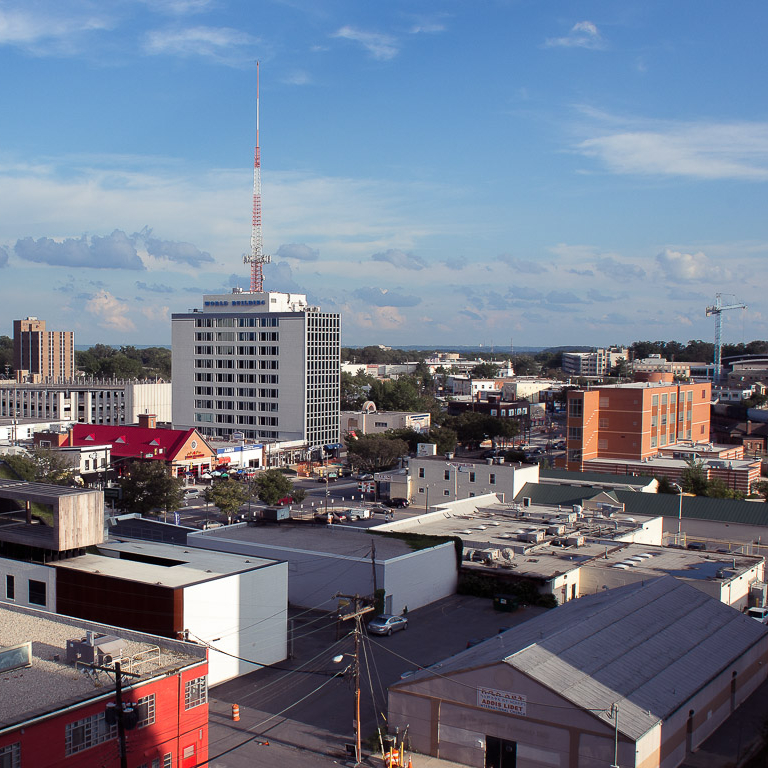
Solution: Offer a low-interest revolving line of credit at portfolio level where up to half the loan can fund immediate capital repairs but the remainder must be directed to a resilience component, paired with expert technical assistance to identify the highest-impact measures.Key challenge: Property owners borrow to repair damage after an event and to meet immediate capital needs, but almost never to reduce the risk of the next one - so finance repeatedly reinstates the same exposure and resilience remains an unfunded discretionary addition.Context: The fund operates in Montgomery County, Maryland, across urban and suburban residential and commercial property, developed with the Urban Land Institute. It responds to the barriers identified across the Financial Innovations Lab: significant upfront capital needs, projects spanning years, complex multi-stakeholder coordination, and difficulty quantifying total return on investment across environmental, social and economic benefits.Solution in practice: The Green Bank provides a low-interest line of credit through a revolving loan fund, with disbursal, investment and repayment handled at parent or portfolio level rather than project level, which reduces risk for the borrower and enables multiple projects without seeking separate funding each time. Loans are interest-only, sized at $3-5 million, priced between 2.5% and 9% with the low end reserved for high-impact projects, on a three-year extendable term. The defining feature is conditionality: up to half the loan can go towards capital improvements, but the rest must be directed to a resilience component, and that resilience investment is also made at portfolio level rather than necessarily at the property where repairs are happening. Expert technical assistance is provided with a partner to identify high-impact resilience investments, and data collection is intentional, building evidence on baselines and avoided losses to support lower insurance premiums and faster financing in future. Projected three-year outcomes are 20-plus properties with resilience upgrades, an average 20% reduction in utility costs, operational savings and reduced insurance premiums, alongside a replication toolkit for green banks and CDFIs nationwide.Impact / outcome: Projected over three years: 20+ properties upgraded, average 20% cut in utility costs, lower premiums, and a replication toolkit.Next steps: The explicit aim is to position resilience as a bankable asset class, and the replication toolkit for green banks and CDFIs is the mechanism for doing so - which speaks directly to the playbook call under action area 2b for standardized structures that, once developed in one municipality, can be adopted elsewhere rather than rebuilt deal by deal. The design principle worth testing more widely is the split mandate: pairing immediate needs with mandatory ex ante resilience investment is what prevents recovery finance from simply restoring prior risk, and it is the feature missing from the post-disaster lending product at row 24. The intentional data collection is the second transferable element, since it builds the avoided-loss evidence base insurers require before adjusting terms.Organizations involved: Authoring: Urban Land Institute (ULI)Actors: Montgomery County Green BankImplementation partners: Investors & Banks; Local Governments; Property value chain stakeholders; Insurers
USA
A revolving loan fund that ties repair finance to resilience investment - Montgomery County Green Bank
Solution: Apply a single, globally applicable asset-level label - built as a meta-standard from 55+ existing guidelines and including a dedicated Adaptation & Resilience dimension - so that infrastructure project sustainability and resilience credentials are documented once and recognized consistently by financiers, developers and public authorities.Key challenge: There is no market-recognized, comparable way to measure the sustainability and resilience of infrastructure projects, so financiers cannot easily identify credible assets and developers cannot evidence quality - leaving an estimated USD 18 trillion infrastructure investment gap to 2040 while only 46% of required projects are shovel-ready.Context: More than 90% of the SDGs rely on infrastructure and more than 88% of adaptation costs sit in infrastructure, yet financiers lack a market-recognized system for measuring sustainability and resilience at asset level, and there is a lack of knowledge on the ground on how to implement practices and improve asset performance. The Label applies across all infrastructure sectors, regions, sizes and stages, spanning urban, peri-urban and rural infrastructure assets. It was developed by a coalition of over 60 financial institutions, 20+ governments and intergovernmental bodies, 30+ contractors, developers, service providers and supply chain organizations, and 30+ civil society organizations and academic institutions, representing more than USD 6 trillion of assets under management. It is governed independently through a Steering Committee and Executive Advisory Committee, and is directly funded by the French government’s Infrastructure Financing Support Mission (Fin Infra) and the Swiss State Secretariat for Economic Affairs (SECO).Solution in practice: The Label is a meta-standard drawn from 55+ recognized sources, populating 14 criteria across four dimensions: Environmental, Social, Governance, and Adaptation & Resilience. Projects register free on the application portal, powered by Bloomberg, and self-assess against minimum safeguards (including the IFC Performance Standards), all 14 baseline criteria, and at least one positive-contribution criterion, receiving a complimentary performance report and a Self-Assessed Label; third-party verification by trained verifiers then converts this to a Verified Label. The Label applies at every lifecycle stage from development through construction and operations, and at fund level: managers make Label commitments in marketing, mandates and legal agreements, pass requirements down to SPVs and EPC contractors, and upload KPIs to the Bloomberg Data Repository for disclosure aligned with EU SFDR, EU Taxonomy, ISSB and MDB/DFI frameworks. Adoption is visible in market practice: Dalmore Capital includes FAST-Infra in its Responsible Investment Policy due diligence, Pentagreen has incorporated it into its ESG framework for assessing assets, and the IDB has embedded it in Terms of Reference and legal structuring for projects supported by its PPP Unit. As of June 2026, 373 projects had been created, 216 labelled, covering USD 36 billion of CAPEX, alongside 46 certified professionals across 23 countries trained through the 20-hour capacity-building Program, and a SECO-funded repayable grant scheme (the FAST-Infra Access Program) covering verification costs for projects in ODA countries.Impact / outcome: 373 projects created and 216 labelled, covering USD 36bn of CAPEX; 46 certified professionals in 23 countries (June 2026).Next steps: Fin Infra is funding the FAST-Infra Group to develop its institutional penetration in the sector, working with governments and relevant institutions to promote Label adoption. SECO is funding the FAST-Infra Access Program, a repayable grant scheme covering verification costs for projects in the development phase within ODA countries, together with roadshows to engage financiers and provide access to finance. The verifier network is being built out across regions - 2 trained verifiers in Latin America (Brazil), 2 in Europe (Spain), 2 in Africa (South Africa and Tunisia) and 7 in Asia (China, Hong Kong and Vietnam) - alongside the capacity-building Program, which has certified 46 professionals across 23 countries to date (38% MDBs, 19% public sector, 18% ESG consultants, 8% advisors). The Label is embedded in Bloomberg’s data architecture and is creating a future marketplace for sustainable infrastructure projects. The stated call to action is for further organizations to join the FAST-Infra Label and accelerate the development of sustainable infrastructure.Organizations involved: Authoring: FAST-Infra Group; Global Infrastructure Basel (GIB) FoundationActors: Infrastructure Financing Support Mission (Fin Infra), French government; Swiss State Secretariat for Economic Affairs (SECO); Bloomberg; Inter-American Development Bank (IDB); Dalmore Capital; PentagreenImplementation partners: Investors & Banks; Regulators & Policymakers; Data Providers; Property value chain stakeholders; Civil Society Organizations
Global
A market-led sustainability and resilience label for infrastructure assets - FAST-Infra Label
Solution: Use a community development financial institution, seeded with bank and philanthropic capital and backed by a state loan-loss guarantee, to offer rebuild mortgages with lower liquidity requirements and flexible cashflow underwriting for homeowners who cannot access conventional construction loans after a disaster.Key challenge: After the 2025 Palisades and Eaton fires, most displaced households remained unable to rebuild because conventional construction lending requires liquidity and cashflow profiles that underinsured, displaced homeowners cannot meet - leaving them at risk of losing homeownership entirely.Context: The January 2025 Pacific Palisades and Eaton fires displaced thousands of Los Angeles households across established urban and suburban residential communities. A survey of more than 2,300 fire-impacted residents found that most families remained displaced as the costs of temporary housing and rebuilding continued to rise. Insurance settlements alone were insufficient, and the conventional construction loan market did not serve borrowers whose income and liquidity had been disrupted by the event. The specific financing gap was identified through FORGE LA, a collaborative initiative to identify financial gaps in disaster recovery, led by The Center by Lendistry, Lendistry's strategic nonprofit partner.Solution in practice: In August 2026 Lendistry Home Loans launched the Disaster Recovery Mortgage Pilot, seeded with a USD 15 million commitment from Bank of America and USD 5 million from the California Community Foundation through its Los Angeles Wildfire Rebuilding and Renewal Fund. The pilot lowers liquidity requirements and applies more flexible cashflow underwriting standards while still meeting statutory ability-to-repay requirements, targeting community members at risk of losing homeownership who cannot access construction loan products. It launched shortly after California’s 2026-27 state budget established a USD 100 million Disaster Rebuilding Assistance Program providing loan-loss guarantees and reduced interest rates for impacted homeowners - public risk-sharing that allows the lender to price and underwrite the product. Bank of America positioned the CDFI route as complementary to its own Rebuild Solution for existing mortgage clients (extended forbearance, a line of credit and preservation of the original lower interest rate), recognizing that non-clients needed a separate channel. The Program was announced ahead of applications opening, in early autumn 2026, to give homeowners equitable opportunity to prepare to apply.Impact / outcome: USD 20m seed capital for rebuild mortgages backed by a USD 100m state loan-loss guarantee Program; applications open early fall 2026.Next steps: Loan applications for the Disaster Recovery Mortgage Pilot will be available in early fall of 2026. Lendistry Home Loans announced the Program in advance of applications opening to allow equitable opportunity for homeowners to prepare to apply, directing homeowners to www.disasterrecoverymortgage.com to learn more and sign up for updates. The pilot is designed to work alongside California's Disaster Rebuilding Assistance Program, a USD 100 million Program established in the 2026-27 state budget providing loan-loss guarantees and reduced interest rates for impacted homeowners, which helps lenders mitigate risk while providing responsible financing to affected communities. This maps directly onto the playbook action area 2a: mortgage lenders and retail banks have the longest financial relationship with any property, often 25 years or more, yet play a limited role in funding resilience today, and examples like this remain exceptions rather than standard practice.Organizations involved: Authoring: Lendistry Home LoansActors: Bank of America; California Community Foundation; The Center by Lendistry; State of CaliforniaImplementation partners: Investors & Banks; Civil Society Organizations; Regulators & Policymakers; Local Governments
USA
A CDFI disaster recovery mortgage for wildfire-displaced homeowners - Lendistry Home Loans, Los Angeles
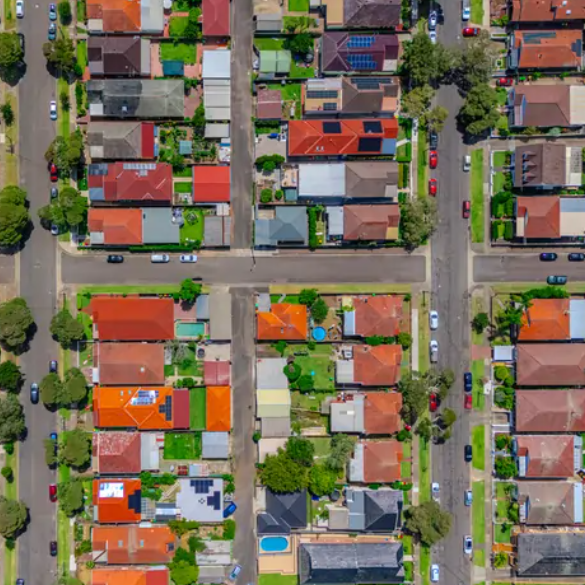
Solution: Use concessional public wholesale finance to fund a below-market retail loan product that lets existing mortgage customers borrow specifically for defined bushfire, flood, storm and cyclone resilience upgrades alongside energy efficiency measures.Key challenge: Mortgage lenders hold the longest financial relationship with any property, often 25 years or more, yet play almost no role in funding resilience; homeowners face concentrated upfront costs for bushfire, flood and storm hardening with no dedicated affordable financing route, at a time when 1.3 million Australian properties are projected to be uninsurable by 2100.Context: Australia faces rising property insurance costs, with average premiums up around 14%, and a projection that 1.3 million properties will be uninsurable by 2100. Much of the housing stock predates modern standards: the minimum energy standard for new homes is currently 7 stars, but homes built before 2003 have an average rating of just 1.5 stars. The product is available nationally across urban, peri-urban and rural residential property. Retrofit costs are typically funded from savings or unsecured credit. The Australian Government's AUD 1 billion Household Energy Upgrades Fund (HEUF), managed by the government-owned Clean Energy Finance Corporation (CEFC), was created to make retrofit finance cheaper at scale and is expected to help a total of 110,000 households. A Lonergan Research survey of more than 1,000 Australians commissioned by Westpac found nine out of ten who aim to renovate in the next five years would consider a sustainable upgrade to their home.Solution in practice: In August 2024 Westpac became the first bank supported by the HEUF, launching Sustainable Upgrades home and investment loans at a variable rate of 4.49% p.a. (comparison rate 4.87%), materially below its standard basic variable rate - a customer with a AUD 30,000 balance saves roughly AUD 3,475 in interest over ten years. The CEFC committed AUD 160 million of wholesale finance, expected to support at least AUD 320 million of discounted lending. Eligible customers are owner-occupiers and investors with an existing or approved Westpac home or investment loan of at least AUD 150,000 secured on the property being upgraded, with no lenders mortgage insurance applicable; they can borrow AUD 4,000-50,000 over up to ten years with no establishment or monthly account fees, and funds are paid directly to the supplier or installer against an invoice. Critically, the eligible upgrade list is not confined to energy efficiency: it includes defined climate-resilience measures such as roofing with non-combustible materials, sarking, framing and external finishes; non-combustible or fire-rated window frames, metal flyscreens or shutters and toughened glazing; doors of non-combustible material or solid timber; fencing within 1.5m of the property using non-combustible materials; and storm and flood-resilient electricals - with non-combustibility defined against National Construction Code 2022 Volume 2 Class 1.Impact / outcome: AUD 160m CEFC finance expected to support at least AUD 320m of discounted loans at 4.49% p.a.Next steps: The CEFC has committed AUD 160 million towards the product, which is expected to support at least AUD 320 million in discounted loans to eligible Westpac home loan customers; the CEFC states that its wholesale finance, combined with a significant contribution by Westpac, delivered a low rate intended to improve accessibility and drive further take-up of green home loan products across the market. Westpac was the first bank supported by the HEUF, following the CEFC’s first HEUF investment with non-bank lender Plenti. This is a direct instance of the playbook action area 2a on bringing lenders into resilience finance, where the playbook identifies the remaining opportunity as exploring loan terms that recognize documented resilience measures, and closer data sharing between lenders and insurers so that both view the same risk in the same way.Organizations involved: Authoring: WestpacActors: Clean Energy Finance Corporation (CEFC)Implementation partners: Investors & Banks; Regulators & Policymakers; Property value chain stakeholders
Australia
A discounted home loan for climate-resilience retrofits - Westpac Sustainable Upgrades, Australia
Solution: Provide step-by-step instructions for supplementing historic climate data with specific, regional, forward-looking climate change projections in the design of city facilities, applied consistently across nearly all municipal capital projects.Key challenge: Codes and standards that regulate the design of facilities already incorporate historic weather data to determine how to design for today’s conditions, but historic data does not accurately represent the projected severity and frequency of future storms, sea level rise, heat waves and precipitation - threatening to undermine capital investments and impede critical services over the full useful life of facilities designed today.Context: New York City faces challenges resulting from a rapidly changing climate. Many capital projects, including infrastructure, landscapes and buildings ("facilities"), will experience extreme flooding, precipitation and heat events, and the intensity and severity of these events will increase over the 21st century. With 520 miles of coastline across its five boroughs, several low-lying locations across the dense urban area will experience monthly tidal inundation resulting from higher seas. The New York City Panel on Climate Change (NPCC) prepares and regularly refines projections for the metropolitan region, covering temperature and extreme heat events, precipitation and sea level rise by the 2050s and 2080s.Solution in practice: The Climate Resiliency Design Guidelines, developed by the Mayor’s Office of Climate & Environmental Justice (previously the Mayor’s Office of Resiliency and, before that, the Mayor’s Office of Recovery and Resiliency) in collaboration with city agencies that oversee capital project development, provide a consistent methodology for engineers, architects, landscape architects and planners to design facilities that are resilient to changing climate conditions. They complement the use of historic data in existing codes and standards, and are built on NPCC projections with the intent that they are updated as those projections are refined. An initial version was released in April 2017; Version 2.0 followed in April 2018 after a year-long expert testing and review phase; Version 4.0 was published in September 2020 and Version 4.1 in May 2022. The Guidelines are used throughout the design process - from capital planning initiation, as a reference in requests for proposals, through a conceptual or study phase to final design - for all new construction and substantial improvements, and apply to all City capital projects except coastal protection projects such as sea walls, bulkheads and levees, for which the City is developing separate guidance. All new projects and substantial improvements assess risks to climate hazards in the context of the project’s purpose. More than 20 City agencies contributed, including Environmental Protection, Transportation, City Planning, Buildings and Design & Construction.Impact / outcome: Consistent forward-looking design methodology applied across City capital projects, developed with 20+ City agencies (v4.1, May 2022).Next steps: Future versions of the Guidelines will explore additional climate stressors as the science evolves, in coordination with the New York City Panel on Climate Change. NYC is undertaking a study to assess projected changes to extreme wind hazards and identify risks to the city’s built environment, as firm projections on future wind conditions have not yet been developed. The City is separately developing guidance for coastal protection projects, which currently sit outside the scope of the Guidelines.Organizations involved: Authoring: NYC Mayor's Office of Climate & Environmental JusticeActors: New York City Panel on Climate Change (NPCC)Implementation partners: Local Governments; Regulators & Policymakers; Data Providers; Property value chain stakeholders
USA
Climate Resiliency Design Guidelines - NYC Mayor’s Office of Climate & Environmental Justice
Solution: Have a community foundation purchase parametric cover on behalf of a place, so that a pre-agreed hazard trigger releases funds within days to frontline nonprofits and pre-identified priority neighbourhoods that hold little or no conventional coverage of their own.Key challenge: In Greater Miami's most vulnerable neighbourhoods households hold little or no conventional cover, and the nonprofits acting as first responders have no pre-arranged liquidity, while indemnity claims and federal assistance take months or years to arrive - precisely the period in which recovery outcomes are determined.Context: Miami-Dade is among the most hazard-exposed counties in the United States, with dense urban and coastal urban neighbourhoods exposed to hurricanes and extreme rainfall. The Miami Foundation runs the Miami Disaster Resilience Fund, a permanent, revolving collaborative fund supporting disaster preparedness and equitable long-term recovery, and convenes the Miami Strong Disaster Resilience Network, a collective of grassroots organizations across the county. The constraint on that fund was timing rather than intent: traditional insurance policies generally involve lengthy claims processes requiring proof of damages, and it can take months or even years after a catastrophic event before policyholders receive payment.Solution in practice: For the 2024 disaster season the Foundation purchased a parametric insurance policy, becoming one of the first US philanthropic institutions to do so. The policy pays out on a measurable, pre-defined trigger - the windspeed and proximity of an arriving storm - with payment issued immediately on trigger and in as few as ten days, against months or years for indemnity claims. Payouts flow into the Miami Disaster Resilience Fund and are moved rapidly to the nonprofits acting as first responders in their own communities, amplifying the Fund’s capacity and giving pre-crisis certainty about how much will be available. Resilient Cities Network documents a closely related South Florida application in which a parametric policy provides immediate post-flooding resources for communities with the greatest vulnerabilities and limited traditional coverage, developed with three municipalities so that priority neighbourhoods are identified in advance and funding flows quickly after extreme rainfall. The Foundation frames the policy explicitly as a proof of concept for how foundations respond to climate disasters.Impact / outcome: Parametric policy pays out on trigger in as few as 10 days, funding frontline nonprofits.Next steps: The Miami Foundation frames the policy as a proof of concept, demonstrating the potential of parametric insurance in amplifying disaster response funds, and invites contributions to the Miami Disaster Resilience Fund and participation in the Miami Strong Disaster Resilience Network by nonprofits engaged in disaster preparedness, relief, recovery or resiliency across Miami-Dade County. Resilient Cities Network notes that other cities are testing parametric triggers based on rainfall intensity, wind speed or water levels, which pay out automatically when thresholds are reached and allow agencies to accelerate recovery without waiting for conventional damage assessments; delivery involves finance and budget offices, emergency management agencies, insurance providers and risk-modelling specialists, community foundations and local partners, and public works and environment teams. The playbook action area 2c sets out the corresponding opportunity: the community-based model is relevant wherever individual insurance take-up is low, civil society organizations play a key role as trusted intermediaries between insurers and the communities they serve, and communities, insurers and local governments could explore adaptations suited to their own institutions and regulatory settings - with initiatives such as the Insurance for Good Solutions Catalyst offering a starting point for identifying partners and existing solutions.Organizations involved: Authoring: Resilient Cities NetworkActors: The Miami Foundation; Miami Strong Disaster Resilience NetworkImplementation partners: Civil Society Organizations; Insurers; Local Governments; Data Providers
USA
Philanthropic parametric cover for rapid post-disaster community payouts - The Miami Foundation, South Florida
Solution: Create a special district parcel tax on properties inside a defined wildfire hazard boundary, generating stable multi-year revenue for place-level vegetation management, evacuation route protection and fire patrols that no individual property owner can deliver alone.Key challenge: Wildfire mitigation in the Oakland Hills competed for general fund dollars against every other city priority amid a USD 177 million budget shortfall, leaving the risk-reduction work that determines whether homes in the area remain insurable both chronically underfunded and repeatedly interrupted.Context: The 1991 East Bay Hills fire burned 1,500 acres, killed 25 people, destroyed more than 3,500 homes and caused about USD 2.99 billion in losses in 2023 dollars. Since then Oakland has funded fire prevention through a succession of assessment districts that lapsed repeatedly: a Wildfire Prevention Assessment District from 1992 to 1997, only basic services from 1997 to 2003, a ten-year reinstatement from 2003, and a failed ballot measure in 2013. The affected area is the peri-urban wildland-urban interface of the Oakland Hills, where the median household income is greater than USD 120,000. Insurers have issued non-renewal notices and raised premiums across the area, and non-renewals continue to grow and expand into locations previously considered insurable by carriers. In May 2024 the city adopted its first Vegetation Management Plan, a ten-year plan covering approximately 1,924 acres of city-owned land and 308 miles of roadway - but with no dedicated funding to deliver it, leaving mitigation competing against other priorities within a general fund facing a nearly USD 177 million shortfall.Solution in practice: In November 2024 voters inside Oakland's Wildfire Prevention Zone - Cal Fire's Very High Fire Hazard Severity Zone plus adjacent properties, around 25,000 parcels - approved Measure MM with roughly 70% support, clearing the required two-thirds threshold. The tax took effect on 1 July 2025 and runs for 20 years, levying USD 99 per single-family home and USD 65 per apartment or condominium, with non-residential parcels charged by frontage and square footage and annual CPI-linked increases capped at 5%. It raises an estimated USD 2.67 million in its first year, dedicated to implementing the Vegetation Management Plan: expanded roadside clearing to protect emergency evacuation routes, enhanced fire patrols on high-danger days, expanded goat grazing for fuel reduction, and public education for residents, businesses and property owners. Annual parcel inspections deliberately remain on the general fund so that new revenue goes to mitigation rather than administration. An oversight committee receives an independent audit of expenses and an annual report, and makes recommendations directly to City Council. Exemptions apply for very low-income homeowners (at or below 60% of area median income) and seniors below 80% AMI; the tax is halved for nonprofit-owned senior, disabled and low-income rental housing; and the city's Rent Adjustment Program prevents the cost being passed to most tenants. In parallel, the 2024 cohort of the Howden / Resilient Cities Network / Sustainable Markets Initiative Global Risk and Resilience Fellowship worked with the City of Oakland resilience team from March to October 2024, giving city leaders an understanding of underwriter and carrier perspectives, a toolkit for engaging carriers on withdrawal decisions, and a realistic view of what can be done locally to reduce the protection gap.Impact / outcome: Measure MM passed with about 70% support; about USD 2.67m in year one for vegetation management across ~25,000 parcels.Next steps: The Howden Fellowship’s key recommendation to the City of Oakland and its counterparts was to continue mitigation and education efforts, with a view to ensuring homeowners can reduce their risk exposure as much as possible; a focus on risk reduction matters because a solution to the lack of access to affordable insurance relies heavily on changes to State regulation in California, which the city has no direct control over. Educating the public about mitigation and insurance matters will support more informed and timely decision-making and can help communities avoid underinsurance or lapses in coverage, and in addition to preventing the start and spread of wildfires, mitigation efforts will encourage carriers to begin or continue to write policies in Oakland. The Fellowship gave City stakeholders a better understanding of underwriter and carrier perspectives on homeowners insurance, a toolkit to engage with carriers around the factors resulting in withdrawal of cover, and a clear understanding of what can realistically be done to reduce the insurance protection gap. On the regulatory side, the playbook cites Colorado’s HB 1182, passed in 2025, which requires insurers to account for property, community and landscape-scale mitigation in both pricing and coverage decisions, and offers a model other jurisdictions could adopt to incentivize this behavior. Under Measure MM, an oversight committee receives an independent audit of expenses and an annual report on funded activities and makes recommendations directly to Oakland City Council.Organizations involved: Authoring: Resilient Cities Network; SPURActors: City of Oakland; Howden; Sustainable Markets InitiativeImplementation partners: Local Governments; Regulators & Policymakers; Civil Society Organizations; Insurers
USA
A voter-approved wildfire parcel tax funding place-level fuel reduction - Oakland Measure MM, California
Solution: Apply an insurance-grade, five-step climate risk assessment to a utility's most critical facilities to quantify the cost of failing to adapt, then extend the analysis to cascading impacts across other infrastructure providers, businesses, insurers and lenders at city-region scale.Key challenge: Neither the city-region authority nor the water utility could quantify what it would cost if critical water infrastructure were not adapted to future flood risk, and the cascading consequences for transport, electricity, businesses, insurers and lenders sat outside anyone’s assessment - so the true impact of climate risk was being systematically underestimated across both public and private sectors.Context: Greater Manchester has experienced several severe flood events over the past decade that have damaged homes, businesses and infrastructure across its urban and peri-urban areas, causing millions of pounds in economic losses. Storm Desmond in December 2015 alone caused financial losses to United Utilities of approximately GBP 19.5 million; Storms Desmond and Eva together are estimated to have caused GBP 1.6-2.3 billion in economic loss, with insured losses of GBP 900 million to GBP 1.2 billion. Average annual rainfall in the region increased by about 7% from 1961 to 2004, while winter precipitation rose by as much as 50% over the same period. UK Climate Projections 2021 indicate extreme rainfall events will occur with greater frequency, with winter precipitation potentially increasing in intensity by up to 30% by the 2050s, and modelling indicates peak river flows could rise by 70% by the 2070s under high emissions scenarios. Between June and November 2024, insurance Fellows were seconded through the Global Risk and Resilience Fellowship - a partnership between Howden, the Resilient Cities Network and the Sustainable Markets Initiative - to work with Greater Manchester Combined Authority (GMCA), United Utilities, the Cabinet Office and the Ministry of Housing, Communities and Local Government (MHCLG).Solution in practice: The project built a five-step climate risk assessment methodology combining JBA Risk Management's 5-metre resolution fluvial and pluvial flood modelling with insurance industry loss models, climate consulting and analytics. Step 1 mapped United Utilities' 3,000+ facilities and over GBP 3 billion of insured value, applied criticality and vulnerability criteria across 19 facility types, and narrowed to the five facilities most critical to Greater Manchester’s water supply (combined facility value GBP 114.8 million). Step 2 modelled present-day and future exposure at the 1-in-1,000-year return period across baseline, 2030s, 2050s and 2080s horizons under RCP2.6/SSP1 and RCP8.5/SSP5. Average Annual Loss - a proxy for insurance premium - was shown to rise 23% by 2100 across the five facilities, with existing flood protection mitigating AAL by around 10%; under RCP8.5, today's 1-in-1,000-year fluvial event becomes a 1-in-509-year event by 2080 and the pluvial equivalent a 1-in-472-year event. Step 3 developed climate risk narratives and a risk matrix aligned to United Utilities’ risk appetite across financial, operational downtime, customers affected, reputational, environmental and health and safety consequences, with Transport for Greater Manchester and Electricity North West engaged to identify cascading risks. Step 4 produced a costed, complexity-scored menu of adaptation options across governance, finance, physical and technological, nature-based, and knowledge and behavioral categories, screened against UKCIP no-regrets, low-regrets, win-win and flexible/adaptive criteria and flagged for maladaptation risk, with co-benefits identified for each. Step 5 set out the system-level picture: business interruption, supply chain disruption and property damage cascading through to lenders and insurers, with SME loan defaults rising 2.6 times within two years of a flood event, interest rates up 6.4 basis points for businesses in flood-prone areas or lending withdrawn entirely, premiums 25% above average and excesses reaching GBP 25,000.Impact / outcome: Average Annual Loss across five critical facilities shown to rise 23% by 2100; costed menu of adaptation options and a replicable methodology.Next steps: The report sets out three key insights for United Utilities. First, there are insurance and other benefits to applying the methodology across the full portfolio: doing so would provide a quantitative flood profile of each facility, enabling United Utilities to discuss and structure a bespoke coverage Program with its insurance partners - for example grouping facilities by risk profile, excluding or reducing coverage for lower-risk facilities and securing higher coverage for higher-risk ones - and a more comprehensive view of where to focus adaptation investment. Second, a quantitative cost-benefit analysis is needed: the report provides the cost of inaction, highlights gaps in current understanding of climate risk and proposes a qualitative cost-benefit analysis of adaptation solutions, and the next step is to model the proposed solutions quantitatively; United Utilities could also discuss high-priority adaptation measures with its insurer to demonstrate their value and how they can support a stronger insurance Program. Third, collaborative adaptation matters: a focused approach to data gathering and the establishment of a collaborative group with other major infrastructure providers would be the most effective mechanism for ongoing dialogue on interdependencies. For government, the report highlights a lack of corporate involvement in conversations around climate risks to major infrastructure providers, recommends including corporate perspectives in decision-making, and identifies a credible risk that stakeholders across the UK public and private sectors are underestimating the true impact of climate risks - calling for mechanisms for data sharing among agencies and infrastructure providers. The methodology is designed as a blueprint for other utility companies and major infrastructure providers, can be applied to hazards beyond flooding, and is well placed to be amplified in the UK Government Resilience Framework or other municipal resilience frameworks, with national government having a role in setting enabling policies and standards, amplifying best practice, and convening senior decision makers to align incentives for resilience building.Organizations involved:Authoring: Resilient Cities Network Actors: Howden; Sustainable Markets Initiative; Greater Manchester Combined Authority (GMCA); United Utilities; Cabinet Office; Ministry of Housing, Communities and Local Government (MHCLG); JBA Risk Management; Transport for Greater Manchester; Electricity North West Implementation partners: Insurers; Local Governments; Infrastructure Owners & Operators; Regulators & Policymakers; Data Providers.
United Kingdom
Quantifying the cascading cost of failing to adapt water infrastructure to flooding - Greater Manchester
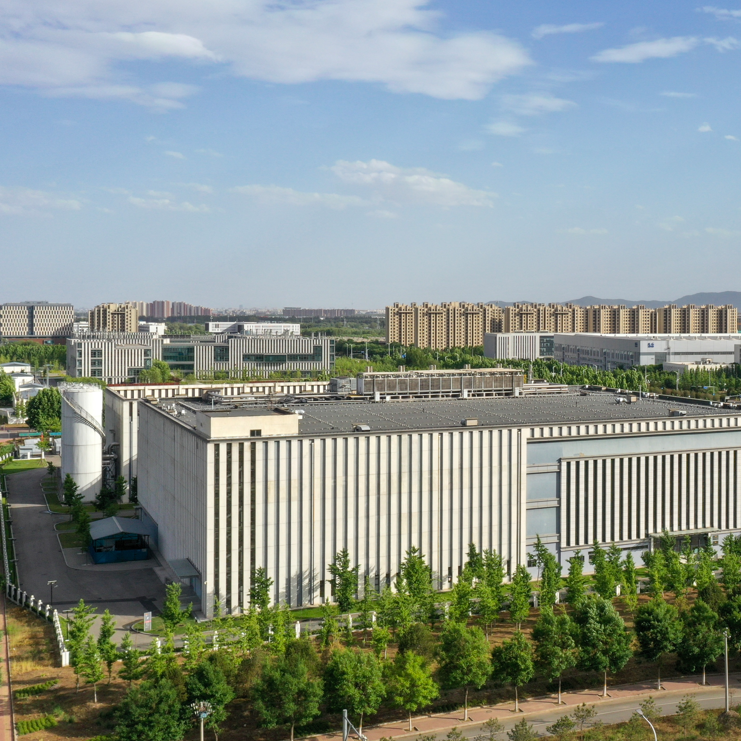
Solution: Assess extreme weather risk across a data center portfolio in terms of business interruption as well as physical damage, so that place-based dependencies beyond the facility boundary shape site selection and construction criteria rather than only qualifying decisions already taken.Key challenge: A data center can be engineered to the highest standard and still be disabled by conditions beyond its boundary - grid power, water for cooling, transport access and network connectivity - and where disruption originates off-site a standard physical damage assessment may register no loss at all, even though business interruption losses can far exceed the cost of repairs.Context: Data centers operate under a single critical constraint: uninterrupted service. Assessing physical damage to the facility captures only part of the risk. As data center construction expands to meet growing digital demand, and given the scale of investment, complexity and multi-decade operational horizons involved, there is an opportunity to build place-based assessment into site selection as well as into business interruption analysis. This is set against a wider gap: business interruption assessment is still not systematic across businesses generally. Marsh's 2025 Adaptation Survey found that 74% of businesses had experienced physical asset losses or disruption from extreme weather, yet only 45% assess future extreme weather impacts on critical infrastructure dependencies. The setting is peri-urban commercial data center development in the United States.Solution in practice: A technology company with a portfolio of more than USD 100 billion in the United States engaged an advisory firm to assess extreme weather risk across its global assets, with particular focus on data centers, both for climate reporting and to inform future investment decisions. The findings identified flooding as the principal driver of increased value at risk. The analysis informed mitigation priorities across the existing estate and, more significantly, set construction criteria for future facilities. The value of the approach lies in its timing: running business interruption assessment at the site selection stage means place-based conditions can still shape the construction decision, rather than simply qualifying a decision already made.Impact / outcome: Flooding identified as the main driver of value at risk; findings set construction criteria for future facilities.Next steps: The playbook sets out three areas where innovation is required. Monitoring that keeps pace with conditions: risk monitoring needs to become more dynamic, with early signs emerging from a range of start-ups - one uses existing footage from dashcams, CCTV and drones to build a continuously updated view of roads, drainage and utility conditions, while Plain Site, another early-stage example, seeks to embed nature-based flood interventions such as sustainable drainage into the property insurance process, with adaptation plans reflected in the quote. Tools that non-specialists can use: decision tools are needed that translate technical outputs into practical actions for non-technical users such as SMEs, requiring collaboration with local governments and civil society organizations that can provide open access tools most relevant to specific geographies - one example is a platform providing transparent municipal and government data on place-based resilience, currently in pilot with a place-based risk data provider and the Urban Land Institute, alongside government-led initiatives such as FEMA's Resilience Analysis and Planning Tool. Making non-damage losses visible: current frameworks focus on physical damage and business interruption, but the wider economic impact often runs deeper and goes uninsured - research on the 2021 Belgium floods found that while 3,000 firms were directly damaged, around 11,000 upstream buyers suffered persistent sales declines lasting up to three quarters, losses that never appeared in an insurance claim. Developing tools that model supply chain dependencies, linear asset disruption (for example sewage pipes, electricity grids) and financing cost impacts alongside physical risk is essential to make the full business case for place-based resilience visible.Organizations involved:Authoring: World Economic Forum; Marsh Implementation partners: Property value chain stakeholders; Data Providers; Insurers; Infrastructure Owners & Operators.
USA
Quantifying business interruption for data centers at the site selection stage
Solution: Use a statutory resilience district to draw a boundary around the beneficiaries of a resilience investment and pool multiple funding levers - tax increment financing, benefit assessments, resilience bonds and grants - into a single vehicle, supported by technical assistance that moves communities from concept to investment-ready.Key challenge: Resilience investment benefits many parties - homeowners, businesses, insurers, lenders and government - over decades, while the costs are concentrated and immediate, so no single actor has sufficient incentive to act and communities remain dependent on one-off grants rather than stable long-term financing.Context: California's Senate Bill 852 (2022) authorized the creation of resilience districts, giving communities a legal mechanism to pool funding across beneficiaries and invest collectively in long-term risk reduction. Legal authority alone, however, does not make a district financeable: communities still need to define a boundary, select the right combination of funding levers for their fiscal context and institutional relationships, and reach a standard of project design that insurers, lenders and investors will accept. The pilot communities span California and Connecticut, two states at different stages of resilience district legislation.Solution in practice: To translate the statute into practice, California Forward and Resilient Cities Catalyst launched the Resilience District Incubator in 2025, selecting five pilot communities in California and Connecticut, including the City of San Rafael, the County of Los Angeles and the City of Bridgeport. The incubator provides each community with technical assistance, peer learning and expert input from advisers spanning finance, insurance and risk modelling. The funding mechanisms available to districts include tax increment financing, benefit assessments, resilience bonds and grants, with the right combination determined by local fiscal context and institutional relationships. Four design features make the model work: a defined geographical boundary that captures the beneficiaries of resilience investment; multiple funding levers pooled into a single vehicle, reducing reliance on one-off grants; technical and governance support to move communities from concept to being investment-ready; and an advisory group spanning insurers, lenders and risk specialists to validate project design.Impact / outcome: Five pilot communities in California and Connecticut receiving technical assistance (pilot stage).Next steps: The model is still in its pilot stage, but it provides a replicable template for how communities can move beyond one-time funding towards stable, long-term financing for place-based resilience. The next step is demonstrating that private asset owners within district boundaries can be active contributors, not just beneficiaries. The playbook sets out the corresponding action under action area 2a: the resilience district concept offers a route for private actors, and asset owners and managers could engage with business improvement districts and similar structures to explore how resilience measures might be funded collectively at district level, allowing the owners who benefit from a safer place to contribute to creating it. The playbook also identifies, under action area 2b, the need for more replicable blended vehicles combining government grants, low-cost loans from public or development banks and private investment in standardized structures that, once developed in one municipality, can be adopted elsewhere rather than rebuilt deal by deal.Organizations involved:Authoring: World Economic Forum; MarshActors: California Forward; Resilient Cities Catalyst; City of San Rafael; County of Los Angeles; City of Bridgeport Implementation partners: Local Governments; Regulators & Policymakers; Insurers; Investors & Banks; Civil Society Organizations.
USA
Building the template for resilience districts - California Forward Resilience District Incubator
Solution: Develop a credit that recognizes both the carbon and the flood-reduction benefits of protecting and restoring coastal wetlands, so that the resilience value of a natural system carries a recognized financial value across the finance ecosystem rather than being captured only as carbon.Key challenge: Mangroves, seagrasses and salt marshes provide a protective barrier against incoming coastal storms, but that resilience value is not captured across financial actors - there is no recognized financial value for the flood-reduction benefit that insurers, lenders and investors can act on.Context: Coastal wetlands deliver multiple benefits simultaneously, including carbon sequestration and storm surge attenuation. Carbon markets already price the first; nothing prices the second. The result is that conservation and restoration are financed, if at all, on the carbon case alone, while the flood risk reduction that most directly affects property losses and insurability goes unrecognized. The challenge is creating a recognized financial value for the resilience benefits of coastal wetlands that actors across the finance ecosystem will accept.Solution in practice: The Ocean Risk and Resilience Action Alliance (ORRAA) is partnering with The Nature Conservancy and AXA XL, an insurance company, to create Blue Carbon Resilience Credits for mangrove ecosystems in the Caribbean. The aim is to allow corporations to offset their carbon footprint while also supporting resilience by reducing flooding in highly vulnerable coastal areas through wetland conservation and restoration. Based on a pre-feasibility study across two sites covering 10,000 hectares of mangroves, ORRAA estimates that restoring these sites could avoid more than USD 140 million a year in property damages and reduce flood risk for more than 750 people. The Nature Conservancy is now working with local partners to establish a recognized baseline for the project, including updated mangrove site maps, and is examining blended finance mechanisms that bring actors together to scale additional projects.Impact / outcome: Restoring 10,000 ha of mangroves could avoid USD 140m+ a year in property damage and reduce flood risk for 750+ people (pre-feasibility).Next steps: Blue Carbon Resilience Credits now need to be adopted by additional actors to scale the initiative across additional sites. The Nature Conservancy is working with local partners to establish a recognized baseline for the project, including updated mangrove site maps, and is examining blended finance mechanisms that bring actors together to scale additional projects. The playbook identifies application to other perils as the area where further innovation is required: the resilience credits offer an approach that could be extended to other perils, and excessive rain may be particularly well suited to this, since municipalities typically hold information on drainage capacity which could support the development of comparable metrics for surface water resilience, thereby incentivizing further investments. Under action area 4c the playbook also notes that AXA and SCOR have explored insurance products designed around nature restoration, where the insured asset is the ecosystem itself and the policy incentivizes the ongoing management that keeps it functioning as a risk buffer - a principle replicable wherever a natural system performs a protective function that can be measured, verified and credited.Organizations involved:Authoring: World Economic Forum; MarshActors: Ocean Risk and Resilience Action Alliance (ORRAA); The Nature Conservancy; AXA XLImplementation partners: Insurers; Civil Society Organizations; Investors & Banks; Data Providers; Regulators & Policymakers
Latin America
Capturing the value of coastal wetlands through Blue Carbon Resilience Credits - Caribbean
Solution: Integrate sustainability intelligence (including physical climate risk screening, regulatory/market analysis, and capex planning) into investment committee underwriting and asset management, and create asset-specific adaptation plans when risks exceed thresholds to protect long-term value and liquidity.Key challenge: Climate-related physical risks and evolving regulations can create uncompensated costs and threaten long-term asset value and liquidity if not identified, priced, and mitigated during underwriting and ownership.Context: Hines uses “investment intelligence” to support sustainable value creation across the real estate lifecycle from deal origination through asset management and exit. Its investment committee (IC) process includes a dedicated sustainability section in IC memos that assesses financially material factors such as physical climate and extreme weather risk, energy and carbon intensity, CRREM misalignment year, local regulatory context, capex plans for efficiency/sustainability improvements, and green building certification gaps. Hines also engages externally with peers and public-sector actors, including participation in OECD working sessions on place-based risks in real estate investment.Solution in practice: Hines completes climate risk assessments for all new acquisitions and applies a screening threshold to flag high-risk assets during IC due diligence. If a property exceeds the threshold, asset teams evaluate and confirm municipal- and asset-level adaptation measures and develop a physical climate risk management plan intended to reduce potential impacts and support long-term resilience. In 2025, three assets (one in each of the Americas, Asia, and Europe) were initially flagged as high-risk; by creating a physical climate risk management plan for each, Hines lowered the risk to an acceptable level and proceeded with the purchases. Ongoing decision-making is supported by third-party data providers that monitor trends such as extreme weather hazards, building performance requirements, sustainable finance/disclosure policies, and tenant demand for green buildings, informing acquisition, capex planning, and scenario-based performance evaluation.Impact / outcome: Three assets flagged high-risk in 2025 were brought to acceptable risk through climate risk management plans and acquired.Next steps: Build shared approaches for assessing, pricing, and managing place-based climate risks across the real asset ecosystem by strengthening collaboration among governments, investors, banks, insurers, developers, and individuals, and by advancing common policy and climate objectives that enable a more resilient and sustainable real asset market.Organizations involved:Authoring: HinesImplementation partners: Data Providers; Regulators & Policymakers; Asset Owners & Managers
Global
Integrating physical climate risk screening and adaptation planning into investment committee underwriting — Hines
Solution: Maintain and restore forests around production plants (thinning, pruning, planting) and implement certified water stewardship to increase groundwater recharge and replenish more water than operations withdraw.Key challenge: High dependence on reliable water supplies creates financial and operational risk from water stress, requiring sustained watershed recharge and stewardship beyond the plant boundary.Context: Suntory launched the Natural Water Sanctuary Initiative in 2003 to cultivate water resources and preserve biodiversity in forests surrounding its plants, explicitly treating water dependency as a significant financial risk. The initiative uses forest maintenance to improve water source recharge and is paired with broader integrated water resource management (reducing operational water use and managing wastewater). Suntory also positions its approach within the broader global water sustainability movement via the Alliance for Water Stewardship (AWS), a standard created by NGOs including WWF and The Nature Conservancy together with companies.Solution in practice: Suntory has expanded the Natural Water Sanctuary Initiative to more than 12,000 hectares across 26 locations in 16 prefectures in Japan, and reports that these sanctuaries recharge more than double the amount of groundwater used by its Japanese plants. The work includes thinning, pruning, and planting to enhance recharge capabilities, and it is implemented with local governments, NGOs, educational institutions, and communities, including monitoring of groundwater levels. Suntory has also pioneered AWS Certification in Japan and extended sanctuary-style efforts internationally to sites including the Maker’s Mark distillery grounds in the US as well as locations in France, Scotland, and Mexico.Impact / outcome: 12,000+ ha across 26 sites recharge more than double the groundwater used by Suntory's Japanese plants.Next steps: Expand and replicate the forest-and-stewardship model with partners in additional water-stressed basins, using AWS (and related monitoring) to standardize practices and demonstrate outcomes. Support Suntory’s stated targets to replenish more water than it uses in at least 50% of its owned plants globally by 2030 (including all in highly water-stressed areas), with a long-term pathway to 100% by 2050 by strengthening local collaborations, ongoing groundwater monitoring, and operational water-use reduction and wastewater management.Organizations involved:Authoring: SuntoryActors: WWF; Alliance for Water Stewardship (AWS); The Nature Conservancy Implementation partners: Civil Society Organizations; Local Governments; Regulators & Policymakers
Japan
Forest-based groundwater recharge and water stewardship — Suntory Natural Water Sanctuary (with WWF/AWS)
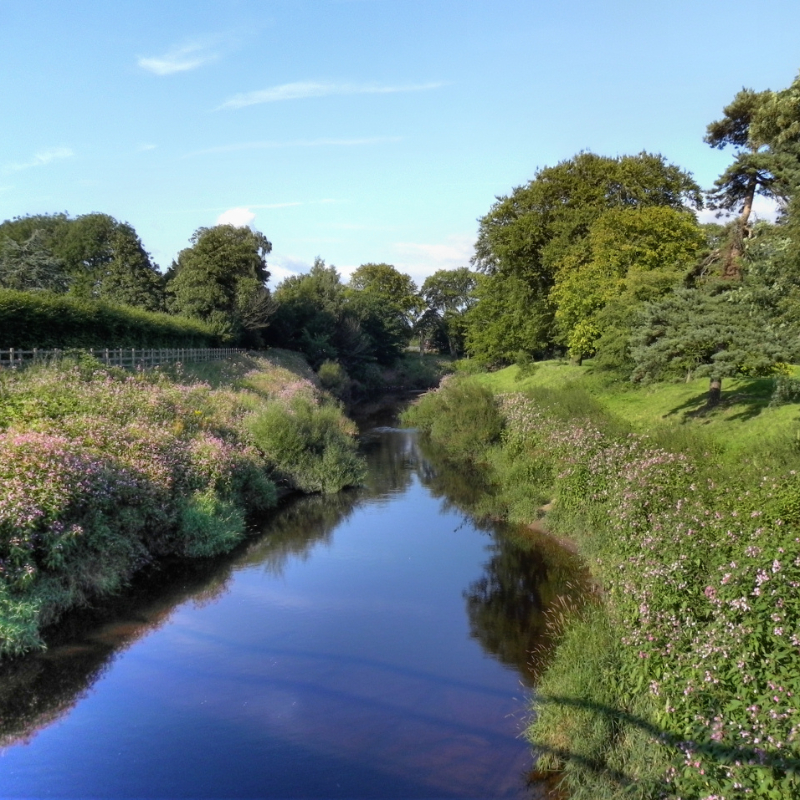
Solution: Create a commercial business model that repays upfront private investment using forecast flood-risk cost savings from natural flood management (NFM), enabling payments to farmers and landowners to host and maintain measures like tree planting and water storage.Key challenge: Flood risk has been increased by land-management and river-modification practices that reduce water storage and speed runoff, while funding is needed to implement catchment-scale NFM to protect thousands of at-risk properties.Context: Approximately 7,600 properties across the Wyre catchment are at risk from river flooding. Intensive farming (overgrazing and heavy machinery) has compacted soils and reduced their ability to store water; removal of trees, ponds and wetlands has reduced landscape water storage; and straightened/modified watercourses have accelerated flows and disconnected rivers from floodplains. Climate change is contributing to more frequent and intense rainfall, increasing flood likelihood and impacts, including damage to homes and businesses and longer-term wellbeing effects.Solution in practice: Modelling under the Wyre Investment Readiness project (funded by Triodos Bank) indicates that developing around 70 hectares of NFM features could reduce flooding frequency affecting up to 120 properties in Churchtown. The Wyre NFM project has developed a commercial business model intended to attract private funding alongside public funding, where the cost savings from NFM implementation generate a long-term revenue stream to repay upfront investment in reduced flood risk. Farmers and landowners are paid to host and maintain interventions such as tree planting, water storage areas, and hedgerow planting. A Wyre Catchment Community Interest Company has been set up to raise £850k from private investors (including high net worth individuals and companies such as United Utilities), alongside a £526k grant from the Woodland Trust (Northern Forests Grow Back Greener Program, part of Defra’s Nature For Climate Fund). The project is a national pilot delivered by the Wyre Rivers Trust over four years, with monitoring through to 2030, led by Wyre Rivers Trust, The Rivers Trust national, and Triodos Bank UK with partners including Wyre Council, Markerstudy, United Utilities, Flood Re, Co-op Insurance, Northwest Regional Flood and Coastal committee and Hogan Lovells.Impact / outcome: About 70 ha of natural flood management could reduce flooding frequency for up to 120 properties in Churchtown (modelled).Next steps: Use the pilot delivery and monitoring through 2030 to evidence flood-risk reduction and associated cost savings, enabling investor repayment and validating the commercial model. Continue raising the planned private investment and coordinating partners (public bodies, insurers, utilities, and land managers) to scale and sustain NFM implementation across the catchment.Organizations involved:Authoring: Wyre Rivers Trust Actors: The Rivers Trust; Triodos Bank UK; Woodland Trust; United Utilities; Wyre Council; Flood Re; Co-op Insurance; Markerstudy; North West Regional Flood and Coastal Committee Implementation partners: Civil Society Organizations; Investors & Banks; Local Governments; Infrastructure Owners & Operators; Insurers; Regulators & Policymakers
United Kingdom
Financing natural flood management via a catchment investment model — Wyre River catchment (Wyre Rivers Trust)
Solution: Use high-resolution, insurance industry catastrophe flood-and-loss modeling to quantify how mangrove extent changes storm-surge flood depths and resulting property losses by comparing “With Mangroves” vs “No Mangroves” scenarios.Key challenge: Mangrove impacts on storm-surge losses are spatially variable and storm-severity dependent, with mixed effects for properties inside or seaward of mangrove forests and limited fine-scale evidence for decision-making.Context: The study analyzes Florida, a coastline with high hurricane storm-surge exposure, valuable coastal properties, and extensive mangrove forests. Using kilometer-scale flood and loss modeling (∼100 m in the coastal floodplain), it estimates how mangroves modify storm surge and resulting damages, both as average annual loss (AAL) in Collier County using representative synthetic storms drawn from a 100,000-year catalog, and for historical events Hurricane Irma (2017) and Hurricane Ian (2022) across southern Florida. Reported results include annual avoided losses of US$67 million in Collier County and event-scale reductions of US$725 million (14%) for Irma and about US$4.1 billion (≈30%) for Ian from storm surge damages.Solution in practice: The authors apply an insurance industry-standard catastrophe risk modeling workflow that couples a physics-based storm surge/overland flooding model with an economic loss model to estimate property-level storm-surge losses under two land-cover scenarios: present-day mangroves (“With Mangroves”) and a counterfactual where mangroves are absent (“No Mangroves,” represented by lower-friction land cover such as developed open space/open water). The approach quantifies avoided losses by comparing damages between scenarios, and maps spatial patterns showing that mangroves always reduce losses for landward properties, with significant benefits extending roughly 11–14 km inland depending on the event, while effects for properties inside and seaward of mangroves are net positive but mixed and can sometimes increase damages.Impact / outcome: USD 67m a year in avoided losses in Collier County; USD 725m (14%) for Irma and about USD 4.1bn (~30%) for Ian.Next steps: Use the quantified, high-resolution evidence on avoided losses and spatial variability to inform targeted conservation/restoration and adaptive management of mangroves as “natural infrastructure,” prioritize investments where landward property protection benefits are highest, and incorporate up-to-date mangrove extent (and ideally health/density) data into storm-surge risk assessments to support incentives such as premium reductions or resilience investments; further studies are also indicated to better capture waves, dynamic vegetation drag, and more realistic counterfactual land-use scenarios.Organizations involved:Authoring: Cell Reports Sustainability - peer-reviewed study Implementation partners: Data Providers; Insurers; Civil Society Organizations; Regulators & Policymakers.
USA
Quantifying mangrove storm-surge loss reduction using insurance catastrophe models — Florida (Collier County; Hurricanes Irma & Ian)
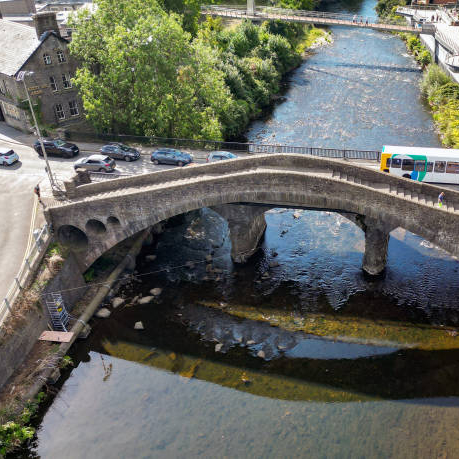
Solution: Apply catastrophe flood modelling under low- and high-emissions climate scenarios to quantify how flood defense standards of protection erode by 2040, and to test the cost-effectiveness of defense-strengthening versus complementary adaptations, informing investment decisions and the post-Flood Re insurance transition.Key challenge: As climate change erodes the effectiveness of flood defenses over the Flood Re scheme's lifetime (ending 2039), cities face growing residual losses that defense investment alone cannot fully offset — requiring evidence-based prioritization of defense upgrades alongside complementary measures before the transition to risk-reflective pricing.Context: York (population ~200,000) and Pontypridd (population ~30,000) are two urban UK communities with different flood defense standards: York is largely protected to a 100-year return period, while Pontypridd ranges from 25 to 100 years. Pontypridd was severely flooded during Storm Dennis in 2020, with more than 150 properties inundated to depths of up to 1.8 meters. The study models a 1-in-50-year flood scenario in 2040 — the year after the Flood Re scheme ends — under both low-emissions (RCP 2.6) and high-emissions (RCP 8.5) climate pathways, with existing defenses as a baseline.Solution in practice: Moody's applied the RMS UK Inland Flood HD Model and UK Inland Flood HD Climate Change Model to York and Pontypridd. Under the chosen flood scenario, climate change by 2040 produces £11m–£20m of additional losses for York and £8m–£17m for Pontypridd. The study tested two defense-strengthening scenarios (50% and 100% increase in standard of protection): a 50% SoP increase yields the greatest loss reduction for both cities because even the largest embankments cannot protect against surface water flooding. For Pontypridd under RCP 2.6, a 50% SoP increase reduces losses by £14m, while a further 100% increase adds only £5.5m more in reduction. The study concludes that defense investment is cost-effective only to a point, and that property-level flood resilience and surface water management are also necessary for a successful 2039 transition.Impact / outcome: A 50% increase in defense standard gives the biggest loss reduction (e.g. GBP 14m in Pontypridd under RCP 2.6); further increases add little.Next steps: Apply this defense-performance modelling framework across additional high-risk UK communities to build the evidence base for prioritizing defense investment and complementary adaptations ahead of Flood Re's 2039 wind-down. Findings may be used to advocate for integrated resilience standards that link quantified defense performance to insurance affordability outcomes, such as the new piloted Flood Protection Certificate, and to demonstrate the value of catastrophe modelling as a planning tool for government flood risk programs.Organizations involved:Authoring: Moody's RMS; Flood Re Implementation partners: Data Providers; Insurers; Regulators & Policymakers; Local Governments
United Kingdom
Modelling climate change impacts on flood defense performance ahead of the 2039 insurance transition — York and Pontypridd (Moody's RMS / Flood Re)
Solution: Embed physical climate risk assessment into bank credit and portfolio processes and use blended climate-finance facilities to structure and lend for client resilience investments.Key challenge: Fragmented climate risk and credit decisions (and underpricing of environmental/social externalities) makes adaptation investments harder to justify and finance at scale.Context: CIB is the largest private-sector bank in Egypt with established relationships in agriculture, food and beverage, and water-intensive industries, and it integrates sustainability across policies, strategic initiatives, financed transactions, and operations. The bank created a Sustainable Finance Strategy with an integrated Environmental & Social Risk Management (ESRM) system, using materiality analysis and heatmap-based methodologies to capture sector vulnerabilities and geographic exposure, feeding an ESG risk scoring framework being rolled out to reflect climate risk in credit evaluation and portfolio oversight.Solution in practice: CIB applied its climate/ESG risk scoring and ESRM approach with corporate food-industry clients exposed to heatwaves, water stress and temperature-driven supply chain disruption, then worked with them to identify and finance targeted resilience investments through its Climate Finance Program developed with PROPARCO and supported by blended finance from the GCF. Three example financings include a modern greenhouse system with drip irrigation and IoT monitoring (USD 5.2 million and 99 million EGP) to reduce water consumption; wave breakers for a port (EGP 1.3 billion) to improve anti-flooding protection amid sea-level rise; and local manufacturing capacity (USD 4 million) for advanced wastewater treatment technologies (e.g., hybrid filters, sludge collectors, flocculators, regulation gates). To scale, CIB launched the “Brain Trust” initiative at COP27, combining a governance mechanism (CIB, clients, DFIs, and external technical partners) to validate designs and mechanisms, with an operational framework that runs from risk identification and project design through financial structuring, instrument selection, and impact measurement/disclosure/reporting.Impact / outcome: Financed greenhouse irrigation (USD 5.2m + EGP 99m), port wave breakers (EGP 1.3bn) and wastewater technology manufacturing (USD 4m).Next steps: Build partnerships between commercial banks and MDBs/DFIs to support pre-screening projects against adaptation standards and validate risk assessments, while expanding granular physical-risk data infrastructure that captures the geographic location of client assets and operations (not only headquarters). Extend the physical-risk assessment methodology to additional sectors and geographies and continue investing in data, methodology, and talent to translate climate risk into credit-relevant metrics that enable systematic scale-up of adaptation finance.Organizations involved:Authoring: Commercial International Bank (CIB); World Economic Forum; Marsh Actors: PROPARCO; Green Climate Fund (GCF)Implementation partners: Regulators & Policymakers; Asset Owners & Managers.
Egypt
Embedding physical climate risk and resilience into corporate lending — Commercial International Bank (CIB), Egypt
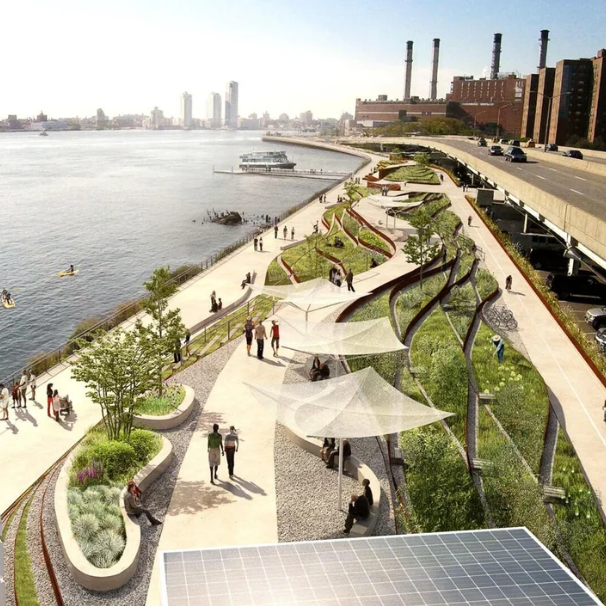
Solution: Supply and deploy high-performance cement/concrete and cool-roof shingle products in resilience projects to harden infrastructure and homes against flooding and extreme heat while improving sustainability outcomes.Key challenge: Cities and households need resilient, durable building solutions to protect people and assets from escalating climate-related hazards, particularly flooding and extreme heat, as urbanization increases.Context: Amrize positions itself as a supplier of advanced, high-performance building products for resilient homes, buildings, and infrastructure across North America amid rising urbanization. The source highlights large-scale public investment in resilient infrastructure in the United States and references the East Side Coastal Resiliency Project in New York City (part of the BIG U) as an award-recognized example of flood protection integrated with improved open space, alongside a separate initiative to re-roof homes in Los Angeles to address extreme heat and air pollution.Solution in practice: In New York City, Amrize materials were used in the East Side Coastal Resiliency (ESCR) project, a coastal protection initiative that began in Fall 2020 and is intended to provide flood protection and improve open spaces for more than 110,000 residents; the project used MAXtect due to superior mechanical and durability properties versus conventional concrete, and it has used 40,000 tons of OneCem cement (an Amrize brand) and 5,000 tons of slag. In Los Angeles, Amrize partnered with the non-profit Climate Resolve to re-roof residential homes using Malarkey shingles designed to be highly reflective (reducing indoor temperatures and energy needs) and to include smog-reducing granules to help clean the air, supporting household-level resilience to extreme heat and air pollution.Impact / outcome: Materials used in the East Side Coastal Resiliency project protecting 110,000+ residents; cool-roof re-roofing of homes in Los Angeles.Next steps: A coalition could work with building product suppliers to embed resilience specifications and whole-life cost modelling into procurement documents from the outset, so the investment case is legible to insurers and public funders. Connecting material performance data to catastrophe model inputs would ensure resilience interventions feed back into the risk models that drive insurance pricing and coverage decisions.Organizations involved:Authoring: AmrizeActors: Climate Resolve; City of New YorkImplementation partners: Local Governments; Civil Society Organizations; Property value chain stakeholders
USA
Resilient construction materials for coastal protection and cool roofs — Amrize (North America)

Resilient Futures Initiative

A World Economic Forum Initiative