Solution: Integrate stormwater management, drainage, water quality improvement, and public realm design through blue-green infrastructure across the urban environment.
Key challenge: Conventional drainage systems alone are not sufficient to address land constraints, intense rainfall, water quality, and the need for attractive, usable urban space.
Context: Singapore combines long-term drainage planning with the ABC Waters Programme and a Source-Pathway-Receptor framework for flood resilience. This approach has helped reduce flood-prone areas from about 3,200 hectares in the 1970s to fewer than 25–30 hectares today, while expanding the use of blue-green infrastructure across the city.
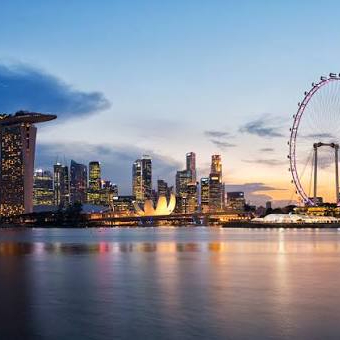
Solution in practice: Singapore has transformed canals, drains, reservoirs, and development sites through naturalized waterways, rain gardens, vegetated swales, detention systems, and integrated waterfront design. The programme is supported by design guidelines and has been applied in projects such as Bishan-Ang Mo Kio Park, Marina Barrage, and Punggol. Impact / outcome Flood-prone areas cut from about 3,200 hectares in the 1970s to fewer than 25-30 hectares today.
Next steps: Use clear design standards and certification to scale blue-green infrastructure beyond flagship projects, connect site-level interventions to a wider Source-Pathway-Receptor flood management system, and set measurable rollout targets and outcome tracking across the portfolio.
Organizations involved:
Authoring: PUB, Singapore's National Water Agency
Implementation partners: Local Governments; Infrastructure Owners & Operators; Regulators & Policymakers; Property value chain stakeholders