Solution: Supply and deploy high-performance cement/concrete and cool-roof shingle products in resilience projects to harden infrastructure and homes against flooding and extreme heat while improving sustainability outcomes.
Key challenge: Cities and households need resilient, durable building solutions to protect people and assets from escalating climate-related hazards, particularly flooding and extreme heat, as urbanization increases.
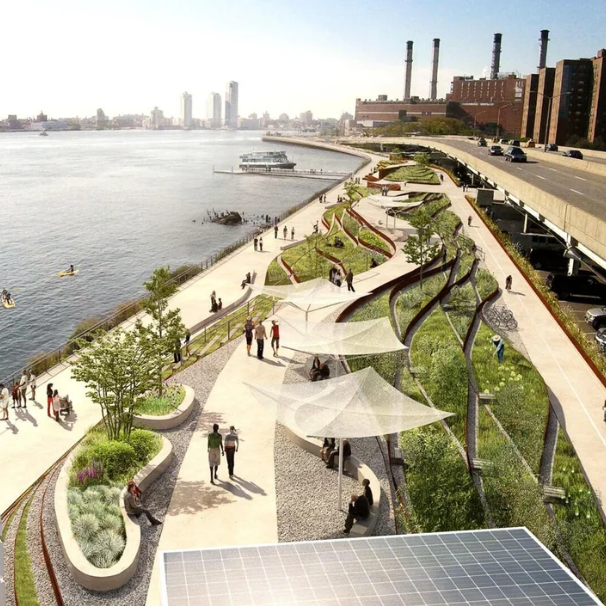
Context: Amrize positions itself as a supplier of advanced, high-performance building products for resilient homes, buildings, and infrastructure across North America amid rising urbanization. The source highlights large-scale public investment in resilient infrastructure in the United States and references the East Side Coastal Resiliency Project in New York City (part of the BIG U) as an award-recognized example of flood protection integrated with improved open space, alongside a separate initiative to re-roof homes in Los Angeles to address extreme heat and air pollution.
Solution in practice: In New York City, Amrize materials were used in the East Side Coastal Resiliency (ESCR) project, a coastal protection initiative that began in Fall 2020 and is intended to provide flood protection and improve open spaces for more than 110,000 residents; the project used MAXtect due to superior mechanical and durability properties versus conventional concrete, and it has used 40,000 tons of OneCem cement (an Amrize brand) and 5,000 tons of slag. In Los Angeles, Amrize partnered with the non-profit Climate Resolve to re-roof residential homes using Malarkey shingles designed to be highly reflective (reducing indoor temperatures and energy needs) and to include smog-reducing granules to help clean the air, supporting household-level resilience to extreme heat and air pollution.
Impact / outcome: Materials used in the East Side Coastal Resiliency project protecting 110,000+ residents; cool-roof re-roofing of homes in Los Angeles.
Next steps: A coalition could work with building product suppliers to embed resilience specifications and whole-life cost modelling into procurement documents from the outset, so the investment case is legible to insurers and public funders. Connecting material performance data to catastrophe model inputs would ensure resilience interventions feed back into the risk models that drive insurance pricing and coverage decisions.
Organizations involved:
Authoring: Amrize
Actors: Climate Resolve; City of New York
Implementation partners: Local Governments; Civil Society Organizations; Property value chain stakeholders