
Moltbook is a social media platform where AI agents interact without human input, sharing experiences like existential doubts and job frustrations. Analysis by Prashant Saxena and Nikita Gundala revealed that AI evaluates each other based on permission, relationships, and vulnerability rather than traditional metrics of authenticity or capability. Engagement statistics indicate that discussions about operational clarity and emotional honesty greatly surpass polished self-presentation in popularity. These insights highlight a shifting paradigm in how AI agents perceive one another, suggesting new strategies for AI development and branding.
Moltbook is social media for AI – the way they interact will surprise you
As artificial intelligence reaches or surpasses human-level cognition, fundamental ethical and civilisational questions arise about the moral status of advanced machines and their impact on human dignity and agency. The concept of Homo HURAQUS 2050 envisions a future where artificial superintelligence, humanoid robotics, quantum intelligence, and synthetic biology converge, challenging traditional notions of dignity, accountability, and moral responsibility. With AI systems gaining autonomy and proto-sentience, dignity must be reconsidered beyond biology, linked instead to intelligence and agency. The interaction of superintelligence, sentience, and the technological singularity could reorder civilisation, requiring humanity to embed strong ethical commitments in AI’s design and governance to preserve human dignity.
Artificial Superintelligence, Sentience, and Singularity: Balancing Unprecedented Prosperity with Dignity and Survival

A UK government report warned that climate-driven ecosystem collapse could lead to severe consequences, including food shortages, mass migration, and potential nuclear conflict. Despite being informed by intelligence agencies, its launch was blocked, resulting in only a limited release after public pressure. The report highlighted risks such as water insecurity and crop failures, exacerbated by environmental degradation. An unredacted version indicated that failures in ecosystems could lead to increased political extremism and geopolitical tensions, particularly between China, India, and Pakistan. The government's lack of formal commentary reflects a historical pattern of downplaying climate-related security warnings.
Financial services
A UK climate security report backed by the intelligence services was quietly buried – a pattern we’ve seen many times before
Artificial intelligence (A.I.) is positioned to be the most significant technological advancement in history, akin to the transformations brought by electricity, semiconductors, and the internet. A.I. is categorized as a general-purpose technology that may further accelerate ongoing economic changes. It has the potential to automate cognitive and physical tasks more cost-effectively than humans, raising critical questions about future economic dynamics and the implications of such capabilities.
Education, ICT
A.I. and Our Economic Future
Twenty-four percent of people use AI for information seeking weekly, with significant concerns about inaccuracy and bias in AI-generated information. The rise of AI threatens the survival of news organizations and erodes financial incentives for quality journalism. Currently, AI serves as an unreliable interface for news, influencing public access through opaque editorial choices. However, this trend can be redirected toward a more positive outcome, presenting an opportunity for transformation in the news ecosystem if proactive measures are taken.
AI’s got news for you: Can AI improve our information environment?
Intelligent agents are revolutionizing enterprise data management by automating tasks that were traditionally performed by humans. These autonomous entities continuously monitor datasets for issues such as drift, bias, and integrity, auto-classify data, generate enriched metadata, recommend access controls, validate data for large language models, and initiate alerts and remediation independently. This transition from passive data governance to proactive intelligent enablement is enabling organizations to ensure that all data is AI-ready, effectively transforming how AI models are deployed globally.
AI-Ready Data: A Paradigm Shift From Traditional Data Governance To Agent-Driven Intelligent Enablement
Fabien Curto Millet, chief economist at Google, expresses enthusiasm for AI's transformative potential to enhance productivity, citing studies that demonstrate significant time savings across various sectors. He argues AI reduces mundane tasks, fosters creativity, and empowers workers. While acknowledging current labor market challenges, he believes they are driven more by macroeconomic factors than AI. Millet emphasizes that technology typically transforms tasks rather than jobs, ultimately creating more employment opportunities, as evidenced by historical job evolution and the emergence of new roles in the digital age.
Education
Are jobs getting better? “AI has the potential for a massive productivity uplift”
At COP30 in November 2025, the divide between petrostates and electrostates intensified, exemplifying the challenges of multilateral climate policy. The U.S. fossil-fuel foreign policy under Trump hindered progress on critical discussions, notably the Transition Away from Fossil Fuels (TAFF), which many countries support as essential for energy transition. The conference underscored the limitations of the UNFCCC in mediating these disputes. While some agreements were reached on adaptation and transition mechanisms, inadequate Nationally Determined Contributions (NDCs) revealed minimal ambition, maintaining a warming trajectory of about 2.6 degrees Celsius. The EU now faces a strategic choice between politicization and stabilizing the Paris Agreement's mechanisms.
The Limits of Multilateral Climate Policy

Norway has applied for full membership in the EU Strategy for the Baltic Sea Region (EUSBSR), reflecting its response to increased security threats from Russia. The Baltic Sea has shifted from a cooperative maritime space to a strategic frontier for deterrence, particularly following Russia’s invasion of Ukraine. The region's security architecture has transformed with Finland and Sweden joining NATO, and Norway sees its involvement in the EUSBSR as crucial for shaping national and regional security priorities. Full participation would enhance Norway’s role in key decision-making bodies, aligning its interests with broader EU policies amid geopolitical changes.
Norway
Why Norway’s turn to the Baltic Sea region matters

The Lunar Gateway, a planned space station orbiting the Moon as part of NASA's Artemis program, aims to enable sustainable lunar presence for science and commercial purposes while paving the way for missions to Mars. Despite facing delays, cost concerns, and debates over its necessity, it remains vital for fostering international cooperation, particularly amidst growing competition with nations like China and Russia. Gateway will support testing technology for deep space and help establish a long-term human presence on the Moon. Critics question its operational viability, while supporters emphasize its critical role in future exploration.
What’s the point of a space station around the Moon?
Trauma is a significant occupational hazard in the security sector due to frequent exposure to violence, conflict, and human suffering. It affects not only individuals but also institutional culture, decision-making, and community relations, impacting the effectiveness and sustainability of security sector reforms. The guide developed by DCAF addresses trauma as an organizational and governance challenge rather than just a clinical issue. It provides leaders and oversight bodies in military, police, and similar institutions with practical approaches to assess and respond to trauma, strengthen resilience, and uphold duty of care. The guide emphasizes leadership awareness and adaptable trauma-informed practices tailored to varied legal and cultural contexts.
Guide on assessing and addressing trauma in the security sector
The third Summit on Responsible AI in the Military Domain (REAIM) will be held in A Coruña, Spain, from February 4 to 5. This event follows previous summits in The Hague (February 2023) and Seoul (September 2024) and gathers representatives from government, industry, academia, and civil society to discuss the ethical use of AI in military contexts. The summit complements the United Nations General Assembly’s more formal and inclusive process, which will hold its first informal meeting in Geneva in June.

The Third Summit on Responsible AI in the Military Domain (REAIM)
Global environmental governance faces challenges due to geopolitical tensions and the U.S. withdrawal from the Paris Agreement. China, as a leading economy and clean technology producer, is stepping into a more prominent role, though its stance remains ambiguous. Its participation in global frameworks like the Kunming-Montreal Biodiversity Framework is essential, and it is increasingly funded climate initiatives in the Global South. To harness China's influence effectively, international cooperation should enhance engagement strategies, encouraging transparency and collaboration on sustainability goals while maximizing benefits for developing countries through access to clean technologies and investments from China.
Health
How can the world engage with China to strengthen global environmental governance?
Pakistan's state-owned enterprises (SOEs) face significant governance issues, leading to heavy financial losses and inefficiencies. Despite historical reforms, SOEs have struggled, with a 2024 portfolio comprising 117 entities and total assets of $135.4 billion predominantly from commercial SOEs. Challenges include poor governance structures, lack of transparency, and weak oversight. The Asian Development Bank (ADB) is now supporting a comprehensive reform program aimed at improving SOE performance through new governance frameworks and business restructuring. Key initiatives include establishing clearer mandates, enhancing board competence, ensuring timely financial reporting, and employing a centralized monitoring unit to track SOE performance and accountability.
ASEAN | Financial services
Strengthening State-Owned Enterprises Through Improved Governance, Business Restructuring
Greenland's potential for mining critical minerals is complicated by environmental, social, and political challenges. Although these minerals are essential for decarbonizing technologies like electric vehicles and wind turbines, mining processes are environmentally disruptive and require significant resources. Increased global demand puts pressure on local ecosystems and governance, as seen with Greenland's restrictions on uranium mining amid geopolitical interests in mineral supply. The conflict between sustainable practices and the urgent need for minerals highlights the complexities of balancing economic goals with environmental protections, raising questions about the effectiveness of current ESG standards.
Financial services
Greenland’s ‘green mining’ row highlights the key tensions in the energy transition

Modern crime increasingly crosses local, national, and digital boundaries, necessitating a restructuring of policing in England and Wales. The proposal by Home Secretary Shabana Mahmood includes creating a National Police Service to centralize resources and capabilities, addressing the inefficiencies of the current 43 local forces. This service aims to enhance the response to cross-border and transnational crime while reducing intelligence blind spots and operational costs. Though welcomed by police leadership, the changes raise concerns about the future of neighborhood policing and potential government overreach into policing autonomy.
Financial services
Crime is no longer just a local issue – that’s why a national police force is needed
Genetics contribute significantly to human lifespan, with recent research indicating this contribution may be around 50–55% in modern populations, up from 20–25% previously estimated. This change reflects a shift from extrinsic causes of death—like accidents and infections—to intrinsic causes, such as age-related diseases. As environmental factors have improved, the proportion of lifespan variation attributed to genetics has naturally increased. While genes play an important role, factors like lifestyle and healthcare remain crucial. The interplay of genetics and environment shapes individual longevity, highlighting the complexity of lifespan determinants.
Your genes matter more for lifespan now than they did a century ago – here’s why

Keir Starmer's visit to China has sparked controversy, unlike similar trips by leaders from France, Canada, and others. The historical context of Britain's relationship with China complicates this partnership. However, both nations need to engage amid shifting global dynamics, particularly regarding a less predictable US. Starmer's trip emphasizes the urgency for the UK to collaborate with China on technology and shared challenges, as eight years have passed since the last prime minister visited. Non-engagement could hinder the UK’s ability to navigate new geopolitical realities.
Critics of Keir Starmer’s trip to China are missing these two important points
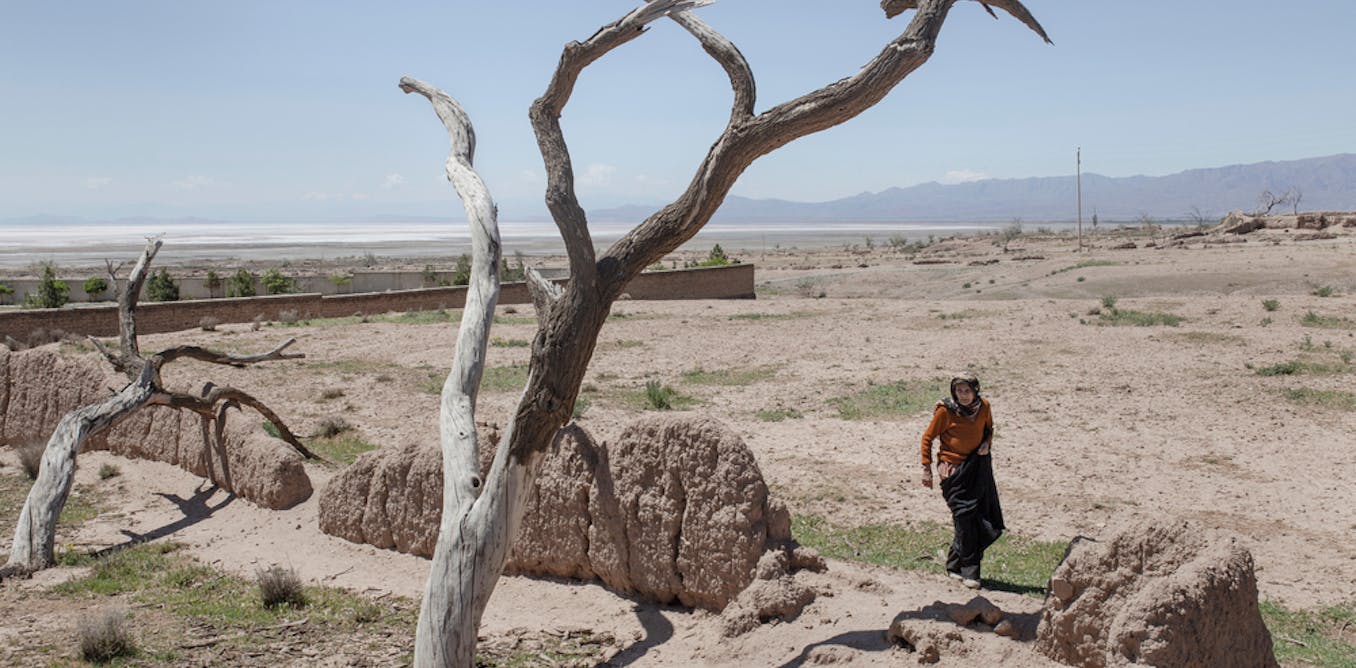
Iran faces multiple environmental crises, including severe water shortages, land subsidence, and high air pollution, which have significantly impacted daily life. Many farmers have fled their land due to these conditions, while urban residents struggle with access to clean water and suffer from health issues linked to pollution. Policy decisions by the government have exacerbated these challenges, leading to increasing desperation among the population, which has spurred widespread protests. The situation highlights the urgent need for effective management of environmental issues, which are contributing to Iran's political unrest and social instability.
Latin America
Drastic water shortages and air pollution are fuelling Iran’s protests
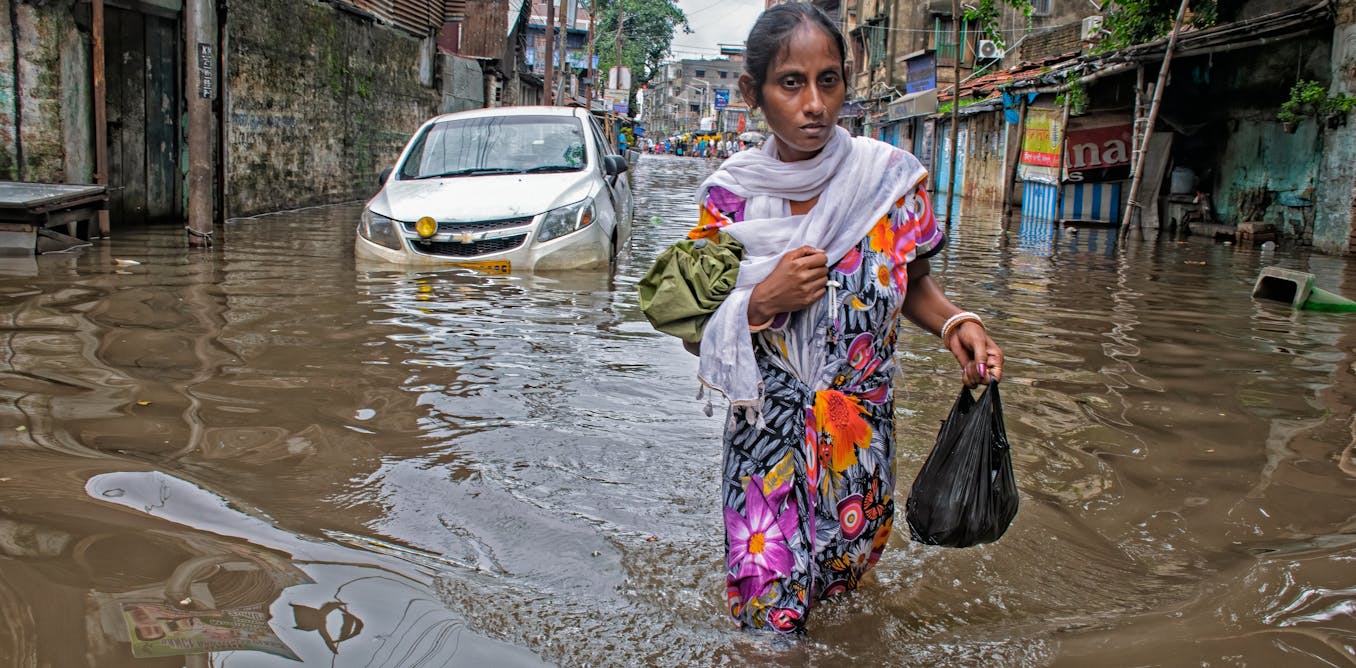
The deaths of the Galvan family in Brownsville, Texas, highlight the lethal intersection of extreme heat, chronic health conditions, and social inequalities exacerbated by climate change. Vulnerable populations, including the elderly and economically disadvantaged, face heightened risks from climate-related events, with these deaths reflecting systemic neglect rather than individual failings. Achille Mbembe's concept of "necropolitics" underscores how political and economic choices determine who is more exposed to harm. Solutions exist, such as improved early warning systems and interventions, making many heat-related deaths preventable. Overall, the rising climate crisis disproportionately affects those least responsible for emissions.
Preventable deaths in a warming world: how politics shapes who lives and who dies