
Meta's $2 billion acquisition of Manus raises concerns about potential overvaluation in the AI sector. The deal highlights three critical issues: revenue sustainability, cost recognition, and valuation methodology. Despite Manus’ significant early revenue, experts caution that rapid adoption does not guarantee long-term success, as demonstrated by past failures in similar sectors. Moreover, AI firms often inflate earnings by misrepresenting the economic depreciation of critical assets. Traditional valuation benchmarks are under pressure as AI companies command unsustainable multiples, raising challenges for investors and lenders amid an increasingly competitive market.
Meta’s $2 billion purchase of Manus raises concerns over AI valuations

Crises have historically catalyzed European integration, yet they have also exposed the EU's lack of a coherent constitutional framework. Vera Spyrakou argues that the EU has adapted to ongoing challenges—financial crises, pandemics, security threats—through a pragmatic approach known as "federal emergency," which enables temporary pooling of sovereignty and the extension of EU competences without formal treaties. This adaptation has transformed integration from a linear process to an evolving response based on urgency. Furthermore, the rigidity of EU enlargement procedures reveals limitations in addressing contemporary geopolitical realities, while new forms of post-membership cooperation—like the EU-Canada relationship—demonstrate a shift towards more flexible, value-based partnerships that transcend traditional political boundaries.
The federal emergency – how the EU builds order from crisis

Technological advances are transforming decision-making in the public sector by aligning it with citizens' needs and community challenges. A proposed sandbox solution enables public administration to address community issues in real time, enhance effective allocation of resources, and evaluate administrative performance. By analyzing social media feedback from 95 municipalities, the research identifies prevalent community problems and categorizes them by population and geographical factors. The sandbox aims to improve responsiveness at local and central government levels, ensuring public spending aligns with community needs.
Financial services, Health, Education
Using Sandboxes for Testing Decisions in the Public Sector
Women nano-entrepreneurs, traditionally overlooked by banks and MFIs as unprofitable, are now being effectively served by linking their trusted savings groups with financial institutions through digital tools. Two successful models emerge: the credit-led approach, like VisionFund’s FAST in Kenya, offering group loans repaid collectively, and the savings-led model, such as Tanzania's NMB Bank’s Kikundi platform, which starts with digital savings accounts and gradually introduces credit. These models enable access to larger loans with low default risk and sustainable delivery costs, reaching poorer and more rural women than traditional finance. Expanding these linkages requires investment, supportive policies, and further research to optimize digital integration and product uptake.
Financial services
From Informal to Investable
The paper investigates the growth drivers of private businesses in Timor-Leste, emphasizing the need for tailored policy actions for micro, small, and medium-sized enterprises (MSMEs) amid global uncertainty. It identifies four MSME types—formalized, digitalized, internationalized, and women-led—each exhibiting distinct business characteristics and performance. The findings highlight the necessity for targeted policy support to effectively assist different firm types in Timor-Leste.
Cambodia, Viet Nam
Private Sector Development and Policy Actions in Timor-Leste: Lessons from a Business Mapping Survey
Job security influences the type of innovation within firms, shaping both the approaches and outcomes of inventors. Engineers at companies with strong job protection tend to focus on incremental innovations that enhance existing technologies, while those at firms with weaker security are more likely to pursue broader, potentially disruptive ideas. Research on U.S. employee inventors indicates that higher job security encourages specialization and firm-specific advancements, while less protection fosters diverse, radical innovation. Managers should recognize this dynamic, balancing workplace stability with strategies that promote breakthrough innovation.
Education
What kind of innovation do you want to create?
AI is shifting labor market dynamics by adversely affecting white-collar jobs while blue-collar positions gain importance. Research shows that as AI automates tasks traditionally held by professionals, the demand for white-collar roles declines. The study analyzed 200 years of data, revealing that greater exposure to technology often results in job losses, except when AI only takes over a subset of tasks, which can enhance employment growth. Historical trends suggest that while AI's impact seems unprecedented, it mirrors past technological shifts, emphasizing the value of interpersonal skills and adaptability in the workforce.
Education
Is AI Turning Back the Clock on the Job Market?
China's economy faces significant challenges, including high youth unemployment, low consumption, deflation, and a real estate crisis, with GDP growth dropping to around 5%. Despite concerns following Evergrande's bankruptcy, the expected financial crisis has not yet materialized due to state control preventing bank runs. The underdeveloped financial markets compound the issues, raising anxiety about potential impacts. Trade tensions with the U.S. have also escalated, with tariffs affecting economic dynamics but not leading to immediate crises. The evolving geopolitical landscape suggests a shift towards three major spheres of influence: the U.S., China, and Russia.
Australia, Cambodia, India, Kazakhstan, Republic of Korea, Russian Federation, Switzerland, Taiwan, China, Viet Nam | Financial services, Education
4 Trends to Watch in China’s Economy

More than one-third of shark and ray species are threatened with extinction primarily due to overfishing for their fins, meat, and other parts, alongside bycatch in other fisheries. Despite new international trade limits imposed on many species at a 2025 global conference, these regulations alone will not suffice to mitigate overfishing. Local fishing practices often sustain shark mortality regardless of international trade policies. Effective conservation requires comprehensive reforms addressing both local fishing practices and demand management for shark products. Without these changes, the current regulations may have minimal impact on shark populations.
Financial services
New limits on global trade of sharks won’t be enough to save them from overfishing – new research
Achieving the Golden Indonesia Vision 2045 outlines Indonesia's strategies for becoming a resilient, inclusive, and prosperous nation by its centenary. The book, produced in collaboration with the ADB and Indonesia's National Economic Council, identifies key growth pillars and reform strategies to enhance productivity, focusing on sectors like food security, education, and investment. It covers challenges, provides a framework for mobilizing financial and human capital, and emphasizes the importance of structural transformation and regional cooperation for national development.
Indonesia, Viet Nam
Achieving the Golden Indonesia Vision 2045: Pathways and Challenges
Artificial intelligence (AI) is being utilized to support young people in Asia and the Pacific amidst rising mental health concerns and limited services. Increased screen time correlates with higher risks of mental health issues, particularly among adolescent girls vulnerable to online harms. While the potential for AI tools to offer confidential support exists, concerns about safety, cultural relevance, and privacy persist. Effective deployment of AI must prioritize youth rights, ensure regulatory safeguards, and include human oversight to mitigate risks, particularly for vulnerable populations. Countries like Singapore and Indonesia are exploring AI applications in mental health to enhance care accessibility and outcomes.
Education
Teaching AI to Help, Not Harm, Young Minds
Workers in low-income countries experience lower exposure to artificial intelligence compared to those in high-income countries, primarily due to differences in occupational tasks. A country-specific measure developed in the study highlights that information and communications technology intensity and human capital significantly contribute to this variation. High-income countries have a greater employment in highly exposed occupations, with task shifts increasing exposure. The findings indicate that disparities in ICT infrastructure and digital readiness may exacerbate the technological and economic gap between advanced and emerging economies.
Education
Workers’ Exposure to Artificial Intelligence Across Development Stages
Artificial intelligence (AI) is reshaping the workforce, but technology alone cannot address the human-centric needs of businesses. Human skills from hospitality—such as empathy, adaptability, and cultural intelligence—are vital for enhancing AI applications like chatbots and virtual assistants. These skills transform customer interactions into meaningful experiences, promoting loyalty and understanding. The UK hospitality sector exemplifies the economic and social value of these skills, being a significant employer and contributor to GDP. As industries increasingly adopt AI, integrating hospitality skills into training and operations will enhance customer engagement and ensure a personal touch in service, ultimately boosting business success.
Education
Why hospitality skills can help all businesses adapt to the AI revolution

Small improvements in sleep, physical activity, and diet are linked to a longer and healthier life, according to a study involving 590,000 UK participants aged around 64 over eight years. Even minor changes, such as an extra five minutes of sleep or two minutes of exercise daily, can add approximately one year of healthy life. More significant lifestyle changes can lead to up to four additional healthy years. These changes reduce disease risks, including dementia, and lower the likelihood of early death. The study emphasizes that modest adjustments can produce substantial health benefits, particularly for older adults.
Health
Small improvements in sleep, physical activity and diet are linked with a longer life
The Observatory of Public Sector AI, a research initiative by InnovateUS and The Governance Lab, analyzes data from over 150,000 public servants to enhance understanding of AI's awareness, attitudes, and adoption in government. The initiative seeks to identify effective investments in upskilling that improve services, policies, and government performance. Key research will assess public servants' AI competencies, training impacts, barriers to adoption, and variations in role and geography. The first research report is expected in spring, focusing on the translation of insights into actionable improvements in public sector capabilities.
Education
Launching the Observatory of Public Sector AI: An Invitation to Build the Evidence Base Together
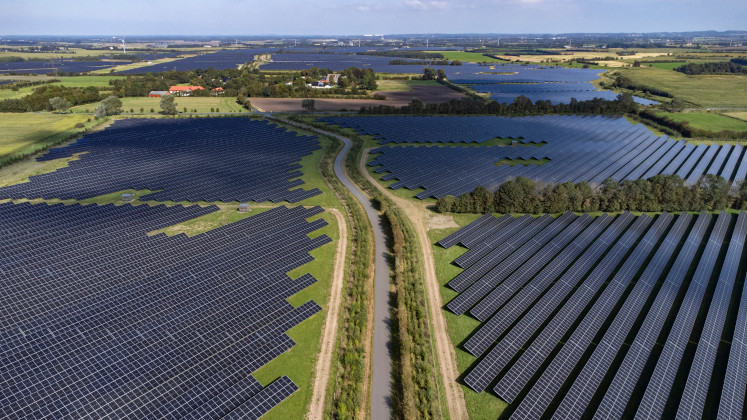
Opposition to solar power has become a significant electoral issue in Denmark, driven by the Denmark Democrats and their leader, Inger Støjberg. The term "fields of iron," coined by Støjberg, highlights local opposition to large solar parks and has gained traction in political discourse. The party emerged from divisions within the Venstre party, focusing on rural concerns amid Denmark's urban migration. The 2025 local elections featured strong campaigns against solar projects, particularly in Ringkøbing-Skjern, although the Denmark Democrats secured only 4.7% of the vote. This backlash, however, has brought the issue of renewable energy into mainstream politics.
How a solar energy backlash engulfed Danish politics

Mexico, Chile, and Colombia have officially committed to a feminist foreign policy (FFP), reflecting a growing awareness of gender issues in politics. These Latin American countries focus more on domestic concerns compared to their European counterparts. While these FFPs have not resulted in fundamental political changes, they enhance gender equality and women's representation in foreign policy discussions. As partners for Germany and the EU on gender and human rights, these nations are positioned to foster trilateral cooperation amidst changing political landscapes. The future of FFP in Chile remains uncertain, highlighting the need for adaptive cooperation and dialogue on human rights and inclusion.
Chile | Health
Feminist Foreign Policy in Latin America
Artificial intelligence has become accessible to nonprofits, schools, public agencies, and social enterprises, enabling them to utilize advanced AI tools for various tasks with little or no cost, a phenomenon described as the “democratization” of AI. However, this accessibility is temporary, as the transition from experimental tools to core infrastructure will reveal economic challenges related to energy, hardware, and market power. This shift could adversely impact equity and the organizations serving communities facing social and economic inequality, raising questions about whether these institutions will influence the future of AI services or have to adapt under unfavorable conditions.
Education
The Low-Cost AI Illusion
AI's integration into democratic governance significantly alters the role of political representatives. It affects input representation by aggregating citizen preferences and output representation by reshaping policy decision-making processes. The analysis assesses AI's impact through five democratic criteria and examines case studies from Taiwan and Austria. Findings indicate that representatives shift from mere interpreters of public will to facilitators of clearly expressed preferences and from direct decision-makers to architects of algorithmic decision-making systems. The study identifies six institutional conditions essential for enhancing representation through AI, including transparency, accountability, and barriers to participation.
Education
Of the people, by the algorithm: how AI transforms the role of democratic representatives?

Bhutan's agriculture sector faces significant challenges, including low domestic food production and high import dependence despite favorable natural resources. The 13th Five-Year Plan aims to enhance food security by revitalizing traditional crops and promoting high-value exports. Key obstacles include inadequate sanitary and phytosanitary (SPS) capacity, low production volumes, and aging workforce. The Asian Development Bank supports this dual strategy through various interventions aimed at improving seed systems, market access, and overall agricultural resilience. Addressing these issues is crucial for reducing import dependence and enhancing export potential.
Bahrain, Bangladesh, Bolivia, Botswana, Burundi, Cambodia, India, Lesotho, Nepal, New Zealand, Sri Lanka, Switzerland, Thailand, Viet Nam
Advancing Bhutan’s Agriculture for Food Security and Export Growth