
Ordinary neighborhoods in the UK have become focal points in the political landscape, particularly illustrated by the controversial Operation Raise the Colours in 2025. Local sentiments influence political perspectives, as shown by opposition to far-right groups like Reform UK and the Essex Spartans, who exploit fears around immigration. However, communities in Bristol demonstrate resilience, with activists promoting inclusivity and improving local conditions while resisting far-right narratives. These grassroots efforts focus on fostering connections among diverse groups, enhancing community identity, and advocating for neighborhood renewal despite facing socioeconomic challenges.
How ordinary neighbourhoods became battlegrounds in the politics of ‘broken Britain’

Most of the world's largest corporate R&D investors depend primarily on sales within their home regions, contrary to the notion of them being borderless giants. A study by ESCP's Régis Coeurderoy indicates only 17% of these firms generate at least 20% of their revenue across all three major global regions. European firms are generally more global due to the fragmented market in Europe, while US and Asian companies benefit from substantial domestic markets. Differences in industry regulations further influence global expansion, with tech and automotive sectors more capable of entering new regions than pharmaceuticals or healthcare.
Global firms, regional sales: The myth of the borderless R&D giant
Germany is undergoing a significant security policy transition, influenced by the war in Ukraine and uncertainties regarding U.S. support, necessitating a rapid rebuild of its defense industrial base. Despite increased funding and a goal to make the Bundeswehr Europe’s strongest conventional army by 2031, Germany faces challenges such as industrial bottlenecks, slow procurement, and maintenance backlogs. Cooperation with South Korea is strategically important, as local production by Korean firms could address bottlenecks, enhance supply chains, and facilitate operational readiness, while South Korea remains a key market for German arms exports.
Germany, Republic of Korea
The K(orea)-Factor in the Zeitenwende
The Copenhagen Institute for Futures Studies has created four potential scenarios for resolving the conflict over Greenland, each with distinct geopolitical consequences. Drawing on over 50 years of combined expertise across various sectors, these scenarios aim to provide a comprehensive outlook on Greenland’s future and its international impact.
Denmark
Scenarios For Greenland
The ability of AI chatbots and agents to remember users and their preferences is becoming a key feature, as exemplified by Google's announcement of Personal Intelligence for its Gemini chatbot that utilizes data from Gmail, photos, search, and YouTube. Other companies like OpenAI, Anthropic, and Meta are also developing similar capabilities. However, while these personalized systems offer advantages, they introduce significant privacy risks by consolidating user data into unstructured repositories. This can lead to potential breaches that compromise users' private information across various contexts and interactions.
What AI “remembers” about you is privacy’s next frontier
The UK Government Digital Service (GDS) has released guidelines aimed at enabling public sector organizations to make their datasets suitable for artificial intelligence. Key elements include a four-pillar framework covering technical optimization, data quality, organizational context, and legal compliance, along with an AI-ready data action plan and self-assessment checklist. The guidelines emphasize the importance of infrastructure modernization and ethical decision-making for effective AI use. Additionally, the Department for Science, Innovation and Technology is developing the National Data Library to enhance data accessibility across sectors, supported by over £100 million in funding.
Education
New guidelines aim to make UK government datasets AI-ready
A sustainable ceasefire between Russia and Ukraine requires a joint military coordination mechanism to manage, reduce violence, and monitor ceasefire compliance. Due to low trust between parties, third-party involvement is essential. Three main approaches include: a high-level international supervisory board composed of senior military officials to oversee implementation, enhance transparency, and address violations; low-threshold technical support providing informal, demand-driven expertise to facilitate communication, draft agreements, and manage information; and an advisory body of impartial experts. While supervisory boards offer accountability, parties may resist external intrusion, favoring lighter, flexible technical assistance modeled after frameworks like the Black Sea Grain Initiative coordination center. Third-party support enhances ceasefire prospects by bridging distrust and operational gaps.
Third-party Support for Ceasefire Mediation in Ukraine
Regulatory sandboxes facilitate controlled testing of AI technologies, reducing compliance burdens while allowing regulators to learn from real-world applications. Initially developed in the Fintech sector, their success has led to expansion into other areas, including AI, as governments seek adaptive governance tools amid rapid tech advancements. These sandboxes promote innovation by easing market access, fostering regulator-firm interaction, implementing strict consumer protections, and signaling support for new entrants. Initiatives across the EU, Japan, Singapore, and South Korea illustrate the varied approaches to AI oversight, though challenges such as regulatory inconsistencies remain.
ASEAN | Education
Let AI Developers Play in the Regulatory Sandbox

AI-generated content is transforming marketing, enabling brands to create sophisticated advertisements more cost-effectively. Americus Reed, a Wharton marketing professor, emphasizes that smaller companies can now compete with larger firms by leveraging AI tools, which help streamline creative processes and consumer research. As AI adoption accelerates, marketers must embrace these technologies to remain relevant, similar to the internet's emergence in the 1990s. It is crucial for brands to ethically utilize AI while maintaining consumer trust and engagement amidst this evolving landscape.
How Should Brands Use AI? | Americus Reed

Artificial intelligence (AI) presents both opportunities and risks for the Global South, with the potential to enhance public services, empower women, and support social justice. However, the effective use of AI depends on high-quality, inclusive data governance. Without representation from marginalized groups, AI systems can exacerbate inequalities. Key elements for fostering inclusive AI include ensuring data is representative, safe, interoperable, and action-oriented. Examples like Tunisia's Observatoire Tunisien des Politiques Publiques illustrate how local data can enhance civic engagement and accountability, highlighting the necessity for strong governance to bridge data with democracy.
Africa | Education
Governing Data for Inclusive AI in the Global South
The United States, under Donald Trump’s administration, has shifted toward a more interventionist and unpredictable approach in Latin America, marked notably by the controversial operation in Venezuela targeting Nicolas Maduro. This contrasts with Trump's initial campaign rhetoric favoring limited foreign engagement, instead reflecting internal cabinet influences such as those from Secretary of State Marco Rubio. U.S. actions include exerting economic pressure on Venezuela, threatening Panama over Chinese influence related to the Panama Canal, and redefining regional priorities to counter China’s growing presence. Latin America now stands at a crossroads amid evolving geopolitical dynamics as both Europe and the U.S. potentially cede influence to China.
Belarus, Bolivia, Brazil, Chile, Italy, Lithuania, Mexico, Peru, Venezuela
Latin America at a Crossroads – at the Heart of the New Global Geopolitics
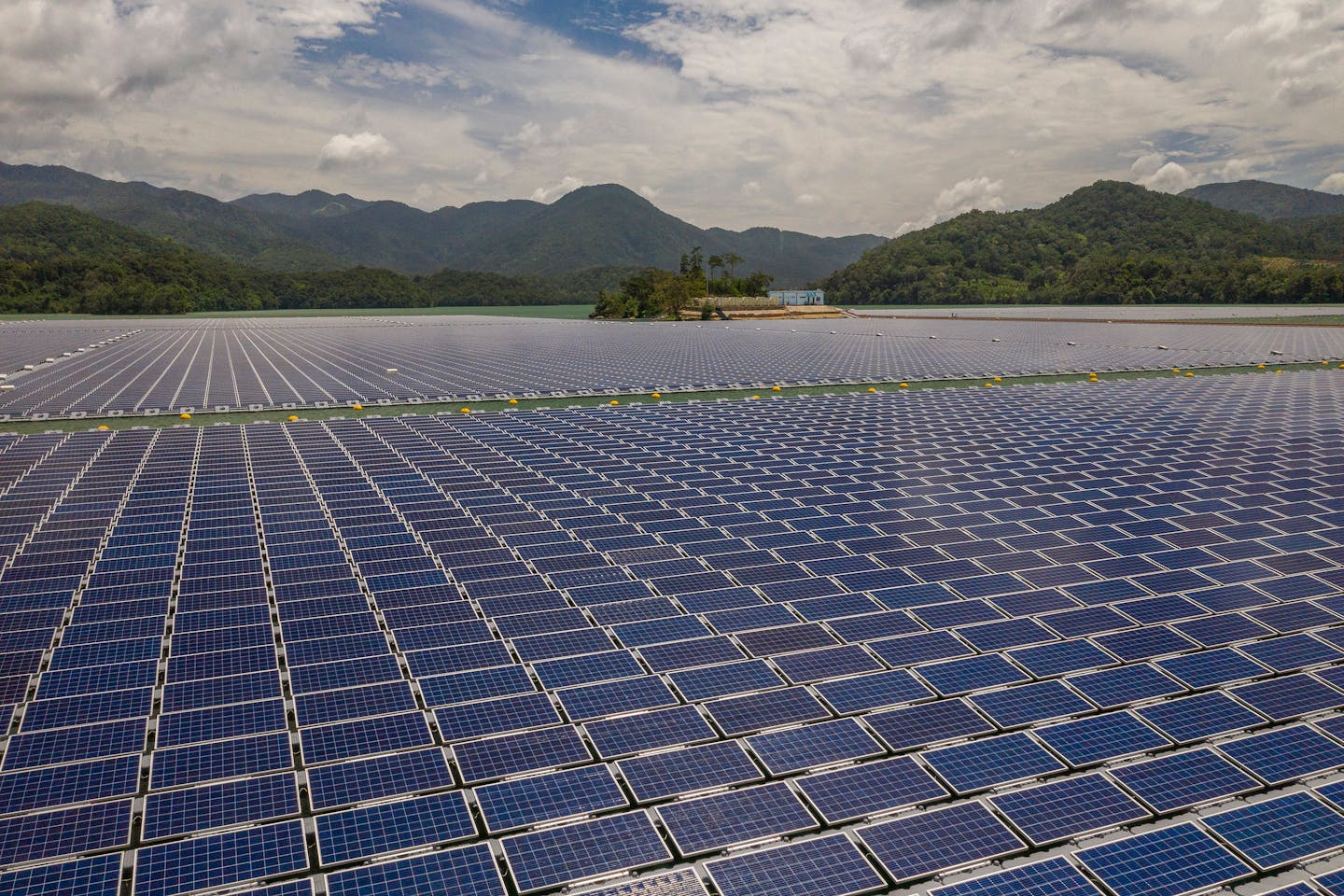
Malaysia, Thailand, and Indonesia have initiated new climate action plans under the Paris Agreement, aiming for significant emissions reductions and cleaner futures. Malaysia set its first absolute-emissions reduction goal, Thailand advanced its net-zero target to 2050, and Indonesia confirmed its ambition for net zero by 2060. However, robust implementation is essential, particularly in the power sector, requiring grid upgrades, market reforms, and decarbonisation of heavy industry. The urgency for action is compounded by economic pressures and potential climate delayism, risking stagnation in the transition to clean energy. Southeast Asia must commit to necessary reforms to avoid merely supplementing fossil fuels with renewables.
Bolivia, Cambodia, Denmark, Egypt, Estonia, Ethiopia, Ghana, Hungary, India, Indonesia, Japan, Malaysia, Peru, Philippines, Poland, Republic of Korea, Romania, Thailand, Tunisia, United Kingdom, Viet Nam | Financial services
Climate action can unlock Southeast Asia’s future competitiveness
Early 2026 in France is marked by an unusual apolitical atmosphere despite looming municipal and presidential elections. Key political processes, such as the budget debate, reveal a lack of clear government initiative or opposition challenge, reflecting a broader political malaise influenced by international events. The rise of non-partisan candidates, even in major cities, and Marine Le Pen's subdued stance during her appeal trial highlight this trend. The government plans to pass the 2026 budget using Article 49.3 of the Constitution after failing to secure parliamentary support, relying on a tacit non-censure agreement with the Socialist Party, which gained social concessions funded by a surcharge on large companies to avoid raising household taxes.
[Decoding France] - All's Well That Ends Well ?
The study explores the complex interplay between collaborative and data governance in inter-organizational data ecosystems, emphasizing the limitations of treating these dimensions separately. By analyzing five data ecosystems through a multiple case study approach, a conceptual framework for Integrated Governance is developed. This framework identifies 24 core relationships between the two governance dimensions and categorizes them into causal, explanatory, concurrent, chronological, and overlapping types. The findings provide a holistic perspective aimed at enhancing the design and management of data ecosystems.
ICT, Health
Integrated governance in data ecosystems: A conceptual framework consolidating collaborative and data governance

Indonesia's rapid expansion of captive coal plants to support its nickel industry threatens the country’s climate goals and public health. Current operational and planned captive coal capacity has reached 31 gigawatts (GW), tripling since 2023. This surge significantly outpaces Australia's coal fleet and is nearing Germany’s total. The lack of transparency in regulatory assessments, combined with exemptions under Presidential Regulation No. 112, risks locking Indonesia into a high-emissions future, potentially resulting in 27,000 additional pollution-related deaths and a $20 billion economic burden. Failure to decarbonize could hinder Indonesia's integration into global green supply chains.
Indonesia
Indonesia’s massive captive coal plans are putting climate targets and economy at risk: study
AI-augmented policy analysis enhances "sentiment-aware policy design," allowing governments to better understand public sentiment around policies. Unlike traditional tools, AI can assess political risks and build coalitions by considering public reactions to terminology and timing in policy implementation. It enables near-real-time sentiment analysis, ensuring that policies are aligned with current voter concerns. By highlighting discussions across various platforms, AI can help governments become more responsive and aware of the political implications of their decisions. Ultimately, AI enables the integration of technical proficiency with political responsiveness, fostering greater public trust in democracies.
Education
How AI Could Restore Trust in Democratic Governance
Zhang Youxia, vice-chairman of China’s Central Military Commission (CMC) and the highest-ranking military official after Xi Jinping, was publicly purged alongside General Liu Zhenli amid widespread anti-corruption investigations. Only two of the seven CMC members appointed in 2022 remain, signaling a significant reshuffle reminiscent of Cultural Revolution-era military purges. The purge reflects deep-rooted corruption endemic in the PLA and political moves to consolidate Xi Jinping's absolute control over the military. Accusations combine both corruption and political disloyalty, highlighting the intertwined nature of party loyalty and military leadership in China.
The Purge of Zhang Youxia: Reading China’s Army-Party Relations Through Tea Leaves
Global leaders aim to reverse nature's degradation by encouraging private investment through nature markets, which trade credits representing ecological improvements. A new study outlines a checklist to assess the credibility of these nature credits. Key factors for success include ensuring that credits genuinely measure environmental improvements, establishing verifiable project additionality, and maintaining public data transparency. Historical evaluations show significant variation in effectiveness among different nature markets. Laws and regulations are also crucial for long-term accountability, ensuring that these systems can attract sustained investment while delivering real ecological benefits.
Financial services
How to make sure the nature credits you buy are real – new research

Public attitudes toward academic freedom reveal significant divisions linked to political ideology and trust in expertise. Research shows that right-leaning individuals tend to support academic freedom and oppose restrictions on offensive research, while left-leaning individuals often prioritize accountability and may endorse limits on controversial findings. Trust in scientists enhances support for academic freedom, particularly in Japan, where deference to expertise is stronger. These insights indicate that debates over academic freedom are deeply rooted in differing values about autonomy versus accountability, complicating consensus and suggesting the need for nuanced discussions that consider these varied perspectives.
How political leanings affect views on academic freedom – new research

Iran's protests stem from not only political repression and economic strife but also severe environmental crises, including water shortages, air pollution, and land subsidence. A significant loss of groundwater has led to water bankruptcy, affecting millions. Subsidence rates threaten infrastructure and heritage sites, while hazardous air quality contributes to health emergencies. Chronic electricity shortages exacerbate the situation, forcing inefficient fuel use. Decades of prioritizing ideological goals over environmental governance have deepened the crisis, leading to unrest primarily in regions suffering from these compounded environmental issues.
Iran’s biggest centres of protest are also experiencing extreme pollution and water shortages