Europe aims to reduce its dependence on US internet technology due to concerns over vulnerability from geopolitical disputes and technical failures. Currently, US firms control about 70% of the European cloud computing market, which heightens risks for both public and private sectors. Initiatives for digital independence are emerging, such as a project in Helsingborg testing responses to digital blackouts and Schleswig-Holstein's shift to open-source technology. The EU is promoting digital sovereignty through frameworks that prioritize European control over data, emphasizing the importance of treating digital infrastructure with the same significance as physical infrastructure.
Africa | Financial services, ICT
Europe wants to end its dangerous reliance on US internet technology

Donald Trump, in his second presidency, is challenging the international order with aggressive actions, including threats to annex Greenland, which prompts a disjointed response from European leaders. French President Emmanuel Macron adopts a confrontational stance, labeling Trump’s approach as a form of colonialism, while German Chancellor Friedrich Merz advocates for de-escalation. Italian Prime Minister Giorgia Meloni aims to mediate, maintaining popularity amid her cautious relations with Trump. The uncertainty within Europe potentially weakens collective deterrence against U.S. aggression. Increasing hostility towards Trump among Europeans signals a demand for clearer, firmer responses to uphold foundational security principles.
Trump is testing Europe – and the clock is ticking
U.S. President Trump's renewed efforts to incorporate Greenland, an autonomous Danish territory, into the United States challenge the sovereignty of both Greenland and Denmark and threaten EU member states supporting the territory through tariff threats. The EU has limited military options but can respond economically, primarily through the Anti-Coercion Instrument (ACI), designed to deter and counter economic coercion. Though untested and politically challenging, activating the ACI offers a structured, non-escalatory way to demonstrate EU resolve. To implement effective economic countermeasures within months, the EU must trigger the ACI promptly. While political will and coordination remain significant hurdles, the stakes for European sovereignty are high.
Positioning the Anti-Coercion Instrument in the Greenland Crisis
Research by Eszter Kovács Szitkay, Dániel Oross, and Alexandra Kiss analyzes the institutionalization of institutions of citizen participation (ICPs) in Hungary, focusing on their effectiveness in a hybrid regime. The study evaluates five Hungarian ICPs—open primaries, referenda, national consultations, public hearings, and citizens’ assemblies—through a three-step assessment framework. Findings reveal that mere institutionalization does not ensure the quality and impact of these democratic innovations, highlighting the challenges within Hungary's illiberal political context.
A Chapter on Institutionalization: The Use and Misuse of Institutions of Citizen Participation in Hungary
The United States has proposed the "Trump Route for International Peace and Prosperity" (TRIPP) as part of peace negotiations between Armenia and Azerbaijan, aiming to connect Azerbaijan with the exclave of Nakhchivan. The agreement, reached after the 2020 ceasefire, includes commitments to mutual sovereignty, the establishment of diplomatic relations, and border demarcation efforts. However, it lacks direct references to the rights of displaced Karabakh Armenians or the status of Armenian prisoners. Political sensitivities, particularly concerning Armenia's constitution and ongoing negotiations over transport routes, pose challenges to long-term stability and ratification of the agreement.
Armenia
Can the “Trump route” bring peace to Armenia and Azerbaijan?
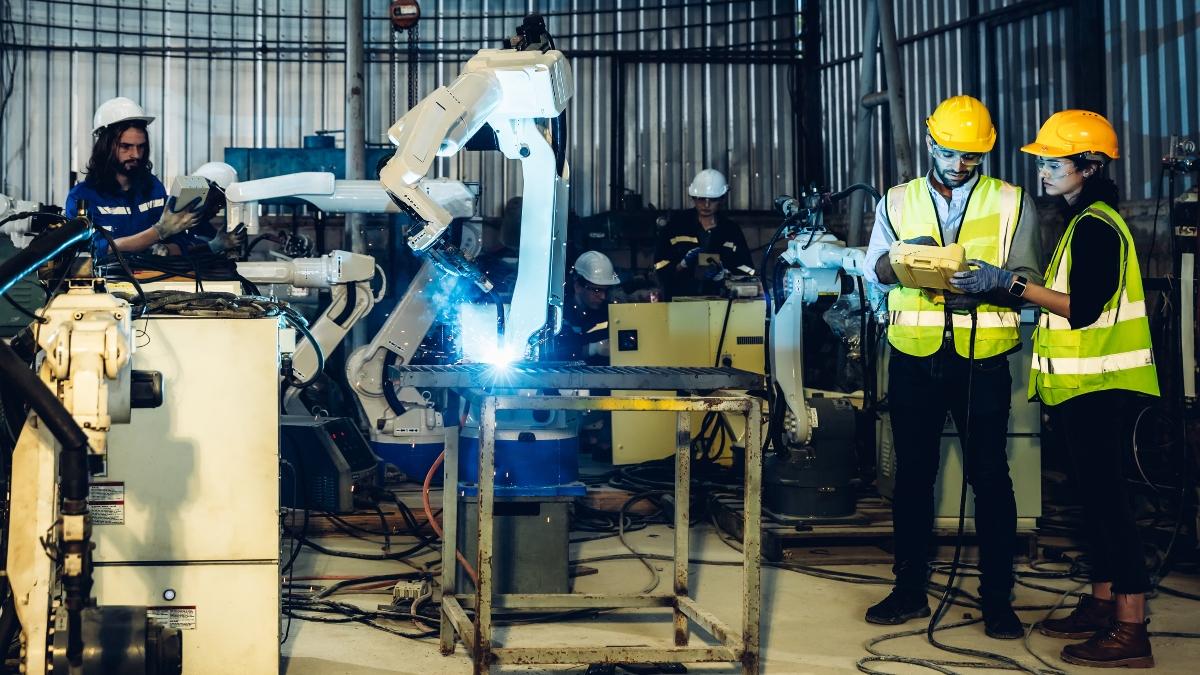
Automation in British factories is linked to increased employment rather than job loss, according to research by Aniket Baksy, Daniel Chandler, and Peter John Lambert. Analyzing data from nearly 27,000 manufacturing plants between 2005 and 2023, the study shows that the adoption of CNC machines and industrial robots leads to significant job growth—6% and 8% respectively—over four years. Increased usage of these technologies is primarily seen in larger plants, resulting in a 9% rise in employment when additional CNC machines are installed. Overall, these findings suggest that automation expands productivity and employment rather than displacing workers.
Education
Automation is not hollowing out British factory jobs
Richard R. Khan's book, "The AI Glossary: AI & Emerging Tech Explained," provides comprehensive definitions and insights into AI and related technologies. Each entry not only defines terms but also connects concepts, visuals, and real-world applications. Topics include AI, machine learning, quantum computing, robotics, IoT, cloud, cybersecurity, XR, and generative AI. The book emphasizes ethics, governance, and bias, catering to students, professionals, policymakers, and curious readers by enhancing understanding and decision-making in the tech landscape.
Education
The AI Glossary: AI & Emerging Tech Explained

Chinese farmers are facing increased challenges due to climate change, causing disruptions in traditional agricultural practices tied to the 24 solar seasons. Abnormal weather patterns, such as dry springs and excessive rainfall, have forced farmers like Mr. Hong to adapt by changing crops and planting schedules. Despite government policies aimed at improving climate resilience, gaps remain between top-level strategies and grassroots implementation. Many farmers lack awareness of these policies and face obstacles in adapting to extreme weather, often opting to do nothing due to a lack of concrete agricultural guidance and local government support.
Financial services, Health
How to improve Chinese farmers’ resilience to climate change
Shifting from vendor-led digital systems to government-designed AI tools can improve public services and tax administration in Pakistan. Many citizens struggle to navigate fragmented, complex government services and tax processes. Involving civil servants in tool design fosters ownership and ensures solutions meet user needs. Recent reforms streamlined tax filing, enhance compliance, and optimize processes, exemplifying efficiency through co-design. Challenges include data compatibility, skills gaps, and maintaining inclusivity. Effective integration of AI in government requires clear governance, coordination, and sustained funding, paving the way for better accessibility and transparency for citizens.
Education
To Improve Government Efficiency, Let Officials Design the AI Tools

The UK has agreed to transfer sovereignty over the Chagos Islands to Mauritius by May 2025, a move supported by the Trump administration, which has been criticized as a strategic error. The Chagos archipelago has historical ties to colonial Mauritius and was separated by the UK in 1965 to serve military interests, notably hosting a US base on Diego Garcia. Recent legal pressures have made Britain's position untenable, leading to negotiations for a settlement, which maintains US military access while addressing colonial grievances. Critics highlight the potential implications of this decision amidst rising global tensions and China's naval expansion in the region.
Why Trump is attacking the UK over Chagos Islands – and what it tells us about Britain’s place in the world
The relevance of American studies is underscored by current political events under Trump's presidency, characterized by a departure from traditional US behavior and an unpredictable approach to foreign policy. American studies contextualizes contemporary conflicts, such as political polarization and racial tensions, within historical frameworks, emphasizing democracy as an ongoing project shaped by struggles for participation and civil rights. Historical interventions and immigration debates illustrate the complexities of American identity and governance. Understanding these themes is crucial for anticipating societal instability and reinforcing the resilience of the constitutional order amidst challenges.
Why everyone should be a student of American studies

The Trump administration's withdrawal from major international climate organizations like the UNFCCC and IPCC marks a significant shift in climate policy, moving away from profit-driven obstruction to a more ideological stance. Historically, U.S. climate resistance aimed to protect industry profits; however, Trump’s actions seem to undermine even corporate interests in clean technology. This resistance is rooted in a conservative backlash against modern values and a nostalgic longing for a past where traditional hierarchies dominated. The administration's dismantling of scientific oversight reflects a rejection of climate science that conflicts with their worldview, prioritizing ideological conformity over economic rationale.
US climate obstruction used to be about profits. Trump’s scorched earth policy is something else
The EU's Artificial Intelligence Act, now being implemented, will impact UK companies, regulators, and consumers despite Brexit. The act aims to enhance accountability and safety in AI applications in daily life, particularly in high-risk areas like employment and healthcare. UK firms with operations in the EU must comply with these regulations or face sanctions. While the UK prefers a less prescriptive regulatory approach, it risks regulatory misalignment with the EU's standards, potentially leading to increased costs. Many UK businesses may opt to meet EU standards from the start to simplify compliance across markets.
Education
The EU’s new AI rulebook will affect businesses and consumers in the UK too

Business leaders are increasingly adopting artificial intelligence in various organizational domains, including hiring and marketing. However, AI can reflect human biases, which influences its effectiveness. Recognizing how biases manifest in AI systems and establishing strategies to mitigate them can enhance trust in AI's application and improve organizational outcomes. The insights from experts in management and organizations highlight the intersection of human psychology and AI-driven contexts in shaping emotions and attitudes.
The Insightful Leader Live: How AI Reflects Human Bias … and What to Do about It.

AI disclosure is becoming essential across various professional roles as AI tools integrate into daily tasks. At the individual level, many workers use AI without disclosing it, creating cognitive dissonance between ethical concerns and actual practices. This leads to an "AI disclosure penalty," where work is rated better when AI involvement is hidden. Organizations also face challenges in establishing trust, with a lack of governance frameworks and policies regarding AI disclosure. Companies risk damaging reputations if undisclosed AI use is revealed. On a national scale, there is ongoing debate about regulatory mandates for AI transparency, reflecting broader cultural values.
Education
Why AI Disclosure Matters at Every Level

AI deployment in organizations often prioritizes automating the highest-paid positions, which can be misguided. Studies reveal that introducing AI can disrupt peer monitoring and change team dynamics, leading to unintended consequences in motivation and wages. Leaders should view AI as a system-wide redesign rather than a cost-cutting measure. Effective strategies include randomizing AI roles to foster uncertainty, protecting connector roles vital for peer monitoring, and recognizing that sometimes it’s beneficial to leave AI capacity underutilized to maintain individual effort importance.
Who Gets Replaced by AI and Why?
Latin America has an opportunity to enhance its competitiveness through artificial intelligence (AI), which is reshaping industries and economies. The report analyzes the region's structural foundations, presents findings from a business survey on AI adoption, and showcases local and global best practices. It outlines ten strategic actions to formulate a roadmap for boosting Latin America's AI capabilities, promoting regional collaboration and sustainable growth in response to technological advancements.
Angola, Bolivia, Colombia | Education
Latin America in the Intelligent Age: A New Path for Growth

AI is revolutionizing industries and governments, offering unprecedented opportunities for growth in Latin America, which has historically faced productivity challenges. The report features a literature review on the region's structural foundations, findings from a business survey on AI adoption, and best practices endorsed by industry leaders. It outlines ten strategic actions to convert research into practical insights, creating a roadmap aimed at enhancing Latin America's AI competitiveness and fostering sustainable, people-centric growth in the context of technological transformation.
Angola, Colombia | Education
Latin America in the Intelligent Age: A New Path for Growth

The real estate market in 2026 is expected to exhibit stability, with national house prices remaining relatively flat and facing ongoing challenges in both residential and commercial sectors. An affordability crisis persists due to a significant imbalance in housing supply and demand, with many households struggling to manage high housing costs. Solutions hinge on increasing construction, making financing accessible, and prioritizing affordable homeownership. The decline in starter homes exacerbates accessibility issues, as rising construction costs and regulatory barriers push developers toward higher-end properties, limiting affordable options for first-time buyers.
Financial services
Real Estate and Housing Market Outlook | Benjamin Keys
Trump's administration has threatened tariffs on eight European nations, including the UK, over military support for Danish sovereignty in Greenland. The new tariffs, starting at 10% and rising to 25%, are intended to pressure these countries economically while asserting U.S. interests in Greenland for strategic purposes. Unlike China's retaliatory measures during its trade war with the U.S., Europe's position is complicated by varying dependencies on the U.S. and NATO security. Five potential responses for Europe include accepting U.S. tariffs as a permanent reality, diversifying trade partnerships, enhancing defense spending, reevaluating UK-EU relations, and exploring non-trade solutions to territorial disputes.
Europe has five options for responding to Trump’s Greenland threats. None of them look good