
Global climate finance reached $2 trillion in 2024, yet a significant gap persists between financial commitments and their execution, particularly in adaptation and nature-positive investments in emerging economies. AI can bridge this gap by transforming fragmented data into actionable insights, thereby facilitating the mobilization of capital toward impactful projects. It enhances the efficiency of financing decisions, crucial for vulnerable communities facing climate risks. The use of AI in areas like energy transition and ESG priorities helps optimize financing and improve resource management, supporting initiatives such as renewable energy and nature conservation while ensuring inclusivity for underserved groups.
Financial services, Education
How AI can help close the finance gap between climate ambition and action

Conspiracy theories have gained significant traction in Spanish politics, being exploited by both the radical right and left to manipulate public perception and undermine institutions. Historical instances of conspiracy thinking, including anti-Semitic and anti-Freemason narratives, have evolved over time. Recent events, such as terrorist attacks and the COVID-19 pandemic, have fueled accusations against the state, particularly by the radical right party Vox. The rise of right-wing populism has accelerated the spread of conspiracy beliefs like the "great replacement theory," which posits that immigrants threaten native populations. This has led to increased support for extremist parties, particularly among the youth.
Latin America
How conspiracy theories entered the mainstream in Spain

In 2026, cybersecurity is increasingly defined by rising threats, geopolitical fragmentation, and a widening technology gap. The need for enhanced collective cyber resilience is both an economic and societal imperative. As artificial intelligence rapidly transforms the cybersecurity landscape, it both aids in threat detection and facilitates sophisticated attacks. Trust and cooperation among nations are eroding due to geopolitical tensions, heightening cybersecurity risks, especially for small and medium-sized organizations. Executives emphasize the necessity of collaborative efforts, intelligence sharing, and skill development to bolster defenses against evolving cyber challenges.
Africa | Financial services, Health, Education, ICT
As cybersecurity risks grow, here are the priorities of executives and cyber leaders

Before superintelligent AI can effectively tackle global challenges, a consensus on what constitutes 'solved' is essential. This involves defining success metrics for AI applications in complex areas such as economic disparity, environmental sustainability, and societal well-being. Current AI optimization may lead to unintended consequences if values and trade-offs are not clearly articulated. Moreover, differing priorities across cultures complicate the alignment on objectives. Establishing shared frameworks and specialists to translate human values into precise AI specifications is crucial for the ethical deployment of these technologies.
Education
Before superintelligent AI can solve major challenges, we need to define what 'solved' means

Southeast Asia's energy demand is projected to double by 2050, necessitating a shift toward diverse, clean energy solutions to maintain economic resilience and competitiveness. Industrial clusters in the region, such as those in Indonesia, Malaysia, Singapore, and Thailand, are pivotal in driving the energy transition by fostering collaboration among companies. These clusters facilitate partnerships, support clear policy frameworks, scale innovative low-carbon technologies, and attract investment through blended finance. Initiatives like the Indo-Pacific Net-Zero Battery Materials Consortium and Sarawak’s energy policies exemplify strategies that enhance low-carbon industrial transformation and position ASEAN in the global clean-tech supply chain.
India, Indonesia, Philippines, Singapore, Thailand | Financial services, ICT
How industrial clusters can power ASEAN’s low-carbon future

The insurance sector is vital in combating climate change, with potential costs reaching $38 trillion annually by 2050. It can serve as a model for innovation in sustainability and profitability. By increasing insurance coverage, the sector can foster a virtuous cycle that enhances resilience against climate risks. Insurers manage substantial global capital, enabling them to direct funds toward sustainable initiatives and support global goals. Historical precedents show that insurance can improve societal risk management through proactive measures, transforming challenges into opportunities for sustainable development and reduced inequality.
ICT, Financial services, Health
Insurance and asset managers can trigger a virtuous cycle for climate action

In 2026, the digital asset landscape is poised for significant evolution driven by enhanced regulatory clarity, increased asset tokenization, and the convergence of traditional finance (TradFi) with decentralized finance (DeFi). Regulatory advancements, particularly in regions like Singapore, the UAE, and the US, support the responsible scaling of digital innovations. Stablecoins are emerging as crucial links between fiat and decentralized systems, while tokenization is set to expand market access by digitizing various asset classes. The integration of blockchain technology by conventional financial institutions further facilitates improvements in transaction efficiency and transparency, marking a pivotal year for the adoption and infrastructure of digital assets.
Financial services, ICT
A digital economy at an inflection point: what to expect for digital assets in 2026

A global industrial transformation is in progress, driven by shifting geopolitics that prioritize energy security and competitiveness. Current investment in industrial transformation is insufficient, at only $30-50 billion annually, hindering essential decarbonization projects. Well-organized industrial clusters play a crucial role by aggregating demand, sharing infrastructure, and coordinating investments, making transformation more feasible while preserving jobs. The World Economic Forum’s Transitioning Industrial Clusters initiative demonstrates the potential for significant CO2e abatement and economic contributions. The report provides insights on organizing clusters and structuring risk-sharing, serving as a resource for policy-makers, financiers, and industry leaders pursuing sustainable industrial transformation.
Belgium, Benin, Bolivia, Burkina Faso, Canada, Chile, Colombia, Denmark, Egypt, Estonia, Ethiopia, Georgia, Germany, Ghana, Hungary, Iceland, India, Indonesia, Ireland, Israel, Jamaica, Japan, Jordan, Kenya, Mozambique, Netherlands, Peru, Philippines, Poland, Republic of Korea, Russian Federation, Senegal, Singapore, South Africa, Sweden, Switzerland, Taiwan, China, Tanzania, Thailand, Tunisia, Uganda, Ukraine, United Arab Emirates, United Kingdom, Zimbabwe | Financial services, ICT, Health, Education
From Blueprint to Reality: A Stronger Business Case for Shared Energy Infrastructure

ASEAN's rapid industrial growth is challenged by rising energy demand and an energy transition. The region, home to over 670 million people and the world’s fifth-largest economy, faces risks from fossil fuel dependence, fragmented policies, and high financing costs that threaten energy security and competitiveness. The white paper presents industrial clusters as essential for translating strategies into actionable plans. It includes recommendations for policy alignment, ecosystem strengthening, and large-scale finance mobilization, along with a cluster playbook and case studies. These strategies aim to advance low-carbon industrial transformation and enhance resilience in the region.
Australia, Cambodia, Denmark, Estonia, Ghana, India, Indonesia, Japan, Kenya, Malaysia, Myanmar, Philippines, Republic of Korea, Saudi Arabia, Senegal, Singapore, South Africa, Taiwan, China, Tanzania, Thailand, Uganda, United Arab Emirates, Viet Nam | ICT
Industrial Transformation in ASEAN: A Cluster-Driven Model for Regional and Global Collaboration

Climate litigation is rapidly evolving, with over 3,000 climate-related cases heard globally, posing a rising risk for businesses, particularly in fossil fuel sectors. Three international courts have provided advisory opinions on climate change, suggesting that greenhouse gases are pollutants and emphasizing the obligation of states to reduce emissions. These non-binding rulings could influence future legal responsibilities for companies. Many cases focus on corporate deception and human rights violations, and trends indicate that courts are becoming more receptive to climate-related claims. As litigation risks escalate, companies, particularly in carbon-intensive industries, may face financial implications from unfavorable court decisions.
Climate litigation is evolving - and businesses should take notice

AI and circularity are essential for future material innovation, driven by the need for efficient materials and systems that recycle existing ones amid climate challenges. The transition to net-zero emissions is fundamentally a materials transition, requiring approximately 6.5 billion tonnes of materials by 2050. AI can revolutionize materials science by identifying new materials faster through generative models and autonomous labs. The emerging ecosystem includes foundational models, robotic labs, enterprise platforms, and improved experimental hardware. Innovations promise advancements across energy, mobility, consumer goods, and electronics, potentially transforming material development from serendipitous discovery to a computation-guided process.
Education
AI and circularity will be key to the future of materials in the AI age

Transformative science is essential for addressing global challenges like climate change, health crises, and resource scarcity. Its potential can be fully realized through investment, trust, and open access to research outcomes. Collaborative, open science enables cross-border cooperation and builds a common knowledge base, enhancing resilience and fostering innovative approaches to shared problems. By maintaining transparency and effectively communicating scientific findings, trust in science can be rebuilt, allowing for evidence-based policymaking that meets the needs of society. These principles underpin the establishment of the Frontiers Science House at the World Economic Forum Annual Meeting 2026.
ICT, Health, Education
Five reasons transformative science needs to be open to the world
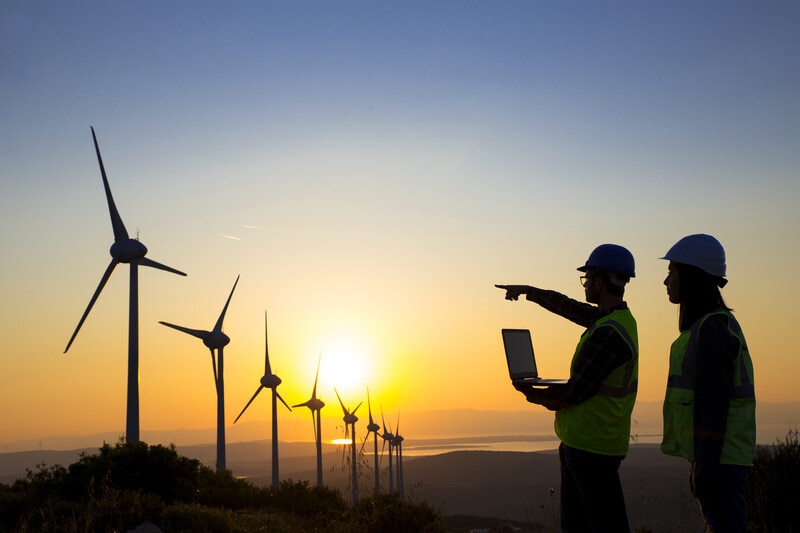
Rising global electricity demand necessitates improvements in power infrastructure, which can be achieved economically through artificial intelligence (AI) and digital technologies. AI tools can enhance existing grid performance and unlock hidden capacity, crucial for strengthening energy security. Transition fuels, such as liquefied natural gas, must be balanced with renewable sources to meet demand while ensuring cost-effectiveness and regulatory support. Optimizing energy use by integrating digitalization can increase efficiency and extend asset lifespan, enabling countries to achieve significant production gains without extensive infrastructure investment. The key to sustainable energy security lies in enhancing connections among assets, data, and expertise.
Africa | Financial services, ICT, Education
Unlocking hidden power: Using AI to drive efficiency and improve energy security
Social entrepreneurs and innovators, organized by the Schwab Foundation, have positively impacted over 950 million lives globally while mobilizing more than $1 billion to tackle challenges in healthcare, education, climate action, and economic inclusion. Facing funding cuts and cash-flow issues, 82% of these innovators adapted by diversifying income sources and adopting blended financing models. The foundation fosters collaboration, unites over 510 members from 190 countries, and awards outstanding innovators annually. The movement pivots towards a sustainable future, emphasizing empathy in innovation and viewing underserved communities as co-creators of change.
Education
How 510 Social Entrepreneurs and Innovators have improved the lives of 950 million people worldwide

Small and medium-sized enterprises (SMEs) account for approximately 90% of global businesses, creating most jobs and contributing 50% of global GDP. Despite their vital role, many small businesses fail due to a lack of access to capital and digital skills. Policymakers are urged to enhance financial education, support digital payment adoption, and improve access to funding. Initiatives such as Visa's training programs and partnerships aim to upskill entrepreneurs and promote digital transformation. Addressing these challenges is crucial for economic resilience and driving growth, particularly in emerging markets where SMEs are vital for job creation.
Burkina Faso, Egypt, Eswatini, Ethiopia, Malawi, Rwanda, Senegal, South Africa, Tanzania, Uganda | Financial services, ICT, Education
Driving global growth through the power of small business

Global electricity waste exceeds hundreds of billions annually, driven by a rise in demand and renewable energy fluctuations. AI technologies are essential for improving thermal and building efficiency, reducing emissions, and enhancing grid flexibility. Collaboration across industries and workforce upskilling are crucial for advancing demand-side innovation. Trane Technologies aims to cut customer emissions by 1 gigaton while optimizing energy management in buildings and data centers. Key initiatives include AI-driven HVAC solutions that significantly lower energy use and partnerships for thermal management in AI factories. Efficient energy demand management promises substantial returns for customers and the environment.
ICT, Education
How to rethink energy demand to build a sustainable, resilient future

China has been a significant driver of clean technology adoption in developing countries, primarily through the provision of affordable solar panels and electric vehicles (EVs). A recent survey revealed that over 80% of participants in developing regions express interest in these technologies, with particularly high interest in sub-Saharan Africa and Latin America for Chinese-made products. China's clean tech influence is bolstered by its soft power strategy, showcased at global forums like COP30, which contrasts with perceptions of Western countries. This shift indicates a growing geopolitical landscape where China's clean technology leadership may reshape international relations.
Egypt, Taiwan, China
China’s clean tech charm offensive wins Global South hearts and minds

Fusion energy has the potential to become a scalable, zero-carbon baseload energy source, essential for meeting the rising global electricity demand projected to increase by 40% in the next decade. Driven by advances in fusion technology and increasing investments, fusion could support evolving needs in a world where electrification, AI, and industrial reshoring are creating unprecedented energy demands. Fusion power offers advantages such as high energy output with minimal fuel, safety from meltdowns, and reduced regulatory burdens. It could enhance energy security by minimizing dependence on finite resources and mitigating geopolitical tensions, fostering economic opportunities in sectors like manufacturing and data centers.
Education
How fusion energy and AI can power the next era of energy demand

The rapid rise of artificial intelligence (AI) in enterprise settings faces significant challenges due to the need for clean data and high accuracy. While consumer adoption of AI is straightforward and often forgiving, enterprise environments demand precision, governance, and seamless integration into workflows. Only 5% of custom AI projects reach production, as organizations struggle to translate AI potential into operational change. Success hinges on embedding forward-deployed engineers directly within teams to ensure effective integration and continuous adaptation, moving away from traditional centralized approaches.
Education
How to make AI work in your enterprise through integration, not silos

Real estate is undergoing significant transformation as 90% of companies adopt AI solutions, yet success hinges more on people than technology. While many organizations launch AI initiatives, only 5% achieve their objectives due to a lack of strategic planning and readiness. The industry's workforce faces gaps in AI training, contributing to ineffective tech strategies. Successful companies invest in human capital and exhibit strong leadership, fostering innovation and organizational resilience. Leaders must build capacity to adapt, ensuring long-term success in navigating the evolving landscape of AI and market demands.
Education
Why real estate's AI success depends more on people than technology