
Hurricane Delta's aftermath in Mexico showcased the economic value of natural habitats, as insurance payouts funded coral reef restoration, aiding coastal protection and tourism. Sustainable finance is evolving to recognize that ecosystems significantly impact costs, risks, and overall economic stability. The decline of natural systems leads to higher food prices and increased insurance costs. Initiatives like Belize's debt relief in exchange for ocean protection demonstrate the financial benefits of safeguarding ecosystems. Recognizing nature as integral to economic health can enhance resilience and reduce financial risks associated with environmental degradation.
Financial services
The economics of climate risk ignores the value of natural habitats
The Tropical Forest Forever Facility (TFFF), launched by the Brazilian government during COP30, aims to finance the conservation and restoration of tropical rainforests through blended finance. While it seeks to address the funding gap in forest finance required to meet Rio Convention targets, significant challenges remain. Germany and other European nations have pledged support, but overall forest finance is insufficient compared to what is needed. The TFFF plans to mobilize USD 125 billion through long-term loans and private investments. It incentivizes maintaining low deforestation rates, providing payments per hectare for standing forests. Effective forest management must balance carbon sequestration with biodiversity and local rights considerations.
Financial services
The Tropical Forest Forever Facility and Its Role in International Forest Finance
Cyber risk is rapidly evolving, driven by AI advancements, geopolitical instability, and rising cyber-enabled fraud, which has now surpassed ransomware as the foremost concern for CEOs. In 2025, 73% of executives reported being impacted by cyber-enabled fraud. As organizations struggle with declining confidence in national cyber preparedness, collaboration and shared intelligence become essential. Key challenges identified include the evolving threat landscape, vulnerabilities in supply chains, and shortages in cybersecurity expertise. AI plays a dual role as both a defensive asset and a source of new threats, shifting concerns towards data leaks and misuse.
Africa | ICT, Financial services, Education
Cyber risk in 2026: What executives must know about AI, fraud, geopolitics and more
The Global Cybersecurity Outlook 2026 analyzes emerging cybersecurity trends influencing global economies and societies. Key factors include accelerated AI adoption, geopolitical fragmentation, and increasing cyber inequity. As attacks become more sophisticated, organizations and governments must adapt to persistent challenges and capability gaps. The report highlights AI's dual role in enhancing defenses and escalating attacks, while geopolitical concerns significantly shape cyber risk strategies. Notably, a growing number of organizations are prioritizing AI security, reflecting the urgency of addressing vulnerabilities. Strengthening collective cyber resilience is vital for economic and societal stability amid these evolving risks.
Chad, Georgia, Guinea, Mali | Financial services, Health, Education, ICT
Global Cybersecurity Outlook 2026
AI-enabled agricultural intelligence is essential for addressing the challenge of feeding a projected global population of nearly 10 billion by 2050. This approach combines data, technology, and agronomic expertise to enhance productivity without expanding farmland. Current challenges include rising costs, market volatility, and extreme weather, leading to a significant decline in the number of farms. Despite barriers such as a digital divide and high initial costs, innovations in AI and digital tools are revolutionizing farming practices. These technologies enable precise farming through advanced data analysis, improving crop yields, sustainability, and profitability while ensuring farmers maintain control over their data.
Education
How AI is enabling agricultural intelligence and revolutionizing farming
New, data-driven energy technologies are transforming the energy landscape into decentralized, omni-directional networks. This shift is crucial for addressing the growing energy demand in the face of infrastructure constraints. As artificial intelligence (AI) fuels economic growth while consuming vast amounts of energy, optimizing energy systems for efficiency and resilience becomes paramount. Integration of digital intelligence, IoT, and advanced AI can enhance energy consumption, reduce waste, and foster autonomous energy systems. These innovations are essential for sustainable growth in a volatile geopolitical environment, ensuring networks can adapt to disruptions while delivering greener electricity.
ICT, Education
Unleashing energy technology to create a sustainable, resilient future
Europe and the EU are often perceived as being in a state of permanent crisis, tied to a long history of complex challenges. Elia R.G. Pusterla and Francesca Pusterla Piccin highlight that the EU's ongoing crises stem from its inability to decisively act and embrace its political responsibilities. They argue that the EU must redefine its approach to gain legitimacy and effectively address its unique challenges. By accepting its role and making critical decisions, the EU can transform its crises into opportunities for cohesion and meaningful political action.
Why does Europe always seem to be in crisis?
Global companies are increasingly recognizing the necessity of building "geopolitical muscle" to navigate risks and leverage opportunities in a complex global landscape. A report titled "Building Geopolitical Muscle" outlines five primary components essential for organizations to effectively institutionalize geopolitics in their decision-making. These include establishing a clear mandate for proactive engagement, enhancing intelligence gathering through internal and external channels, designing adaptable operating models, and strategically staffing the function with knowledgeable leaders. The urgency arises from geopolitical disruptions affecting trade, technology competition, and supply chains, necessitating a shift from reactive risk management to proactive opportunity identification.
Belgium, Bolivia, Bulgaria, Denmark, Egypt, Ethiopia, Georgia, Germany, Ghana, Hungary, Iceland, Indonesia, Japan, Jordan, Kenya, Kyrgyz Republic, Luxembourg, Paraguay, Peru, Philippines, Poland, Republic of Korea, Russian Federation, Rwanda, Senegal, Singapore, Sweden, Switzerland, Tanzania, Uganda, Ukraine, United Arab Emirates, United Kingdom | Health
Global companies need to build geopolitical muscle. Here’s how
India and Europe have a significant opportunity to form a strategic partnership amidst global political fragmentation. Both regions, anchored in a rules-based order, share goals of sustainable growth. India's economy is rapidly expanding, driven by a young workforce, extensive infrastructure developments, and significant reforms, positioning it as a global growth engine. In turn, Europe, rich in innovation and advanced manufacturing capabilities, offers essential expertise. This collaboration can create value by combining India's scalability with Europe's precision and capital, addressing common challenges like supply chain dependencies and enhancing resilience in a volatile global environment.
Afghanistan, Australia, Austria, Belgium, Bulgaria, Canada, Czech Republic, Denmark, Egypt, Estonia, France, Georgia, Germany, Ghana, Hungary, India, Indonesia, Ireland, Italy, Kenya, Latvia, Madagascar, Mauritius, Myanmar, Namibia, Nepal, Netherlands, Pakistan, Peru, Poland, Russian Federation, Rwanda, Senegal, Singapore, South Africa, Spain, Sweden, Thailand, Uganda, Ukraine, United Arab Emirates, United Kingdom | Health
India and Europe have a generational opportunity to forge a strategic partnership. Here's why
The revival of Nalanda's spirit emphasizes knowledge’s role in promoting the common good through AI. Addressing challenges similar to those faced in the 5th century, initiatives like India's AI Mission and the UNDP's AI Hub aim to create inclusive knowledge systems that serve historically marginalized communities. These programs focus on equity in access, integrating cultural contexts, and fostering accountability. Efforts include providing low-cost GPU access and developing voice-first applications for the underserved. Global collaborations seek to harness AI for sustainable development, affirming the principle that inclusive knowledge systems foster generative outcomes rather than dominance.
Africa | ICT, Education
AI that serves all: Reviving the spirit of Nalanda for a planetary commons
The year 2025 was marked by tariff volatility, supply-chain fragmentation, ongoing conflicts, and intensifying technological competition, significantly altering global trade and investment. Despite heightened awareness from events like COVID-19, the Ukraine war, and US-China rivalry, many firms remained unprepared for the rapid changes. The report "Building Geopolitical Muscle" by Boston Consulting Group, IMD Business School, and the World Economic Forum guides business leaders in developing the capability to systematically sense, plan, and respond to geopolitical dynamics. Beyond risk mitigation, strong geopolitical insight can enhance brand value, unlock strategic opportunities, deepen policy engagement, and improve commercial positioning. Insights are drawn from over 55 executive interviews and nine cross-sector case studies showing how to turn awareness into action.
Building Geopolitical Muscle: How Companies Turn Insights into Strategic Advantage
Journalists covering climate change in Asia experience significantly higher physical threats compared to their counterparts in Europe and the Americas, with 34% reporting dangers related to their work. A global survey revealed that Asian journalists also suffer more symptoms of post-traumatic stress disorder (PTSD) and receive less psychological support. The region faces the highest disaster risks globally, with notable impacts from climate change. Press freedom in Asia is constrained, with many countries ranked poorly on the World Press Freedom Index due to political repression and threats. The report highlights the urgent need for better support for journalists in the region.
Asia's climate journalists among those most physically threatened for their work
The recent U.S. military intervention in Venezuela, resulting in the removal of President Nicolas Maduro, has sparked worldwide polarization and reflects a shift in the global order. Using the PLUTO framework, key aspects of the current geopolitical landscape are highlighted: it is polarized, evolving, unilateral, tense, and involves various international actors. The motivations behind the intervention are debated, with speculation on oil interests, promoting democracy, countering China, and U.S. political dynamics. Businesses are advised to adapt to this unpredictability through scenario planning, resilience in supply chains, and risk management strategies.
Argentina, Bolivia, Brazil, Chile, Colombia, Costa Rica, Ecuador, El Salvador, Ethiopia, Guatemala, Latvia, Mexico, Moldova, Paraguay, Peru, Philippines, Poland, Portugal, Russian Federation, Spain, Switzerland, Taiwan, China, Ukraine, United Kingdom, Uruguay, Venezuela, Viet Nam | Financial services
Scenario planning for doing business after Venezuela, U.S. unilateralism and an erosion of trust

Trust in automotive AI is crucial for the widespread adoption of AI-enabled mobility solutions. While advanced AI systems are ready, public confidence in their safety and reliability remains low. The societal benefits of automotive AI, including improved road safety and reduced traffic fatalities, necessitate closing the trust gap. Digital trust, defined by explainability, continuous monitoring, and clear accountability for failures, is essential. This requires adherence to safety standards and lifecycle monitoring, as well as evolving regulatory frameworks to ensure reliable, secure, and responsible AI operations in mobility.
ICT, Education
Why trust in automotive AI will determine the future of mobility
Data collectives, including unions and mutuals, are emerging to shift power from mega-platforms to individuals, as exemplified by the formation of the First International Data Union (FIDU). This movement is a response to the growing influence of generative AI like ChatGPT, which has rapidly transformed user interaction online and raised concerns about data ownership and privacy. As traditional regulatory measures falter, data unions offer a promising means for citizens to control their digital identities and advocate for values aligned with their interests.
ICT, Education
Data unions: people-powered data control

Nearly 4 billion people live in urban areas, posing challenges like aging infrastructure and rising energy demands. Integrated smart cities, built through collaboration and innovation, are essential for sustainable urban living. The construction industry must evolve from traditional models to focus on long-term service provision, integrating various urban systems efficiently. This transformation is crucial as the sector accounts for a significant portion of global energy consumption and CO₂ emissions. GS E&C's Life Weaver strategy promotes a holistic urban ecosystem that harmonizes energy, mobility, and data while enhancing sustainability and quality of life.
Africa | Financial services, ICT, Health, Education
Why smart cities must become integrated urban ecosystems
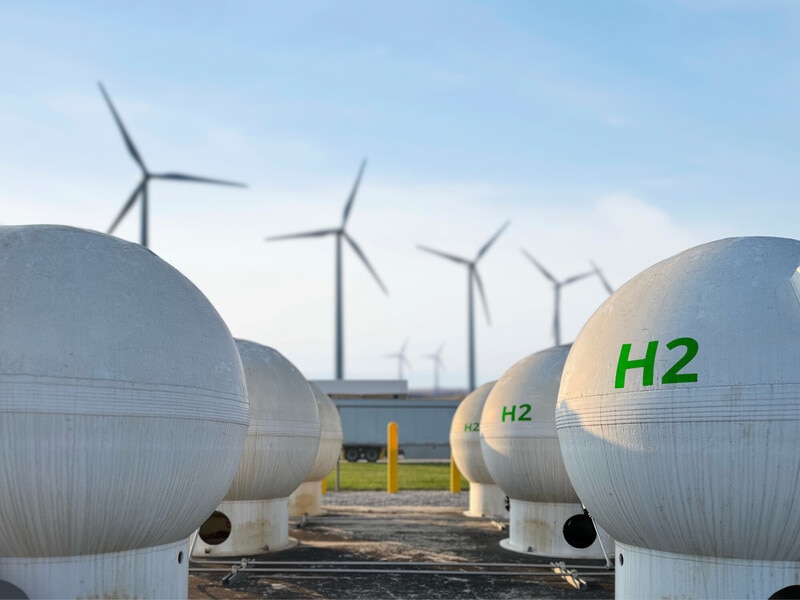
Global partnerships are essential for the effective scaling of hydrogen and its derivatives, which are crucial for decarbonizing hard-to-abate sectors and achieving net-zero goals. Japan is positioned as a leader in this transition, albeit facing challenges like incomplete infrastructure and cost premiums. Recent policy initiatives, such as the Basic Hydrogen Strategy and the Hydrogen Society Promotion Act, aim to mobilize private capital and foster international collaboration. The Japan Hydrogen Fund (JHF) is a key development that channels investment into hydrogen technologies and projects, supporting the maturation of hydrogen ecosystems while enhancing global partnerships.
Japan | Health
Why global partnerships matter for scaling hydrogen
Using novel data and AI technologies in crisis resilience and management is increasingly significant. AI applications range from damage detection to assistance prioritization, enhancing human decision-making. This study outlines a responsible AI roadmap integrated within the Crisis Information Management Circle, based on focus groups and literature review. Key principles include equity, fairness, explainability, transparency, accountability, privacy, security, inter-organizational coordination, and public engagement. The research emphasizes the need for responsible AI practices to address challenges and protect vulnerable populations in crisis situations.
Education
Roadmap Towards Responsible AI in Crisis Resilience and Management

Tesla's Optimus aims to create an all-purpose humanoid robot for factory and home use, targeting a million units in the next decade. The development of generative AI has made the concept of personal robots that understand human emotions feel more achievable. However, the humanoid design poses both practical and emotional implications, as it can help with tasks while also suggesting companionship. There is a concern that over-reliance on robots could diminish human social interactions. The challenge lies in designing robots that foster connections among people rather than replacing them, ultimately determining whether societal bonds strengthen or weaken.
Humanoid robots or human connection? What Elon Musk’s Optimus reveals about our AI ambitions

On January 3, Nicolás Maduro's capture by US forces triggered significant financial speculation across global markets, particularly impacting prediction markets, bonds, and cryptocurrencies. Prediction platforms saw dramatic activity, with some traders profiting enormously despite subsequent disqualifications of bets on Maduro’s capture. Trump's financial gains linked to crypto during this turmoil highlight the interplay between political events and market behavior. Venezuelan sovereign bonds surged by nearly 20% as investors anticipated debt restructuring following the potential regime change. Energy stocks, notably Chevron, also rose amid expectations of increased access to Venezuela's oil reserves.
Venezuela | Financial services
How markets have cashed in on Maduro’s capture in Venezuela – and why it’s raising questions