City governments globally typically operate through functional hierarchies, managing specialized departments for areas like transport, housing, and education, which reflect traditional organizational models. While these structures promote accountability and specialized knowledge, they also create challenges, including inter-departmental conflicts and information silos. As cities increasingly confront overlapping crises, there is a shift towards more coordinated, horizontal approaches. This includes leveraging digital technologies for better collaboration, establishing new roles and task forces, and fostering partnerships to create mesh-like organizational structures that can more effectively address complex, cross-cutting issues.
Financial services, Education
The city as mesh

Morocco is at the forefront of combining food security and clean energy to address global challenges. With 70% of global phosphate reserves and significant renewable energy potential, Morocco is a crucial player in sustainable agricultural growth. The country aims to reduce emissions by up to 53% by 2035, with its phosphate industry contributing 9% to this target. The OCP Group plans to increase phosphate production while targeting carbon neutrality by 2040. Morocco's energy transition focuses on renewable sources, striving for 52% electricity generation from renewables by 2030. Initiatives like OCP's renewable energy projects and water recycling systems further bolster this integrated approach.
Burkina Faso, Egypt, Ghana, Mauritania, Morocco, Mozambique, Namibia, Senegal
How Morocco is powering food security through clean energy and innovation
AI enables the transition to a circular economy by enhancing digital connectivity and providing actionable insights across the value chain. It addresses data fragmentation, linking product design, manufacturing, and recovery processes. AI drives improvements in the plastics sector through novel material synthesis, sustainable product design, and advanced waste identification. Innovations like AI-generated material properties and real-time analytics for waste sorting significantly enhance recycling efficiency and purity. These capabilities position AI as a vital tool in achieving a resilient, circular economy, ultimately supporting sustainability goals and resource management.
Education
What is an AI-driven circular economy?
The US's covert operation in Venezuela to capture President Maduro has marked a significant decline of the international rule of law, raising concerns about a world governed solely by power. As global governance structures falter, Europe faces a crucial challenge: to unite with allies like the UK, Norway, and Canada to explore a new framework that can replace the defunct world order. The region's economic interdependence and diplomatic strengths position it uniquely to broker peace, but achieving this will require boldness and a commitment to uphold democratic values. Greenland may serve as a catalyst for this necessary awakening in European leadership.
Latin America
As the US eyes Greenland, Europe must turn a global problem into an opportunity
President Trump has renewed his interest in acquiring Greenland, positioning it as part of his broader ambition for U.S. hemispheric dominance. Despite being publicly rebuffed in 2019, Trump emphasized this goal again upon taking office in January 2025, linking Greenland and Canada to U.S. national security interests amid perceived threats from China. This quest reflects a shift in geopolitical dynamics, with commitments to assert U.S. control highlighted by renaming the Gulf of Mexico and declaring “Gulf of America” Day. These actions signify a strategic push for resource-rich territories and enhanced political dominance within the hemisphere.
Making America hemispheric again – President Trump and the quest for Greenland

A successful AI strategy for businesses hinges on three critical elements: the right tools, internal partnerships, and trusted data. Most organizations fail to implement AI effectively, with 95% of generative AI pilots not yielding measurable returns. Companies often treat AI as a technical upgrade rather than a holistic rethinking of strategy. To achieve meaningful impact, businesses should adopt purpose-built tools that integrate seamlessly into workflows, cultivate partnerships among key executives to align strategy with technology and capital, and ensure data is connected, trusted, and accessible. This approach enables continuous adaptation and better decision-making.
Education
The right AI strategy for businesses means doing these three things
The United States has imposed a 39 percent tariff on Swiss goods, more than double that on the European Union, marking one of the highest rates against a developed economy. This move challenges Switzerland’s long-standing political identity based on neutrality, direct democracy, and financial prudence, signaling that its traditional exceptionalism no longer shields it from global economic coercion amid escalating trade tensions.
Switzerland
Trump’s Tariffs Threaten the End of Neutrality

Japan’s cabinet approved a JPY122.31 trillion (US$780 billion) budget for fiscal year 2026, focusing on green transformation and nuclear energy. Key allocations include JPY605 billion for renewable energy initiatives, JPY84 billion for energy efficiency improvements, and significant support for next-generation solar and offshore wind technologies. The government will invest JPY2.1 trillion over five years in corporate projects using nuclear or renewable power. Funding for advanced nuclear reactors and recycling rare materials is also increased, alongside initiatives for data center emissions and human-wildlife conflict management. This budget aims to support Japan's target of achieving net-zero emissions by 2050.
Jamaica, Japan, New Zealand
Japan approves record $780 billion draft budget for 2026, ramps up green transition and nuclear spending
Economic opportunities in Guizhou Province, China, can be enhanced through a market-oriented rural industry support system. Despite significant growth, rural industries face issues like product over-specialization and lack of agricultural modernization. Key proposals include improving farmer benefits from agricultural development, fostering value chain innovation, establishing high-quality specialty brands, and enhancing training and social safety nets for vulnerable populations. Insights are drawn from local stakeholder surveys and rural development experiences in Australia, Japan, and the United States.
Strengthening Rural Industries to Boost Income Growth in Guizhou Province, the People’s Republic of China

Stefano Puntoni identifies six AI trends anticipated to shape business, education, and markets by 2026: model specialization, agentic systems, everyday consumer AI, monetization, regulation, and the impacts on business education and workforce development. These trends highlight the evolving landscape of AI and its integration into various sectors.
Education
Six AI Trends Shaping Business, Education, and Markets in 2026
The digital era has reshaped the production and governance of demographic figures, shifting from state-led efforts to a model dominated by private actors and extractive technologies. This paper analyzes these changes through Ostrom’s typology of goods, illustrating the transition of demographic figures from club goods in royal censuses to public goods under democracy, and now to rivalrous private assets. Case studies on satellite imagery and mobile data reveal how passive data collection disrupts state-citizen relationships, raises ethical concerns, and challenges national statistical institutes. The paper advocates for re-establishing demographic figures as a common good, promoting a collective governance model with transparency and the creation of a Public Demographic Data Library.
ICT, Health
Demographic figures at risk in the digital era: Resisting commodification, reclaiming the common good

Disabled young people with life-shortening conditions increasingly survive into adulthood, but they often lack support regarding intimacy and sexual relationships. Research reveals that many feel overlooked and unsupported, with families and professionals unprepared to address such topics due to longstanding taboos. Participants expressed a desire for intimacy as vital to their emotional and physical well-being, yet they often experience marginalization and limited access to sex education. Resources have been developed to aid discussions about sexuality and to support both young people and their caregivers in affirming their sexual and reproductive rights.
Why disabled young people with life-shortening conditions need better support for intimacy
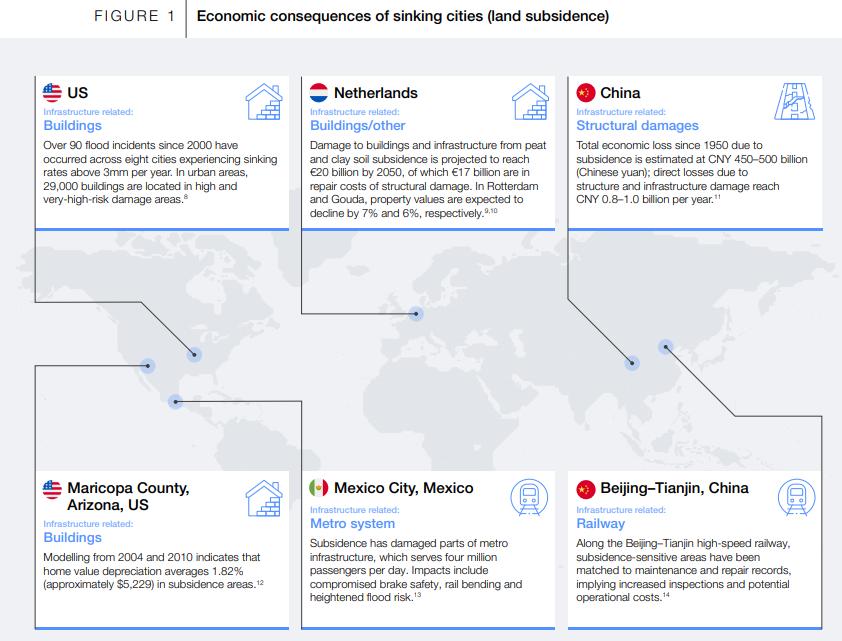
In 2025, urban transformation focused on actionable solutions to climate change, inequality, and economic challenges. Key developments included the establishment of innovation ecosystems prioritizing sustainable growth, a re-evaluation of the night-time economy highlighting its importance beyond nightlife, and initiatives for nature-positive urban planning. Cities like San Francisco and Durban demonstrated leadership in integrating green solutions into infrastructure. Additionally, reports emphasized the risks of land subsidence, threatening $8 trillion of global GDP. These themes reflect a shift towards resilient, inclusive urban environments that prioritize sustainability and community wellbeing.
Haiti, Nigeria, United Kingdom | Financial services, ICT, Health, Education
The top 5 urban transformation stories of 2025

Leadership models need to evolve from stability and hierarchy towards adaptability to constant transformation. The World Economic Forum’s Global Future Council on Leadership underscores the importance of redefining leader selection, training, decision-making, and succession management to develop leaders capable of addressing complex, interdependent challenges. Key proposals include broadening selection criteria to reduce biases and enhancing effective listening skills among leaders. Engaging in dialogue fosters understanding and community building, which are essential for creating a sustainable leadership future that benefits people and the planet.
Africa, Latin America | Financial services, Health, Education
How to rethink leadership in 2026, according to young leaders from around the world

A circular economy can enhance the clean energy supply chain by reducing reliance on mining and addressing critical mineral shortages essential for technologies like batteries and solar panels. With the increasing demand for these minerals, the circular economy offers a stable supply through recycling and recovery, minimizing greenhouse gas emissions and lowering geopolitical risks. Successful implementation will require collaboration between governments and industries to establish efficient collection systems, invest in recycling infrastructure, and create regulatory frameworks that foster market confidence. This approach aims to bolster industrial competitiveness and ensure a sustainable energy transition.
Financial services, ICT, Education
How a circular economy could strengthen the clean energy supply chain of the future

Prediction about the future is inherently difficult due to uncertainty and complex factors. Historical examples demonstrate both failed forecasts, like Sweden's naval timber planning ignoring industrial advances, and successes, such as Herman Kahn’s economic predictions during the Reagan era. Many futurists prefer exploring multiple possible scenarios rather than fixed predictions, recognizing limits highlighted by chaos theory. However, in some scientific domains, long-term predictions are possible, such as continental drift and planetary climate changes millions of years ahead. Climate forecasts farther in the future can sometimes be more reliable than nearer-term projections due to natural trends versus human impacts. Future studies are multidisciplinary, encompassing human, socio-technical, and natural systems, complicating prediction but allowing diverse approaches to understanding potential futures.
The Prediction Problem
Regulation is emerging as a crucial component of economic competitiveness, akin to physical infrastructure, especially as technologies like AI, digital finance, and biotech evolve. Effective regulatory frameworks, which are interoperable, open, and iterative, play a significant role in determining which innovations thrive. Examples from countries such as Brazil, India, the UAE, and across Africa illustrate the importance of regulation in fostering innovation and inclusivity. The whitepaper "The Regulatory Frontier" emphasizes that well-designed regulation not only shapes markets but also drives economic participation and societal trust, positioning it as a vital infrastructure investment of the digital age.
Germany, Luxembourg, Sweden, United Kingdom | Financial services, Health, ICT, Education
Regulation now shapes innovation as much as technology - here's why it's an infrastructure investment

Technological progress is rapidly transforming economies and societies, making the regulatory frameworks that govern innovation increasingly critical. The Regulatory Frontier white paper, developed by the World Economic Forum with partners, presents a practical framework for creating future-ready regulatory systems. It showcases global examples like Brazil’s Pix, India’s UPI, and the UAE’s regulatory sandboxes that demonstrate how adaptive governance can foster trust, inclusion, competitiveness, and societal growth. This work supports the Global Regulatory Innovation Platform, providing tools and insights to help countries craft modern regulatory infrastructures.
Financial services, Health, Education, ICT
The Regulatory Frontier: Designing the Rules that Shape Innovation

Malaysia has adopted the Transitioning Industrial Clusters (TIC) framework as a national agenda aimed at fostering green economic growth, enhancing job opportunities, and reducing carbon emissions. The TIC initiative, launched globally by the World Economic Forum at COP26, unifies industrial clusters to promote economic, social, and environmental value through collaborative efforts. Malaysia's Prime Minister emphasized the framework's role in aligning companies and public institutions for strategic industrial development. Key priorities include developing state-level strategies, formalizing governance structures, and launching cluster projects, particularly in Sarawak, Johor, and Selangor, focused on sustainable industries and technologies.
Barbados, Belgium, Cambodia, Colombia, Ethiopia, Germany, Haiti, Hungary, India, Indonesia, Jamaica, Kenya, Malawi, Malaysia, Mali, Mauritius, Mozambique, Philippines, Poland, Republic of Korea, Rwanda, Senegal, Singapore, Sweden, Taiwan, China, Tajikistan, Tanzania, Thailand, Trinidad and Tobago, Tunisia, Türkiye, Uganda, United Arab Emirates, United Kingdom, Zimbabwe | Education, ICT
Malaysia adopts the Transitioning Industrial Clusters framework – here's what that means

Agility is now a crucial strategic advantage in the rapidly evolving business landscape, impacting both private and public sectors. Organizations must invest in workforce training to address skills shortages, as traditional workforce design no longer applies in hybrid human-digital environments. Studies indicate that 82% of business leaders see the need for reinvention every few years, yet only 17% of employees feel prepared for future demands. Public policy lags behind market changes, necessitating increased investment in adult learning to close the skills gap. Agility empowers organizations to adapt and innovate continuously, ensuring long-term competitiveness.
ICT, Education
The infinite game: Why agility is the stand-out strategic advantage for today's business