
Singapore leads Southeast Asia's green startup ecosystem, hosting approximately 45% of the region's 1,089 mapped green economy companies. Despite facing infrastructure and financing challenges, Singapore excels in urban systems and sustainable finance, aided by early carbon pricing and supportive regulations. The report highlights significant innovation priorities, including industrial decarbonization and low-carbon fuels. While regional emissions rise, the integration of efforts across sectors like renewables, transport, and industry is crucial for progress. Other countries demonstrate unique capabilities, with startups playing a vital role in advancing the green transition amidst calls for improved coordination and deployment.
Bangladesh, Cambodia, Indonesia, Malaysia, Philippines, Republic of Korea, Senegal, Singapore, Taiwan, China, Thailand, Viet Nam
Singapore dominates Southeast Asia’s green startup landscape, report finds

Four Futures for the New Economy: Geoeconomics and Technology in 2030 analyzes the impact of geopolitical shifts and technological advancements on the global economy. The white paper outlines four potential scenarios for 2030 based on varying degrees of geopolitical stability and technology adoption, focusing on factors like AI commercialization, supply chain changes, regulatory fragmentation, and increasing volatility. It also gathers insights from experts to identify cross-cutting risks and "no-regret" strategies, providing decision-makers with tools to enhance resilience and adapt to a dynamic global environment.
Angola, Australia, Belgium, Bolivia, Chile, Costa Rica, Egypt, Estonia, Ethiopia, Finland, Georgia, Germany, Ghana, Guinea, Haiti, Hungary, Iceland, India, Indonesia, Ireland, Jamaica, Japan, Jordan, Kenya, Kyrgyz Republic, Mongolia, Morocco, Mozambique, Namibia, New Zealand, Pakistan, Peru, Philippines, Portugal, Qatar, Republic of Korea, Russian Federation, Rwanda, Saudi Arabia, Senegal, Singapore, South Africa, Sweden, Switzerland, Taiwan, China, Tanzania, Thailand, Tunisia, Uganda, Ukraine, United Arab Emirates, United Kingdom, Viet Nam, Zimbabwe | Financial services, Health, Education
Four Futures for the New Economy: Geoeconomics and Technology in 2030

AI and data-driven technologies are rapidly transforming economies, exacerbating the widening digital skills gap. This report, developed with Cognizant, analyzes global trends in supply and demand for AI, data, and foundational digital skills, noting increasing employer expectations and regional disparities in preparedness. It presents a framework for developing and credentialing digital skills and showcases innovative models from industry and government. The findings offer leaders guidance to cultivate resilient, future-ready workforces capable of leveraging the growth potential of the Intelligent Age.
Singapore | ICT, Education
New Economy Skills: Building AI, Data and Digital Capabilities for Growth

A report by the Poseidon Principles indicates that 36 international banks, representing 80% of global shipping finance, are aligning their lending practices with the International Maritime Organization's (IMO) decarbonization goals. The banks' climate alignment misalignment score improved from 19% to 11.7% over the past year, tracking toward targets of 20% emission reduction by 2030 and net zero by 2050. Notably, Japan's MUFG and Singapore's OCBC reported significant engagement in financing low-carbon technologies, underscoring the banking sector's role in promoting sustainable maritime operations amid increased maritime trade and emissions from the shipping industry.
Global shipping’s top lenders are getting increasingly aligned to IMO’s net zero target: study
Hydropower is vital for India's renewable energy goals, offering economic growth and improved infrastructure, particularly in areas inhabited by indigenous peoples. The Lower Kopili Hydroelectric Power Project, a 120 MW facility funded by a $231 million Asian Development Bank loan, aims to enhance Assam’s energy supply and spur local job creation. However, it raises concerns about displacement, with 17 villages affected and 1,161 tribal households impacted. Successful integration of indigenous rights necessitates Free, Prior, and Informed Consent, equitable benefit-sharing, and careful management of cultural and community cohesion during project implementation. Mitigation measures were established to address challenges such as food shortages and transportation disruptions.
Bridging Traditions and Transformation: Indigenous Peoples and the Lower Kopili Project in India

Artificial Intelligence (AI) is revolutionizing tax and customs administrations by automating risk management, enhancing audits, and improving public service delivery. AI efficiently identifies tax fraud and underreporting through algorithms that analyze vast data sets. It speeds up processes like tax registration and customs clearance, increasing accuracy and citizen satisfaction. However, challenges such as data protection, over-reliance on technology, and the need for skilled personnel must be addressed. Successful AI implementation requires continuous evolution, collaboration across sectors, and a thorough readiness assessment to align with organizational goals and ensure equitable access.
Financial services, Education
Enhancing Tax Administration, Compliance, and Public Services Through AI
In 2025, global financial inclusion improved, with 75% of adults in low- and middle-income countries holding a financial account, yet only 34% could cover expenses for more than two months without income. There was a notable shift towards focusing on financial health and resilience, reinforced by initiatives like CGAP's Impact Pathfinder. The role of AI advanced in financial services, with authorities developing governance guidelines. While the gender gap in financial access narrowed to 5 percentage points, challenges persisted, exacerbated by funding cuts in gender-related aid. Overall, the sector faced growing complexity amid funding constraints and climate resilience demands.
Bangladesh, Burkina Faso, Chad, Ethiopia, Georgia, Ghana, Guinea, Haiti, Kenya, Malawi, Qatar | Health, Education, Financial services
FinDev Financial Inclusion Year in Review 2025

The European security order is currently dysfunctional, heavily influenced by a crisis in multilateralism. The OSCE, intended as a platform for cooperative security, reveals the fragility of traditional multilateral institutions amid rising geopolitical tensions, particularly due to Russia's aggression in Ukraine and U.S. disengagement from international commitments. The consensus on multilateral principles is eroding, leading to competing alliances rather than cohesive cooperation. Despite this, technical-military agreements within the OSCE continue to function effectively, highlighting both opportunities and risks that the 57 participating States must navigate amidst growing discord and calls for reform.
Bosnia and Herzegovina, Cyprus, Hungary, Poland, Russian Federation, Sweden, Ukraine | Financial services
The OSCE as a Yardstick for Multilateral Security
Corporate restructuring, including mergers, acquisitions, and bankruptcy, presents complex challenges regarding data ownership, especially in cross-border contexts with multiple legal jurisdictions. As the digital landscape evolves, controlling user data has emerged as a critical issue. Policymakers face the task of safeguarding citizens' data, assessing data asset value, and adhering to competition regulations. Despite strengthened rights, loopholes remain, allowing organizations to redraw data ownership lines, often circumventing regulatory safeguards. This article proposes the Data Ownership Governance for Corporate Restructuring (DOGCR) framework to enhance accountability and manage data ownership transitions.
Whose data is it, anyway? Deliberating data ownership during corporate restructuring
Joshua Gans' book, "The Microeconomics of Artificial Intelligence," explores AI advancements as improvements in statistical prediction techniques that significantly impact decision-making efficiency within firms and industries. It evaluates the supply and production characteristics of AI and the factors driving demand for AI predictions. Gans also discusses how supply and demand dynamics establish prediction pricing influenced by market structure, and addresses key policy trade-offs related to antitrust, privacy, and regulation from a microeconomic viewpoint.
The Microeconomics of Artificial Intelligence
Foundation models, which are AI systems trained on large datasets, hold significant potential for transforming scientific discovery and innovation. A study by the National Academies, requested by the U.S. Department of Energy (DOE), examines the capabilities and challenges of these models. The report discusses how foundation models can enhance traditional computational methods, showcases successful applications, and suggests strategic investments to align with DOE's mission.
Education
Foundation Models for Scientific Discovery and Innovation: Opportunities Across the Department of Energy and the Scientific Enterprise
In Germany, public attitudes towards refugees are increasingly negative, influenced by political statements and polling. A study involving over 2,000 participants examined the impact of humanitarian versus threat-focused messages regarding Syrian refugees. Results revealed that those exposed to humanitarian content showed increased compassion and support for refugee aid. However, viewing videos of young male refugees heightened concerns about cultural impacts and decreased support for refugee admissions. Notably, attitudes varied significantly between east and west Germans, with east Germans reacting more negatively overall.
What makes people welcome or reject refugees? What research in Germany reveals
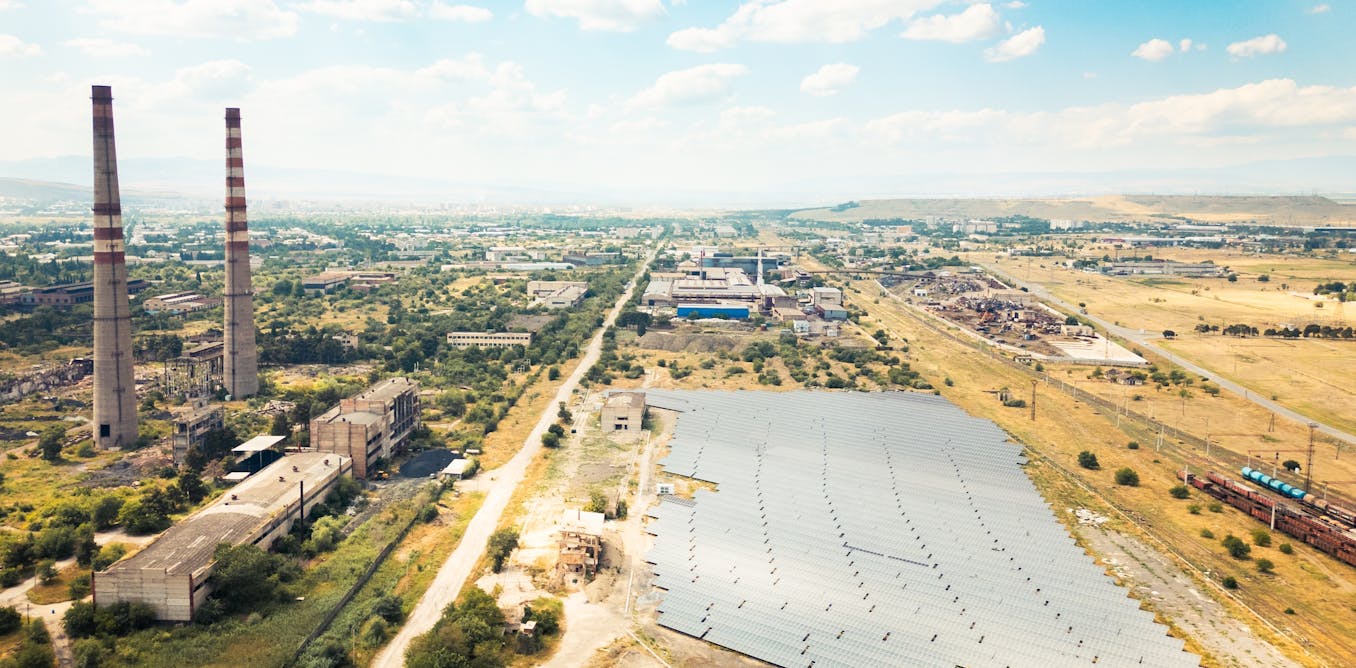
Millions of UK households face energy poverty, with around 6 million unable to afford adequate heating. Simultaneously, the country aims for net zero by 2050, necessitating 70GW of solar power by 2035. Repurposing over 37,000 brownfield sites—abandoned lands often in deprived areas—for community-based renewable energy projects like solar farms and wind turbines could alleviate energy poverty and enhance renewable energy uptake. Community-owned renewables offer affordable rates, reduce reliance on fossil fuels, and empower local residents through inclusive energy decision-making. However, challenges like contamination and financing issues need targeted policy support for successful implementation.
How abandoned land can power a fair energy transition

City accessibility significantly impacts tourism experiences during the Christmas season. Effective public transport, including bus stops and bike lanes, influences tourist satisfaction and spending. Poor connectivity not only frustrates travelers but also marginalizes communities, resulting in lost economic opportunities and increased transport poverty. GIS mapping helps identify areas needing improved transport infrastructure, promoting sustainable travel options. Encouraging bus and bike usage can create seamless journeys between accommodations and attractions, fostering inclusive and environmentally-friendly tourism. Prioritizing the needs of diverse mobility users is critical for future transport planning.
How bus stops and bike lanes can make or break your festive city trip
President Trump’s National Security Strategy (NSS) for 2025 serves as a politicized tool aiming to undermine the Biden administration and previous administrations while reinforcing "America First" sentiments. The document, notable for its brevity and lack of clear structure, transforms national security into a partisan discourse, mentioning Trump excessively and portraying him as a historical transformative figure. Key themes highlighted include a radical shift prioritizing immigration and border security, which is characterized as a primary national security concern. The strategy reflects broader political polarization and personalizes national security discourse.
Russian Federation, Ukraine
A National Security Strategy for Trump 2: Continuation of Policy by Other Means
Inclusive regulatory sandboxing is crucial for ensuring that digital innovations yield equitable and impactful outcomes. The JRC policy brief highlights risks such as biases and exclusion due to improper sandbox design and provides a practical guide to promote inclusion. Key recommendations are categorized into six themes: scoping, regulations and safeguards, stakeholder engagement, data and technology, governance, and reach and impact. The brief emphasizes that while inclusive approaches may require more resources, they ultimately enhance the value by promoting equitable innovation that benefits all stakeholders.
Financial services, Health, Education
Innovating Together – A Guide to Inclusive Regulatory Sandboxing

Agentic AI has evolved into a tangible collaborator within businesses, prompting enterprises to redesign their structures for effective integration. This shift requires a focus on simplifying workflows and enhancing collaboration, as execution is no longer the primary constraint; orchestration is. Key strategies include streamlining essential tasks, redefining roles to emphasize strategic oversight rather than manual productivity, and fostering a culture of systems thinking for growth. Additionally, establishing trust through enhanced oversight, transparency, and control is vital for scaling the use of agentic AI securely and effectively.
Education
How to rebuild the enterprise for the Age of Agentic AI
International collaboration is essential to enhance the resilience and sustainability of material systems critical for the global economy. Experts highlight the challenge of ensuring equitable material access amid rising demand, supply constraints, and increased geo-economic fragmentation, exemplified by a significant rise in trade restrictions on critical minerals. Effective solutions include regional cooperation to align standards and policies, improve data transparency, and establish digital product passports for traceability. Additionally, coherent global governance and standardized measurement frameworks are crucial for managing material flow and fostering sustainable practices across industries.
Belgium, Benin, Bolivia, Denmark, Finland, Germany, Indonesia, Ireland, Japan, Lesotho, Luxembourg, Malawi, Malaysia, Mauritania, Morocco, Poland, Republic of Korea, Russian Federation, Singapore, Sweden, Taiwan, China, Uganda, United Kingdom, Zambia, Zimbabwe | Financial services, Education, Health
Materials: Is this the new frontier for international collaboration?
Organisational silos contribute significantly to failures across various sectors, such as aerospace and finance, by trapping information, responsibility, and authority within separate units. This fragmentation creates blind spots where local issues can escalate into major crises, as seen in the NASA Challenger and Columbia disasters. Additionally, competitive internal dynamics exacerbate siloed behavior, eroding trust and collective resilience. When early warning signs remain isolated, they can trigger a cascade of failures, revealing the critical need for organizations to enhance visibility, trust, and collaboration to mitigate these risks effectively.
Financial services
Silo cascade risk: how hidden barriers trigger organisational failure
Innovative insurance products are essential for boards aiming to enhance business resilience amid increasing climate risks. Traditional insurance methods are inadequate; hence, new models like parametric policies and resilience bonds empower businesses to proactively manage climate-related challenges. Advances in geospatial analytics and AI facilitate accurate risk assessments, leading to the emergence of sophisticated insurance mechanisms. Notable examples include the Global Index Insurance Facility, which helps stabilize incomes for small farmers, and parametric insurance initiatives, offering rapid payouts based on predefined indices, thus promoting economic stability and recovery in affected areas.
Financial services
How innovative insurance products help boards ensure business resilience amidst climate uncertainty