
Smallholder farmers are central to Africa's food economy, especially in the growing poultry sector, which provides job opportunities for youth and women. Reducing the protein gap requires lowering feed costs, which constitute nearly 70% of production expenses, and fostering innovation in feed solutions. Initiatives like the Southern Africa Poultry Initiative aim to strengthen policies, improve supply chains, and enhance production efficiency. The Poultry Feed Accelerator Challenge supports MSMEs to develop affordable feed technologies, benefiting smallholder profitability. Overall, Africa's prosperity will depend on integrating innovation, technology, and youth-led enterprises into its food systems.
Burkina Faso, Ethiopia, Ghana, Malawi, Nigeria, South Africa
Smallholders at the centre: Why innovation and diversification are pivotal for Africa’s food future
Micro, small, and medium-sized enterprises (MSMEs) in Cambodia face significant structural and gender-specific barriers, particularly affecting women entrepreneurs. The report discusses issues such as unequal access to knowledge, finance, and networks, which hinder women's participation in the digital and green economy. It also provides targeted policy recommendations aimed at fostering inclusive economic development and empowering women entrepreneurs to take leadership roles in these sectors.
Cambodia, Egypt, Indonesia, Viet Nam | ICT
Gendered Barriers Facing Micro, Small, and Medium-Sized Enterprises in the Digital and Green Economy in Major Cambodian Cities
Developing low-carbon, climate-resilient health supply chains is essential for the health care sector. The approach emphasizes collaboration across sectors, particularly between human and animal health supply chains. Efficiencies can also arise from initiatives aimed at enhancing supply chain security and pandemic preparedness. Key strategies include health product design, manufacturing, logistics, procurement, regulatory standards, and financing, addressing critical vulnerabilities and supporting decarbonization efforts in the health sector.
Health
Low-Carbon, Climate-Resilient Health Care Supply Chains: High-Level Health Care Climate Action Principle #3

China is shifting its climate adaptation strategy from reactive to proactive approaches, focusing on building a "climate-adapted society" by 2035. This strategy, emphasized in its latest Nationally Determined Contribution, combines adaptation with mitigation efforts. China's centralized planning allocates significant resources to infrastructure and disaster prevention, contrasting with the EU's decentralized approach. Annual funding needs for adaptation are projected at over CNY 2 trillion (US$280 billion) from 2026 to 2030, but China faces a falling financial support gap, having received only US$530 million in international climate adaptation funding between 2020 and 2022.
Nigeria | Financial services
How can China meet its climate adaptation challenges?
Tom Williams' book examines critical issues at the intersection of robotics and social justice, focusing on how roboticists design robots' appearances, behaviors, and perceptions. It critiques the tendency to reinforce white patriarchal power structures and proposes alternative approaches that draw from a wide array of disciplines, including computer science, sociology, and feminist studies. The work connects questions of robot design to broader abolitionist movements, advocating for a more socially just future in robotics.
Degrees of Freedom: On Robotics and Social Justice

Businesses globally are adopting artificial intelligence without adequately addressing its societal and environmental risks, according to a report by the AI Company Data Initiative. The study, covering over 1,000 companies across various regions and sectors, reveals most lack public AI strategies and fail to consider AI's carbon footprint. Significant resource consumption, particularly water and electricity, is evident in AI data centers. Furthermore, 68% of firms overlook the precarious conditions faced by data annotators in the Global South. Companies are urged to develop responsible AI practices that also consider employee concerns and the technology's broader impacts.
Education
In data: How many companies are ignoring AI's environmental risks?

AI models are facing a data shortage, limiting their growth and effectiveness. Although data generation has increased, a lack of variety is hindering advancements. In industries like pharmaceuticals and finance, complex modeling requires new data that traditional experimentation cannot provide efficiently. Solutions include automation for data collection and computational models that simulate outcomes based on first principles. These large quantitative models can rapidly explore drug interactions and industrial processes, significantly reducing development times. A broad innovation ecosystem and improved access to essential datasets are crucial to unlock the potential of synthetic data in advancing AI capabilities.
Africa | Financial services, ICT, Education, Health
We're running low on data to train AI. The good news is there's a fix for that

The global cancer crisis is intensifying, particularly impacting vulnerable populations in low- and middle-income countries. Data indicates that in 2023, there were 18.5 million new cancer cases and 10.4 million deaths, with two-thirds of these fatalities occurring in less affluent regions. Modifiable risks, such as tobacco use and unhealthy diets, contribute to 41.7% of cancer deaths. Projections for 2050 estimate almost 30.5 million annual diagnoses and 18.6 million deaths, driven by lifestyle changes, urbanization, and aging populations. Urgent action is needed through enhanced public health policies, prevention strategies, and improved healthcare access to mitigate this crisis.
Africa, Latin America | Health
The world is facing a cancer crisis that’s hitting the most vulnerable hardest

Investment in early childhood care and education (ECCE) is crucial for fostering social and economic growth, particularly highlighted by the recent G20 commitment to prioritize education. Over 350 million preschool children lack access to quality care, stunting human potential. Evidence indicates investing in ECCE yields substantial economic returns, breaking poverty cycles and promoting gender equity in the workforce. Despite international pledges, funding remains inadequate, with many low-income countries allocating less than 2% of education budgets to ECCE. Mobilizing political will and financing for ECCE is essential to tackle these challenges effectively.
Ghana, Russian Federation, South Africa, Sweden, United Kingdom | Financial services, Education, Health
The Transformative Power of Early Childhood Education
Asian businesses face significant challenges in decarbonizing Scope 3 emissions, which constitute the majority of their carbon footprint and are complex to control. However, this region, accounting for half of global carbon emissions yet driving over half of global GDP growth, is poised for opportunities through value chain decarbonization. Companies that address environmental risks and enhance operational efficiency report financial gains and resilience improvements. Decarbonization strategies not only align with regulatory demands but also create competitive advantages and new revenue streams, exemplified by initiatives in construction waste reuse and carbon assessment services.
How Asian businesses are using value chain decarbonization to drive growth and sustainability

India's rivers face severe pollution, predominantly from textile and tannery industries that release untreated wastewater, endangering health, agriculture, and local economies. Regions like the Noyyal basin and Jojari River are witnessing arable land degradation and forced migration due to toxic exposure. Enhanced monitoring through AI, real-time detection, and stricter regulations are essential for industries to reduce pollution. Many rivers, including the Yamuna and Ganga, risk functional collapse, while polluted waterways threaten drinking supplies and public health. Urgent action is required to protect these vital ecosystems for future sustainability.
India’s river crisis: Why industry must lead the cleanup
One-third of global soil is degraded, threatening human health, biodiversity, and economies. Healthy soil is crucial for food security, climate resilience, and ecosystem stability but remains undervalued in global policies. Degradation costs the global economy $878 billion annually, exacerbating food and water insecurity and contributing to conflict. Investing in soil restoration yields significant returns, enhancing agricultural productivity and sustainability. Efforts like the Great Green Wall in Africa and regenerative agriculture demonstrate successful soil management. Coordinated global action is necessary to integrate soil health into sustainable development and climate strategies.
Health
How healthy soil and land creates solid ground for global resilience

The US dollar's dominance in the global financial system is being challenged under President Trump's administration. Historically, the dollar's strength stemmed from trust in the US to maintain a stable, rules-based order. However, Trump's policies, including aggressive trade tactics and attacks on institutional independence, have raised doubts about US fiscal stability and reliability. Consequently, countries are diversifying reserves away from the dollar and developing alternative payment systems. Although no single currency is poised to replace the dollar, the global monetary landscape is becoming increasingly fragmented, with a shift toward non-dollar assets and regional financial systems.
Latin America | Financial services
Is the dominance of the US dollar unravelling under Trump?
AI is revolutionizing education by emphasizing the importance of caregiving over content delivery. Akshay Saxena, co-founder of Avanti Fellows, asserts that a sense of safety and care significantly enhances learning success. AI plays a supportive role by reducing teachers' administrative tasks, allowing them to focus on mentorship. Avanti's community-oriented approach has notably increased access to top engineering schools for students from disadvantaged backgrounds, fostering intergenerational wealth. While embracing AI for personalized learning, Saxena emphasizes that the core of effective education lies in promoting human connection and care within the learning environment.
Education
AI is transforming education by allowing us to be more human
China has transitioned from being the world's factory to a leading global innovator, significantly increasing its manufacturing share from 9% in 2004 to 30% in 2023, surpassing the U.S. at 16%. The state-led "Made in China 2025" initiative has bolstered advancements in key industries like AI, EVs, and telecommunications. China's centralized political system enables a focused long-term industrial strategy, resulting in growing competition with the U.S. in high-tech sectors. Although China's technological growth poses challenges to American hegemony and global market dynamics, it does not yet rival the U.S. as a hegemonic power.
Australia, Chile, Egypt, Hungary, India, Indonesia, Japan, Republic of Korea, Russian Federation, Singapore, Switzerland, Taiwan, China, United Kingdom | Financial services
Despite its stunning innovation record China is not yet a challenger to American hegemony
Leadership must evolve in response to a volatile world characterized by rapid change and declining trust. Effective leadership is grounded in service, ethics, and rigor, emphasizing a moral compass and empathy. Key shifts include moving from control to co-creation, fostering shared responsibility, embracing intergenerational leadership, and prioritizing long-term impact over short-term performance. This new model encourages collaboration, decentralization, and the inclusion of diverse perspectives, essential for navigating complexity and ensuring resilience in organizations. Leaders must cultivate environments that empower collective intelligence and innovate for sustained success.
Health, Education
How can leadership evolve in a volatile world?

Trust in AI healthcare is lagging behind its adoption, especially in sensitive areas like mental health. Key factors contributing to this trust deficit include lack of transparency in AI decision-making, fragmented accountability among developers and healthcare providers, and insufficient human oversight in the clinical workflow. Effective AI implementation requires clear data usage, decision-making processes, and avenues for accountability. Initiatives in Southeast Asia, such as Singapore's reforms for AI diagnostics, aim to establish trust through observable safety measures, shifting the perception of AI from being a promise to proof.
ICT, Education, Health
The trust gap: why AI in healthcare must feel safe, not just be built safe
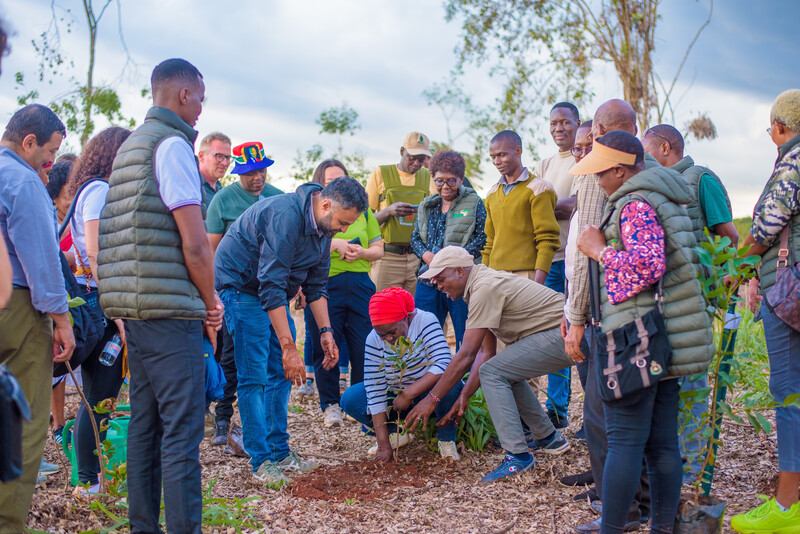
Africa has approximately 2.18 million social enterprises, generating $96 billion in annual revenue and creating over 12 million jobs. More than half of these enterprises are led by women, and one in three by individuals under 35. These mission-driven businesses enhance access to essential services, create dignified employment, and strengthen community resilience, contributing to inclusive and sustainable growth. The importance of social enterprises is recognized in a new report, which illustrates their significant role in fostering economic and social development across the continent.
Egypt, Ethiopia, Ghana, Senegal, South Africa | ICT, Health, Education
Africa’s 2.18 million social enterprises are rewriting the continent’s growth story
Collective action is transforming Canadian philanthropy by promoting trust-based, collaborative relationships over traditional transactional funding. Current funding practices create instability for non-profits, which are increasingly pressured by rising costs and social inequities. A public letter from over 100 organizations emphasizes the need for meaningful dialogue and concrete shifts in philanthropic practices to rebuild trust and foster community well-being. This initiative, led by the Tamarack Institute and supported by various philanthropic networks, aims to create agile, equitable funding that recognizes non-profits as essential partners in achieving social goals.
How collective action is rewiring philanthropic and community partnerships
Urban areas face significant challenges from climate change and water scarcity, while buildings contribute to 39% of global energy-related carbon emissions. Transforming existing buildings through retrofitting and refurbishment is essential, as most structures in 2050 are already built. Smart, integrated energy systems could allow buildings to generate, store, and share energy with electric vehicles and neighboring units. Sustainable urban development also demands attention to social infrastructure, fostering community and wellbeing. Technology must support this transition, requiring improved policies and market conditions to optimize building performance and efficiency.
Africa | Financial services, Health, Education
Making cities future-proof: How to sustainably build livable urban centres