
Geopolitics and artificial intelligence will significantly influence global business trends in 2026. The world economy is expected to grow by 3.1%, although underlying conditions are increasingly fragile. Companies must remain vigilant against systemic risks arising from geopolitical tensions. AI adoption is projected to deepen, moving from broad applications to systematic integration in workplaces. Talent management will adapt to technological shifts, emphasizing continuous learning and essential analytical skills. Sustainability initiatives will persist, albeit away from the spotlight, as environmental concerns continue to polarize debate in the U.S.
Chile, Egypt, Estonia, Ethiopia, Germany, Hungary, Iceland, India, Indonesia, Israel, Japan, Poland, Qatar, Russian Federation, Saudi Arabia, Senegal, Singapore, Spain, Sweden, Switzerland, Taiwan, China, Tanzania, Tunisia, United Arab Emirates, United Kingdom | Financial services, Health, Education
6 business trends for 2026

The "Golden Dome" initiative, announced by President Trump in January 2025, aims to establish comprehensive missile defense for the United States, protecting against airborne threats like aircraft, drones, and missiles. With an estimated budget of $175 billion, the program intends to enhance existing systems and introduce space-based sensors and interceptors. The initiative focuses primarily on countering intercontinental ballistic missiles (ICBMs) deemed strategic threats. While defense systems aim to neutralize missiles during their flight phases, challenges remain in their effectiveness, particularly against long-range ballistic threats. The implications for Germany and Europe are complex, necessitating careful navigation of US defense strategies.
‘Golden Dome’ and the Illusory Promise of Invulnerability

Iran faces a severe air pollution crisis exacerbated by one of the worst droughts in decades, causing wetlands to dry and increasing dust sources that disrupt air quality. Major cities, including Tehran, have recorded hazardous levels of air pollution, leading to school closures and a spike in respiratory issues and deaths linked to poor air quality. Contributing factors include ageing vehicles and low-quality fuel; however, the deeper issues stem from governmental mismanagement and economic isolation. These elements have hindered technological advancements and maintained a dependency on cheap energy, compounding the environmental crisis.
Egypt, Nigeria, Pakistan
Iran’s record drought and cheap fuel have sparked an air pollution crisis – but the real causes run much deeper

Food security in the UK is a significant concern due to increasing vulnerabilities in the complex, interdependent food supply system. The UK imports approximately half of its food, with some categories relying on imports as much as 80-95%. Disruptions from bad weather, geopolitical tension, and dependence on migrant labor highlight the fragility of this system. The issue of food insecurity is current, affecting many households with rising prices and reduced choices. Recognizing food security as a distinct risk in the national risk register could enhance government planning, investment in agriculture, and support for vulnerable populations.
Financial services
The UK’s food supply is more fragile than you might think – here’s why it should be a national priority
Australia has the potential to double its iron export revenues to AUD250 billion annually by transitioning to low-emissions green iron, produced using renewable energy and hydrogen. To capitalize on this opportunity, Australia must launch commercial-scale green iron projects by 2027. Moving towards green iron could reduce up to 4% of global emissions while supporting Asia's low-carbon industrial transition. Key priorities include boosting investment, enhancing market demand, streamlining permitting processes, establishing certification standards, and fostering regional collaboration on carbon pricing and logistics to ensure cleaner exports.
Australia
How Australia can lead the global transition to green iron
Lauren Sukin explains that modern cyber warfare occurs in the grey zone below conventional conflict, often involving techniques like ransomware and phishing. Cyber warfare has transformed warfare by targeting infrastructure to support traditional military actions. Historically, technology has driven changes in warfare, evolving from basic tools to advanced weaponry and software capabilities. In the Russia-Ukraine war, Russia employs cyber tactics to degrade Ukrainian forces and influence narratives, while Ukraine utilizes asymmetric cyber capabilities to counter these actions. The involvement of private actors, such as corporations and hackers, adds complexity to cyber warfare dynamics.
Lauren Sukin: “The story of warfare throughout history is really a story of technology”

Data centre investments in Africa aim to enhance digital capabilities and support future growth, yet present significant risks. Major initiatives include Cassava Technologies’ partnership with Nvidia and Kenya’s US$1 billion project with Microsoft, targeting improved cloud capacity. Despite 39 African countries hosting data centres, the continent requires at least 700 more to foster digital inclusion. Current challenges include inadequate infrastructure, local backlash, high operational costs, and dependency on foreign direct investment amidst geopolitical uncertainties. Successful data centre implementation necessitates careful planning to balance economic needs and technological evolution.
South Africa | Financial services, ICT
Data centre investments are a gamble for Africa
Addressing deforestation is crucial for enhancing supply chain resilience, regulatory compliance, and stakeholder satisfaction. Companies like Bunge and PepsiCo are committed to eliminating deforestation from their supply chains, setting ambitious targets for 2025 and 2030. The Accountability Framework provides guidance for companies on setting measurable goals and improving practices for transparency and traceability. Bunge has achieved significant traceability in its soy supply chains and employs satellite monitoring, while PepsiCo focuses on supplier training and procurement improvements. Collective action and collaboration are essential to tackle deforestation effectively in agricultural and forestry sectors.
Why addressing deforestation is a strategic business priority

Vulnerable nations urgently require enhanced infrastructure funding as climate risks grow, but face challenges in attracting financial support. At COP30, the target for tripling adaptation finance was pushed to 2035, delaying urgent funding needs. While developing countries advocated for a tripling of grant-based adaptation finance to at least US$120 billion, the finalized goal lacked specificity and removed the 2025 baseline, creating uncertainty. The new target is less ambitious than the previous doubling commitment from 2021, emphasizing concerns over the adequacy of developed nations' financial obligations.
Financial services
Analysis: Why COP30’s ‘tripling adaptation finance’ target is less ambitious than it seems

A new fund to aid developing countries in coping with climate change impacts has opened for applications, offering US$250 million, after being formally launched at COP28 in 2023. Despite US$768 million pledged so far, this is inadequate against the over US$100 billion lost annually due to climate disasters. Research suggests expanding the definition of "loss and damage" to include indirect losses from supply chain disruptions. Most severe losses from 2009-2019 occurred in manufacturing, agriculture, construction, and transport, with low-income nations facing the greatest risk, particularly from droughts and storms.
Bangladesh, Ghana, Namibia, Nigeria, Philippines, Viet Nam | Financial services
Climate ‘loss and damage’ should include supply chain impacts
Technology significantly impacts daily life, with over 1 trillion semiconductors sold each year and 11,000 data centers managing vast amounts of data. However, the sector heavily relies on finite natural resources and faces threats from climate change. Semiconductor production consumes over 1 trillion liters of freshwater annually, while data centers utilize over 60 GW of energy. The industry generates 60 billion kg of e-waste each year, with recycling rates below 25%. To thrive, tech companies must address their environmental impacts, following seven recommended actions that highlight the financial benefits of adopting nature-positive strategies.
Nigeria | Financial services, ICT, Education
Nature Positive: Role of the Technology Sector

Technology significantly impacts daily life, with over 1 trillion semiconductors sold annually and 11,000 data centers managing vast data loads. Despite this growth, the sector heavily relies on limited natural resources and faces threats from climate change. Semiconductor manufacturing consumes over 1 trillion liters of freshwater, while data centers require over 60 GW of energy. Additionally, 60 billion kg of e-waste is generated each year, with under 25% recycled. To succeed, tech companies need to address their environmental impacts and can leverage nature-positive strategies for financial benefits, including resource recovery and efficiency savings.
ICT, Education
Nature Positive: Role of the Technology Sector

South Korea will nearly double its financial support for renewable energy projects in the 2026 budget, allocating KRW 648 billion (US$440 million) for initiatives such as RE100 industrial complexes and agrivoltaic solar. Overall climate ministry spending will increase by 9.9% to KRW 19.16 trillion (US$13 billion). Significant funding boosts will be directed towards energy, resource circulation, and environmental programs, while some climate-related budgets will see minor reductions. The government aims to accelerate its transition from coal and oil while promoting electric vehicles, introducing subsidies, and expanding support for reusable containers.
Republic of Korea
South Korea doubles financial support for renewable projects in 2026 budget
Investing in nutrition, caregiving, safe environments, and early learning in the first years of life generates significant lifelong social and economic benefits. Despite economic growth in Asia and the Pacific, malnutrition remains a severe issue, with over half of the world’s stunted children residing in this region. Up to 90% of brain development occurs before age five, making adequate nutrition and responsive care critical. Compounded by factors like anemia and toxic exposure, these issues hinder children's potential. Every dollar invested in early childhood programs can yield up to $17 in returns. Strengthening early childhood development is crucial for a productive workforce and economic resilience.
Africa, Latin America | Education, Health
Small Kids, Big Payoffs: The Hidden Economics of Growing Up Healthy
Boosting investments in agricultural research, irrigation, and rural infrastructure, along with repurposing subsidies towards productive activities, can significantly enhance food systems in Asia and the Pacific by 2050. This approach focuses on improving agricultural production, infrastructure, market access, value chains, and resource efficiency, in light of projected demographic changes and economic growth in the region.
Bangladesh | Health
The Future of Food and Agriculture: Scenarios of Increased Public Investments and Policy Reforms for Asia and the Pacific
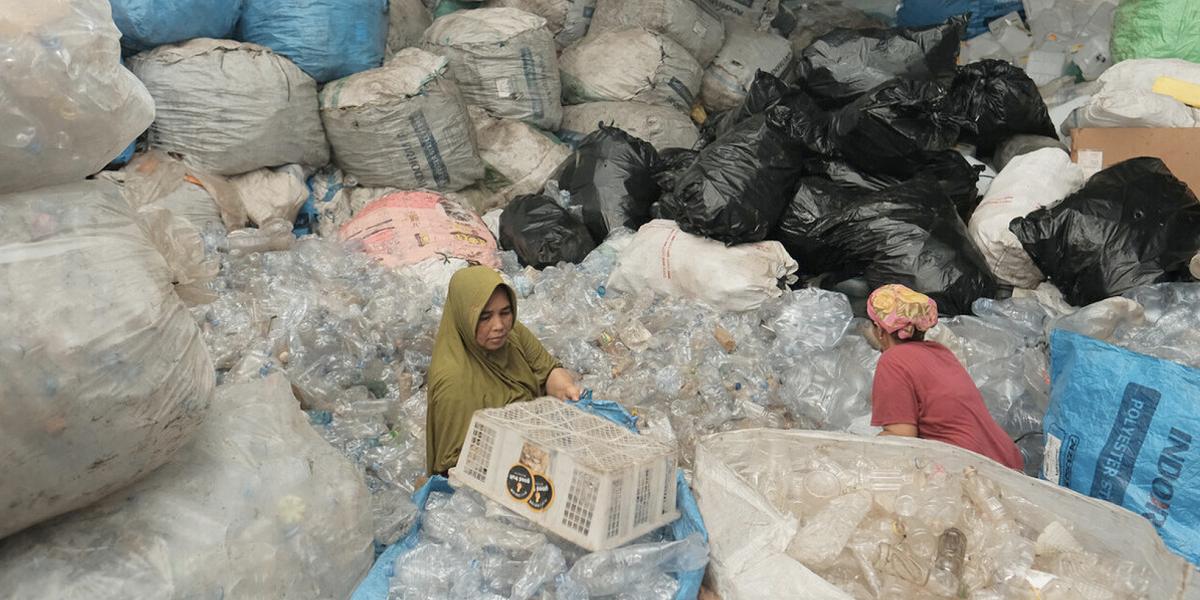
Development challenges, such as plastic waste management and energy transitions, are inherently complex and involve multiple actors and feedback loops. Traditional analytical tools often overlook these complexities, leading to unintended consequences. System dynamics modeling can visualize these complexities by mapping resource flows, simulating policy impacts, and identifying leverage points for effective circular economy strategies. Benefits of this approach include a holistic understanding of systems, risk-free policy testing, collaboration facilitation, and a long-term perspective on interventions. Choosing an appropriate modeling tool is essential and should align with the project’s purpose, stakeholder needs, complexity capacity, and data availability.
Bangladesh | Financial services
Understanding Development Complexity Through System Dynamics
Governments and international bodies are currently focusing on regulating the outputs of AI systems. However, a more effective approach to AI governance requires attention to upstream factors, particularly how data is collected, governed, shared, and stewarded. Integrating robust data governance practices, such as data stewardship and data commons, is essential for protecting fundamental rights and ensuring equitable distribution of AI's economic and social benefits. An effective AI governance framework must combine both input and output governance into a cohesive system.
Education
Toward AI Governance That Works: Examining the Building Blocks of AI and the Impacts

Stefano Puntoni, a marketing professor at Wharton, examines research on AI companionship and its implications for loneliness and mental health. The discussion highlights the transformative role of chatbots in emotional well-being and addresses the safety, ethical, and legal challenges associated with this evolving field.
How Chatbots Shape Emotional Well-Being in the Age of AI

Interest rates, a fundamental tool for central banks to influence economic activity, may become less effective as global populations age. With the percentage of individuals aged 65 and over nearly doubling by 2054, factors like increased savings and decreased investments typical of older demographics push interest rates down. Consequently, central banks may struggle to stimulate economies through rate cuts, potentially constraining monetary policy. However, demographic ageing may also create opportunities, such as extended working lives and increased female workforce participation, which could counteract these pressures. Embracing innovation is crucial for adapting monetary policy to these demographic shifts.
Financial services
Is the world ageing out of interest rates?

Economic growth continues to rely on human creativity despite increasing automation. While AI can enhance productivity, it cannot fully replicate the unique big ideas generated by exceptional thinkers. Soft skills like creativity have become crucial in the job market, contrasting with fears of job losses due to AI. Historical innovators, such as Einstein and Franklin, exemplify the need for unconventional thinking, suggesting that economies will require more creative minds to foster innovation. As knowledge expands, the demand for original ideas may necessitate larger workforces to leverage human ingenuity in the AI era.
Education
Too offbeat to automate? Here's a reason economies still need more people, not less