
This workbook guides security sector personnel in integrating gender and intersectionality into daily practice through exercises on topics like use of force and shift planning. It explains key concepts, their relevance to security mandates, and offers practical tips for promoting gender equality and inclusive security. The workbook includes DCAF’s NAPRI+ tool for gender and intersectionality analysis and a facilitator guide to support interactive training, emphasizing creating safe spaces for discussing power and identity. It highlights that effective security requires recognizing all individuals and making decisions based on facts rather than assumptions.
Africa
Gender and intersectionality workbook for security sector actors promoting equal access to security
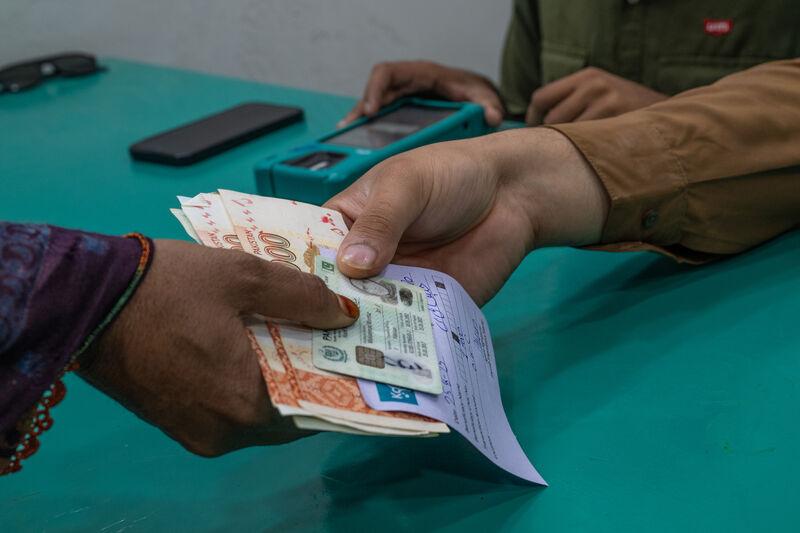
Social protection encompasses policies and programs aiding people to manage risks and overcome poverty throughout their lives, including social assistance, insurance, and labor-market initiatives. True inclusivity means not only providing access to support but also ensuring marginalized groups have a voice in its design and that inequalities are addressed. Resilience requires systems to be intentionally designed to respond and adapt to shocks—large or slow-onset—through coordinated, well-funded mechanisms. Sustainability depends on credible financing models that uphold social protection as a human right and public investment, going beyond poverty reduction to promote inclusion and social cohesion. Effective social protection demands prioritizing inclusion, resilience, and sustainability in policy choices.
Africa | Financial services, Health
Asian Development Blog: Coming to Terms with Inclusive, Resilient, and Sustainable Social Protection

Increased childcare funding alone does not guarantee higher maternal employment rates. England and South Korea both aim to support child development and mothers' employment through market-based childcare systems but face systemic challenges. Korea spends more on childcare yet has lower full-time maternal employment due to traditional gender roles, limited family-friendly work policies, and childcare supply shortages. England offers stronger parental leave but struggles with childcare access, quality, and workforce retention. Research shows that equitable access, affordable, high-quality childcare combined with supportive labor policies, as seen in countries like Norway and Germany, more effectively promotes maternal employment than funding increases alone.
Education
Does increased childcare funding help mothers into work?

Agentic scanning uses AI agents to assess cybersecurity environments from an attacker’s perspective, identifying exploitable attack paths by combining environmental knowledge with vulnerability intelligence. Unlike traditional scanners that detect vulnerabilities, agentic scanners explore what attackers can actually achieve, enabling proactive defense against AI-driven attacks. However, balancing autonomy with safety is critical to avoid damaging production systems. Effective agentic scanners operate under strict boundaries, validating exploits minimally to gather evidence without unnecessary risk. As attackers increasingly use AI agents, defenders must adopt controlled, autonomous scanning to stay ahead, leveraging available solutions while ensuring reliable, low-risk testing.
Agentic scanning is becoming a cybersecurity must. Can we make it safe?
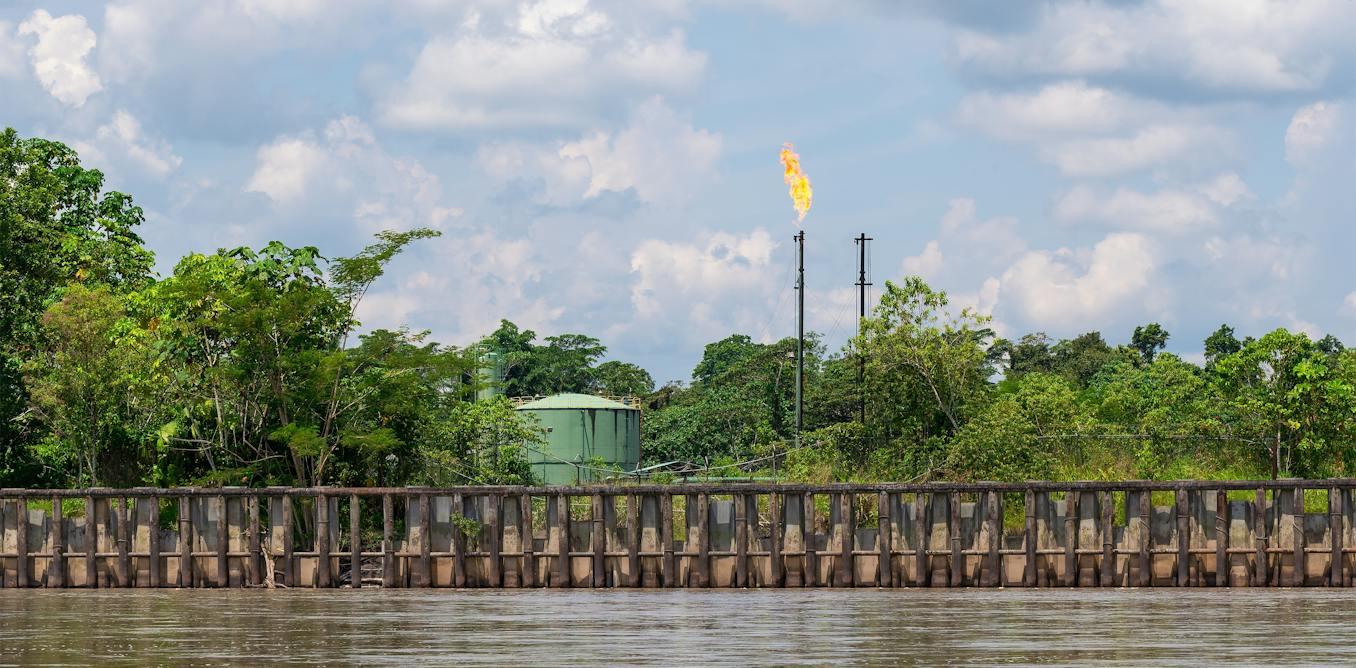
Over half the Ecuadorian Amazon, overlapping Indigenous Quichua territories, has been targeted for oil drilling, notably the Ishpingo-Tambococha-Tiputini (ITT) project. Despite the well-known environmental damage such as river pollution and deforestation, some local Indigenous communities accept extraction due to anticipated benefits. These include jobs, compensation, and infrastructure improvements addressing existing problems like polluted water, limited access to services, and economic needs. The dilemma is asymmetric as local livelihoods already face ecological pressures and restrictions, making oil companies key providers of cash and services. Thus, oil extraction is viewed paradoxically as both a threat and a necessary solution for community development.
Latin America
Why some Indigenous communities don’t resist oil extraction in their territories

Science fiction has long explored human augmentation, reflecting hopes and anxieties about technology transforming the body and mind. Key ideas include immersive experience sharing via brain-recorded wearables ("Strange Days"), bodily enhancement and unequal access to medical tech like exoskeletons ("Elysium"), genetic optimization shaping social status ("Gattaca"), networked cyborg labor exploiting migrant workers ("Sleep Dealer"), and mind preservation and transfer beyond the physical form ("Advantageous"). These narratives examine ethical questions around consent, inequality, identity, and the redefinition of humanity as augmentation shifts from fiction toward reality.
How will humans of the future be augmented? Six striking ideas from science fiction
Artificial intelligence is profoundly transforming financial services by reshaping investment research, financial advice, and decision-making. Experts Jeremy Siegel and Jeremy Schwartz highlight AI’s role in enhancing market efficiency, driving earnings through AI-related stocks, and enabling firms to expand capabilities and innovate workflows. While AI is expected to democratize access to financial expertise, human judgment remains essential. This transformation is pivotal for the industry’s future, influencing both macro market dynamics and how investment strategies are developed and managed.
Education
AI’s Impact on Financial Services

Humanity faces a portfolio of systemic catastrophe risks from complex existing systems like finance, bioweapons, and nuclear deterrence. Advanced AI introduces additional risks, with experts debating its potential to cause human extinction within a decade versus dismissing such threats. While some advocate pausing AI development to reduce these dangers, rapid AI progress may actually hedge against broader civilization risks by improving crisis management and enabling new solutions. For example, AI could make resolving large financial crises more feasible by automating complex tasks quickly. Thus, despite its dangers, AI represents a critical risk worth taking to help humanity escape current vulnerabilities and reduce overall catastrophe exposure.
Financial services
AI is a dangerous risk we should take
Nepal remains highly vulnerable to natural disasters, yet non-life insurance penetration is very low at 0.7%, far below the global average of 4.3%. Despite significant economic losses from disasters like the 2015 Gorkha earthquake, only a small fraction of damaged properties were insured. The non-life insurance sector, dominated by auto insurance, has insufficient coverage of critical areas like property and infrastructure. Although Nepal’s financial institutions are strong, public distrust and regulatory gaps hinder the growth of disaster risk coverage. Building true resilience requires improved insurance awareness, regulatory enforcement, and a shift in public perception toward non-life insurance.
Crisis of Trust: Disaster Risk in Nepal's Insurance Industry - Nepal Economic Forum

Business leaders' confidence in cyber resilience is declining amid growing digital dependence. Boards are shifting focus from simply asking if they are resilient to determining what measures define being “resilient enough,” balancing investments in prevention, protection, and recovery. Many organizations lack robust recovery strategies, especially under realistic attack conditions, and accountability often remains with IT rather than leadership. With shrinking reaction times to breaches and rising disruption costs, cyber resilience and rapid recovery are vital. Measuring resilience risk requires assessing impact magnitude, event likelihood, and progression to harm, connecting maturity capabilities to tangible business value for effective risk management.
Financial services
How companies can quantify cyber resilience – and why it’s important they do

High-quality diets in older adults are linked to biological markers of healthier ageing, as shown by a study of 1,769 people aged 60 and above. Diets rich in fruits, vegetables, whole grains, legumes, nuts, and fish—such as the Mediterranean diet—and low in processed foods, red meats, and sugary drinks are associated with favorable blood biomarkers including higher folate levels and lower growth differentiation factor-15, an indicator of cellular stress. Diets with lower inflammatory potential showed the broadest health benefits by supporting blood sugar regulation, appetite, liver, bone, and immune function. These findings suggest that healthy eating reduces internal bodily stress and inflammation, potentially slowing the ageing process and chronic disease development.
Eat well to age better at a biological level – new research
The US remains the world’s most powerful country, holding the largest share of global GDP, military expenditure, and influence over international finance with the dollar dominating foreign exchange and reserves. It also leads in technological innovation and education. However, under Donald Trump’s second presidency, its global leadership through consent has markedly declined, shifting towards a more coercive, domination-based approach. The US has retrenched from providing international public goods, increasingly leveraging economic tools like tariffs and political demands to extract costs from allies and partners, signaling a diminished hegemonic role despite its enduring capabilities.
Africa, Latin America | Health, Financial services
Is the US still hegemonic?

Professional investors recognize that human-only decision making is increasingly inadequate in complex transactions, with 62% acknowledging the need for AI support, though only 22% trust AI for final deal approval. Investment judgment traditionally develops through hands-on apprentice-like experience, which AI now rapidly automates, risking the erosion of this critical learning process. The encoded assumptions in AI tools may become entrenched defaults, limiting diverse perspectives and challenging decision integrity. To safeguard future investors' judgment, firms should document their reasoning, ensure AI model transparency, and emphasize decision integrity over speed as AI adoption accelerates across private markets.
Education
What professional investors can learn from Modernist artists on AI adoption
Southeast Asia's ASEAN Power Grid (APG) aims to connect national electricity networks via subsea high-voltage direct current (HVDC) cables, enhancing energy security, enabling cross-border power trade, and integrating renewables to meet rising demand. However, projects face early-stage risks from costly technical studies and booking manufacturing capacity years before approvals and financing are secured. Limited supplier capacity and long lead times intensify these challenges. To advance, Southeast Asia must align regulatory frameworks, coordinate cable procurement across countries, and establish mechanisms to share early-stage financial risks—actions that can secure manufacturing slots and accelerate subsea interconnection projects crucial for the region's growing energy needs.
Africa, ASEAN | ICT
Asian Development Blog: Why Southeast Asia Must Act Early on Subsea Power Cables
Rural transformation in Asia requires moving beyond income-based measures to assess development. Subjective well-being—encompassing happiness, life satisfaction, and mental health—provides a deeper understanding of rural welfare. Studies across Asian economies reveal that economic activities, social conditions, and institutions jointly influence rural well-being. Key factors include agricultural productivity, off-farm employment, energy transitions, sanitation, aging, mental health, childhood experiences, and women's empowerment. Policies targeting employment, infrastructure, energy, and inclusion affect both material conditions and personal life perceptions, highlighting the need for inclusive, sustainable rural development approaches.
Africa | Health
Beyond Income: Subjective Well-Being and Rural Transformation in Asia

Boards must actively govern AI deployment to balance capturing value and managing risks, as AI oversight is now a fiduciary responsibility. Two common failures are under-engagement, where boards lack understanding and miss scaling AI benefits, and over-acceleration, where rapid deployment without controls causes costly harm. Effective governance involves five key responsibilities tailored to AI: defining corporate purpose and ethics related to AI use; ensuring strategy captures value amid changing competitive dynamics; overseeing assets and capabilities needed for execution; managing AI-specific risks with appropriate controls and audits; and adapting leadership evaluation to ensure executives can guide AI initiatives responsibly. The STAR framework offers a practical approach for quarterly AI oversight.
How boards should govern artificial intelligence
The rapid adoption of AI in Asia and the Pacific threatens traditional export-led growth models reliant on low-cost labor, with up to 77% of jobs at high risk of automation. Without policy action, developing countries face deindustrialization, rising inequality, and youth unemployment. To address this, governments must modernize education to emphasize critical thinking and AI literacy, enhance technical and vocational training through public-private partnerships, and establish continuous reskilling programs and expanded social protections for displaced and informal workers, fostering human-AI synergy to sustain economic growth and employment.
ASEAN | Education
Managing the AI Transition: Upskilling and Reskilling Asia’s Workforce in the Age of Automation
Economic progress is increasingly defined by financial sovereignty and productivity amid a fragmented global order marked by rising public debt and demographic decline, especially in Europe. Europe faces slow growth and inflation pressures, needing unified capital markets and attractive euro assets to strengthen its financial position. The U.S. benefits from dollar dominance, stablecoin-backed Treasury demand, and dynamic tech investments despite high debt and inflation. China struggles with low growth, demographic challenges, and overcapacity, risking incremental rather than disruptive innovation. Sustained productivity and financial resilience are essential to support welfare states and manage rising financing costs globally.
Africa, Latin America | Health, Financial services
Productivity and financial sovereignty are shields against a fragmented world order
The methodology uses spatial machine learning to downscale aggregated national and subnational macroeconomic data into high-resolution grids, revealing detailed local economic patterns. By integrating official economic accounts with Earth observation data—such as nighttime lights, built-up areas, land cover, and population—the approach produces gridded estimates consistent with official totals. Applied to Canada and the U.S., it generates experimental GDP data by ten industry sectors, enhancing spatial granularity in economic statistics and enabling more precise assessment of local economic activity, physical risks, and infrastructure needs.
Africa | Health, ICT
Earth Observations and Machine Learning for Gridded Macroeconomic Data
Living Science is a University of Chicago initiative aimed at keeping influential scientific research dynamic by revisiting findings as new data, models, and methods emerge. Initially focusing on economics, it uses AI-driven replication agents to reproduce key results and extend analyses with updated datasets. This approach treats research papers as evolving studies rather than final conclusions, encouraging ongoing verification and discussion with input from original authors and the broader community. The project seeks to enhance the durability and relevance of empirical research in a changing world.
Living Science