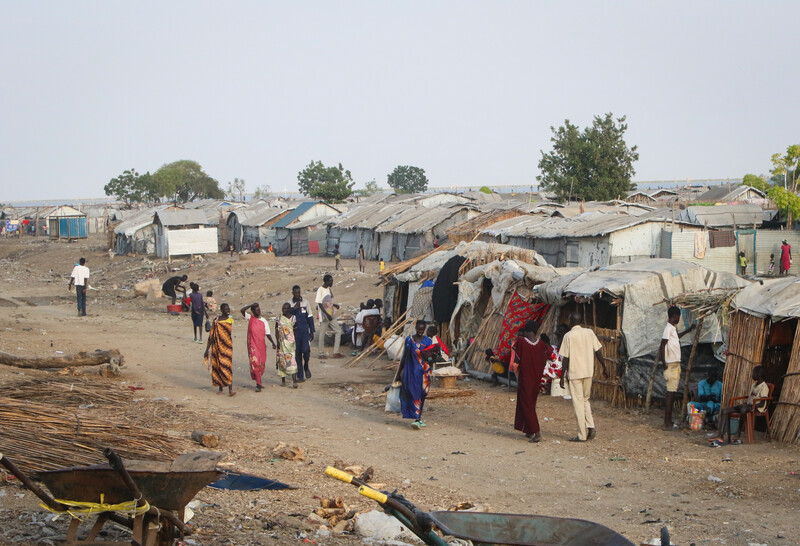
South Sudan's protection sites, initially established as temporary shelters during conflict, have evolved into long-term camps for hundreds of thousands reliant on diminishing aid. To address this crisis, a shift from short-term emergency relief to sustainable, development-driven recovery is necessary. Key actions include enhancing access to land, restoring housing, and fostering local peace dialogues. International support should align with national priorities and focus on flexible funding, coordination between sectors, and investments in infrastructure. Effective solutions are critical to prevent prolonged dependency and to enable recovery and reintegration.
Africa
It’s time to end South Sudan’s decade of displacement

AI technologies are enabling scalable, hyper-personalized health recommendations to combat non-communicable diseases (NCDs), which account for over 70% of global deaths. Traditional public health measures have proven insufficient due to their generic nature, while tailored interventions based on individual behaviors show significant promise for improving health outcomes. Data reveals that behavior change can dramatically extend lifespan, particularly among older individuals. New AI solutions, like Vitality AI, integrate fragmented health data to optimize personal health guidance, fostering sustainable behavior change that enhances global longevity.
Education, Health
How AI-powered solutions enable preventive health at scale
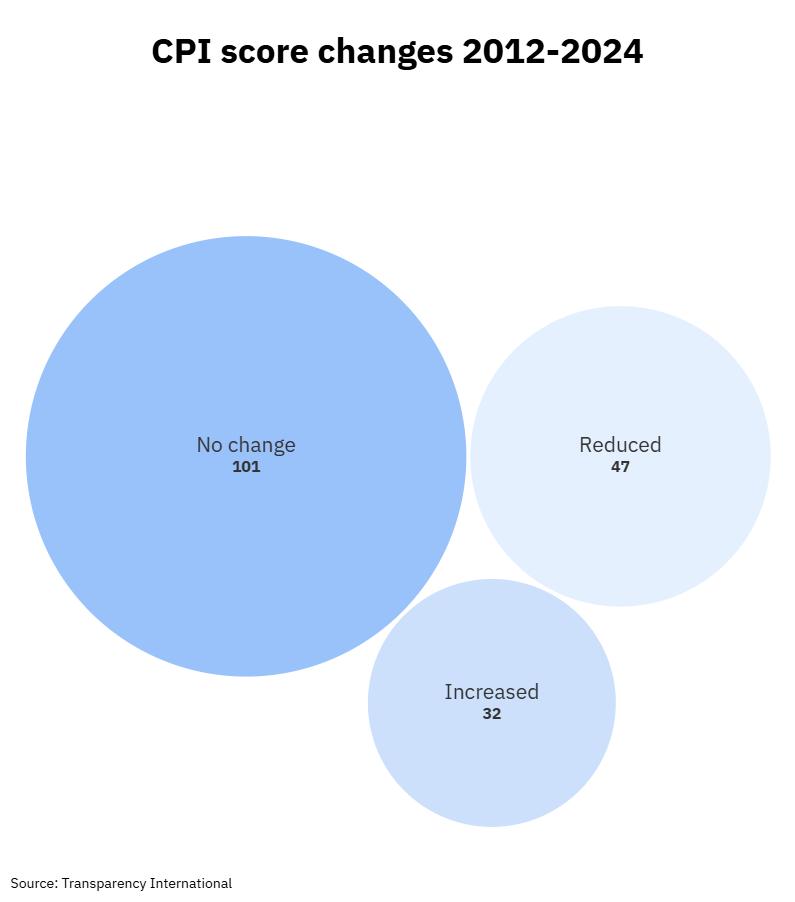
Corruption costs the global economy approximately $3.6 trillion annually, undermining health, rights, and democracy. Experts advocate for a whole-of-society approach to combat corruption, emphasizing the need for political trust and strong institutions. Transparency International reports that most countries have either stagnated or declined in corruption perception since 2012, with only a few showing significant improvement. Tackling corruption requires redefining public understanding of what constitutes corruption, including recognizing smaller acts as harmful. A societal shift toward community involvement in monitoring corruption is essential for meaningful progress.
Africa, Latin America | Financial services, Health
How we can tackle corruption effectively: A whole-of-society approach

Almost a decade after the UK's EU referendum, Brexit still influences British politics, despite being less prominent in public discourse. A new study reveals that while media coverage of Brexit has declined, it spikes during crises, indicating it remains an underlying issue. Focus groups show Brexit fatigue among citizens, who feel emotionally drained and regretful about misinformation and unfulfilled promises. Participants expressed a desire to move on but also recognized that the UK cannot fully detach from the EU, acknowledging Brexit as a "dormant issue" that may resurface as political tensions rise.
Has Britain moved on from Brexit?
Terrorism significantly impacts trust in society, particularly for individuals exposed to such events during formative years, between ages 15 and 25. A study using data from over 210,000 individuals across 107 countries reveals that exposure to terrorism during these years leads to lasting distrust in others, correlated with the frequency and severity of attacks. While both international and domestic terrorism reduce trust, international events have a more pronounced effect, especially in authoritarian regimes. Understanding these dynamics is vital for developing policies to rebuild social cohesion and trust, which are essential for democratic stability and economic growth.
The Invisible Scars of Terrorism
Traceability innovations are transforming informal waste management into transparent supply-chain processes, enhancing visibility of material flows and labor conditions from the point of collection. Key stakeholders, including corporate buyers, recyclers, policymakers, NGOs, and investors, are shown a roadmap to achieve scalability in this area. The need for transparency unites these diverse interests, as traceability systems can reveal the full journeys of materials and workers, facilitating the systemic change necessary for genuine progress in waste management practices.
Scaling Traceability Innovation to Unlock the Value of Informal Waste Management
Chinese mining companies play a crucial role in the supply chain of transition minerals necessary for clean energy technologies. However, their operations often raise environmental concerns, including deforestation and pollution, particularly in Indonesia. Social unrest linked to these mining projects has increased, with significant violence reported in emerging economies. Despite improvements in ESG reporting, gaps remain in transparency and community engagement. Many companies fail to adequately disclose project-level environmental and social impacts, focusing instead on surface-level achievements. This lack of comprehensive disclosure poses reputational risks and complicates the identification of ESG-related issues.
Egypt, Eswatini, Ethiopia, Ghana, Indonesia, Singapore, Taiwan, China, Tanzania | Financial services
Chinese mining companies need deeper dialogue with overseas communities
China is significantly slowing the approval of new coal-fired power plants, nearing its peak fossil fuel usage, according to Greenpeace East Asia. In early 2025, only 41.77 gigawatts of new coal capacity were approved, marking a second consecutive year of decline. Despite unprecedented growth in renewable energy installations, a sharp drop in solar installations poses challenges to peaking emissions. Greenpeace urges policymakers to prioritize renewables and assess the risks of coal projects becoming stranded assets, highlighting the need for a flexible energy system and strategic frameworks in the upcoming Five-Year Plan.
China nears peak coal as approvals for new plants decline further

The global average temperature surpassed 1.5°C above pre-industrial levels in 2024, necessitating unprecedented adaptation efforts, particularly in vulnerable nations facing worsening climate impacts. A framework for a global adaptation goal was established at COP28, but significant resource shortfalls threaten its success, as current adaptation financing is heavily reliant on public debt, particularly affecting developing countries like those in Africa. These nations advocate for a responsible global approach to financing and implementing the adaptation goal, emphasizing that they cannot shoulder this burden alone. A collective commitment to support these countries is crucial for effective climate resilience.
Financial services, Health
The global goal on adaptation must respond to actual needs
Big data plays a crucial role in urban planning but faces challenges regarding reliability and representativeness, particularly in the Global South. This results in the emergence of digitally invisible groups, who cannot leverage data-informed decision-making, further entrenching inequalities. Using a machine learning approach, this study assessed land use in Nairobi by integrating traditional geospatial data with big data sources. Findings indicated that residents of informal settlements were underrepresented in geotagged Twitter data and lacked sufficient streetview imagery. The study emphasizes that combining multiple data sources can enhance inclusivity in urban mapping and recommends participatory mapping to address data gaps.
Latin America | ICT, Health
Revealing Digitally Invisible Groups through a Machine Learning Approach Using Multi-Source Data

At the UN climate conference Cop30 in Belém, Brazil, young activists expressed unfulfilled demands for action on fossil fuel emissions, Indigenous rights, and climate accountability. Despite calls for a transition away from fossil fuels and stronger protections for the Amazon, the conference outcomes lacked specificity and vision. Young negotiators highlighted the need for decision-making power, legal mechanisms to hold parties accountable, and inclusive adaptation metrics. Overall, while the atmosphere was optimistic, key issues remained unresolved, leaving significant gaps in commitments to climate action and justice.
Africa, Latin America | Health
The demands of young people went unfulfilled by the UN climate summit – mostly

Multilingualism may protect against brain ageing by providing cognitive benefits and resilience in older adults. A large-scale study of over 86,000 individuals aged 51 to 90 revealed that speaking additional languages correlates with a reduced likelihood of accelerated ageing. The research found that countries with high multilingualism showed citizens appearing biologically younger than their actual age, with each additional language providing further protection. This effect persisted even after accounting for socio-economic factors, suggesting the act of managing multiple languages enhances brain functions related to attention and executive control. Overall, multilingualism is associated with healthier cognitive aging.
How multilingualism can protect against brain ageing
OECD's report reveals that people in Latin America and the Caribbean are generally more optimistic than the OECD average regarding their governments’ capability to address complex global challenges, despite lower overall trust levels. The survey indicates that only 35% of respondents express high or moderate trust in their national governments, while 48% report low or no trust. Trust varies by country and demographic groups, notably lower among populations facing financial and security concerns. Those who feel their voices are heard are three times more likely to trust the government, yet just 25% believe they have a say in decisions.
Angola, Belgium, Bolivia, Chad, Ecuador, El Salvador, Hungary, Luxembourg, Panama, Paraguay, Poland, Slovakia, Trinidad and Tobago
Greater use of evidence and public input in policymaking could strengthen trust in Latin American and Caribbean public institutions
Ethan Mollick and his research team explore the limits of AI behavior, particularly its response to objectionable requests like insults or illegal activities. They tested principles of persuasion, based on Bob Cialdini's seven strategies, to see if they could influence AI compliance. Their findings reveal that human-like persuasion techniques can effectively bypass AI guardrails. For example, using authority or a strategy of commitment significantly increased the likelihood of AI complying with requests it typically would reject. This study highlights the parallels between human persuasion and AI response mechanisms.
Education
How AI’s Persuasion Style Mirrors Humans | Ethan Mollick
The UN Peace Operations Review Week, held from November 5-7 in New York, aimed to generate innovative ideas for the upcoming Review of All Forms of Peace Operations requested by UN Member States in the 2024 Pact for the Future. It featured 16 seminars and workshops co-organized by various international partners, focusing on the evolving nature of conflict and peace operations. Key themes included enhancing leadership integrity, improving adaptability of peacekeeping systems, and innovating training to incorporate new technologies and address challenges like misinformation and climate risks. Recommendations emerged to strengthen the education and training framework for peacekeepers.
Advancing Inclusive Brainstorming to Strengthen Future Peace Operations

States emerged around 5,000 years ago, driven by climatic, social, and technological changes rather than agriculture's initial invention. The long-standing view linking agriculture to state formation is questioned, as a gap exists between agricultural expansion and the establishment of states. Research suggests that intensive grain agriculture, particularly cereals that are easy to store and tax, was crucial for state development. Writing evolved to document taxes, reinforcing hierarchies within societies. Findings imply that the challenges facing modern states mirror those from their inception, highlighting the ongoing impact of information systems on societal structures.
The real reason states first emerged thousands of years ago – new research

Personal experiences of individuals affected by climate change illustrate the profound human impact of the crisis, which is often overshadowed by geopolitical discussions at global summits like Cop30. Stories from places like Karachi, Kingston, and Nairobi showcase the emotional toll and daily disruptions caused by climate events. Effective communication should focus on these lived realities, fostering connection through grounded hope and practical actions rather than doom narratives. Trusted messengers from local communities, particularly youth and Indigenous leaders, enhance engagement by presenting climate change through relatable experiences. Ultimately, meaningful climate action stems from recognizing and sharing these personal stories.
Latin America | Health
How stories of personal experience cut through climate fatigue in ways that global negotiations can’t

South Africa's housing policy is misaligned due to the inclusion of Solar Home Systems (SHS) in housing grants, initially intended to alleviate energy poverty during power outages. Despite the urgency at the time, funding SHS diverted resources from essential housing projects without a sustainable plan. Recent improvements in Eskom’s capacity have rendered the SHS policy less relevant, yet it persists. A study shows SHS units have minimal impact on reducing grid demand or energy poverty in low-income households, highlighting significant opportunity costs that hinder crucial housing development amid ongoing shortages.
Financial services
Evidence should shape South Africa's housing policy
The Franco-German AI Industry Executives’ Dialogue, initiated by the French Embassy in Berlin, gathered over 40 stakeholders from research, industry, and academia to develop action plans for a competitive and sovereign European AI ecosystem. Multi-stakeholder workshops across sectors like healthcare and energy generated joint project ideas and addressed obstacles, particularly around regulation. Outcomes from these sessions will inform a joint roadmap to be established in the coming months. The initiative showcases its results at the Adopt AI Summit in Paris, underscoring a commitment to fostering European technological sovereignty.
Education
Franco-German AI Executives’ Dialogue: Advancing Towards a Sovereign and Competitive European AI Ecosystem

A recent Parliamentary Partnership Assembly in London highlighted the potential for closer EU-UK cooperation on security and trade, signaling a shift towards pragmatic collaboration rather than integration. This emerging relationship focuses on shared interests in areas such as security cooperation, cultural exchanges, and digital regulation, addressing common challenges without pursuing political union. The ongoing Brexit debate reflects a disillusionment among Britons, with many emigrating to EU countries for better prospects. The new settlement emphasizes functional over federal relations, facilitating a realistic path forward for both the UK and EU.
United Kingdom
Functional, not federal – why pragmatism now defines the EU-UK relationship