Asia's carbon markets are increasingly interconnected, providing businesses with opportunities for enhanced decarbonization and competitiveness. China aims to cut greenhouse emissions and expand its carbon trading market to key sectors. Five essential steps for regional integration include forming a carbon market council, harmonizing standards, developing digital infrastructure, establishing trading corridors, and accelerating support for regional leaders. Countries like Japan and South Korea have mature systems, while emerging economies focus on capacity building. The region's diverse markets present significant collaboration potential, driving effective decarbonization efforts.
Indonesia, Republic of Korea | Financial services, Education, ICT
Uniting Asia’s carbon markets: 5 steps for regional integration

A shift towards an ecosystem-based approach in travel and tourism can enhance prosperity, resilience, and inclusion. As the sector grows, it faces challenges such as resident-visitor tensions, workforce shortages, and environmental strain, which a fragmented model cannot effectively address. The approach emphasizes the interconnectedness of various stakeholders, including businesses, civil society, and governments. It advocates for better alignment in areas like skills, finance, and governance. Global case studies illustrate how collaboration among diverse actors can turn challenges into sustainable growth opportunities.
Beyond Tourism: Coordinated Pathways to Inclusive Prosperity

Beyond Tourism: Coordinated Pathways to Inclusive Prosperity advocates for an ecosystem-based approach to travel and tourism, emphasizing its potential as a catalyst for prosperity, resilience, and inclusion. The sector faces challenges such as resident-visitor tensions, workforce shortages, and environmental issues, necessitating a shift from traditional fragmented models. The publication highlights the importance of collaboration among stakeholders—residents, businesses, civil society, and governments—across key areas such as finance, infrastructure, and policy. Global case studies illustrate how such partnerships can turn challenges into opportunities for sustainable growth.

Education
Beyond Tourism: Coordinated Pathways to Inclusive Prosperity
Nigeria's youthful population presents a significant opportunity for transforming its economy through digital talent. With a median age of 18.1 years and 3.5 million young Nigerians entering the workforce annually, a national skills transformation initiative is essential to address high youth unemployment and skills shortages. The Strategic Nigeria Talent Accelerator, launched by government and industry leaders, focuses on education reform, industry alignment, and governance to create a coordinated national skills system. If effectively harnessed, Nigeria's demographic dividend could drive economic growth, while failure to do so may result in social unrest and underemployment.
Algeria, Angola, Benin, Burkina Faso, Ghana, India, Indonesia, Mali, Namibia, Niger, Nigeria, Norway, Republic of Korea, Saudi Arabia, Senegal, South Africa | Financial services, Education, ICT
How Nigeria’s youthful population could help it become a digital talent powerhouse

Geoengineering proposals aimed at mitigating the impacts of climate change on the polar regions face significant obstacles. The Arctic and Antarctic are warming twice as fast as the rest of the planet, leading to critical changes in ecosystems and sea levels. Five geoengineering strategies—stratospheric aerosol injection, sea curtains, sea ice management, basal water removal, and ocean iron fertilization—are analyzed. Each method encounters scientific, environmental, or logistical challenges, rendering them impractical for effectively addressing the rapid warming of the poles.
Antarctica
5 prominent geoengineering ideas — and why they will not save the poles
Africa holds 30% of the world’s critical minerals, making it a pivotal player in the global tech industry, which relies on these resources for production. During its G20 presidency, South Africa aims to prioritize fair negotiations for mineral access, advocating local value chains and processing. Experts suggest that tech companies must engage in equitable practices, linking mineral deals to infrastructure development. The current reliance on foreign technology poses vulnerabilities, as seen in geopolitical conflicts. Proper negotiations are essential to ensure Africa benefits from its mineral wealth, enhancing economic growth and technological independence.
Democratic Republic of the Congo, Ghana, Senegal, South Africa, Tanzania | Financial services, Education, ICT
Critical minerals and tech dependency – a key G20 issue for Africa
Public anxiety about artificial intelligence (AI) is rising due to concerns over transparency, job loss, bias, and data privacy. This anxiety presents a significant challenge, potentially undermining the legitimacy and adoption of AI in society. As AI becomes embedded in daily life, addressing these concerns is critical. Key imperatives include enhancing transparency and understanding of AI systems, fostering public participation in AI decision-making, and establishing robust governance and accountability mechanisms. Treating anxiety as vital feedback can help build trust and ensure AI's beneficial integration for the future.
Education
Why public uncertainty is a defining challenge of the AI era

CEOs and CIOs must collaborate closely to lead AI transformations effectively. CEOs set the vision and direction through AI manifestos, emphasizing responsible use and AI's integral role in the organization. CIOs translate this vision into actionable processes, prioritizing impactful AI use cases and ensuring alignment across teams. Key challenges include defining clear outcomes, assessing team readiness, and establishing a robust data infrastructure. Transparency and communication are crucial in addressing fears related to AI. Successful AI leadership depends on a strong partnership between CEOs and CIOs to navigate challenges and achieve meaningful progress.
How CEOs and CIOs can lead the AI transformation together

Geopolitical tensions are fragmenting the global financial system, hindering the free flow of investment and capital. Policies responding to these tensions threaten over five decades of economic integration that has fueled global prosperity. According to a World Economic Forum report, continued fragmentation could reduce global GDP by $5.7 trillion and raise inflation beyond 5%. Key factors driving this fragmentation include economic shocks like the COVID-19 pandemic, escalating geopolitical conflicts, and increasing regulatory divergence among nations. These developments have raised costs and diminished purchasing power worldwide, affecting both advanced and emerging economies.
Latin America | Health, Financial services
Understanding forces behind global financial system fragmentation key to mitigating its effects

Plastic pollution is a pressing global challenge, particularly in Southeast Asia, where Indonesia and Vietnam contribute significantly to the crisis. A pilot program by the Asian Development Bank tested digital solutions to enhance the plastics value chain, focusing on waste collection, recycling, and data management. Technologies like waste management apps and AI litter detection systems showed promising results but highlighted the importance of human involvement and social impact. Key solutions included recycling platforms, refill systems, and digital marketing strategies, aimed at engaging communities and improving infrastructure. Overall, technology alone cannot solve plastic pollution; supportive strategies and community engagement are essential for success.
Digital Innovation for Plastics Circularity: Lessons from Indonesia and Viet Nam
Teaching AI skills and ethics in Asia and the Pacific can enhance education and workforce preparedness amid a changing labor market. An estimated 170 million new jobs will emerge while 92 million will vanish, necessitating AI literacy. The region faces a skills gap that hinders transformation, with 75% of companies planning to reskill workers for AI integration by 2030. Urgent action is needed to embed AI competencies in education. Five key priorities include integrating global frameworks with local needs, prioritizing ethics, designing progressive learning pathways, addressing existing gaps in training, and promoting effective financing and measurement of educational outcomes.
Education
Five Steps for AI-Ready Classrooms and Workforces

Southeast Asia can achieve cleaner and more resilient energy systems through innovative financing, cross-border cooperation, and advanced technologies. Transition finance is crucial, helping industries dependent on fossil fuels shift to low-carbon operations while avoiding "greenwashing." Financial instruments like green and sustainability-linked bonds can draw private investment. Policy coordination at national and regional levels, including employment programs and reskilling initiatives, will mitigate social impacts from this transition. Collaborative efforts across governments, industry, and civil society are essential for achieving energy transformation and ensuring economic resilience.
Cambodia, India, Indonesia, Republic of Korea, Thailand, Viet Nam | Financial services
How We Can Build a Cleaner, More Connected Southeast Asia

Thousands of delegates are gathering in Belém, Brazil, for COP30 starting November 10, focusing on climate finance for vulnerable nations. Brazil aims to raise $125 billion for a Forest Fund to conserve endangered forests, with commitments from several countries, but lacks sufficient funding. The "Baku to Belém roadmap" proposes increasing climate finance to $1.3 trillion annually by 2035 but doesn't establish binding commitments from wealthy nations. Currently, only 111 out of nearly 200 countries have submitted updated climate targets, highlighting significant gaps in global climate action.
Financial services
COP30, in numbers
Education on climate change and sustainability is crucial for preparing students to face environmental challenges. Despite teachers’ concern, many feel unprepared due to systemic barriers, including rigid curricula that prioritize exams over climate education. Urgent policy support is needed to recognize and integrate climate topics into educational frameworks. Collaborative professional development and supportive school leadership can enhance teachers' confidence and effectiveness. As emphasis on climate education grows, addressing these challenges will empower young people, foster community resilience, and help mitigate societal risks associated with impending environmental crises.
Health, Education
How to empower teachers and help students prepare for a sustainable future

The Cop30 climate summit in Brazil faces challenges due to U.S. trade policies under President Trump. His administration has withdrawn from the Paris climate agreement and dismantled environmental regulations, impacting global climate commitments. The UK must align with EU environmental standards, while Trump pressures Europe to relax these requirements. This pressure, combined with tariffs, hampers trade and could lead to regions becoming "sacrifice zones" for high-emission products. Global economic growth may slow, risking crucial financial support for developing nations’ renewable energy initiatives. Immediate actions are essential to address these challenges for climate change.
United Kingdom | Financial services
How Trump’s trade policies are weakening international climate commitments
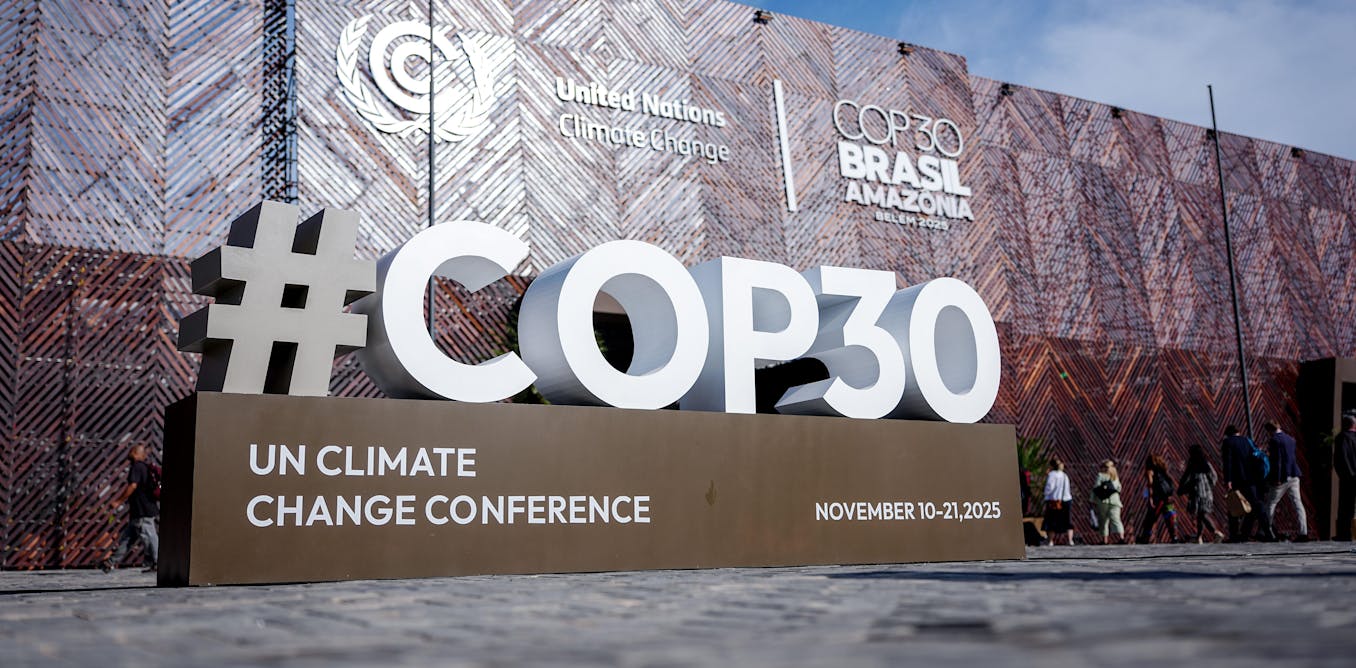
The UN climate summit Cop30 in Belém, Brazil, faces significant challenges, including the submission of national climate plans, funding for climate action, the definition of a "just transition," and tropical forest preservation. As of now, only 79 countries, accounting for 64% of global emissions, have submitted their updated climate commitments. The issue of funding remains unresolved, with developing countries needing US$1.3 trillion annually but only receiving a pledge of US$300 billion. The debate on what constitutes a fair transition from fossil fuels lacks clarity, risking ineffective climate action. Additionally, Brazil's initiative to protect tropical forests hinges on global cooperation.
Latin America
Five key issues at the UN climate summit in Brazil – and why they matter to you and the planet

Nvidia CEO Jensen Huang stated that China is poised to win the AI race, citing its advancements in energy, research talent, and a strategic national strategy aiming for AI leadership by 2030. Research at the 2025 International Conference on Computer Vision showed that half of the presented papers were from Chinese institutions, underscoring China's dominance in the field. Moreover, coordinated financial ecosystems and vast data generation bolster China's AI progress. However, the U.S. maintains leadership with more private-sector investment and top AI companies, presenting a complex competitive landscape.
Will China win the AI race?
Accusations that China pressured Sheffield Hallam University to halt research on Uyghur forced labor have prompted concerns about academic freedom. Despite the university's claims of procedural reasons for the pause, allegations have arisen linking the halt to external pressures. Academic freedom, a crucial component of democracy, is facing global declines, as evidenced by the Academic Freedom Index and reports of 395 attacks on scholars worldwide. To combat this, universities should adopt clear policies on academic freedom, implement protection mechanisms for sensitive research, and document intimidation attempts to uphold scholarly integrity and human rights.
Why threats to academic freedom are growing – and how universities can respond to intimidation
A global governance framework for AI is necessary to address fragmented local control and build trust in the technology. Current disparities in AI governance among nations hinder shared growth and create a trust gap that affects economic performance. A proposed architecture would include a constitutional framework for safety and transparency, an operating system for interoperable trust, and a council to align strategies and safeguards. This approach seeks to empower and unify nations while allowing for individual regulatory contexts, aiming for a cooperative intelligence ecosystem that benefits all.
Health, Education, ICT, Financial services
Building trust in AI through a new global governance framework
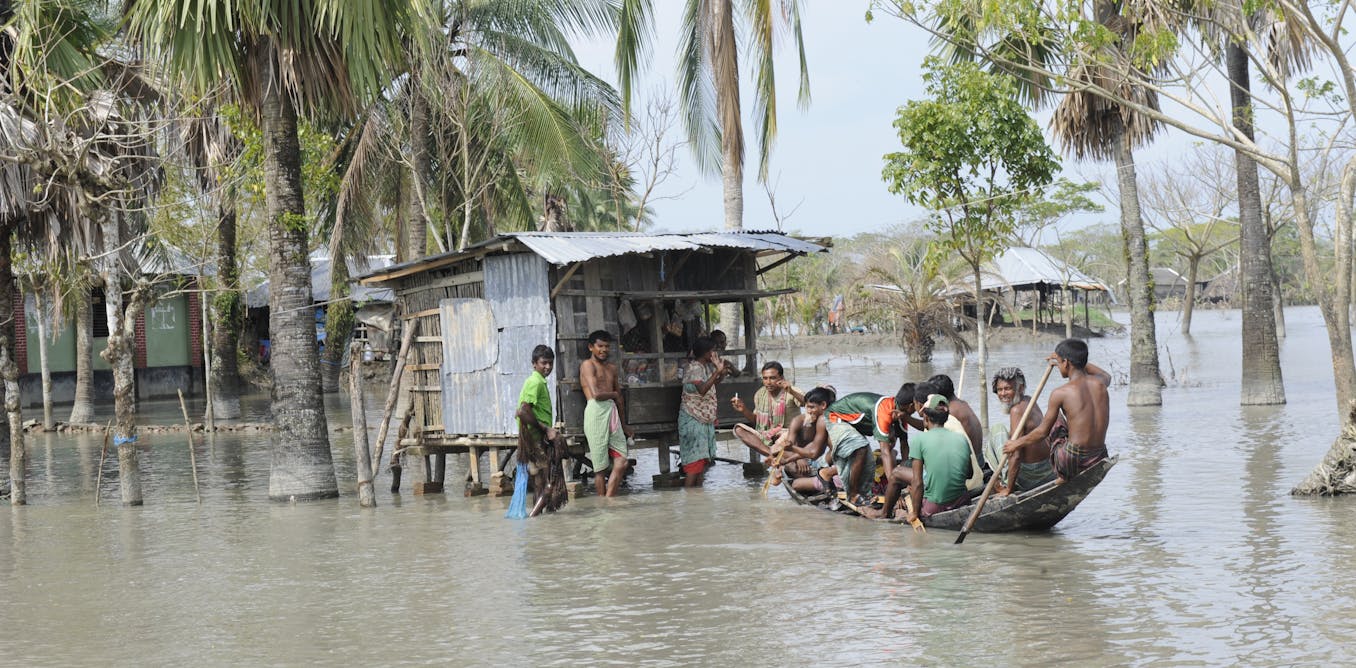
Countries are increasingly addressing the impacts of climate change through various adaptation strategies. Bangladesh has established early warning systems to reduce cyclone-related deaths, while Tuvalu focuses on land reclamation amidst rising sea levels and has signed a migration agreement with Australia. The UK faces slow adaptation progress despite monitoring structures, risking food security. Kenya empowers local committees to prioritize adaptation efforts, though some challenges require broader support. In Australia, escalating disaster risks prompt national plans emphasizing potential relocations and agricultural shifts. Overall, while steps are being taken, adaptation measures must evolve significantly to meet future climate challenges.
Nigeria
How five countries are adapting to the climate crisis