
World leaders will convene for the UN COP30 climate summit in Belem, Brazil, amid urgent calls for enhanced action to combat climate change. A report by Systems Change Lab highlights that global efforts are insufficient to meet temperature rise limits set by the Paris Agreement, with projections suggesting a potential 3.1°C rise. Progress includes renewable energy surpassing coal in some regions; however, substantial actions like phasing out fossil fuels and cutting emissions by 43% by 2030 are necessary to avoid catastrophic effects. Despite challenges, natural ecosystems could play a role in carbon absorption, and every fraction of temperature increase matters for future harm mitigation.
Antarctica, Nigeria | Health
COP30: What is the world doing about climate change?
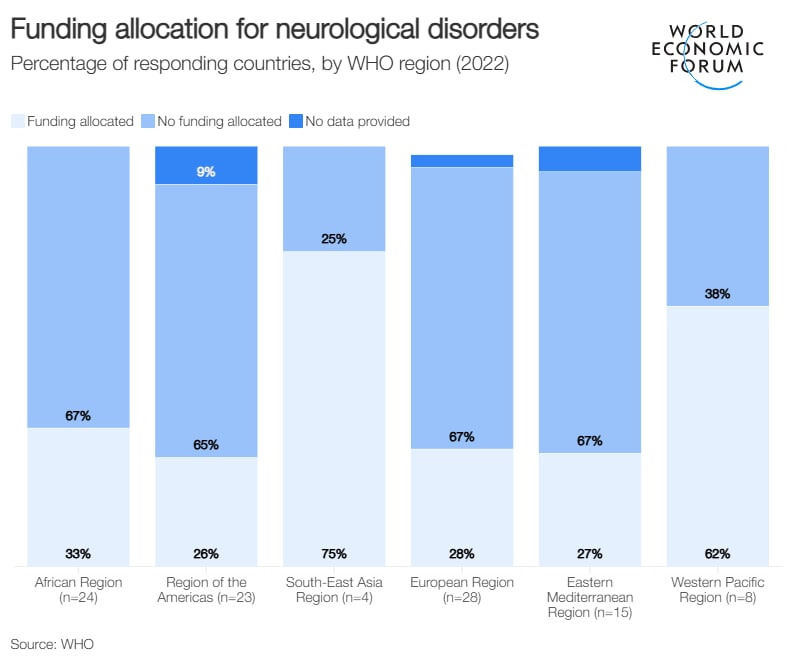
Neurological conditions impact over 3 billion people, leading to more than 11 million deaths annually. Despite their prevalence, only 32% of countries have national policies addressing these disorders, and merely 18% allocate dedicated funding. The World Health Organization emphasizes the need for increased investment, universal health coverage, and better data systems for neurological care. Additionally, a new heat-sensitive label could significantly reduce vaccine wastage by indicating exposure to unsafe temperatures. In other health news, NHS in England and Wales introduces an HIV prevention jab, AI aids dementia detection, and a partnership aims to digitalize health systems in sub-Saharan Africa.
Africa | Health
Neurological conditions affect more than 40% of global population, and other health stories

Uncertainty is significantly impacting the global economy, becoming a crucial economic factor according to a Deutsche Bank strategist. Measurement of uncertainty is often indirect, utilizing proxy data like surveys from institutions such as the World Economic Forum, the US Federal Reserve, and the European Commission. High levels of economic uncertainty, linked to global events like tariff hikes and crises, threaten trade, GDP growth, and investment. Various indices, such as the Economic Policy Uncertainty Index, quantify this uncertainty, revealing its detrimental effects on macroeconomic performance. Experts emphasize that unpredictability hinders businesses’ long-term planning.
Ukraine, United Arab Emirates, United Kingdom | Financial services
Uncertainty is impacting the global economy. But how is it measured?

AI has the potential to unlock $200 billion in sustainable finance for the Middle East and North Africa (MENA) by 2030, significantly addressing a $675 billion funding gap. As AI technology rapidly advances, it can enhance sustainability efforts in finance, energy, and resource management. A collaborative project involving First Abu Dhabi Bank revealed AI can identify sustainable finance opportunities and improve risk assessments, potentially generating a 50-135x ROI within five years. Additionally, such initiatives could contribute to decarbonization by avoiding 3.8 million tons of CO2 emissions and creating approximately 50,000 new sustainable jobs.
Africa
Could AI help the Middle East and North Africa unlock $200 billion in sustainable finance by 2030?

The development of AI requires challenging disciplinary silos that can obscure a holistic understanding and responsible innovation. Different academic fields are incorporating AI, but focus on either opportunities or risks, leading to incomplete views on associated challenges. For example, while AI enhances medical diagnostics, its environmental impact on resource consumption poses significant risks. The article argues that interdisciplinary collaboration and diverse perspectives are essential to address these contradictions and to frame objectives in ways that align with broader human values. Crafting nuanced prompts for AI applications is crucial to avoid misalignment with societal goals.
Financial services, Education, Health, ICT
Designing AI for humanity: Why disciplines must clash

Successful urban innovation relies on shared purposes among public, private, and community stakeholders. The Global Partnership for Local Investment honored three cities—Harar, Kigali, and Jersey City—for their collaborative efforts addressing pollution, housing, and healthcare through trust and transparency. 

In Harar, a partnership with Kubik aimed to create a plastic-waste-free city by converting waste into building materials, generating jobs for over 600 women and significantly reducing waste. Jersey City focused on making healthcare technology more accessible, resulting in improved health outcomes for underserved residents through community-driven designs. These initiatives highlight the importance of inclusive collaboration for sustainable urban transformations.
Rwanda | Financial services, Education, Health
Collaboration for trust – How cities build innovation from the ground up

Mauritania's economic growth and development strategies rely heavily on its mining, energy, and fishing sectors, which contribute significantly to GDP and exports. However, the country faces challenges like a low manufacturing base, food insecurity, and deep social inequalities. With 28% of its population living below the poverty line, Mauritania is pursuing structural reforms under the SCAPP strategy and enhancing regional cooperation, securing over $2.5 billion in investments from various entities. The African Continental Free Trade Area provides further opportunities for economic integration, potentially reducing poverty levels and fostering inclusive growth by 2043.
Algeria, Angola, Benin, Burkina Faso, Burundi, Cameroon, Democratic Republic of the Congo, Djibouti, Egypt, Eswatini, Ethiopia, Gabon, Ghana, Guatemala, Guinea, Indonesia, Jamaica, Jordan, Kenya, Lesotho, Madagascar, Malawi, Mali, Mauritania, Mauritius, Morocco, Mozambique, Namibia, Niger, Nigeria, Oman, Pakistan, Peru, Rwanda, Saudi Arabia, Senegal, Seychelles, South Africa, Tanzania, Thailand, Trinidad and Tobago, Tunisia, United Arab Emirates
Can Mauritania’s partnerships drive inclusive growth?

As artificial intelligence (AI) increasingly disseminates development data, concerns about data integrity arise, especially with large language models (LLMs) that can summarize and interpret information rapidly. These models can produce outputs that might not accurately reflect the official data they are based on, despite seeming confident. Proof-Carrying Numbers (PCN) provide a solution by offering a mechanism to verify the numerical accuracy of AI-generated data in real-time. PCN checks outputs against reference data and flags any deviations, promoting transparency and trust in AI systems.
Strengthening governance and trust in AI-based data dissemination with Proof-Carrying Numbers

A resilience economy is emerging, driving cities like New York and Cape Town to link climate action with inclusive economic growth. Strategic cross-sector partnerships translate climate risks into investment opportunities, addressing an annual $300 billion loss due to climate shocks. Low- and middle-income countries may need $821 billion annually by 2050 for resilient infrastructure. The private sector is expected to attract over $1 trillion in climate resilience investments by 2030. Effective resilience planning requires collaboration among cities, investors, and insurers to create sustainable, proactive solutions, ensuring long-term economic competitiveness and community strength.
Nigeria | Financial services, Health
How investing in urban resilience can foster sustainable growth and long-term competitiveness

Populist citizens in ten West European countries exhibit dissatisfaction with democracy but remain supportive of democratic principles. According to a study by Patricia Rehus and Steven M. Van Hauwaert, while they are less supportive of minority rights, populist citizens do not show a greater inclination towards authoritarianism compared to non-populists. Their understanding of democracy encompasses multiple dimensions, blending electoral and liberal aspects, and reclassifying minority rights within a broader egalitarian context. This suggests that populist citizens envision democracy differently, valuing various democratic principles without necessarily rejecting the system itself.
Populist citizens are dissatisfied with democracy, but still democratic
Insurance must transition from a reactive model focused on risk transfer to a proactive approach emphasizing risk prevention. Rising insurance premiums amid increasing natural disaster losses are forcing people and businesses to relocate, threatening urban economies. Collaborations between cities and insurers aim to enhance urban resilience through calculated investments in disaster prevention. Successful examples include partnerships in Broward County and Cape Town, which have demonstrated the effectiveness of resilience strategies in attracting financing and improving credit ratings. This shift requires insurers to develop new capabilities to combine coverage with prevention efforts, ultimately benefiting all stakeholders.
Africa | Financial services, Health, Education, ICT
Why insurance must evolve from risk transfer to risk prevention

AI requires strong governance for effective regulation. The AGILE Index 2025 assesses AI governance across 43 indicators and highlights gaps in transparency, institutional preparedness, and the uneven development of regulatory frameworks. High-income countries typically have stronger governance structures, while middle-income nations face challenges in enforcement. Successful examples like Singapore and the UK demonstrate the potential of agile governance practices. The Global Regulatory Innovation Platform (GRIP), set to launch in 2025, aims to foster collaboration among stakeholders to enhance AI governance frameworks globally.
Algeria, Angola, Guinea
Turning measurement into momentum so agile governance can keep pace with AI

Business owners often hire and promote individuals who share their political views, leading to less educated managers and poorer company performance. Research from Brazil indicates that workers are 60% more likely to be employed by politically aligned owners, a trend more pronounced than biases based on gender or race. This political bias extends beyond hiring, affecting promotions and salaries negatively for those with differing views. Political favoritism poses serious risks to workplace fairness, performance, and corporate reputation.
Politics is a source of workplace bias more than race or gender
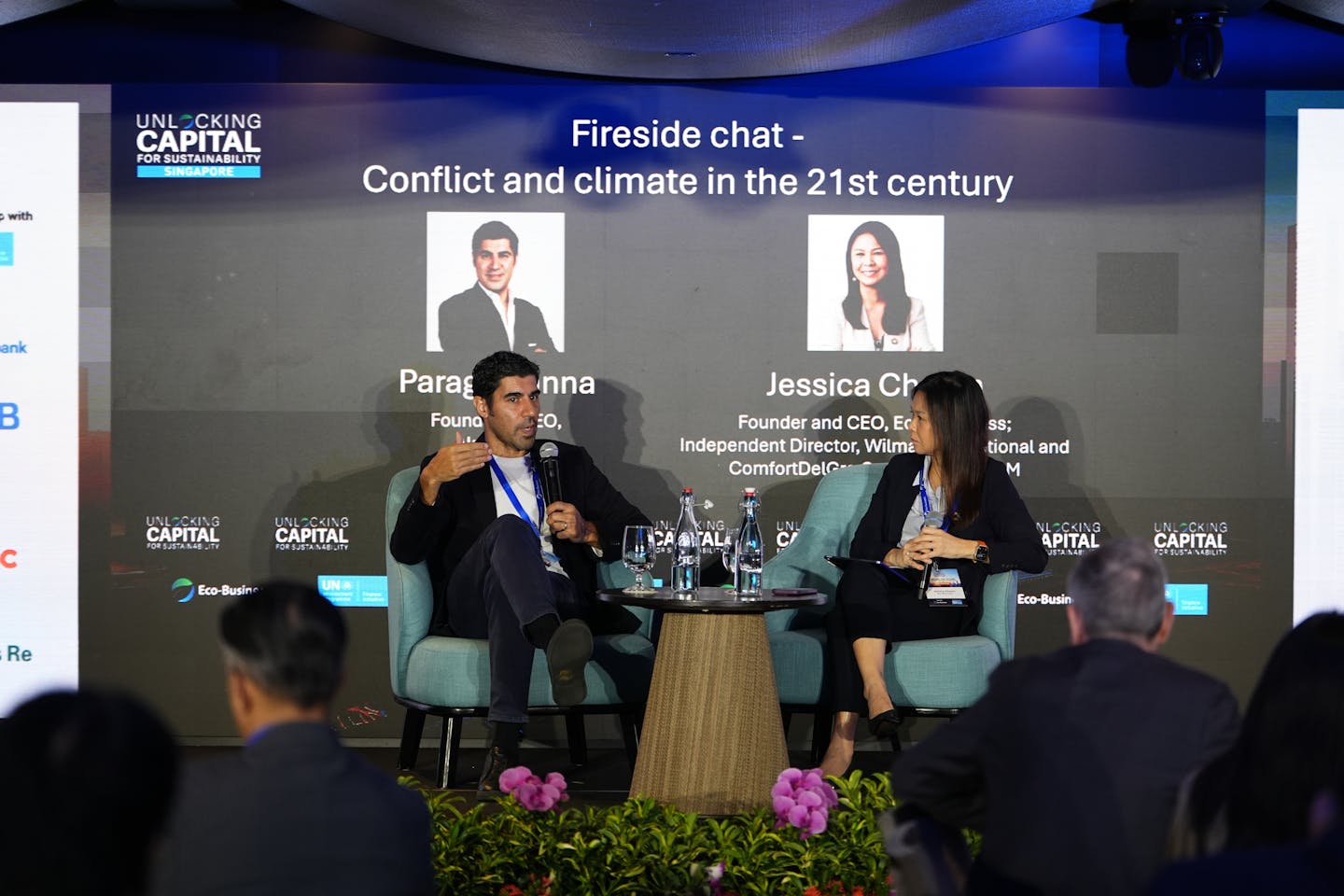
Singapore ranks as the most resilient nation in Asia Pacific and fourth globally, according to the Global Investment Risk and Resilience Index. This index evaluates nations' abilities to withstand geopolitical, economic, and climate shocks. In contrast, Pakistan is ranked near the bottom, highlighting significant vulnerabilities due to political instability and climate exposure. Dr. Parag Khanna emphasized the urgent need for increased focus on climate adaptation funding in Asia, as reliance on global actions is insufficient. He advocates local, data-driven approaches to tackle the region's environmental challenges as the realities of climate change unfold.
Algeria, Angola, Botswana, Chad, Guinea, Indonesia, Kenya, Kuwait, Malaysia, Mali, Mongolia, New Zealand, Nigeria, Pakistan, Philippines, Qatar, Republic of Korea, Seychelles, Singapore, Thailand, United Arab Emirates
Singapore ranked Asia Pacific's most resilient nation; climate adaptation in sharp focus as COP30 approaches
Uzbekistan is enhancing disaster resilience by integrating risk screening into all stages of public investment, addressing vulnerabilities to hazards like earthquakes, floods, and droughts. Utilizing geospatial digital tools, the government is able to assess risks and model disaster impacts on infrastructure and communities, allowing for informed decision-making. Key infrastructure projects are being designed with disaster considerations in mind, promoting long-term reliability and fiscal stability. This approach not only strengthens public investments but also aims to protect vulnerable populations, ensuring that projects are resilient against environmental shocks while fostering sustainable growth.
Kyrgyz Republic, Ukraine | Financial services
A Roadmap to Disaster Resilience
Informal justice mechanisms frequently fail to deliver equitable outcomes, as they often exhibit systematic biases against lower caste, female, and poorer disputants in eastern Uttar Pradesh. Dominant group arbitrators tend to dismiss concerns about inequality, resulting in the reinforcement of existing social hierarchies. While these arbitration forums offer accessible alternatives to formal courts, they highlight the need for institutional safeguards to protect the interests of historically marginalized groups and ensure fairness in dispute resolution.
Alternative Dispute Resolution and Social Inequality
Corporate ESG disclosure has become a highly polarizing issue in U.S. politics, particularly highlighted by a recent Republican-backed bill aiming to reduce companies' disclosure obligations related to climate and labor practices. Research indicates that ideological beliefs play a crucial role in lawmakers' actions regarding ESG regulations, with liberal politicians significantly more likely to support these disclosures compared to conservatives. The increasing politicization is linked to broader ideological debates, economic challenges in assessing E&S issues, and a strategic preference for disclosure mandates over more direct regulations. This polarization shows no signs of abating, with significant ideological shifts observed in recent voting patterns.
How corporate ESG disclosure has become a political lightning rod
The Green Primary Care Project in the Lao People’s Democratic Republic utilizes indigenous knowledge to develop locally relevant, inclusive, and sustainable climate adaptation strategies. It focuses on building climate-resilient, gender-responsive primary health care by integrating traditional ecological knowledge, enhancing health systems, and empowering vulnerable communities, particularly ethnic minorities and women, to address climate-related health risks through capacity building and infrastructure improvements.
Health
Using Traditional Ecological Knowledge for Climate-Resilient Primary Health Care

The "electrotech" revolution is transforming energy generation, usage, and transportation through renewables, electric vehicles, heat pumps, and batteries. Driven by physics, economics, and geopolitics, this shift highlights China's leadership while presenting opportunities for other nations. Electrotech technologies are significantly more efficient, with solar prices dropping by 99% since 1980, contrasting with stagnant fossil fuel prices. Furthermore, renewables offer energy sovereignty, potentially empowering many countries. The rapid adoption of solar and battery technologies is reshaping global energy dynamics, making electrotech a pivotal force in energy transition and security.
What is electrotech and what will it mean for geopolitics and energy security?

Cybersecurity has become a central element of national security due to the increasing complexity and dynamics of cyber threats. Successful nations will integrate cybersecurity within their national strategies and governance, recognizing its role in economic stability and sovereignty. The rise of advanced technologies, especially generative AI, has empowered both attackers and defenders, but significant challenges persist, such as workforce shortages and geopolitical tensions. Critical infrastructure is particularly vulnerable to attacks, which have disrupted essential services globally. Initiatives like the UAE's National Cybersecurity Strategy aim to enhance resilience through comprehensive governance and public-private partnerships. Effective cyber risk management requires elevated oversight and sustained investment across sectors.
Colombia, Russian Federation, Seychelles, Ukraine, United Kingdom | Financial services, ICT, Health, Education
Putting cybersecurity at the core of national security