
In an increasingly AI-driven economy, traditional paychecks are becoming less reliable as a source of financial security. As machines automate tasks, the divide between asset owners and wage earners is expected to widen. With AI expected to reduce workforces, individuals must shift their focus from labor to investing in assets to secure future income. This requires financial literacy, disciplined saving, investment diversification, and lifelong planning. Fintech can facilitate access to investment opportunities, but individuals must take initiative. Those who invest will be better positioned for the future, whereas those who do not may struggle financially.
Financial services, Education
Why your portfolio will be your paycheck in the age of AI

Space42 employs satellite communications, geospatial analytics, and HAPS technology to provide advanced space services. The AI-driven GIQ platform enhances operational efficiency and delivers actionable insights by integrating space and ground data. The Foresight constellation transforms Earth observation data into real-time geospatial intelligence, aiding government applications in infrastructure resilience, national planning, and risk management. Space42's integrated approach empowers decision-makers with greater confidence and situational awareness in their operations.
Advanced SpaceTech Services - Space 42
Digital democracy faces challenges due to the evolving relationships between authority and citizens, as highlighted by Antón Barba-Kay. Democratic practices rely on shared norms, which have deteriorated over the past two decades due to the adverse effects of digital technology on communication and moral infrastructure. Three digital pressures—choice, optimization, and neutrality—distort democratic norms by equating them with egalitarianism. The platform Polis exemplifies a successful digital tool for democratic deliberation, allowing public consultation while limiting interactive discourse to avoid disruptions, showing success at the cost of deeper dialogue.
Education, ICT
Democracy by the Book: Is data the last lingua franca?
The report evaluates the destruction of public records in Palestinian institutions in the Gaza Strip due to the war that erupted in October 2023. It emphasizes that “institutional memory” is vital for good governance and is at risk following significant damage to over 80% of government buildings, including archives and digital servers. The report notes that the political division since 2007 has complicated record-keeping, with varying control between Gaza and the West Bank. It assesses the damage across 45 institutions, highlighting the threats to rule of law and individual rights, and offers recommendations for the Palestinian Authority and the international community to recover documentation and bolster governance continuity.
Institutional memory of Palestinian Public Institutions under the war: Post-October 2023
Burdensome regulations deter entrepreneurs from formalizing their businesses, while stronger property rights and rule of law encourage formal registration. High rates of informal entrepreneurship limit growth aspirations and influence the relationship between gender and entrepreneurial ambition. The paper estimates informal entrepreneurship's prevalence across 60 countries from 2006 to 2022, highlighting significant economic and social implications stemming from the informal economy.
Latin America
Informal Entrepreneurship: Institutional Drivers and Productivity Consequences
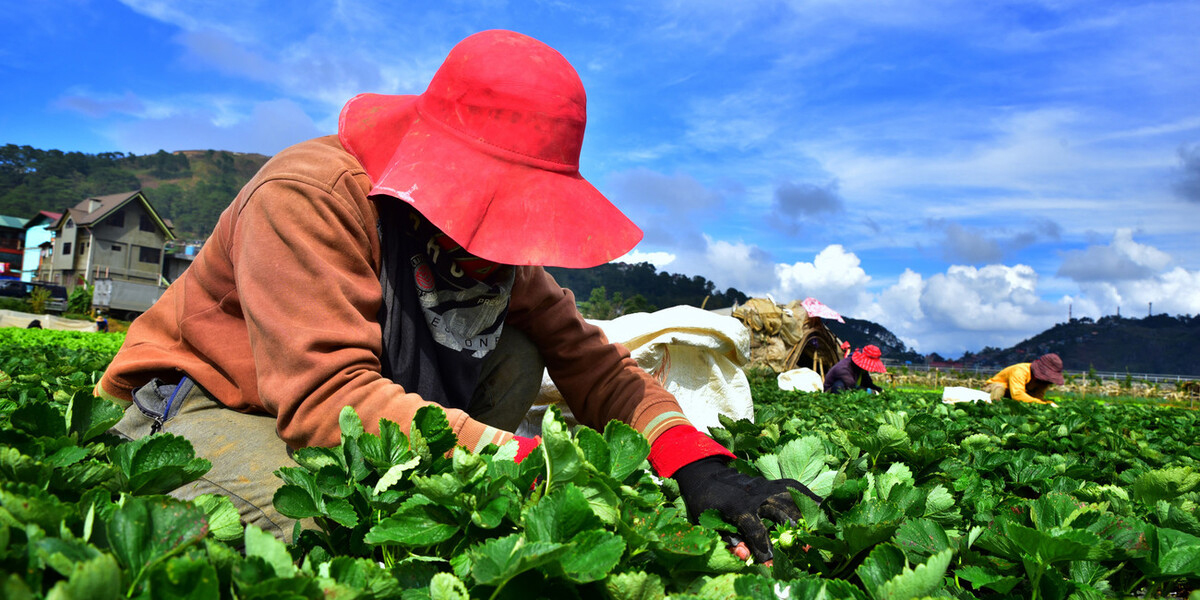
Agricultural education investment is crucial for addressing global food security as the world anticipates a population nearing 10 billion by 2050 while facing severe challenges like climate change and resource degradation. To achieve a sustainable "Green Revolution 2.0," significant investments in developing human capital are necessary. Current public investment in agricultural education and research has stagnated since the 1970s, hindering innovation and productivity. Emphasizing education will empower smallholders, enhance skills for modern agricultural practices, attract youth to the sector, and foster inclusivity while addressing environmental concerns.
Bangladesh, Nigeria | Education, Health
Why Agricultural Education Investment is Critical for Global Food Security
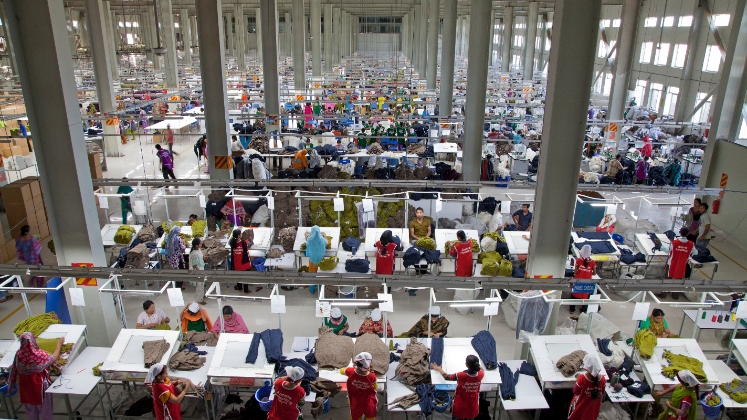
Enforceable brand agreements, such as the Bangladesh Accord, significantly enhance worker protections in global supply chains, addressing shortcomings of voluntary codes of conduct. They involve unions and brands working together with legal enforcement mechanisms, differentiating them from less accountable voluntary measures. Key examples include agreements aimed at combating gender-based violence in factories. However, researchers seek to better define these agreements, analyze their contracts—often shrouded in confidentiality—and understand their enforcement dynamics. Critics note that while these agreements show potential benefits for workers, issues like factory layoffs and decreased orders persist.
Labour rights agreements are reshaping global supply chains
Wicked problems such as climate change, migration, inequality, productivity, and mental health remain unresolved in Western democracies due to outdated political ideas and institutions. Sigge Winther Nielsen’s book, "The Puzzle State," explores this issue through analysis and personal accounts from political events across major cities. It identifies a critical gap in reform efforts: the lack of feedback between decision-makers and practitioners in various sectors. Introducing the concept of the Puzzle State, the author advocates for the use of collective intelligence and AI to enhance collaboration and adapt policies to real-world complexities.
The Puzzle State: How to Govern Wicked Problems in Western Democracies
Free Law Project and the Civil Rights Litigation Clearinghouse have launched a project exploring how artificial intelligence can enhance legal research accessibility, particularly in civil rights litigation. Funded by an exploratory grant from Arnold Ventures, the six-month initiative focused on developing AI tools to classify legal documents, summarize complex texts, generate structured metadata, and enable semantic searches. The project demonstrated the viability of these prototypes to improve legal infrastructure and access to court documents, enabling users to navigate the legal system more effectively.
Opening Doors with AI: How Free Law Project and the Civil Rights Litigation Clearinghouse Are Reimagining Legal Research
A four-stage assessment approach has been developed to evaluate dynamic capabilities in city governments, recognizing their inherent complexity. This method aims to combine rigor with usability, offering valuable insights for city governments and their supporters. The report details the assessment and comparison of dynamic capabilities in a selected sample of cities, and outlines plans for creating a scalable capabilities index to enhance urban governance and improve residents' lives.
Angola, Botswana, Brunei Darussalam, Cape Verde, Chad, Germany, Haiti, Jordan, Kuwait, Mali, Qatar
Assessing Dynamic Capabilities in City Governments: Creating a Public Sector Capabilities Index
The concept of peace technology has expanded globally, with accelerators playing a crucial role in its development. These accelerators, hosted by governments, universities, nonprofits, and private companies, concentrate resources, mentorship, and networks around innovation. This has led to the emergence of a diverse and interconnected ecosystem that continues to grow through new conferences, alliances, and prizes as of 2025.
Health, ICT, Education
From Concept to Ecosystem: The Evolution of PeaceTech Accelerators
International organizations (IOs) often present statistics that, instead of reflecting precise measurements, are based on 'guesstimates.' This paper by Lukas Linsi et al. examines why IOs disseminate these guesstimates with an appearance of certainty. Utilizing an ecological framework, the authors identify three key mechanisms: attracting attention, signaling scientific competence, and consolidating professional status. The study, focused on statistics regarding illicit trade, employs mixed methods to demonstrate how organizational and professional incentives promote mock precision, raising implications for scientific practices in various fields beyond IOs.
Education
Governing through guesstimates: mock precision in international organisations
A novel method developed by BVBA Research utilizes ArXiv data to track technological progress in real time through natural language processing techniques. Monthly indicators monitor preprint publications in computer science, physics, and mathematics, providing an immediate signal of research activity that correlates with traditional metrics like patents. Computer science submissions now comprise almost 50% of ArXiv, with AI research representing 70% of that output. Since 2014, focus in computer science has shifted toward AI disciplines, altering productivity trends and informing strategic investment decisions.
Measuring Technological Progress in Real Time with ArXiv

Automation is causing overcapacity in traditional workforce roles while simultaneously creating a significant shortage of AI-critical skills. A survey revealed that 92% of executives cite workforce overcapacity, with many anticipating up to 39% excess capacity by 2028. Concurrently, 94% report skill shortages, with around a third facing gaps of 40% or more in AI roles. To address these challenges, companies must prioritize reskilling, redesign roles for human-AI collaboration, embed workforce planning into strategies, and leverage diverse HR approaches. An example is BMW's AIconic system, which enhances operational efficiency through AI integration.
AI’s new dual workforce challenge: Balancing overcapacity and talent shortages
China has strategically worked for over two decades to enhance the role of the Chinese Yuan (CNY) in the global financial system, aiming to reduce vulnerability to US influence. Following the installation of a new US administration in 2025, the focus has shifted to commercial relations, with rising tensions expected to include currency discussions. The US seeks to maintain the dollar's dominance but may advocate for a lower exchange rate, pressuring China for a CNY revaluation. As China's economy integrates globally, it has shifted from managing capital flows to addressing frustrations with the dollar's centrality in the monetary system.
Taiwan, China | ICT, Financial services
US-China Competition and the Chinese Renminbi: a Strategy of Resilience First

In Japan, regular exercise routines bolster public health, enhance workplace productivity, and foster community resilience. Despite increasing sedentary behavior due to remote work, sports participation rose significantly, with over 54% of adults engaging in physical activity weekly. Key initiatives like radio taiso promote accessible exercise, enhancing flexibility and strength while reducing health risks, especially among older adults. Community sports festivals further encourage intergenerational collaboration and health management in workplaces. As the population ages, Japan emphasizes maintaining healthy life expectancy through these established exercise traditions and initiatives.
In Japan, simple exercise routines strengthen health, community ties and resilience
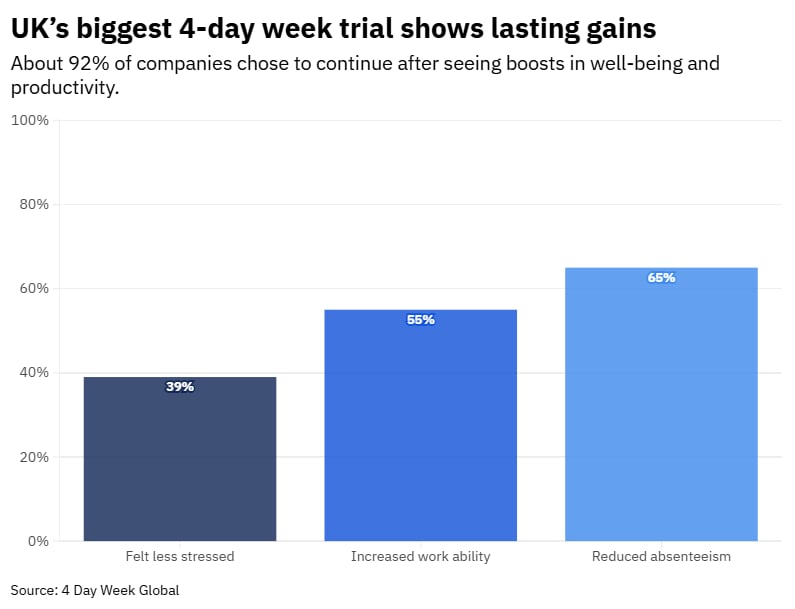
The four-day work week is gaining traction as an innovative shift in workplace productivity, with over 2.7 million UK workers currently participating. Models like the 100:80:100 principle maintain pay while reducing hours without loss of output. Global trials have shown that organizations implementing this model report reduced stress and improved revenues. Rapid advancements in AI could further enhance productivity, with generative AI helping to streamline tasks. Successful integration of AI in reshaping work processes can enable firms to support shorter weeks while maintaining, or even boosting, productivity and employee satisfaction.
Education
How AI can support the four-day work week, and other trends in jobs and skills this month
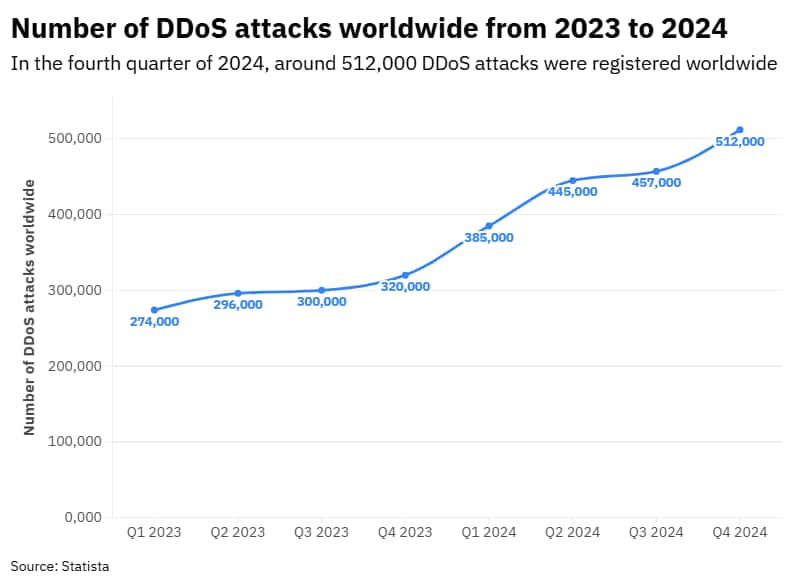
The Cybersecurity Information Sharing Act (CISA), a key US cybersecurity law, expired on October 1, 2025, leading to a potential 80% drop in information sharing between private and public sectors due to reduced legal protections. In other news, the US Secret Service dismantled a threat network during the UN General Assembly, and a cyber attack on Collins Aerospace disrupted European airports. Jaguar Land Rover faced extensive factory shutdowns due to a cyber attack impacting multiple countries, while a DDoS attack peaked at 22.2 Tbps, marking a new record. Cyber incidents have incurred significant costs to organizations, including an estimated $352 billion impact on the German economy.
ICT
Key US cyber law expires, and other cybersecurity news
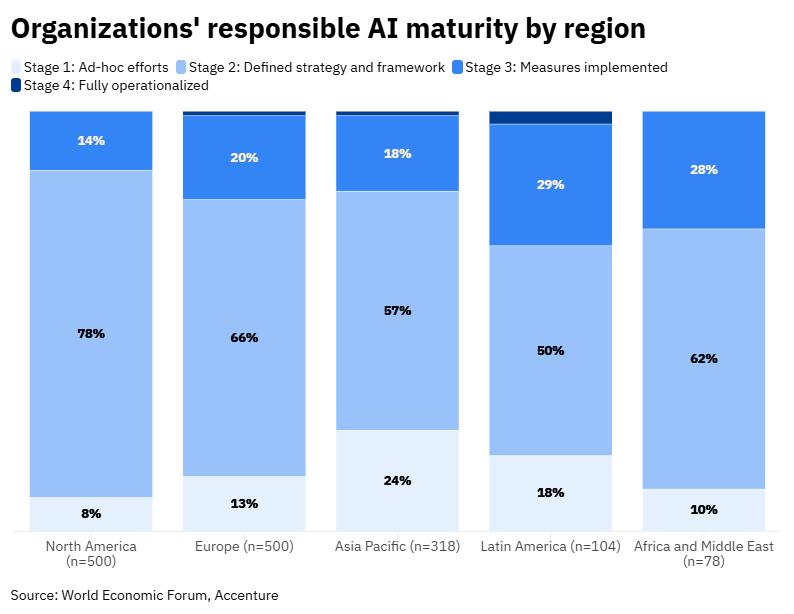
The UN has established two key AI governance bodies: the Global Dialogue on AI Governance and the Independent International Scientific Panel on AI. These initiatives aim to create an inclusive international framework for managing AI technology, which is essential for responsible adoption. Despite AI's rapid growth and potential benefits, only a small fraction of organizations have effectively implemented responsible practices. The new bodies will facilitate cooperation among governments, industry, and civil society, providing evidence-based insights and best practices to ensure safe and trustworthy AI.
Health, Education
The UN has moved to close the gap in AI governance. Here's what to know

Global supply chains are undergoing significant reconfiguration, driven by trade disputes, environmental laws, and geopolitical conflicts. This transformation marks a shift from an integrated model of globalization to a multi-polar order. While Europe and North America focus on reshoring, Asia is redefining its role by consolidating internal capacities and enhancing regional synergies. China is transitioning from low- to mid-tier manufacturing to advanced industries, while Japan leads in high-tech sectors, and South Korea navigates challenges from US sanctions and Chinese competition. Each country's response to these macroeconomic shifts will shape the future of Asia's supply chain ecosystem.
Argentina, Armenia, Australia, Austria, Bahrain, Belarus, Belgium, Bermuda, Brazil, Bulgaria, Burundi, Cambodia, Cameroon, Canada, Chile, Costa Rica, Cyprus, Czech Republic, Denmark, Finland, France, Germany, Ghana, Hungary, Iceland, India, Indonesia, Ireland, Israel, Italy, Japan, Jordan, Kazakhstan, Kenya, Kyrgyz Republic, Lebanon, Lesotho, Lithuania, Luxembourg, Malaysia, Mauritius, Mexico, Mongolia, Morocco, Nepal, Netherlands, New Zealand, Norway, Oman, Panama, Peru, Philippines, Poland, Portugal, Republic of Korea, Romania, Russian Federation, Rwanda, Senegal, Singapore, Slovakia, Slovenia, Spain, Sri Lanka, Sweden, Switzerland, Taiwan, China, Thailand, Türkiye, Ukraine, United Arab Emirates, Viet Nam | Financial services
Asia’s supply chain reconfiguration