Generative Artificial Intelligence (GenAI) significantly influenced electoral campaigns in 2024, with 80% of countries holding competitive elections experiencing related incidents. A total of 215 incidents were documented across 50 nations, primarily involving content creation for political messaging. Most incidents were deemed harmful, with 69% contributing negatively to the election process. The majority of generated content lacked identifiable sources, and a notable portion came from foreign actors. This data-driven assessment underscores the need for responsible governance and policy frameworks to manage GenAI's impact on elections and voter trust.
Generative AI in Electoral Campaigns: Mapping Global Patterns
Content labels and corrective information are effective strategies for mitigating misinformation on social media, according to a systematic review and meta-analysis of 4,798 scholarly articles. Out of 588 selected studies, the research confirms these two approaches as endorsed countermeasures. However, most proposed interventions show uncertain effects, with less than 20% reporting measurable improvements. Additionally, the findings emphasize the need for more rigorous research worldwide, particularly in diverse languages and contexts, to enhance the understanding of user experiences and improve methodologies for evaluating misinformation countermeasures.
Strategies for Improving the Global Information Environment: Results from a Systematic Review and Meta-Analysis
The 2023 Expert Survey on the Global Information Environment reveals significant concerns among 289 researchers regarding misinformation, algorithmic bias, and content moderation. Two-thirds of experts prioritize accurate information for a healthy environment, while half value diverse voices. Key threats identified include social media platforms (33%) and political influences (31%). A notable 72% highlight the lack of access to platform data as a major barrier to understanding this environment. Most experts (54%) anticipate deterioration in 2024, with varying concerns based on governance type, focusing on government influence in autocracies and foreign interference in democracies.
Education, ICT, Health
Trends in the Global Information Environment: 2023 Expert Survey Results

By 2030, 1.4 billion people will be over 60, with low- and middle-income countries hosting 80% of this population. The WHO's UN Decade of Healthy Ageing (2021-2030) targets age-friendly environments, combating ageism, and integrated long-term care. Despite medical advancements increasing life expectancy, many older individuals face disparities, particularly in socio-economically challenged regions. The decade emphasizes holistic public health action, engagement of older people, and collaboration among stakeholders. Community-based programs and civil society involvement are vital in addressing these issues and promoting healthy ageing among vulnerable populations.
Africa | Health
Healthy ageing: Are we on track?

Businesses are increasingly recognizing the role of a Chief AI Officer (CAIO), but not all require this position. Birju Shah, an AI expert, identifies three criteria for determining the necessity of a CAIO: having over one million customers, a commitment to personalized services, and the availability of internal expertise for AI implementation. CAIOs should possess a unique skill set, including competitive intelligence and familiarity with data sources across the organization. Effective CAIOs can enhance operational efficiency and drive financial benefits, but many companies fail to evaluate AI's effectiveness properly, leading to minimal impact from pilot programs.
Does Your Company Need a Chief AI Officer?

Emerging technologies are revolutionizing global trade, offering faster, more inclusive, and secure cross-border commerce, yet regulations struggle to keep pace, creating significant gaps. The UAE TradeTech Regulatory Sandbox, a collaboration between the World Economic Forum and UAE regulators, tested innovative solutions including digital trade documentation and stablecoin payments. This initiative revealed the potential of digital transformation for trade and outlined necessary policy adaptations for widespread adoption. The findings provide a practical roadmap for governments, regulators, and innovators to foster resilient and inclusive global commerce.
Denmark, Egypt, Jordan, Morocco, Saudi Arabia, Tanzania, Trinidad and Tobago, Tunisia, United Arab Emirates, United Kingdom | Financial services, Education, ICT
Advancing Digital Trade: Insights from the UAE TradeTech Regulatory Sandbox

The Singapore Digital Gateway (SGDG) serves as a comprehensive resource for countries, integrating Singapore’s digital and AI strategies, governance frameworks, guides, and open-source tools. Announced by Minister Josephine Teo at a Global Dialogue on AI Governance meeting, the SGDG will initially focus on AI and digital government, featuring key elements like the National AI Strategy 2.0 and the Digital Government Blueprint. It will also provide training and capacity-building courses in collaboration with partners like the World Bank and UNDP, with plans for future expansions into areas like cybersecurity and smart cities.
Singapore | ICT
Singapore launches gateway to provide countries access to digital resources
Evaluations significantly influence AI development, impacting investment, regulation, and public trust. However, many evaluations fail to reflect real-world performance of AI systems due to a lack of context specificity, reliance on technical details, and fragmented methodologies. To improve evaluations, collective input from various stakeholders is essential. Key challenges include the inability to conduct fruitful comparisons due to non-standardized documentation and the prevalence of proprietary internal evaluations that hinder widespread applicability. Evaluations can be categorized into capability, risk, and contextual types to better address these issues.
Education
Notes on building collective intelligence into evals
Governments are increasingly recognizing the transformative potential of artificial intelligence (AI) in public governance to enhance service delivery and improve decision-making. This integration of AI faces ethical, technical, and institutional challenges, such as algorithmic bias and privacy concerns, necessitating responsible adoption. The paper outlines key ethical considerations, international frameworks, technical solutions like explainability and privacy-enhancing technologies, and a self-assessment toolkit to evaluate public institutions' readiness for AI implementation, aiming to promote trustworthy, ethical, and inclusive AI practices.
Education
Building Trustworthy Artificial Intelligence: Frameworks, Applications, and Self-Assessment for Readiness
Satellite imagery can effectively estimate conflict-induced damage to agricultural production in Ukraine, outperforming traditional media-based indicators. The study integrates data on summer and winter crop areas from 2019–2024 with measures of damage from optical and thermal satellite sensors, assessing nearly 10,000 village councils. Findings reveal significant and ongoing negative impacts that extend to unaffected villages, with the predicted damage using image-based indicators being three times greater than media-based estimates. This approach offers new insights into the implications of conflict on agriculture for future research.
Using Remotely Sensed Data to Assess War-Induced Damage to Agricultural Cultivation: Evidence from Ukraine
Ukraine launched Diia.AI on the Diia portal, the world's first national AI-agent capable of delivering government services directly within a chat interface. Committed to becoming a leader in AI development by 2030, the platform is currently in open beta, allowing users to request services like income certificates directly. Diia.AI aims to enhance the citizen-state relationship by functioning as a proactive assistant that automatically processes requests without manual inputs. This initiative represents a significant shift in how government services are accessed globally.
Diia.AI: The World’s First National AI-Agent That Delivers Real Government Services
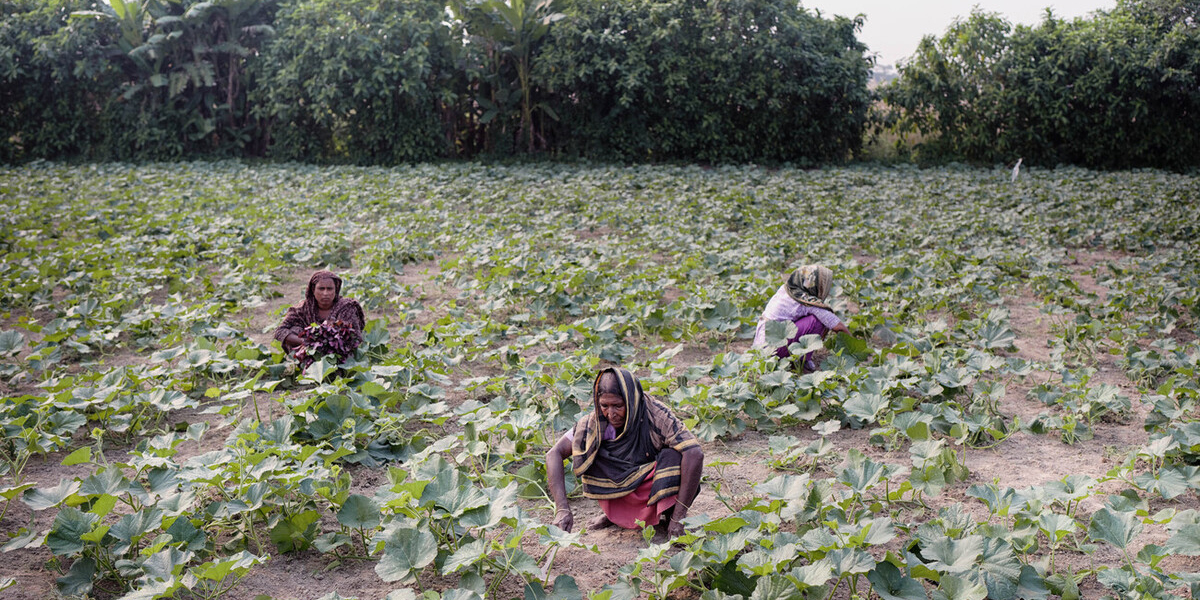
Bangladesh faces severe climate risks, with an average annual economic loss of about $3 billion. The World Bank projects increasing extreme heat and unpredictable rainfall, potentially reducing GDP by up to 9% by 2050 without adaptation. Despite its low contribution to global greenhouse gas emissions, fossil fuel reliance and inadequate governance hinder climate action. Initiatives like the National Adaptation Plan and investments from the Asian Development Bank aim to enhance climate resilience. A whole-of-government approach is facilitating coordinated action among stakeholders, improving data collection, and integrating climate considerations into public planning.
Bangladesh, Nigeria, Pakistan | Financial services, Health
Building Climate Resiliency to Secure Bangladesh’s Economic Future
The success of service exporters in emerging Asia, particularly in digital services, is primarily driven by supply-side factors. A structural gravity model analysis reveals that human capital, such as education and English proficiency, plays a crucial role in enhancing exports, especially in the digital business process services sector. Demand factors and trade policies are less significant in influencing export growth.
Ethiopia, Germany, India, Indonesia, Japan, Jordan, Kenya, Malaysia, Pakistan, Philippines, Republic of Korea, Russian Federation, Saudi Arabia, Senegal, Singapore, South Africa, Sri Lanka, Taiwan, China, Tanzania, Thailand, Ukraine, United Arab Emirates, Viet Nam
What Explains the Success of Emerging Asia’s Service Exporters?

Artificial intelligence has accelerated the pace of change, making adaptability the key constraint for organizations. Unlike previous technological revolutions that allowed time for adaptation, AI combines invention, adoption, and disruption almost instantaneously. This creates an adaptability gap where workers and firms struggle to keep pace with rapid changes. 

To address this, leaders need to deliberately design adaptability within organizations, focusing on task-level definitions, continuous reskilling, and flexible governance. Implementing a repeatable framework like RATE—Reframe, Automate, Train, Experiment—can help organizations systematically manage ongoing change.
Financial services, Education
Adaptability is the essential skill in the age of AI
Africa's youthful population growth offers economic potential if young people acquire relevant skills. Technical and Vocational Education and Training (TVET) is essential for building practical skills that boost employability and productivity amid digitalization, automation, and green transitions. However, African TVET systems face challenges such as underfunding, instructor shortages, poor infrastructure, and weak labor market alignment. Strengthening TVET requires political will, institutional capacity, private sector engagement, coordinated investment, accountability, and inclusive, innovative policies to prepare youth for evolving labor markets and support economic transformation.
Africa, Latin America | Education
Building Technical and Vocational Education and Training (TVET) Systems for Economic Transformation in Africa

China has pledged to reduce greenhouse gas emissions by 7%-10% by 2035, in line with its commitment to peak emissions this decade. This approach reflects China's track record of setting achievable targets, contrasting with many countries that focus on ambitious goals without concrete plans. A recent study in Nature Communications forecasts a global emissions peak this decade and net zero by 2070, emphasizing China's significant role in this scenario. The study also highlights concerns about the implications of China's methane emissions and the need for effective carbon storage and land use strategies. Despite its relevance, this research has received little attention amidst ongoing climate debates.
When China makes a climate pledge, the world should listen
AI tools like large language models (LLMs) create a tension in social change systems between connection and abstraction. Connection is slow, human, and relational, relying on trust and collaboration, while abstraction simplifies complexity and fosters efficiency. LLMs excel in abstraction, reducing human interactions to data points and generating outputs. Although LLMs can enhance creativity and reflection by reorganizing ideas, they lack true intelligence, reasoning, or agency, reshaping inputs without constructing meaningful understanding.
The limits of AI in social change
China has become a key player in providing clean technology and renewable energy solutions to countries in the Global South, with exports in solar, wind, electric vehicles, and battery technology exceeding $72 billion in 2024. While these imports have accelerated sustainability efforts, there is increasing demand for China to not just supply goods but also share technology and expertise to foster local manufacturing and innovation. Diplomatically, China has promoted educational and technical cooperation initiatives, yet concerns remain about its willingness and capacity to facilitate meaningful knowledge transfer. Successful partnerships can drive co-evolution in clean tech development, but significant challenges still exist.
Benin, Brazil, Cambodia, Egypt, Ethiopia, Germany, Ghana, India, Indonesia, Malaysia, Peru, Philippines, Portugal, Republic of Korea, Russian Federation, Senegal, Singapore, South Africa, Taiwan, China, Tanzania, Thailand, Tunisia, United Kingdom, Viet Nam | Financial services, Education
Can China share its green expertise with the Global South?
Cybercrime is escalating, with organizations facing increased threats and a critical cybersecurity talent gap. In 2025, the average weekly cyberattacks per organization have more than doubled since 2021. Small businesses are particularly vulnerable, with significantly more reporting inadequate cyber resilience. AI plays a dual role, both enhancing defenses and enabling more sophisticated attacks by criminals. Social engineering tactics, including the use of deepfakes, have been integrated into strategies by cybercriminals. Cybersecurity budgets are stagnating, with businesses pivoting towards AI solutions amid shortages in skilled personnel.
Africa | Financial services, Education, Health, ICT
Cybersecurity Awareness Month: 10 things to know in 2025
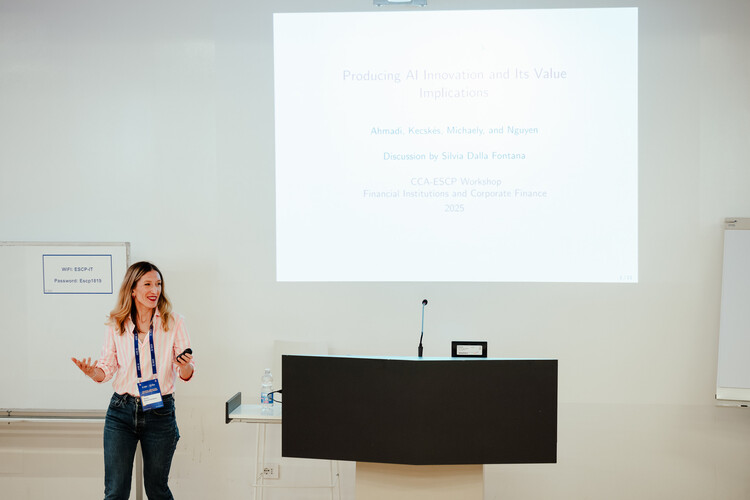
Silvia Dalla Fontana's research explores venture capital allocation dynamics, emphasizing its impact on future technological advancements and societal challenges. Her 2023 paper critiques the mismatch between VC incentives and the needs of deep tech for climate innovation, advocating for patient capital and public-private partnerships. She also examines the VC industry's adaptation to online interactions during the Covid-19 pandemic, revealing a shift toward a hybrid system. Additionally, her work highlights how first impressions influence funding decisions and advocates for greater inclusion in finance, paralleling issues in women's sports to illustrate the importance of capital allocation in shaping equitable futures.
Venture Capital Patterns: Silvia Dalla Fontana on Finance, Deep Tech, and Gender Equity