
Leaders are urged to operationalize AI accountability by deploying fair, transparent, and responsible AI systems to minimize risks and enhance value. Key action steps include defining clear use cases, establishing a governance framework, assigning human accountability, ensuring explainability, testing for bias, and documenting decisions. Organizations like JP Morgan, Salesforce, and Mastercard exemplify responsible AI governance through dedicated teams and ethical principles, promoting trust and oversight in AI initiatives. These practices help organizations integrate ethical accountability from the outset of AI system deployment.
Operationalize AI Accountability: A Leadership Playbook

China's cost-of-living trends reflect a deflationary dynamic driven by oversupply and low demand, mitigated by government efforts to boost consumption through welfare spending and trade-in programs. In contrast, the US is grappling with rising inflation due to historical supply shocks caused by high tariffs, which have increased costs for consumers while complicating business operations. The divergent economic landscapes highlight the challenges faced by each nation: China seeks to stimulate its economy amid a lack of consumption, while the US contends with elevated inflation risks and shifting manufacturing policies.
Taiwan, China | Financial services
China and the US: How can the world’s two biggest economies have such different problems?

The global economy faces challenges such as inflation and lower growth in specific regions, while other areas show resilience. Chief economists highlight underappreciated trends affecting innovation, labor markets, and finance. AI is viewed as a potential breakthrough technology, enhancing research productivity and economic growth, although its benefits may unevenly impact industries. Labor markets are influenced by an aging population and declining participation rates, exacerbating labor shortages in critical sectors. Additionally, the rise of cross-country multi-issuance stablecoins poses emerging risks to financial stability.
Argentina, Australia, Austria, Bahrain, Barbados, Belgium, Benin, Bolivia, Bulgaria, Burkina Faso, Cambodia, Canada, Chad, Chile, Colombia, Costa Rica, Cyprus, Czech Republic, Denmark, Dominican Republic, Ecuador, Egypt, El Salvador, Estonia, Ethiopia, Finland, Georgia, Germany, Ghana, Greece, Guatemala, Hungary, Iceland, India, Indonesia, Ireland, Israel, Italy, Jamaica, Japan, Jordan, Kazakhstan, Kenya, Kyrgyz Republic, Latvia, Lesotho, Lithuania, Luxembourg, Malawi, Malaysia, Mali, Malta, Mauritius, Mexico, Moldova, Morocco, Mozambique, Namibia, Nepal, Netherlands, New Zealand, Nigeria, Oman, Pakistan, Panama, Paraguay, Peru, Philippines, Poland, Portugal, Qatar, Republic of Korea, Russian Federation, Rwanda, Saudi Arabia, Senegal, Seychelles, Singapore, Slovakia, South Africa, Spain, Sri Lanka, Sweden, Switzerland, Taiwan, China, Tajikistan, Tanzania, Thailand, Tunisia, Türkiye, Uganda, Ukraine, United Arab Emirates, United Kingdom, Uruguay, Venezuela, Viet Nam, Yemen, Zambia, Zimbabwe | Education, Health, ICT, Financial services
What isn’t getting enough attention? These under-the-radar trends, according to chief economists

The September 2025 Chief Economists' Outlook analyzes the evolving global economy, highlighting growth, inflation, and the disruptive influence of technology. It emphasizes significant uncertainty due to trade tensions and rapid AI advancements. The report details regional disparities: the US faces subdued growth and inflation, Europe shows fragile improvements, China struggles with deflation, while emerging regions like Sub-Saharan Africa and the Middle East exhibit stronger momentum. It underscores the importance of recognizing systemic risks and opportunities to navigate a transforming global landscape effectively.
Egypt, Ethiopia, Germany, India, Indonesia, Japan, Nigeria, Seychelles, Singapore, Switzerland, Tanzania, Uganda, Ukraine, United Arab Emirates, United Kingdom | Financial services
Chief Economists' Outlook: September 2025

The September 2025 Chief Economists' Outlook examines critical dynamics influencing the global economy, including growth, inflation, policy changes, and technological disruption. It reveals a landscape of increased uncertainty, characterized by trade tensions and rapid advancements in artificial intelligence. Regional economic projections vary: the US faces inflation and subdued growth; Europe is showing fragile improvement; China is under deflationary pressure; while emerging markets like Sub-Saharan Africa and the Middle East exhibit stronger growth. The report emphasizes the necessity for businesses and policymakers to develop adaptive strategies amidst these structural changes and evolving risks.
Algeria, Angola, Argentina, Australia, Austria, Bahrain, Barbados, Belgium, Benin, Bolivia, Brazil, Bulgaria, Burkina Faso, Burundi, Cambodia, Cameroon, Canada, Cape Verde, Chad, Chile, Colombia, Costa Rica, Czech Republic, Democratic Republic of the Congo, Denmark, Dominican Republic, Ecuador, Egypt, El Salvador, Estonia, Eswatini, Ethiopia, Finland, France, Gabon, Georgia, Germany, Ghana, Greece, Guatemala, Guinea, Haiti, Hungary, Iceland, India, Indonesia, Ireland, Israel, Italy, Jamaica, Japan, Jordan, Kazakhstan, Kenya, Kyrgyz Republic, Lebanon, Lesotho, Luxembourg, Madagascar, Malawi, Malaysia, Mali, Malta, Mauritius, Mexico, Moldova, Mongolia, Morocco, Mozambique, Namibia, Nepal, Netherlands, New Zealand, Nigeria, Oman, Pakistan, Paraguay, Peru, Philippines, Poland, Portugal, Qatar, Republic of Korea, Russian Federation, Rwanda, Saudi Arabia, Senegal, Seychelles, Singapore, South Africa, Spain, Sweden, Switzerland, Taiwan, China, Tajikistan, Tanzania, Thailand, Tunisia, Türkiye, Uganda, Ukraine, United Arab Emirates, United Kingdom, Uruguay, Venezuela, Viet Nam, Yemen, Zambia, Zimbabwe | Education, Health, ICT, Financial services
Chief Economists' Outlook: September 2025

The manufacturing sector is facing significant challenges, with high attrition rates and a growing skills gap. More than 40% of Gen Z employees in manufacturing are considering leaving their jobs within the next 3-6 months, highlighting an urgent need for effective talent management strategies. Successful approaches include leveraging AI, immersive onboarding, personalized career planning, and initiatives for frontline well-being, resulting in reduced errors, lower attrition, faster onboarding, and a multiskilled workforce that enhances operational efficiency and productivity.
Education
Empowering Frontlines: Retaining, Training and Upskilling Industrial Workforce

The manufacturing sector is facing significant challenges, necessitating innovative talent strategies for retention and upskilling to maintain competitiveness and productivity. With over 40% of Gen Z employees contemplating job changes within 3-6 months, effective talent management is urgent. Successful strategies from leading organizations include leveraging AI for workforce enhancement, immersive onboarding, personalized career planning, and frontline well-being initiatives. These approaches have resulted in reduced mean-time to repair, fewer on-the-job errors, decreased attrition, quicker onboarding, a multiskilled workforce, and improved operational efficiency.
Education
Empowering Frontlines: Retaining, Training and Upskilling Industrial Workforce
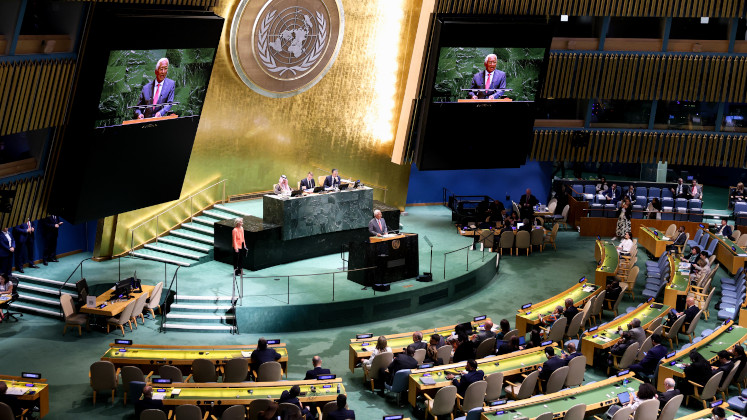
France, the UK, and other European states recognize Palestine, marking a notable shift in European diplomacy and breaking from decades of western policy. This recognition is seen as part of the commitment to a two-state solution, with various reactions from both Palestinian and Israeli leaders. While it symbolizes support for Palestinian statehood and impacts Europe's global role, the recognition does not change on-ground realities amid ongoing Israeli occupation. This diplomatic shift represents a broader alliance with significant western powers, emphasizing the legitimacy of the Palestinian cause within international law. It also coincides with rising public protests in Italy demanding similar recognition and a shift in foreign policy regarding Israel.
Europe, Palestine and the meaning of recognition

Learning a new language in late adulthood is not limited by age; individuals over 60 can successfully acquire new languages using various methods. Research shows no significant advantage of explicit teaching over incidental learning for older adults. In a study with 80 participants aged 60-83, both instructional approaches yielded similar high success rates. Additionally, factors like self-concept and employment status were linked to implicit learning abilities, suggesting that confidence and ongoing work engagement may enhance learning capacity. Overall, older learners can thrive independently, choosing effective paths tailored to their experiences.
Your age shouldn’t put you off learning a new language – what the research says
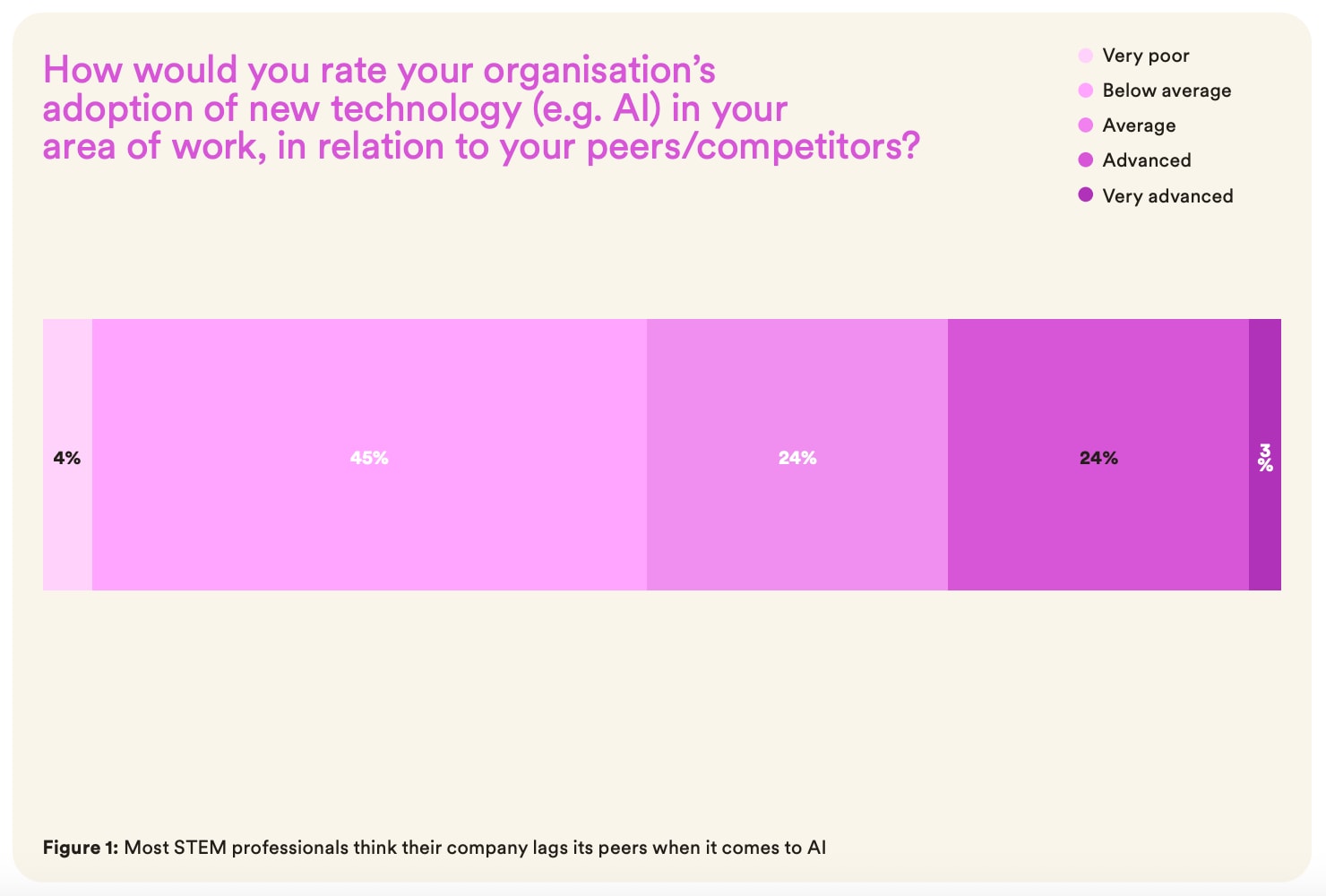
The global competition for STEM talent has intensified, with nations like Switzerland, Singapore, and South Korea making significant investments to attract skilled professionals. Systemic gaps in leadership, infrastructure, and trust are hindering the performance of nations like Germany and the US, leading to inefficiencies and burnout among talent. Effective leadership that values emotional intelligence and innovation is crucial, as is fostering a trusted work environment. Organizations must prioritize embedding technology in their culture and respond to the needs of STEM professionals to prevent talent attrition and ensure national competitiveness.
Singapore | Education
Trust, technology and leadership key to winning the STEM talent race
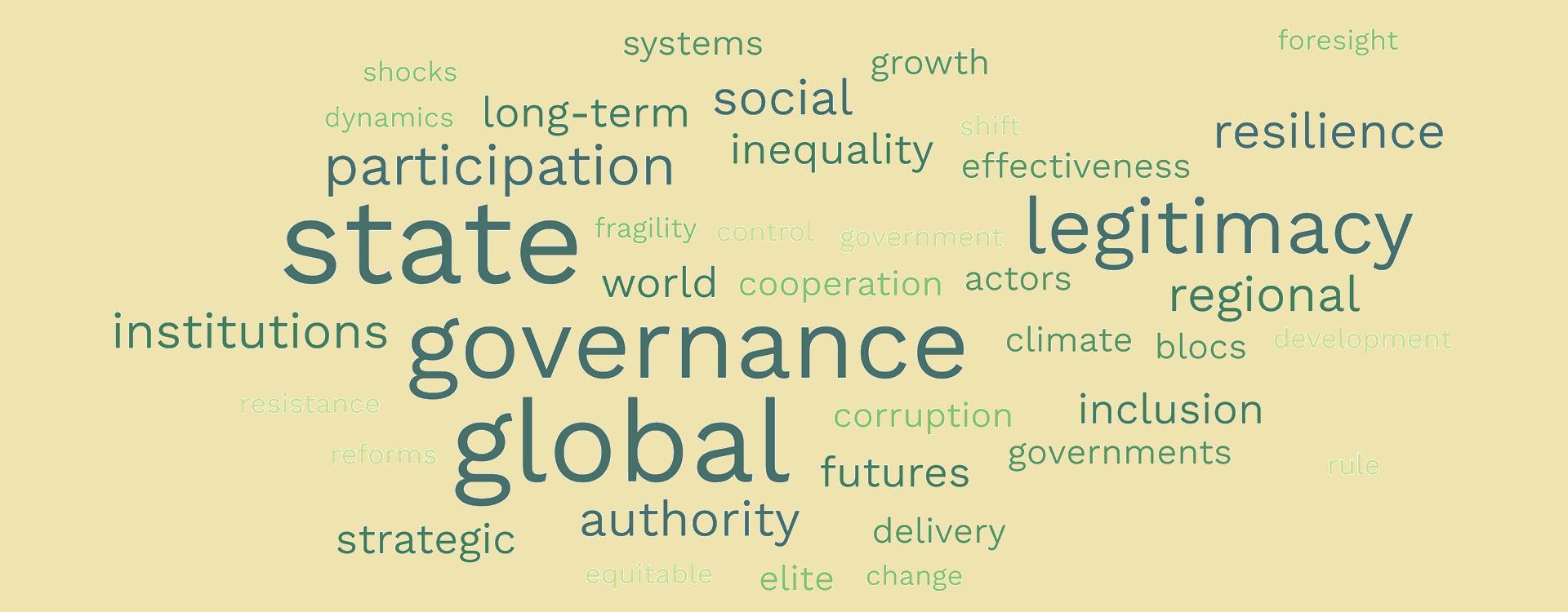
Global South states face significant pressures from climate change, demographic shifts, technology, and geopolitical tensions that challenge their legitimacy, capacity, and governance. A strategic foresight study identifies four potential governance trajectories: the dealmaker, which prioritizes economic growth but risks long-term instability; the system-builder, rooted in cooperation and equity but difficult to achieve; the fractured state, characterized by fragmentation and rising inequality; and the collapsed state, where governance fails entirely. Each trajectory is influenced by external shocks and internal choices, highlighting the complexity and uncertainty of governance futures in the Global South.
Albania, Algeria, Angola, Azerbaijan, Bangladesh, Barbados, Belgium, Benin, Bolivia, Botswana, Brunei Darussalam, Burkina Faso, Cambodia, Cape Verde, Chad, Chile, Colombia, Democratic Republic of the Congo, Denmark, Egypt, El Salvador, Estonia, Eswatini, Ethiopia, Finland, Gabon, Georgia, Germany, Ghana, Greece, Guatemala, Guinea, Haiti, Hungary, Iceland, Indonesia, Ireland, Israel, Jamaica, Japan, Jordan, Kenya, Kuwait, Kyrgyz Republic, Latvia, Lebanon, Lesotho, Luxembourg, Madagascar, Malawi, Malaysia, Mali, Mauritania, Moldova, Mongolia, Montenegro, Mozambique, Namibia, Netherlands, New Zealand, Nigeria, Pakistan, Paraguay, Peru, Philippines, Poland, Portugal, Qatar, Republic of Korea, Russian Federation, Rwanda, Saudi Arabia, Senegal, Serbia, Seychelles, Singapore, Slovakia, South Africa, Sweden, Switzerland, Taiwan, China, Tanzania, Thailand, Tunisia, Uganda, Ukraine, United Arab Emirates, United Kingdom, Uruguay, Venezuela, Viet Nam, Yemen, Zambia, Zimbabwe | Health, Financial services, Education
Under pressure: governance futures in the Global South
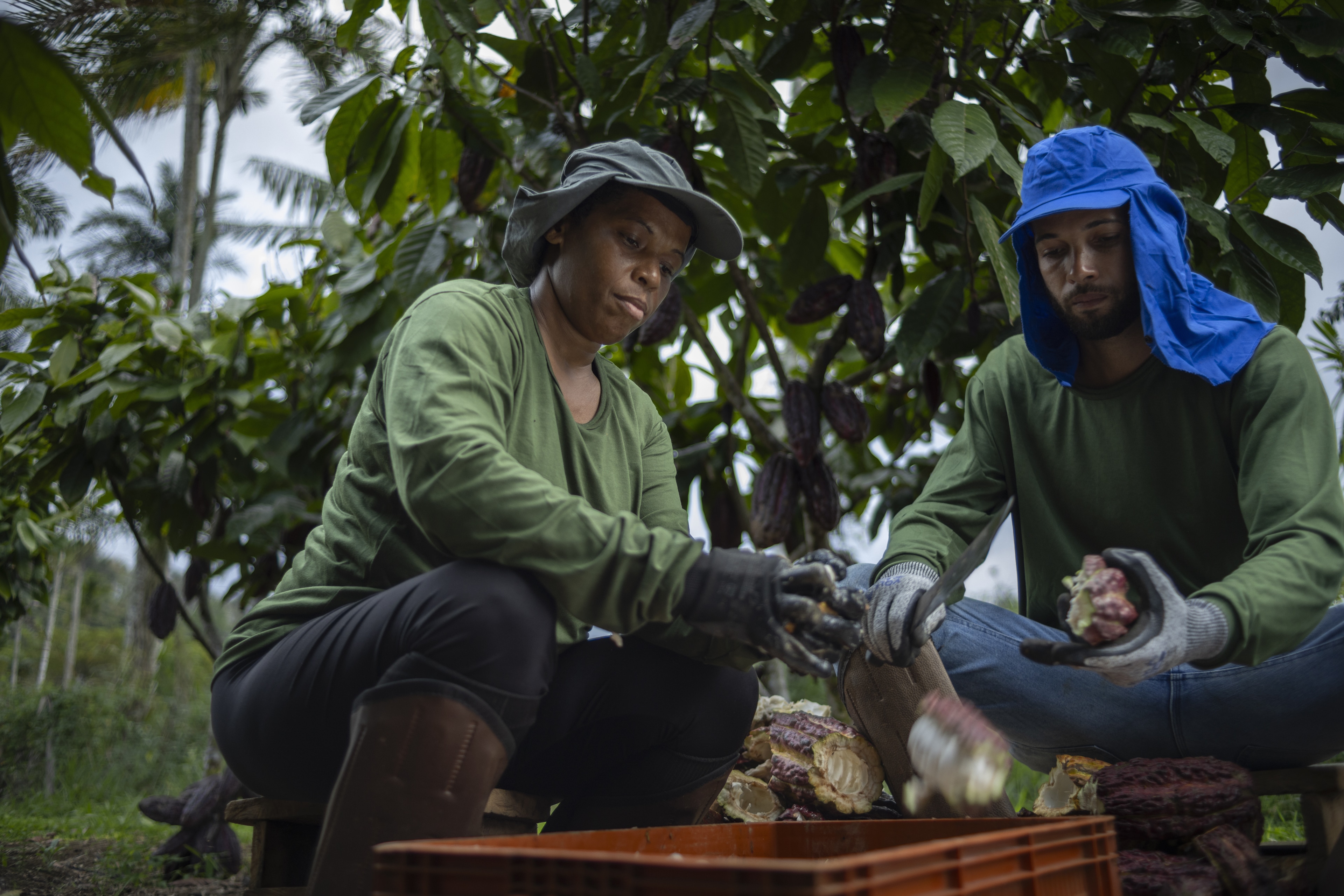
The Schwab Foundation's 2026 Social Innovation Awards celebrate 24 finalists from 18 organizations across 16 countries, recognized for their systemic solutions addressing social inequality and environmental challenges. Notable initiatives include FabricAID in Lebanon, which has diverted textile waste while creating jobs, and Pad-Up Creations in Nigeria, providing biodegradable pads and empowering rural women. Additionally, efforts like Fundación Reimagina in Chile have influenced national education policy. The awards highlight the integration of social value in business strategies, exemplified by companies like Safaricom and VEJA. Collective efforts, such as the RAED Network, further showcase the power of collaboration for systemic change.
Africa | Education, Health, ICT
Meet the finalists of the Schwab Foundation 2026 Social Innovation Awards

The AI Governance Alliance has introduced a playbook featuring nine actionable strategies to enhance responsible AI governance in a multipolar world. It identifies internal and external challenges organizations face, such as legacy systems and regulatory fragmentation. With 81% of companies still in early stages of responsible AI implementation, this guide aims to foster collaboration between public and private sectors, encouraging adaptive frameworks to support innovation while mitigating risks like bias and societal harm. Leaders commend the playbook for its practical insights and real-world case studies that enable trust and compliance across jurisdictions.
Research reveals 9 essential plays to govern AI responsibly in a multipolar world

Linear policymaking is increasingly inadequate in addressing complex challenges like climate change and technological disruption. Traditional forecasting approaches rely on past trends, which are insufficient for "super-wicked" problems that require strategic foresight. Effective policymaking needs to integrate experimentation, foresight, and anticipatory governance. Proposed frameworks highlight the importance of diagnosing current capacities, identifying barriers to progress, and understanding deep drivers of inaction. Successful examples from countries like Finland demonstrate the value of institutionalizing foresight to create resilient, transformative policies.
Financial services, Health, Education
Why linear policymaking no longer fits complex challenges

Care work is essential for sustaining life, predominantly undertaken by women, especially in Sub-Saharan Africa, where they spend over three times more hours than men on caregiving. This “invisible labor” is often overlooked in economic frameworks, though it significantly impacts productivity and employment. Despite the recognition of care work in economic measurements, its complexities, such as emotional labor and relational aspects, cannot be reduced to mere metrics. A balanced approach is necessary for formalizing the care economy in Africa, one that respects its cultural significance while acknowledging the multidimensional contributions of care beyond financial valuation. Context-specific frameworks and well-being indicators are vital for effective policy development.
Senegal, South Africa | Health
Counting What Matters: Developing a Blueprint for Africa’s Care Economy

The financing of smart power systems is emerging as a crucial frontier in global competition, centered on who controls the grid and digital economy infrastructure. Nations are investing in high-voltage corridors and clean-power agreements while facing soaring electricity demand from AI and data services. To sustain this demand, grid investments must nearly double to over $600 billion annually by 2030, but fragmented policies are undermining investor confidence. A shift is needed from siloed, short-term financing to integrated, system-level investment strategies that prioritize smart grids, energy storage, and cleaner infrastructure, ultimately ensuring resilience and growth.
Financial services, Education, ICT
Why financing smart power systems is the next strategic frontier
Childhood obesity has surpassed undernutrition globally, with obesity rates among children and adolescents rising from 194 million in 2000 to 391 million in 2022. Low- and middle-income countries account for over 80% of obesity cases. In Asia and the Pacific, undernutrition and obesity co-exist, with poor food environments exacerbating the crisis. Weak food safety systems lead to significant health risks, while ineffective marketing regulations target children. Solutions include redesigning subsidies to support diverse nutrition, enhancing food literacy, and implementing stricter regulations. Strong policy choices can address the double burden of malnutrition, promoting healthier future generations.
Bangladesh | Health
Both Hunger and Obesity Stalk Our Children
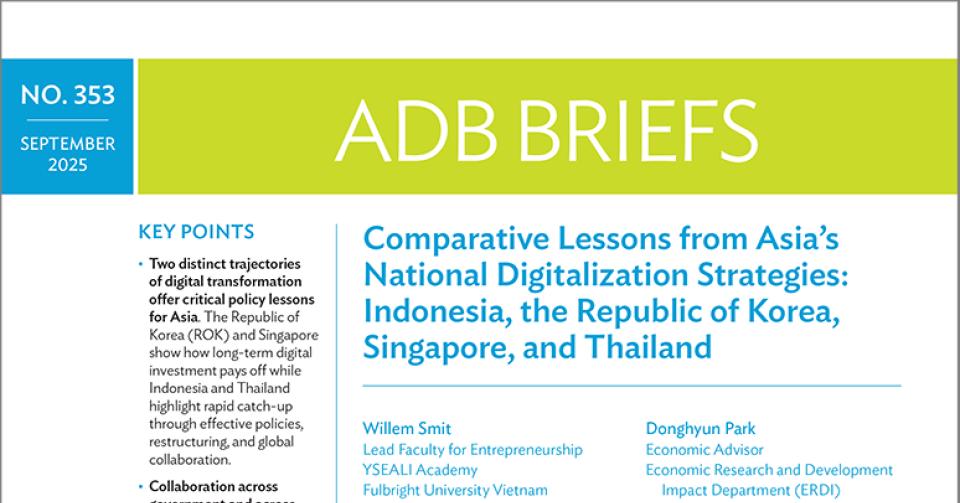
Asian economies' digitalization strategies reveal critical lessons emphasizing strategic leadership, inclusive design, and systemic investment. The Republic of Korea and Singapore demonstrate the benefits of sustained digital investment, while Indonesia and Thailand illustrate effective policies for rapid advancement through restructuring and global collaboration. Key policy takeaways include the need for inclusive digital foundations, alignment with comparative advantages, fostering innovation ecosystems, and enhancing cross-border digital cooperation.
Bangladesh, Brunei Darussalam, Cambodia, Indonesia, Japan, Philippines, Republic of Korea, Singapore, Thailand | ICT
Comparative Lessons from Asia’s National Digitalization Strategies: Indonesia, the Republic of Korea, Singapore, and Thailand
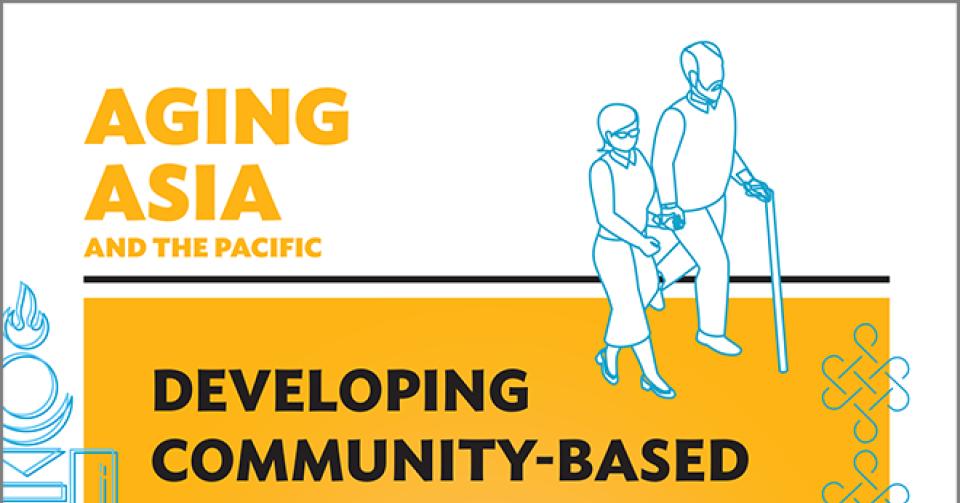
A pilot project in Mongolia, supported by the ADB, focuses on enhancing the quality of life for older adults through integrated, community-based long-term care. The initiative established three active aging hubs to assess the feasibility of coordinated care. The project highlights challenges in home care provision, emphasizing the need for more hubs and improvements in training, financing, and quality management as the aging population grows. Recommendations for scaling the project to provide comprehensive services nationwide are outlined.
Developing Community-Based Long-Term Care Services for Older Adults: Lessons From A Pilot Project in Mongolia

Improving maternal health outcomes in India hinges on addressing three key determinants: access, affordability, and accountability. Despite significant progress in reducing maternal mortality, with a drop to 88 per 100,000 live births in 2022, gaps remain, particularly in the private healthcare sector, which handles nearly half of institutional births. The Manyata initiative exemplifies a successful accreditation framework that enhances quality across private facilities, resulting in increased provider knowledge and adherence to care standards. Sustainable improvements require integration of providers into cohesive quality frameworks beyond public health efforts.
Education, Health
Improving Maternal Health Outcomes in India’s Private Sector