
Pension reforms are critical due to Europe's aging population and the declining dependency ratio. To ensure sustainability and equity in pension systems, automatic adjustment mechanisms should be implemented. These include linking pension adjustments to life expectancy and the financial balance of the system. Additionally, extending the pension calculation period and removing contribution caps can improve fairness. Effective reforms must balance technical soundness with political viability by compensating affected groups to avoid social backlash. Without reforms, many European countries will face significant increases in pension expenditure, risking future deficits.
Latin America | Financial services
Pension reforms: why they fail and how to make them viable

Key principles for enhancing information accessibility in the digital age are outlined in a UNESCO Issue Brief by Andrea Millwood-Hargrave. The brief addresses multilingualism, metadata, and interoperability while calling for transparent and trustworthy information ecosystems. It advocates for inclusive design, transparency, data integrity, legal conformity, efficiency, and flexibility. The document also shares best practices, including Canada's accessibility tools and Chile's open justice initiatives, to support policymakers in fostering equitable access to information and strengthening societal resilience.
Education, Health, ICT
Global challenges for Information accessibility: key principles and good practices in the digital age
Education technology (EdTech) can significantly enhance learning outcomes, personalize instruction, and improve access to quality education, especially for children in low-resource settings and those with disabilities. However, the collection of student data raises serious concerns such as privacy violations and biased profiling. To tackle these challenges, UNICEF, in collaboration with UNESCO and the Global Privacy Assembly, produced a landscape review on EdTech data governance. This review identifies key stakeholders, obstacles, and existing governance mechanisms, offering policy recommendations like strengthening legal frameworks and promoting multi-stakeholder collaboration to protect children's rights while fostering innovation in education.
Health, Education, ICT
Data Governance for EdTech
Kenya, often called the "Silicon Savannah," is emerging as a technological hub in East Africa, with AI startups driving significant developmental advancement. However, there are critical challenges regarding AI inclusivity and local ownership, as most advancements currently favor urban populations and foreign companies. Issues such as gender inequality, a shortage of skilled professionals, and the embedding of foreign values in AI systems hinder the establishment of a robust domestic ecosystem. There is a pressing need for AI sovereignty to ensure the protection of technological growth, prioritizing local needs through community innovation and investment in infrastructure.
Ethiopia, Kenya, Mali, Nigeria, Rwanda, Senegal, South Africa, Tanzania, Uganda | Education
AI sovereignty in Kenya: Building a future rooted in local ownership and innovation

The UK’s justice system faces a crisis due to over a decade of underfunding, contributing to significant case backlogs and logistical issues. Proponents advocate for using artificial intelligence (AI) to alleviate bureaucratic workloads, allowing staff to focus on client interactions. While AI tools have historically assisted in legal processes, concerns arise regarding the use of risk-scoring algorithms that may perpetuate inequalities. The Ministry of Justice plans to implement AI tools for efficiency while promoting transparency and human oversight. However, critical warnings about the reliability of AI outputs persist, potentially exacerbating inequities in justice access for vulnerable clients.
AI use by UK justice system risks papering over the cracks caused by years of underfunding

The UK, Canada, and Australia have recognized Palestine, representing a significant diplomatic shift and reflecting a growing international consensus on Palestinian statehood. This recognition allows for formal diplomatic relations and indicates concern over the threat to Palestinian sovereignty, particularly due to Israeli settlements and proposed annexations. While some argue that Palestine lacks full statehood criteria, political recognition has historically preceded legal definitions. The recognition is separate from endorsing current governing bodies, like Hamas, and may enhance the Palestinians' international standing, leading to further recognition and access to international forums.
The UK, Canada and Australia have recognised Palestine – what does that mean? Expert Q+A
The UK, France, Canada, and Australia recently moved to formally recognize Palestine, reflecting a significant diplomatic shift in the ongoing Israeli-Palestinian conflict. This recognition legitimizes Palestinian statehood, allowing for diplomatic relations and international cooperation. The timing stems from increasing concerns about the viability of Palestinian statehood amidst Israeli settlement expansions and violence. While some argue that such recognition could boost Hamas, recognized nations have clarified that this does not equate to endorsing Hamas's governance. The growing consensus among countries may enhance Palestine's international standing and facilitate participation in global forums.
The UK, France, Canada and Australia have recognised Palestine – what does that mean? Expert Q&A
The UK, France, Canada, and Australia have recently recognized the state of Palestine, marking a significant diplomatic shift in the longstanding Israeli-Palestinian conflict. This collective recognition supports Palestinian statehood and facilitates diplomatic relations, despite concerns from Israel and some allies about the legality owing to Palestine's lack of full territorial control. Increased international consensus reflects a growing public sentiment for Palestine, particularly in response to actions in the West Bank and Gaza. Recognition may enhance Palestine's global standing, leading to more support, access to international forums, and legal instruments, while isolating nations that continue to refuse recognition, especially the US.
The UK, France, Canada and Australia have recognised Palestine – what does that mean? Expert Q+A
The global framework for AI audits emphasizes the necessity of independent evaluation to address the benefits and risks associated with AI systems, which can perpetuate biases and inequalities. It outlines essential standards for audits, including auditor independence, access to evidence, and transparency in results. The framework aims to ensure context-appropriate auditing practices that involve diverse stakeholders and prioritize the mitigation of systemic harms. Key features of the proposed framework include audit scope, methodologies, and post-audit activities. This comprehensive approach seeks to safeguard human rights and promote responsible AI deployment worldwide.
Recommendations for a Global AI Auditing Framework: Summary of Standards and Features
Generative Artificial Intelligence (GenAI) significantly influenced the 2024 elections worldwide, with 80% of countries experiencing related incidents. A study analyzed 215 incidents across 50 competitive national elections, finding that 90% involved content creation—such as videos and social media posts. Nearly half of these incidents lacked a clear source, while many were harmful to the electoral process. The research emphasizes the critical need for policymakers and technology designers to understand both the beneficial and detrimental impacts of GenAI to improve election administration and voter trust.
The Role of Generative AI Use in 2024 Elections Worldwide
The integration of AI across critical sectors poses both transformative potential and risks, including bias and harm. Current auditing practices are insufficient and lack independent verification. A comprehensive global AI auditing framework is proposed, emphasizing common standards, auditor independence, and evidence transparency. It outlines seven key features that include audit scope, auditor roles, stakeholder engagement, criteria, evidence, methodologies, and post-audit activities. This framework aims to address stakeholder expectations and minimize harms while effectively evaluating AI's global impacts.
Towards A Global AI Auditing Framework: Assessment and Recommendations

Carbon capture and utilization (CCU) can significantly reduce industrial emissions by converting captured CO₂ into valuable products like fuels and chemicals. The report emphasizes that CCU requires supportive policy frameworks, patient capital, and collaboration among stakeholders to become viable. It identifies three key barriers: inconsistent policies favoring carbon capture and storage over utilization, the challenges emerging CCU companies face due to long development timelines and high capital needs, and the importance of cross-sector collaboration to advance CCU technologies in established industrial sectors.
Defossilizing Industry: Considerations for Scaling-up Carbon Capture and Utilization Pathways

Responsible AI focuses on building and managing AI systems to maximize benefits while minimizing risks to individuals and society. Currently, fewer than 1% of organizations have effectively implemented responsible AI practices, highlighting an opportunity for enhancing public trust and developing resilient markets. The World Economic Forum’s AI Governance Alliance and Accenture have created a playbook that outlines nine actionable strategies for organizations to operationalize responsible AI principles, promoting a trustworthy AI ecosystem in partnership with government initiatives.
Advancing Responsible AI Innovation: A Playbook

Artificial intelligence (AI) is a driving force behind innovation and growth, but its full potential relies on the adoption of responsible AI, which aims to maximize benefits while minimizing risks to society and the environment. Currently, only 10% of organizations have effective AI governance, and fewer than 1% have implemented comprehensive responsible AI practices, creating an opportunity to build public trust and secure rights. The World Economic Forum's AI Governance Alliance, in partnership with Accenture, has created a playbook featuring nine actionable strategies for integrating responsible AI principles into organizational practices, aligning them with government initiatives for a trustworthy AI ecosystem.
Advancing Responsible AI Innovation: A Playbook
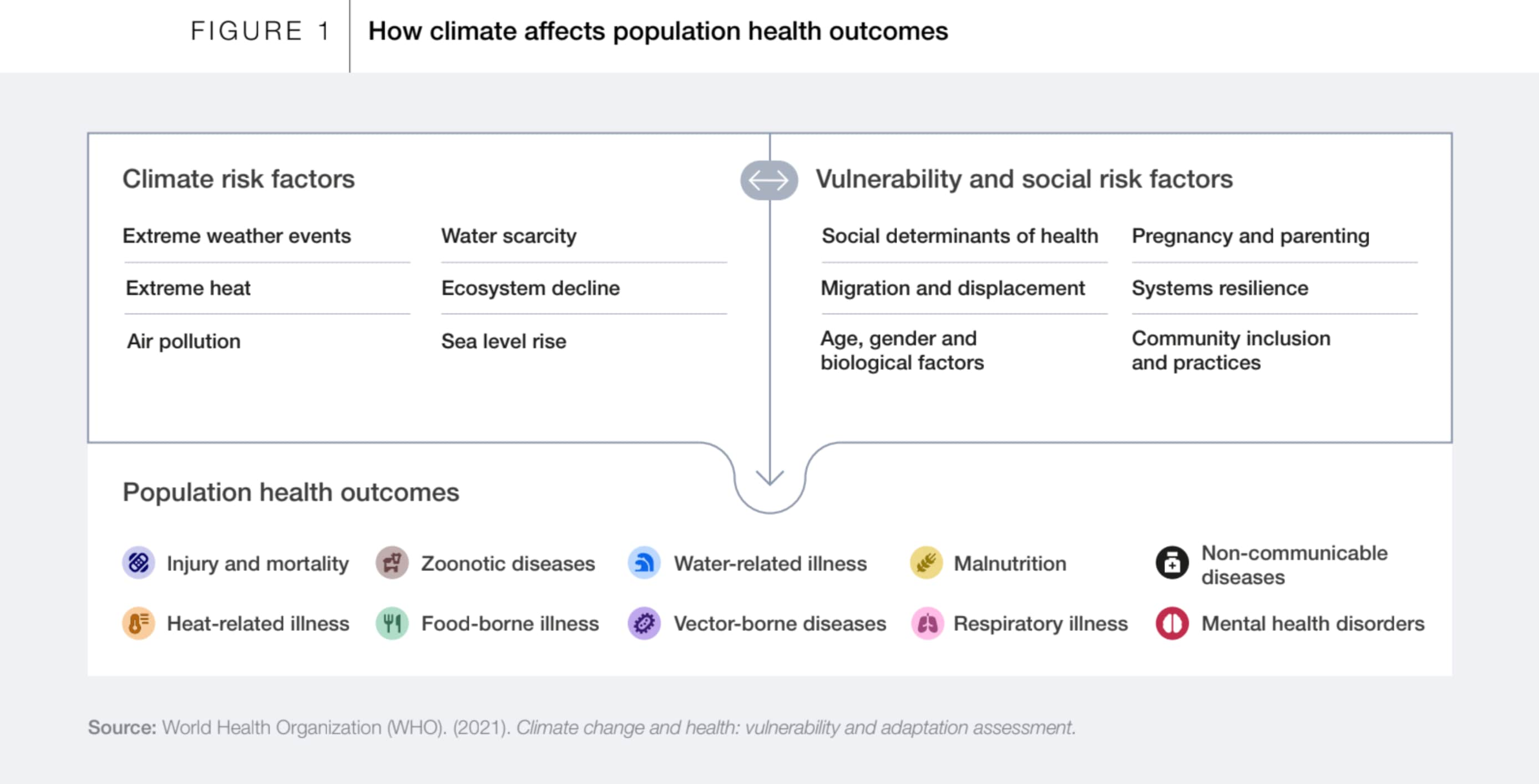
Climate change significantly impacts human health, with increasing extreme weather events and health risks disproportionately affecting vulnerable communities. A World Economic Forum report emphasizes the urgent need for cross-sector collaboration to mitigate the projected $1.5 trillion economic losses due to reduced worker availability from climate-related illnesses. Key sectors like food, agriculture, and healthcare are highlighted as critical areas needing resilience-building measures. Issues such as rising crop failures and increased vector-borne diseases underscore the interconnectedness of climate and health, affecting both individual well-being and economic stability.
Nigeria | Financial services, Health
Climate and health: How global healthcare can adapt to a warming world
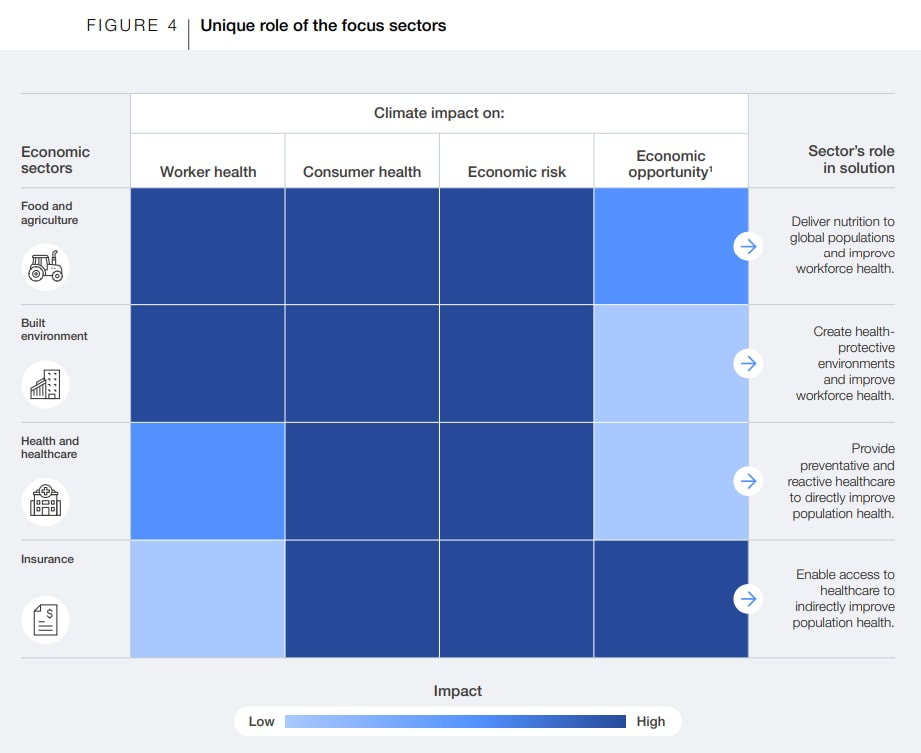
Climate-related health issues are projected to cost businesses billions in lost productivity, potentially amounting to $1.5 trillion globally by 2050. The World Economic Forum's report emphasizes sectors like food and agriculture, built environment, and healthcare as being particularly vulnerable. Less than 5% of climate adaptation funding is directed towards health protection, highlighting a crucial gap. Businesses are urged to take proactive measures such as enhancing employee health benefits, implementing occupational health safeguards, and conducting climate-risk assessments. Proactive adaptation is deemed more cost-effective than reactive responses to climate disruptions.
Financial services, Health
Why climate health will cost companies billions – and what businesses can do

Investing in women’s health leads to significant societal and economic improvements, enhancing scientific research and workforce productivity. This trend is supported by organizations like the Global Alliance for Women’s Health, which aims to turn advocacy into measurable outcomes. Recent investments, including a $2.5 billion commitment from the Gates Foundation, highlight the recognition that prioritizing women's health accelerates overall value creation. The Champions Community within this alliance comprises influential leaders who advocate for policy changes and innovations, emphasizing the untapped opportunities in women’s health and shaping a new narrative that keeps these issues at the forefront of global priorities.
Health
Why investing in women’s health is an investment in innovation, growth and resilience

A £150 billion technology prosperity deal between the US and UK aims to advance sectors like AI and quantum computing, potentially benefiting the British public. However, significant challenges exist, such as AI's tendency to produce erroneous information and the need for sufficient energy supplies. While breakthroughs in quantum computing may enhance drug discovery, the lengthy clinical trial process could delay tangible benefits. Economic impacts from AI in tasks like coding may be seen within two years, although hurdles for autonomous technology like drones persist. Overall, successful outcomes hinge on solving complex scientific problems and addressing technological limitations.
How US-UK tech deal could yield significant benefits for the British public – expert Q&A

Germany's approval of Cosco's 24.9% stake in a Hamburg port terminal marks the beginning of Europe’s “rules-first” approach to Chinese investments. This deal, cleared in May 2023, ensures no control was transferred, as operational authority remains with Hamburg's municipal operator, HHLA. The evolving landscape includes the EU’s Foreign Subsidies Regulation, introduced in January 2023, which mandates scrutiny of foreign investments to address market distortions. Subsequent investigations into Chinese entities signal a robust regulatory framework aiming to balance openness with protection against unfair practices. Hamburg's governance modifications further restrict Cosco’s influence, reflecting a cautious yet proactive stance by Europe.
Belgium, Bulgaria, Denmark, Finland, Germany, Greece, Hungary, Latvia, Luxembourg, Malta, Netherlands, Poland, Portugal, Sweden | Financial services
What Cosco’s Hamburg deal can tell us about Europe’s “rules-first” approach to China

Nearly 8 million tonnes of mismanaged plastic waste are produced annually in Latin America and the Caribbean, with significant pollution evident in Guatemala's Motagua River and Ecuador's Galápagos Islands. Governments are implementing policies and market-based solutions to address this challenge, including waste treatment infrastructure and strict regulations on single-use plastics. Initiatives aim to reduce plastic pollution by 60% by 2040 in Ecuador. The region is fostering collaboration among governments, industries, and civil society to create effective responses and promote a circular economy to protect vital ecosystems and livelihoods dependent on tourism and fishing.
Guatemala
How Latin America is tackling plastic pollution in the Motagua River and the Galápagos Islands