Greenhushing refers to companies downplaying their sustainability efforts, which can undermine the broader environmental discourse. Research on 300 UK hotels revealed that 62% do not share sustainability information on their websites, with only 2% mentioning it on social media. Reasons for this silence include fear of being accused of greenwashing, lack of confidence in the effectiveness of their actions, and reliance on third-party certifications for credibility. This reluctance hampers progress and meaningful dialogue on sustainability, diminishing opportunities for businesses to act as agents of social change.
‘Greenhushing’ is a trend that leaves businesses downplaying their environmental wins

Negotiators failed to agree on a treaty to address global plastic pollution, resulting in a weaker draft from Geneva that shifts towards a nationally determined approach rather than a legally binding framework. The new text omits specific plastic product phase-outs, dilutes compulsory controls, and reduces financial obligations for developed nations. Disagreements over definitions and governance models reflect industrial interests clashing with environmental concerns. The Geneva draft is less effective than the previous Busan draft, limiting international governance and hindering progress towards a circular economy focused on reuse and recycling. Key strategies to manage plastics have thus been compromised.
Plastics talks failure is bad news for the circular economy
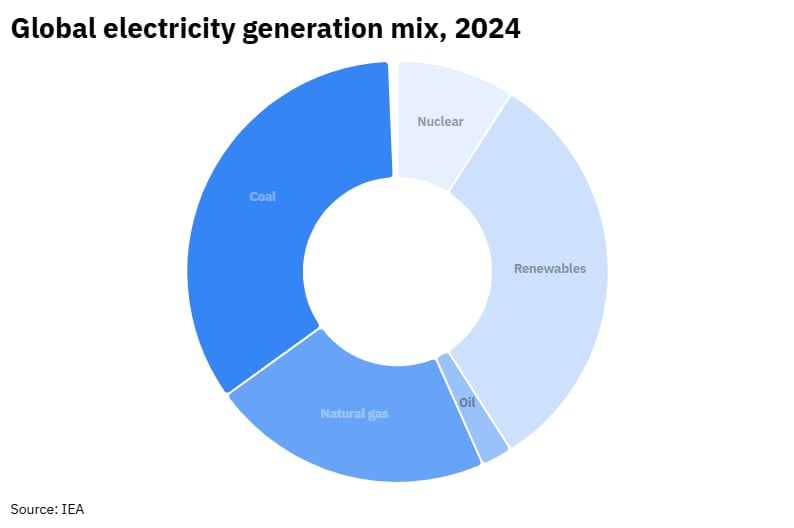
Global gas demand increased by 78 billion cubic meters in 2024, driven by extreme heat, industrial needs, and AI data centers, with similar growth expected in 2025. Europe and North America led the demand increase. The World Economic Forum underscores natural gas's role as a transitional asset, particularly when paired with carbon capture for decarbonization.

At the second Africa Climate Summit, two major programs, CEPA and ENGAGE, were launched to create a cross-border electricity market in Africa, aiming to improve electricity access for over 600 million people. Additionally, significant investments in clean hydrogen and major mining deals were reported globally.
Argentina, Malaysia
Rising global gas demand, and more top energy stories
Wess Mitchell argues that the Trump administration's seemingly impulsive decisions are part of a rational strategy aimed at national renewal, responding to geopolitical and economic constraints. This strategy focuses on addressing threats from major powers, particularly China, while reallocating burdens to allies in secondary regions. Trump's trade policies aim to restructure economic incentives to facilitate U.S. reindustrialization. Mitchell emphasizes the importance of individual leaders' personalities in shaping historical outcomes, positioning Trump as a figure advocating for America’s resurgence based on its historical strengths and potentials.
[Trump’s World] - United States:
Global conflict is at its highest since 1946, with 61 wars recorded in 2024 and defense spending increasing by nearly 10% to $2.7 trillion, while humanitarian aid budgets are shrinking significantly. The challenges include a faltering global response system, rising military expenditures, and growing geopolitical tensions, especially from AI competition and climate crises. Voices from the Global South are calling for a restructuring of aid that prioritizes local engagement. The conditions for effective peacebuilding are deteriorating, necessitating a reevaluation of strategies in face of growing unpredictability and shrinking multilateral cooperation.
Nigeria | Health, ICT, Financial services, Education
Why we must rethink conflict prevention and peacebuilding in a fractured world

Transforming food systems could unlock $121 trillion in global economic growth by 2070 while enhancing sustainability. Key focus areas include the often-overlooked "hidden middle" of food systems—processing, packaging, storage, and distribution—which receives limited climate finance but is crucial for reducing emissions and improving efficiency. Targeted investment in these areas can lead to lower food prices, increased access to nutritious food, and resilience against climate impacts. Collaboration and inclusive policies are essential to support communities and ensure sustainable growth. Sustainable food systems are fundamental for health, economic stability, and addressing societal challenges.
Denmark | Financial services
Transforming food systems: How climate strategy can feed economic growth

India's inclusive AI journey exemplifies the benefits of open digital innovation, showcasing how accessibility and co-creation can drive transformative technologies. The country’s successful digital public infrastructure, including Aadhaar and the Unified Payments Interface, has expanded financial inclusion from 53% to 80% within a decade. This model advocates for openness as a strategic imperative, allowing diverse stakeholders to innovate collaboratively and effectively. India’s diverse demographics offer a unique testing ground for AI systems, enabling solutions like Bhashini to enhance language accessibility. The upcoming 2026 Global AI Summit presents an opportunity to align these lessons with global initiatives for a more inclusive AI ecosystem.
Financial services, ICT, Health, Education
What the world can learn from India’s inclusive AI journey
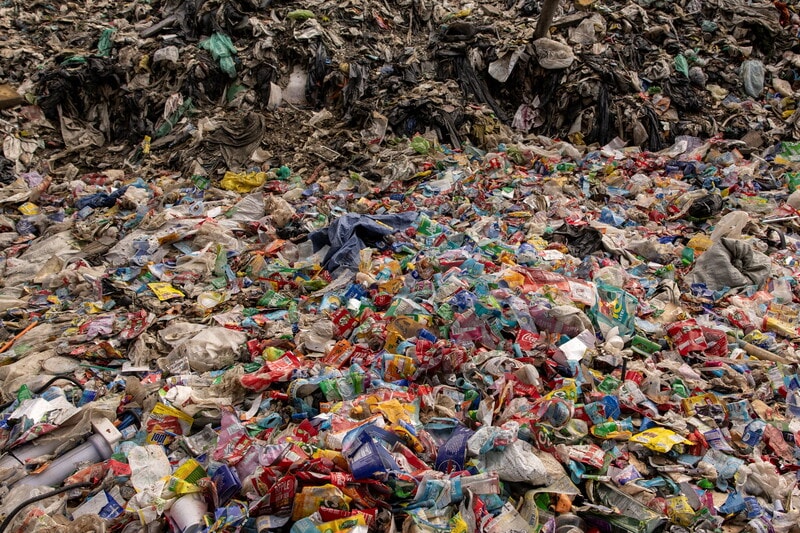
Plastic pollution significantly contributes to climate change, accounting for 3-5% of global greenhouse gas emissions, surpassing those of the aviation industry. With production projected to triple by 2060, plastics threaten the world’s ability to limit warming to 1.5 degrees Celsius. Addressing plastic production and promoting reusable systems can reduce emissions by up to 0.5 gigatonnes annually. Global negotiations are shifting from waste management to reducing virgin plastic production, presenting a critical opportunity to mitigate climate impacts, create jobs, and improve local economies through sustainable practices.
Financial services, Education
Why solving plastic pollution is one of the biggest climate wins hiding in plain sight

Online conspiracy theories spread rapidly across borders, being dynamically interpreted and reframed within various contexts. Zichen (Jess) Hu emphasizes that these narratives are not static but co-created by diverse actors, reflecting tensions between liberalism, neoliberalism, and illiberalism in today's fractured global landscape. Conspiracy theories serve as both political distortions and insights into competing structures of power, often mobilized by elites to redefine legitimacy. Emerging from past crises, they connect diverse narratives, revealing a transnational network of suspicion that transcends geographic and ideological boundaries.
Latin America
The transnational flow of conspiracy theories reflects our fractured world

Asia's agri-food transformation is essential for creating inclusive, resilient, and sustainable food systems amid challenges like biodiversity loss and rising inequality. With 40% of Asia's workforce in food-related jobs, collaboration among over 775 partners, led by the Grow Asia initiative, has improved the livelihoods of 3.7 million smallholders, generating over $81 million in annual farm income. The World Economic Forum's First Movers Coalition aims to leverage collective purchasing power for sustainable commodities. Moving forward, a focus on blended finance, regenerative agriculture, women's empowerment, and digital transformation is crucial to enhance smallholder farmers' success and strengthen food systems across Asia.
Bangladesh | Financial services, Health
Charting Asia’s agri-food transformation

Nations need a comprehensive space strategy due to the critical role space plays in growth, security, and resilience. Key reasons include: 

1. **Sustainable Development**: Space services support nearly 40% of UN Sustainable Development Goals.
2. **Efficient Access**: New technologies enable targeted space applications without extensive investments.
3. **Diplomacy**: Participation in international space governance enhances strategic partnerships.
4. **Economic Growth**: Space activities significantly boost private investment and generate substantial economic spillovers.
5. **Increased Activity**: Over 12,000 active satellites and numerous launches democratize access to space capabilities for all nations.

Innovative applications of space data promote resilience and informed decision-making globally.
South Africa | Financial services, ICT, Health, Education
Five reasons why all nations need a space strategy
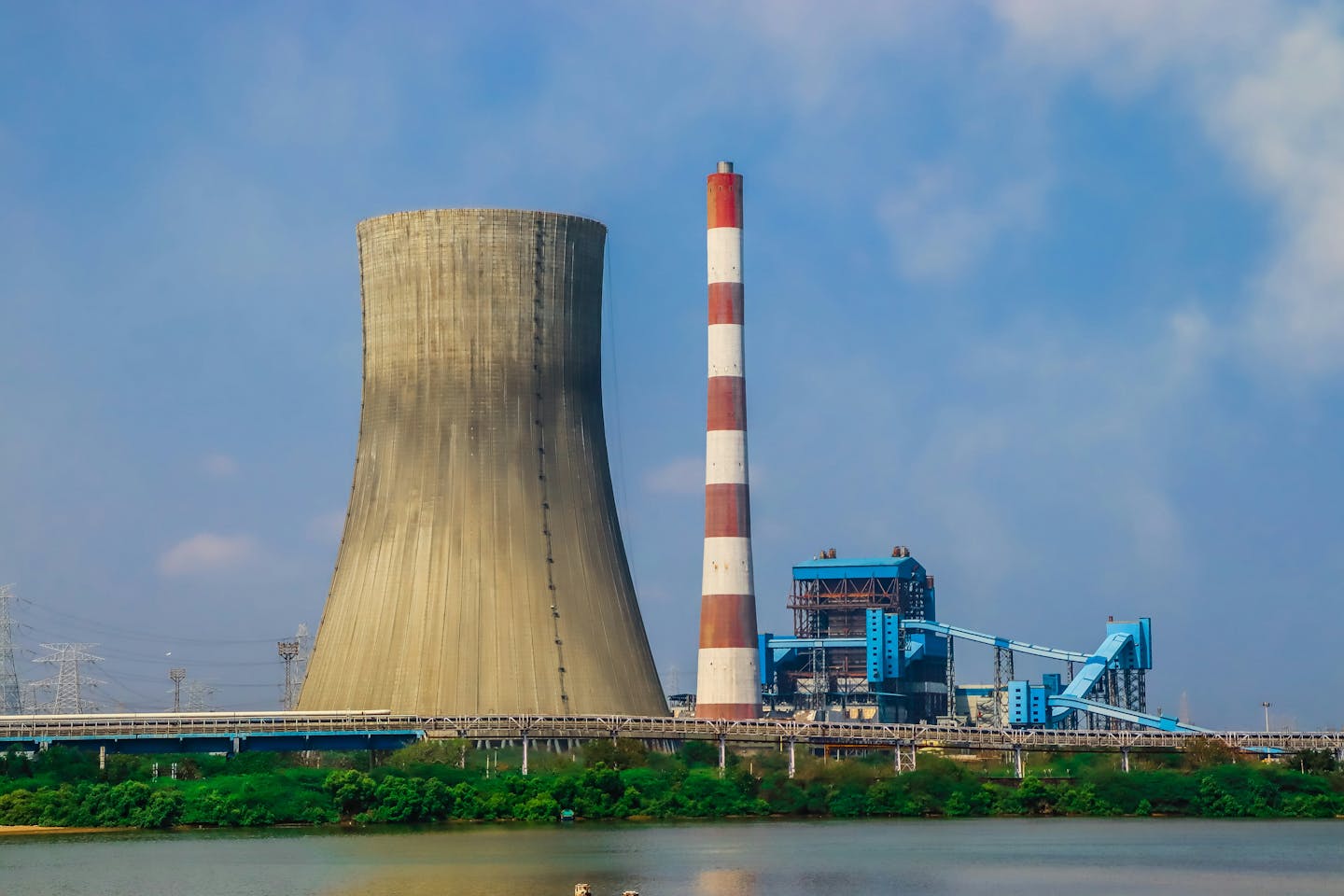
The IEA's latest report confirms that no new oil and gas investments are needed to limit global warming to 1.5°C, contingent on rapid energy transitions. It highlights that existing oil and gas fields are experiencing steep decline rates, necessitating approximately $500 billion annually just to maintain current production levels. The report underscores the shift towards unconventional resources, predicting significant production drops without continued investment. Additionally, it emphasizes that new exploration typically takes nearly 20 years to yield output, suggesting that if demand decreases sharply, no new projects would be required.
IEA reiterates ‘no new oil and gas needed’ if global warming is limited to 1.5°C
President Donald Trump is promoting data centre development as part of a broader strategy aimed at enhancing AI capabilities and economic growth in the US. However, local communities are organizing against this push, citing concerns over traffic, pollution, and rising energy costs associated with new data centres. Over 140 activist groups across 24 states have mobilized to block projects, leading to delays and cancellations of developments worth $64 billion. Local governments, facing challenges due to reduced information under the new strategy, are struggling to manage the impact of these developments on their communities.
As Trump promotes data centres, communities push back

NBS's August 2025 compilation of business sustainability research highlights in-press articles from top journals, showcasing advancements in the field. Key studies include topics on inclusion–exclusion in leadership, gender equity in development frameworks, the impact of moralized opinions in organizations, and environmental disclosures in ESG contexts. Featured research spans multiple disciplines, emphasizing the importance of ethical practices, community responsiveness, and the effects of training on workplace safety among others.
Financial services, Health
Table of Contents: August 2025
ChatGPT's consumer product saw significant adoption, reaching around 10% of the world's adult population by July 2025. Early adopters were primarily male, though the gender gap has narrowed. Usage patterns reveal a growing prevalence of non-work-related messages, which surged from 53% to over 70%, while work-related usage remains prominent among educated, high-earning professionals. The three main conversation topics are "Practical Guidance," "Seeking Information," and "Writing," together comprising nearly 80% of interactions. ChatGPT delivers economic value, especially in knowledge-intensive jobs, by providing decision support and generating digital outputs.
How People Use ChatGPT
Almost two-thirds of the world’s oil is transported by sea, but rising sea levels threaten the infrastructure supporting this trade. A report by CWR warns that up to 90% of the largest oil ports could face inundation within the next 50 years if current greenhouse gas emission trends continue. A one-metre rise in sea levels could disrupt 26 major oil terminals, potentially risking up to $887 billion in exports. Key oil hubs, including those in Saudi Arabia and Brazil, could be severely impacted. The report calls for urgent action to address climate risks and shift towards clean energy.
Oil trade faces ‘crude awakening’ as rising seas threaten global ports, report warns

The Net Zero Banking Alliance (NZBA), once seen as a pivotal framework for aligning bank financing with climate goals, is facing a significant transformation. Originally backed by more than 140 major banks, it is shifting from binding commitments to voluntary guidelines due to political pressures and legal risks. This change risks undermining collective accountability and leads to fragmentation in climate action, as banks will likely act independently based on domestic pressures. The fallout reflects broader limitations of voluntary coalitions in climate finance, which require regulation and global cooperation to effectively drive the transition toward sustainability.
Financial services
How voluntary climate finance lost its way
Impact assessment is vital for effective impact measurement and management (IMM) as social and environmental issues intensify, necessitating high-quality data for resource allocation. Despite its importance, the process is often resource-heavy and complex. Artificial Intelligence (AI) presents opportunities to enhance IMM practices. Better Society Capital (BSC) conducted an experiment using AI within their portfolio to evaluate whether it can deliver the thoroughness of impact assessments rapidly, complementing traditional methods and insights.
We Tested AI Impact Assessments. Here’s What We Learned.
Middle Eastern countries face significant climate change risks, including extreme heat, droughts, and rising sea levels, yet media coverage remains critically low. The Carnegie Endowment for International Peace highlights that these nations are among the most vulnerable to climate impacts. Conflicts in the region divert media focus toward immediate crises, overshadowing climate issues. In Jordan, for instance, the severe water crisis and regional instability complicate climate discussions, often reducing them to secondary concerns in reporting. The lack of dedicated climate journalists further hampers understanding, which is crucial for effective responses to both climate and geopolitical challenges.
Jordan, Nigeria | Health
Middle Eastern countries are among the most exposed to climate change – so why is media coverage so low there?
Digital technologies are transforming global governance, necessitating updated multilateral processes to ensure legitimate frameworks for the Internet, AI, cybersecurity, and data. The article emphasizes the importance of multistakeholderism, where governments collaborate with civil society, academia, and the private sector in digital policy development. It argues that rather than competing, multilateralism and multistakeholderism should complement each other through two integration tracks: state-led openings, where stakeholder input is integrated into national policy, and institutional openings, allowing direct stakeholder engagement with multilateral bodies. Both methods are currently applied inconsistently, highlighting the need for broader implementation.
Health, Education, ICT
Opening Multilateralism: Two Pathways to Digital Legitimacy