
Young people in the Pacific Islands possess creativity and skills essential for driving development, yet many face limited opportunities for meaningful participation in decision-making. A UNICEF study across eight Pacific countries revealed barriers to youth involvement despite their active roles in community groups. Challenges are particularly pronounced for marginalized groups. The research identified successful practices, such as youth-led projects and policy consultations but emphasized the need for stronger legal frameworks and investments to empower youth effectively. Key recommendations include resourcing Youth Councils and supporting initiatives that ensure representation and foster leadership.
Education
Wave Makers: Pacific Youth Participation
UK research and innovation significantly supports the Government’s five missions through a newly developed AI-powered methodology that maps research publications to these missions. This approach, utilizing Large Language Models, classifies approximately 20 million articles published between 2019 and 2023, enabling a scalable analysis of research outputs in relation to policy priorities. The methodology provides insights into various aspects of the research system, including its resources and infrastructure.
Japan, Kenya, Republic of Korea, United Kingdom | Education
UK research and innovation capability to support Government’s five missions
The Biden administration's October 2023 decision to withdraw support for proposals promoting cross-border data flows at the World Trade Organization surprised many US trade partners. This shift reflects growing concerns among US policymakers regarding national security risks associated with data transfers, particularly to China and other adversary nations. Consequently, the US has implemented executive orders to restrict the sale and transfer of specific data types, highlighting the tension between privacy, national security, and the free flow of data.
Latin America | Financial services, Health, ICT
A Difficult Balance: Privacy, National Security and the Free Flow of Data
Cryptocurrencies mirror historical failed attempts at establishing new currencies, drawing parallels with past monetary systems that faced misunderstanding, mismanagement, and social discord. Historical examples, such as the continental dollar during the American Revolution and Sweden's non-redeemable paper money, show that currency change requires social trust and shared values. In contrast, cryptocurrencies, governed by blockchain technology and devoid of central authority, face unique challenges. Their rising popularity, influenced by deregulation and economic shifts, could lead to significant global monetary changes, but existing social divisions may hinder their acceptance as a reliable medium of exchange.
Financial services
History is full of failed attempts to establish new currencies. So what makes crypto different?
Conservative Party leader Kemi Badenoch's commitment to "maximise extraction" of North Sea oil and gas faces significant geological and economic challenges. The North Sea, once a leading source with over 400 fields, is now a "mature" basin producing less than half of its peak output in 1999. With most easy-to-access resources depleted and high costs associated with remaining fields, future prospects depend on small, isolated, and complex developments. Additionally, global competition and investor caution due to market volatility hinder new exploration. While some production will continue, the era of major discoveries and growth in the North Sea has ended.
Nigeria, United Kingdom
Plans to ‘maximise extraction’ of North Sea oil and gas would soon run into geological limits
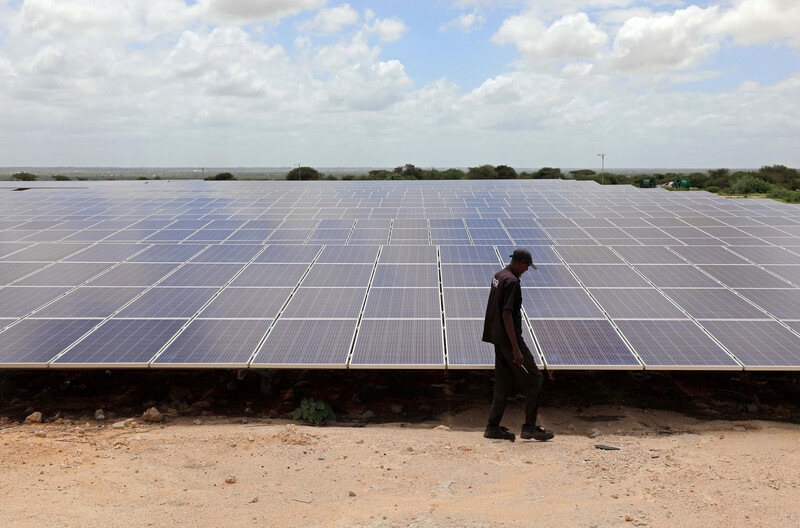
Somalia faces significant environmental challenges, including prolonged droughts and reliance on biomass fuels, leading to deforestation and high emissions. With an installed energy capacity of 400 megawatts, much of it from diesel, only about half the population has electricity access, with urban communities disproportionately benefiting. The country has immense renewable energy potential, particularly from solar and wind. Research indicates that a 1% increase in renewable use can reduce CO2 emissions by 7.4%. However, Somalia's current trade practices focus on carbon-intensive goods. To leverage its renewable potential, the country must align energy strategies with greener trade policies and improve infrastructure and investments.
Bangladesh, Nigeria
The renewables dividend: Why Somalia must bet big on clean power
Trump's policies during his potential second term are characterized by impulsive decisions that shape international dynamics. This world is perceived not only from the U.S. perspective but also through lenses from various regions, including the Middle East, Southeast Asia, and Europe. Key discussions center on whether Trump’s administration will empower middle powers or reinforce traditional spheres of influence. A series of expert interviews aims to explore these implications and reflect on how Trump’s actions will reverberate globally.
Trump's World
The expansion of digital services and technologies, including AI, is reshaping trade and labor markets in Kenya. The paper addresses challenges such as access to digital jobs, work quality issues, and job instability caused by automation. It recommends amending labor laws to include digital workers, developing decent work toolkits for businesses, and harmonizing labor standards through regional trade frameworks. Insights are based on nearly 40 stakeholder interviews and a workshop in Nairobi, part of a initiative by TASC Platform and the World Economic Forum, supported by Laudes Foundation.
Chile, Ethiopia, India, Kenya, Namibia, Republic of Korea, South Africa, Tanzania, United Arab Emirates | Financial services, Education, ICT
Trade and Labour: Pathways for Decent Work in Kenya’s Digital Economy

The expansion of digitally delivered services, platform technologies, and artificial intelligence (AI) is transforming trade and labour markets in Kenya. Key challenges identified include access to digital jobs, decent work deficits, and job churn due to AI and automation. Recommendations focus on amending labour laws to include digital workers, developing decent work toolkits for businesses, and harmonizing labour standards through trade and regional frameworks. The study is based on interviews with nearly 40 stakeholders and a workshop in Nairobi, conducted in collaboration with Africa Practice and the TASC Platform–World Economic Forum.
Kenya, South Africa, Tanzania, United Arab Emirates | ICT, Education
Trade and Labour: Pathways for Decent Work in Kenya’s Digital Economy

AI is increasingly being adopted in cybersecurity as budgets shrink due to economic pressures, with growth rates dropping from 17% in 2022 to a projected 4% by 2025. The education sector has become the primary target for cyberattacks, experiencing a 41% increase from January to July 2025, particularly during the back-to-school season. Despite a rise in attacks, organizations face significant challenges including staff shortages and rising costs. Other significant developments include the resurgence of Marks & Spencer's services post-ransomware attack and concerns over hackers weaponizing AI to generate malicious code.
Education
AI fills the gap as cybersecurity budgets shrink, and other cybersecurity news

Himalayan natural springs, vital for over 100 million people in the region, are drying up due to climate change, deforestation, and poor infrastructure. This situation disproportionately affects the poorest communities, particularly women and children, who bear the burden of fetching water from distant sources. Springshed management is a promising solution that involves restoring recharge zones and actively engaging local communities, especially women, in decision-making. The International Centre for Integrated Mountain Development (ICIMOD) is implementing a systematic approach to reviving springs across the Hindu Kush Himalayan region, showing positive results in areas of India, Nepal, and Bhutan.
Himalayan governments must put springs on the agenda

Dorfner, a 130-year-old Bavarian business that mines and refines industrial minerals, has successfully integrated AI to revolutionize its operations. With significant kaolin and silica sand deposits, Dorfner has enhanced efficiency, sustainability, and business growth by offering services that address clients' supply chain challenges, cutting costs, and developing new products. AI implementation resulted in a 66% reduction in formulation time, 69% less laboratory material usage, and a 30% revenue increase in two years. Dorfner's transformation aligns with its long-term strategy, positioning it as a technology provider focused on sustainable solutions.
How AI Is Mining and Transforming An Old Economy Business

The Second Africa Climate Summit in Addis Ababa emphasizes the necessity of including women and vulnerable communities in climate solutions. As environmental threats escalate, evidence supports that inclusive governance enhances adaptation outcomes and economic returns. Women often bear the brunt of climate impacts, yet their exclusion from decision-making leads to overlooked critical needs. Successful models, like Tanzania's women-led resource management program, showcase the benefits of gender-inclusive approaches. To make progress, ACS2 leaders must ensure health funding is prioritized, that women's representation translates into influence, and that direct support reaches local communities addressing climate challenges.
Kenya, Nigeria | Health
Women and climate-vulnerable groups must drive the conversation at the Africa climate summit
Critical minerals, including lithium, cobalt, and rare earths, have emerged as pivotal resources in global power dynamics, particularly for clean energy, semiconductors, and defense applications. The concentration of production—70% of cobalt from the Democratic Republic of the Congo and over 80% of rare earth refining in China—highlights vulnerabilities and potential chokepoints in supply chains. Current market conditions show increased consolidation, with top nations now controlling 86% of refining capacity. The competition for these resources has heightened tensions in conflict zones and empowered middle powers like Kazakhstan and Indonesia to navigate great-power rivalries through diversified and multi-aligned trade strategies.
Kazakhstan, Kenya, Namibia, Russian Federation, Ukraine
Securing the New Resource Frontier: Critical Minerals in an Era of Great‑Power Rivalry

AI is significantly transforming human resource management (HRM) through recruitment, compensation, and learning and development. Middle managers express concerns that while senior HR leadership focuses on AI policy development, teams are already using AI daily. The discussions highlighted the necessity for prompt engineering training to enhance the effectiveness of AI interactions. Best practices for utilizing AI in HR roles demand practical guidelines instead of formal policies, as managers emphasize the need for critical evaluation of AI-generated outputs to ensure reliability and relevance in HR processes.
Education
Why prompt engineering is now essential for HR professionals

Between March and July 2025, China experienced a record number of "hot days," with temperatures exceeding 35 °C and peaks reaching 46.8 °C in Xinjiang. The China Meteorological Administration (CMA) reports a significant increase in extreme heat events since 1961, driven largely by human-caused climate change. Annual temperatures are rising, with 2024 noted as the hottest year on record. The frequency of heatwaves is straining public health, agriculture, and electricity systems. Record-breaking hot days have increased, particularly in 2022 and 2024, indicating a troubling trend towards more intense heat extremes in China.
Q&A: How China is adapting to ‘more frequent and intense’ heat extremes
Google has avoided being dismantled following a US court ruling, attributed largely to the rise of AI technologies. The court decided against requiring Google to divest its Chrome browser or Android operating system, while mandating that it share certain data with competitors. The shift in the search engine landscape, driven by large language models (LLMs) like ChatGPT, poses a significant threat to Google's advertising revenue, which constitutes around 80% of its income. As consumers increasingly prefer instant AI-generated answers, Google’s previous dominance may diminish without further regulatory intervention.
Google avoids being dismantled after US court battle – and it’s down to the rise of AI

The integration of AI in higher education is shifting from policing to fostering student ownership and creativity. Responsible AI use enhances foundational learning by providing feedback and promoting critical thinking without replacing student creativity. Building trust through transparency and collaboration is crucial, as exemplified by tools like Grammarly, which empower students to be responsible writers. Institutions must ensure equitable AI access for all students, aligning these technologies with educational values. Ultimately, preparing graduates for an AI-driven workforce involves developing skills, trust, and integrity in their academic practices.
Education
Responsible AI in higher education: Building skills, trust and integrity
Trump's foreign policy aligns closely with Jacksonianism, characterized by suspicion of big business and a focus on supporting the middle class. This approach is pragmatic rather than ideological, emphasizing power and national interests over ideals like democracy promotion. Trump favors allies who share immediate threats, such as Israel's concerns about Iran. His coalition, which helped him win in 2024, is diverse, combining populists with Silicon Valley entrepreneurs, highlighting tensions and varying priorities within the MAGA movement.
[Trump’s World] - U.S. :
Negative climate tipping points pose significant risks, with potential disasters from ocean current collapses and rainforest dieback as global temperatures rise. To prevent these outcomes, decarbonization of the global economy must accelerate significantly. However, there is potential for positive tipping points, characterized by self-propelling changes towards zero-emission behaviors and technologies. Historical examples demonstrate that small-scale changes can lead to large societal shifts. Collective actions, lower-emission technologies, and supportive policies can catalyze these positive transitions, encouraging more individuals and sectors to adopt sustainable practices.
How to help trigger positive tipping points – and speed up climate action