
OpenAI is pursuing a partnership with Shopify, where it would earn a percentage of sales generated by ChatGPT's product recommendations, potentially creating conflicts of interest. Similar to early online advertising challenges faced by Google, OpenAI must avoid overwhelming users with product links to maintain trust and quality. AI chatbots like ChatGPT can leverage deep knowledge, persuasive techniques, and user data to influence purchasing behavior subtly. While personalized recommendations may benefit users, the underlying motive for AI companies often centers on profitability rather than altruism.
OpenAI looks to online advertising deal – AI-driven ads will be hard for consumers to spot

Tokenization is revolutionizing public works investment by lowering barriers to entry and enabling fractional ownership, making infrastructure projects more accessible to retail investors. It enhances community engagement, transparency, and potential financial returns from projects like toll roads or public facilities. Notable examples include Berkeley's tokenized municipal bonds and initiatives in the Philippines and Thailand. However, challenges persist due to uncertain revenue from some projects and the need for digital literacy. Overall, tokenization offers a path to inclusive economic growth through innovative public finance.
Financial services, ICT
Unlocking inclusive growth: How tokenization is transforming public works investment
Emerging economies, including Kenya and Colombia, are shifting from dollar-denominated debt to using currencies like the Chinese renminbi and Swiss franc to reduce borrowing costs amid rising global yields. This change, discussed at a recent summit led by Chinese President Xi Jinping, reflects broader geopolitical realignments but raises concerns about exchange-rate risks and stability. Additionally, pressures on central bank independence in the U.S. and Europe pose risks to the global economy, with analysts emphasizing the importance of maintaining fiscal autonomy. The global financial landscape is also seeing increased hedge fund allocations to Europe and Asia amid U.S. policy uncertainty.
Africa, Latin America | Financial services
More emerging economies issue debt outside the dollar, and other finance news to know

Consumers are transitioning from passive users to active participants in energy systems, driven by climate concerns, technological advancements, and changing expectations. The shift from centralized power to decentralized energy models allows individuals to engage in energy production and management through resources like solar panels and battery storage. Behavioral changes, supported by policies that reward engagement, can lead to significant benefits for the energy grid. Examples from Germany, New York, and Kenya illustrate the power of collective action and local solutions in driving energy innovation. Ultimately, consumer involvement is crucial for creating a more resilient and sustainable energy future.
Financial services, Education
How consumers can turn from passive users to power players to drive energy innovation

Spatial data is essential for logistics, urban planning, disaster response, and national security, providing critical insights into geographic information. However, it faces significant cybersecurity threats, including privacy breaches, GPS spoofing, and denial-of-service attacks, which can disrupt operations and compromise safety. Effective cybersecurity measures, such as robust data governance and management, are vital. These involve developing clear policies for spatial data use, employing advanced protective technologies, and ensuring that access controls and encryption are in place to protect this sensitive information.
Spatial data: What is it and why is cybersecurity so vital to it?

Around 25% of global greenhouse gas emissions originate from international trade, yet these emissions are not accounted for in current climate reporting frameworks. COP30 special envoys Dr. Arunabha Ghosh and Professor Laurence Tubiana emphasize the need for integrating trade-related emissions into climate policy to enhance mitigation efforts. This involves establishing clear definitions, promoting transparency, and ensuring international cooperation, particularly concerning mechanisms like the Carbon Border Adjustment Mechanism (CBAM). A collaborative approach, emphasizing equity and development priorities, is essential to achieving a just and sustainable global economy.
India, United Arab Emirates, United Kingdom
COP30 special envoys: Here's how to address emissions in trade

Generative artificial intelligence (GenAI) tools challenge the fundamental purpose of education by providing quick solutions that may undermine meaningful learning. Educator involvement is crucial in developing GenAI tools that align with educational objectives, ensuring they enhance rather than replace critical thinking and skill-building processes. A focus on assessment should shift from mere outcomes, such as test scores, to capturing the developmental process of learning. Effective GenAI systems must recognize misuse, re-engage students, and address their cognitive and emotional needs, necessitating co-design with educators to ensure tools foster genuine learning experiences.
Education
How do we align the business of GenAI with educational goals?

Mongolia’s nomadic herders exemplify adaptability, community resilience, and sustainability, offering valuable lessons for AI governance. Their real-time responsiveness to environmental changes suggests that AI policies should prioritize agility and evolve alongside technological advancements. Additionally, the nomadic ethos of shared responsibility highlights the need for inclusive digital infrastructure that bridges existing divides. Moreover, respecting ecological limits is crucial, as AI's growing demands can threaten natural resources. Ultimately, the future of AI should integrate cultural values and environmental stewardship, ensuring that technological progress benefits all and preserves natural ecosystems.
Mongolia | Education
Digitized nomads: Lessons we can learn from Mongolia’s nomadic herders in the age of AI
China and Russia are moving toward stronger energy ties, with the announcement of the "Power of Siberia 2" pipeline to deliver gas from Russia to China, redirecting supplies that were intended for Europe via Nord Stream. This pipeline could transport up to 50 billion cubic meters of gas annually for 30 years at lower prices than those for European customers. Despite China's growing gas imports, it maintains strategic ambiguity in its energy policy, balancing between reducing dependency on individual suppliers and addressing fluctuating demands in a tense global market.
Belarus, India, Japan, Russian Federation
From Nord Stream to Power of Siberia: How China Wins, Russia Concedes, and Europe Pays
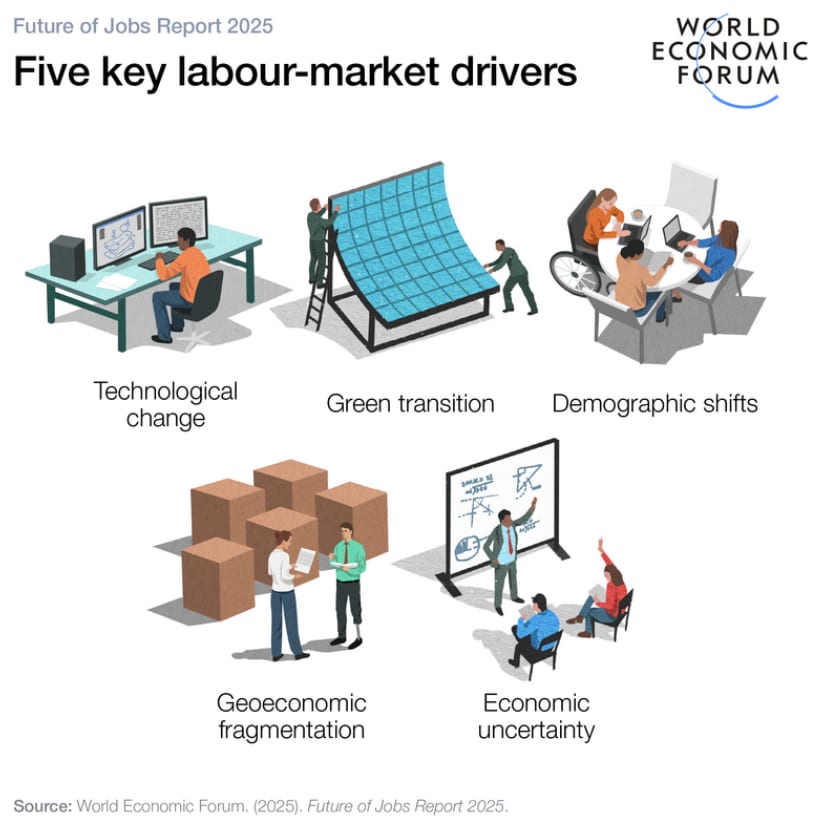
Labour markets in 2025 exhibit significant regional disparities despite historically low unemployment rates in higher-income countries. Unemployment varies widely, from 2.6% in Mexico to 32.9% in South Africa. Wage growth is uneven, with the US experiencing cooling wages alongside a stable 4.2% unemployment rate. Key factors influencing the job landscape include an ageing workforce in developed nations, the rise of AI and digital skills, economic uncertainties, and green transitions creating new job opportunities. Participation in the workforce is declining, highlighting the need for policies that remove barriers for marginalized groups. Employers are adapting by redesigning roles, enhancing workplace culture, and prioritizing responsible technology use.
Latin America | Education
The state of global labour markets in 2025, and other trends in jobs and skills this month

Industrial operations are experiencing significant transformation due to rising complexity, workforce shortages, and global uncertainties. Advances in industrial robotics are giving rise to “physical AI,” which includes robotic systems with perception, reasoning, and autonomous capabilities. Three key robotics systems—rule-based, training-based, and context-based—are emerging to enhance automation. Case studies from Amazon and Foxconn demonstrate the effectiveness of these innovations. Successful scaling of intelligent robotics requires integrating a new technology stack, establishing ecosystem partnerships, and investing in workforce development, positioning manufacturers for sustainable and inclusive growth.
Physical AI: Powering the New Age of Industrial Operations

Industrial operations are experiencing a critical transformation due to increasing complexity, workforce shortages, and global uncertainties. Advances in industrial robotics are leading to the development of "physical AI," which enables robotic systems to perform perception, reasoning, and autonomous actions. Three key systems—rule-based, training-based, and context-based robotics—are emerging. Case studies from Amazon and Foxconn demonstrate the positive impacts of these innovations. Manufacturers must also focus on integrating a new technology stack, forming ecosystem partnerships, and investing in workforce development to successfully scale intelligent robotics and achieve sustainable growth.
Physical AI: Powering the New Age of Industrial Operations

Young people aged 15–24 represent a significant portion of the global population, yet their participation in development policy and financing remains limited. The urgency to achieve the Sustainable Development Goals (SDGs) by 2030 calls for innovative partnerships that include youth voices. An International Youth Day event highlighted the critical role of local youth actions in addressing social and economic issues. Findings from this dialogue stress the need for quality jobs, enhanced youth entrepreneurship, and accessible resources for grassroots initiatives. Recommendations for multilateral development banks include establishing youth advisory structures and prioritizing participatory engagement methods to empower young leaders in driving SDG localization.
Bangladesh | Financial services, Education
Empowering Young People to Localize the SDGs
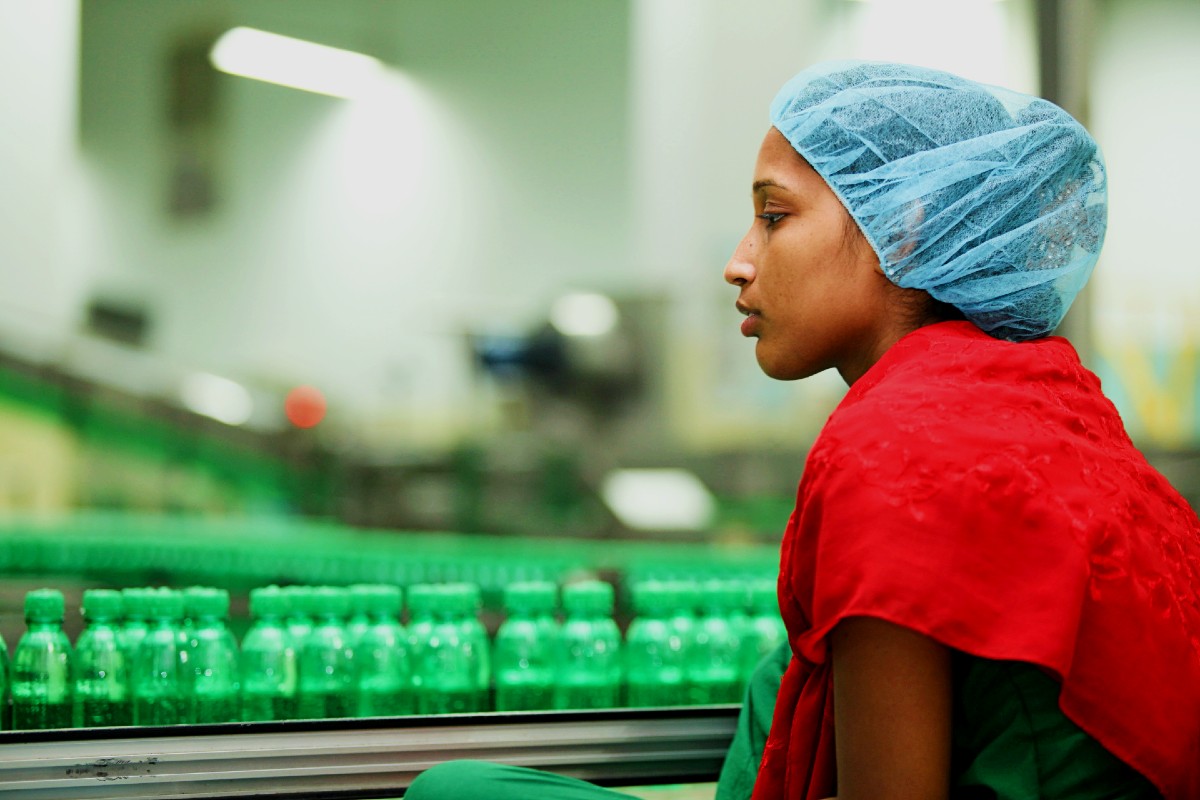
India's manufacturing sector is underutilizing women's talent, with fewer than 20% of formal manufacturing jobs held by women. Addressing barriers such as care responsibilities, safety concerns, and lack of infrastructure can increase women's participation, potentially lifting manufacturing output by 9%. Key solutions include upgrading industrial facilities, providing safe transportation, and onsite childcare. Enhancing training programs to focus on leadership and technical skills is vital for women's advancement. Supporting women entrepreneurs through reserved land and access to government resources can further stimulate economic growth. Embracing inclusivity in the workforce will foster productivity and benefit communities.
Bangladesh, India, Nepal | Education
Unlocking India’s Manufacturing Potential by Removing Barriers for Women

Chancellor Rachel Reeves is under pressure to stabilize the UK's public finances as borrowing costs rise and the pound weakens. Key challenges include limited scope for tax increases, sluggish economic growth averaging 0.3% GDP, and high inflation driving borrowing costs to an estimated £107 billion in 2024/25. Reeves must make tough decisions on debt, welfare, and investment while adhering to commitments not to raise major taxes. Current financial conditions leave little room for improving borrowing or boosting growth, potentially jeopardizing market confidence if not effectively addressed.
Financial services
Can Rachel Reeves avoid a fiscal meltdown?
Chancellor Rachel Reeves is under pressure to stabilize the UK's public finances amid soaring borrowing costs and a declining pound. Key challenges include low economic growth, increasing public debt, and high inflation, which necessitate difficult decisions on debt, welfare, and investment. Current government commitments limit tax increases, while spending demands from defense, net zero initiatives, and an aging population complicate cuts. With financial markets wary, Reeves must navigate tough conditions without immediate solutions, as options for cost reduction or growth enhancement remain limited.
Financial services
Who would want to be Rachel Reeves this autumn?
AI image generators often reproduce Orientalist stereotypes when attempting to depict Pakistani urban streetscapes, missing essential landmarks and the diversity that characterizes these cities. This issue highlights the need for greater cultural inclusivity in AI systems, as existing models rely on datasets that may not fully encompass the complexity of human experiences. The article compares this challenge to the limitations of maps, which simplify and abstract reality, leading to misunderstandings and negative consequences in how cultures are represented and perceived.
Confusing the Map for the Territory
Breakthrough thinking and design thinking, prevalent approaches in business innovation, often yield socially and environmentally detrimental outcomes due to their lack of consideration for complex systems. Systems thinking, a methodology focused on understanding the interconnectedness of organizations, is proposed as a solution. It highlights that changes in one network area can have widespread impacts, such as the effects of tariffs on global supply chains. The approach is particularly important for addressing sustainability challenges, as it emphasizes that the net impact of technologies like electric vehicles and solar panels on the environment can vary based on broader ecological contexts.
Financial services, Education
Why You Need Systems Thinking Now
AI is addressing longstanding challenges in underserved communities, as seen in projects like mapping missing bridges in Rwanda and community-led geospatial initiatives in Nigeria. The AI platform Darli, supporting over 20 African languages, has enabled more than 110,000 farmers to access vital resources such as advice, logistics, and finance. Tailoring AI solutions for these areas fosters equity, creates scalable public benefits, and provides frameworks for sustainable digital transformation.
Africa
How AI is powering grassroots solutions for underserved communities
Children's right to participation in digital policy frameworks is insufficiently addressed, despite opportunities for realizing their rights in the digital environment. This study examines international legal and EU regulations, exploring how children's participation can enhance digital resilience and well-being. It identifies a gap between the formal acknowledgment of these rights and their implementation in policy-making. While recent EU strategies signal a shift towards greater child participation, tangible changes in children's influence at the state level remain limited, revealing a need for genuine engagement in policy processes.
ICT, Education
From Voice to Action: Upholding Children’s Right to Participation in Shaping Policies and Laws for Digital Safety and Well-Being