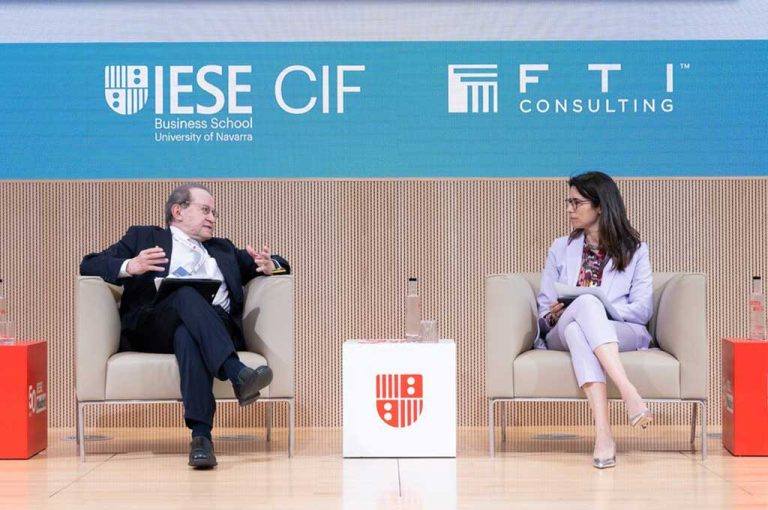
Europe faces challenges in enhancing its competitiveness and productivity, highlighted during a discussion involving economist Vitor Constancio. While Europe maintains external competitiveness, concerns arise over its decreasing GDP per capita, which fell from 90% of the U.S. in 2008 to 54% by 2023 when evaluated using market exchange rates. A more accurate assessment using purchasing power parity (PPP) suggests Europe is 25% below the U.S. The disparity is attributed to lower working hours, declining employment rates, and societal choices valuing leisure and social cohesion. Addressing these issues is crucial for maintaining relevance in a multipolar economy.
Austria, Barbados, Belgium, Bulgaria, Chile, Costa Rica, Croatia, Cyprus, Czech Republic, Denmark, Estonia, Finland, Georgia, Germany, Greece, Hungary, Iceland, Indonesia, Ireland, Israel, Latvia, Lithuania, Luxembourg, Malta, Netherlands, Norway, Panama, Paraguay, Peru, Philippines, Poland, Portugal, Romania, Russian Federation, Singapore, Slovakia, Slovenia, Spain, Sweden, Switzerland, Ukraine, United Arab Emirates, United Kingdom, Venezuela | Financial services
What Europe must do to boost its competitiveness and productivity

The United Nations is exploring the use of artificial intelligence (AI) to reduce reporting duplication and improve efficiency in humanitarian responses as part of the UN80 reform initiative. However, partnerships with private technology firms like Palantir raise concerns about data protection and the implications for humanitarian organizations. Experts emphasize the need for clear guidelines and governance principles regarding data collection and AI usage, ensuring that vulnerable stakeholders are involved in decision-making and that data management follows a responsible life-cycle approach.
Health
Donor crisis prompts rethink on humanitarian data partnership rules
Recent breakthroughs in AI and advancements in information technology have transformed organizational and institutional design, enabling simultaneous discussions among participants in different locations. This evolution enhances the ability to produce collective intelligence by allowing for innovative interaction designs. Design-minded social scientists address the structure and composition of these interactions within various frameworks, overcoming constraints that previously limited efficiency, fairness, and creativity in decision-making processes. The removal of these constraints opens new possibilities for improving collective outcomes.
Education
Everyone, everywhere, all at once LLMs and the new physics of collective intelligence

Singapore has postponed mandatory ISSB-aligned climate reporting for most listed firms by up to five years, affecting over 90% of Singapore Exchange companies. Non-STI issuers with a market capitalization of S$1 billion or more will begin reporting in 2028, while smaller firms will start in 2030. This delay has raised concerns about the potential easing of sustainability regulations across Asia, diminishing Singapore’s role as a leader in climate reporting. Experts caution that the extended timeline signals a deprioritization of sustainability efforts, potentially compromising climate risk management within the financial system.
Financial services
Singapore’s climate reporting delay is ‘fuel for the sustainability deprioritisation fire’ in Asia, say experts

China will implement absolute emissions caps covering major industrial sectors by 2027, with a nationwide emissions trading scheme (ETS) planned by 2030. Likely sectors include chemicals, petrochemicals, papermaking, and aviation. The system will feature both free and paid carbon emissions allowances, supporting a transparent voluntary carbon market. Currently, China’s ETS, initiated for the power sector in 2021 and expanded in 2025 to cover steel, cement, and aluminum, accounts for 60% of greenhouse gas emissions. The reforms aim to respond to international trade pressures and will incentivize investment in emissions reduction as carbon prices rise.
China’s carbon market set to introduce absolute emissions caps by 2027
Advancements in artificial intelligence (AI) are revolutionizing maintenance and operational reliability across various industries. Predictive maintenance technologies, particularly in energy grid management, utilize machine learning to forecast equipment failures, enhancing asset management. This shift reduces unexpected outages and improves efficiency by transitioning from scheduled inspections to condition-based interventions. Sectors such as transportation, aviation, and aquaculture are adopting similar strategies. While promising reduced costs and increased operational resilience, AI integration also introduces cybersecurity risks and necessitates a workforce skilled in data science and AI oversight. Organizations must strategically prepare for this shift to avoid operational vulnerabilities and gain competitive advantages.
Horizon Scanning | Scenario Planning | Strategic Intelligence | Shaping Tomorrow

Multi-agent AI systems enhance decision-making by leveraging multiple collaborating agents, offering deeper insights at the expense of speed. Users often perceive these systems as slower due to the complexity involved in their reasoning processes. To effectively harness the potential of multi-agent AI, organizations must focus on user experience design that minimizes perceived delays and promotes transparency. This includes enabling seamless interactions across various modalities—text, speech, and graphics—while ensuring users understand the system's actions and maintain control. Trust and confidence in the system are crucial for successful adoption and usability.
Rethinking the user experience in the age of multi-agent AI
Tariff wars, particularly between the US and China, are reshaping global supply chains and migration patterns, increasing the risk of human rights abuses for workers. As US firms seek to avoid high tariffs, they are diversifying supply chains, notably toward countries like Mexico and Vietnam. This shift fosters a rise in immigration to meet labor demands, contributing to "replacement migration" trends. However, reliance on recruitment agencies exposes migrant workers to exploitation and rights violations. Increased risks have also emerged in both middle and high-income countries, alongside deteriorating labor conditions for migrants in regions like Mexico and the US.
Argentina, India, Japan, Kenya, Mexico, Republic of Korea, Taiwan, China, United Arab Emirates, United Kingdom | Financial services
How tariff wars are reshaping migration and raising the risk of human rights abuses in supply chains

Water is both severely impacted by climate change and vital for renewable energy, food security, and industry. The 2026 UN Water Conference aims to elevate water on the global agenda, focusing on four priorities: shared frameworks, scalable investments, basin-level initiatives, and policy reform. By 2030, global demand for water is projected to exceed supply by 40%, with nearly 4 billion people facing severe scarcity annually. Immediate action is required to mobilize public-private partnerships and establish a global water valuation framework, ensuring effective investment and sustainable management.
Africa | Financial services, Education, Health
4 priorities for global leaders on the road to the 2026 UN Water Conference
The UK food system's emphasis on low prices is increasingly unsustainable, as this year's drought has severely affected crop yields, with some down by 50%. The reliance on "just-in-time" logistics and imports from climate-vulnerable regions exposes the system's fragility. While supermarkets keep shelves stocked and prices relatively stable, severe weather can quickly lead to shortages and rising consumer prices. To enhance resilience, the system requires stronger local networks, fair contracts between farmers and retailers, and government policies prioritizing adaptability and sustainability. These changes aim to balance consumer expectations with the food supply's long-term stability.
Financial services
The UK’s food system is built on keeping prices low – but this year’s droughts show up its failings

Integration policies across Europe, aimed at quickly placing refugees into the labor market, often undermine their long-term aspirations. This "low ambition equilibrium" results in refugees settling for low-skilled jobs, driven by systemic dynamics and pressures faced by street-level bureaucrats. Despite the availability of vocational training in Switzerland, these opportunities frequently trap refugees in positions unreflective of their skills and experience. Pressured to achieve rapid employment, refugees internalize lower expectations, leading to wasted potential and entrenchment of inequality. Challenging this paradigm requires reevaluating integration as a collaborative societal effort rather than a singular, expedited process.
Latin America | Education
The low ambition equilibrium – why integration policies are putting refugees on a fast track to nowhere
Nigel Farage effectively mobilizes English grievance to reshape political discourse in the UK, focusing on issues like Brexit and immigration. His tactics highlight a discontent rooted in English identity and a perceived neglect from the political class towards England, especially in the context of resource distribution. Despite his success in rallying support, proposed solutions, including Brexit and stringent immigration policies, have proven ineffective and poorly conceived. The lack of focus on genuine issues facing England, such as post-devolution governance, contributes to ongoing grievances, rendering English identity largely ignored in UK politics.
United Kingdom
Nigel Farage and the political power of English grievance
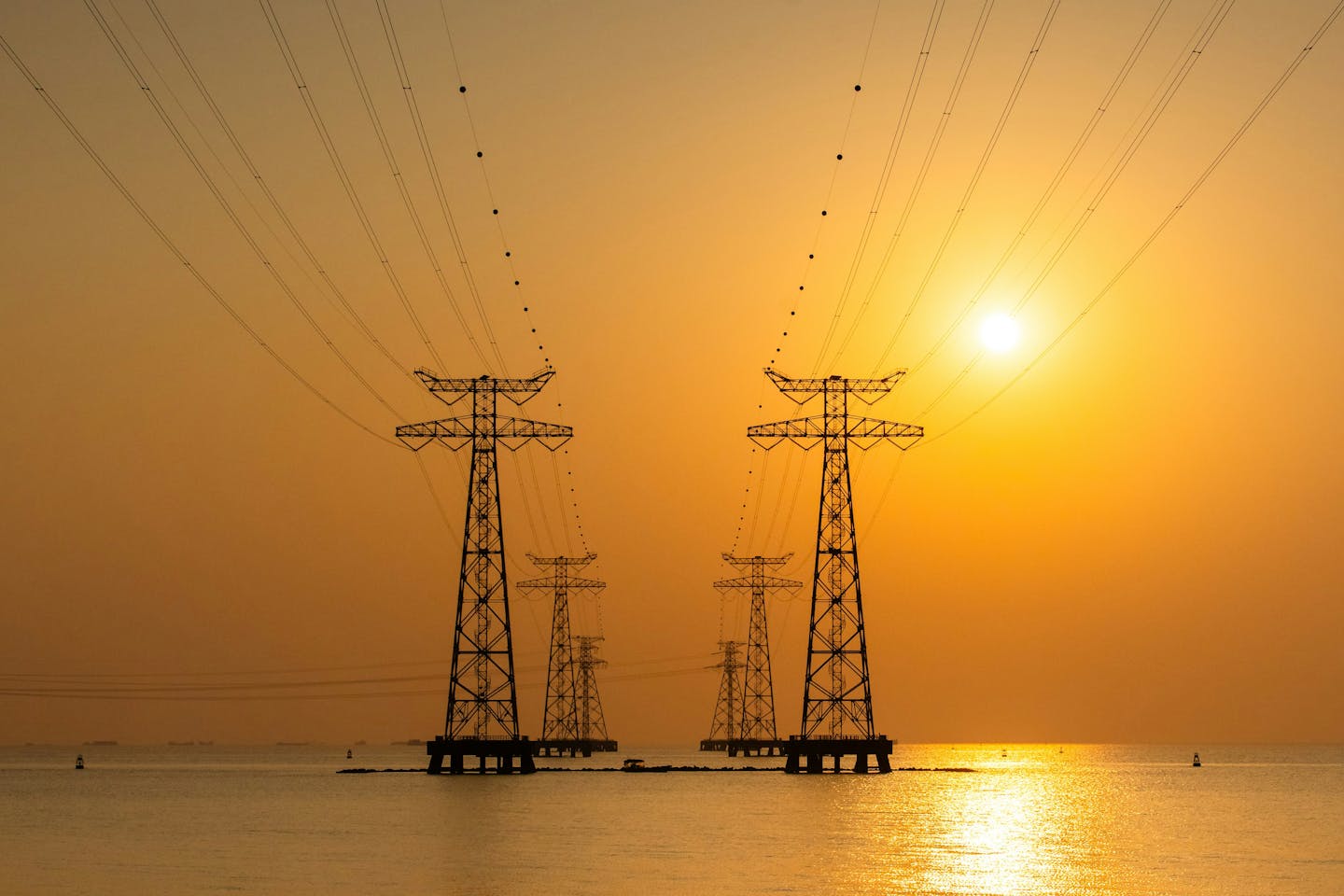
China's CO2 emissions from the power sector decreased by 3% in the first half of 2025, driven by record solar capacity additions of 212 GW, which matched electricity demand growth. Clean power generation grew by 270 TWh, outpacing demand growth of 170 TWh. Coal use in power fell by 3.4%, while gas usage rose by 6%. However, coal-based synthetic fuel production increased by 20%, complicating CO2 reduction goals. Despite the emission decline, China may miss key climate targets, necessitating greater commitments in upcoming national plans.
Analysis: Record solar growth keeps China’s CO2 falling in first half of 2025

Critical minerals such as cobalt, copper, graphite, lithium, manganese, and platinum-group metals are vital for the energy transition, yet Southern Africa, which holds nearly 30% of the global reserves, receives less than 10% of global exploration financing. The report by the Securing Minerals for the Energy Transition initiative identifies financing barriers and proposes practical solutions to enhance critical minerals value chains. It emphasizes the need for de-risking investments, building infrastructure, and supporting local value addition to establish Southern Africa as a key player in the evolving clean energy economy.
South Africa
Securing Minerals for the Energy Transition: Finance for Southern Africa
Critical minerals are vital for the energy transition, powering electric vehicles, renewable energy systems, and energy storage technologies. Southern Africa contains almost 30% of the world’s reserves of critical minerals like cobalt, copper, graphite, lithium, manganese, and platinum-group metals but receives less than 10% of global exploration financing. The report under the SMET initiative identifies financing barriers and provides solutions to enhance critical minerals value chains in the region, showcasing case studies that can de-risk investments, improve infrastructure, foster local value addition, and establish Southern Africa as a key player in the global clean energy economy.
Democratic Republic of the Congo, Ghana, Kenya, Mozambique, South Africa, Zambia
Securing Minerals for the Energy Transition: Finance for Southern Africa
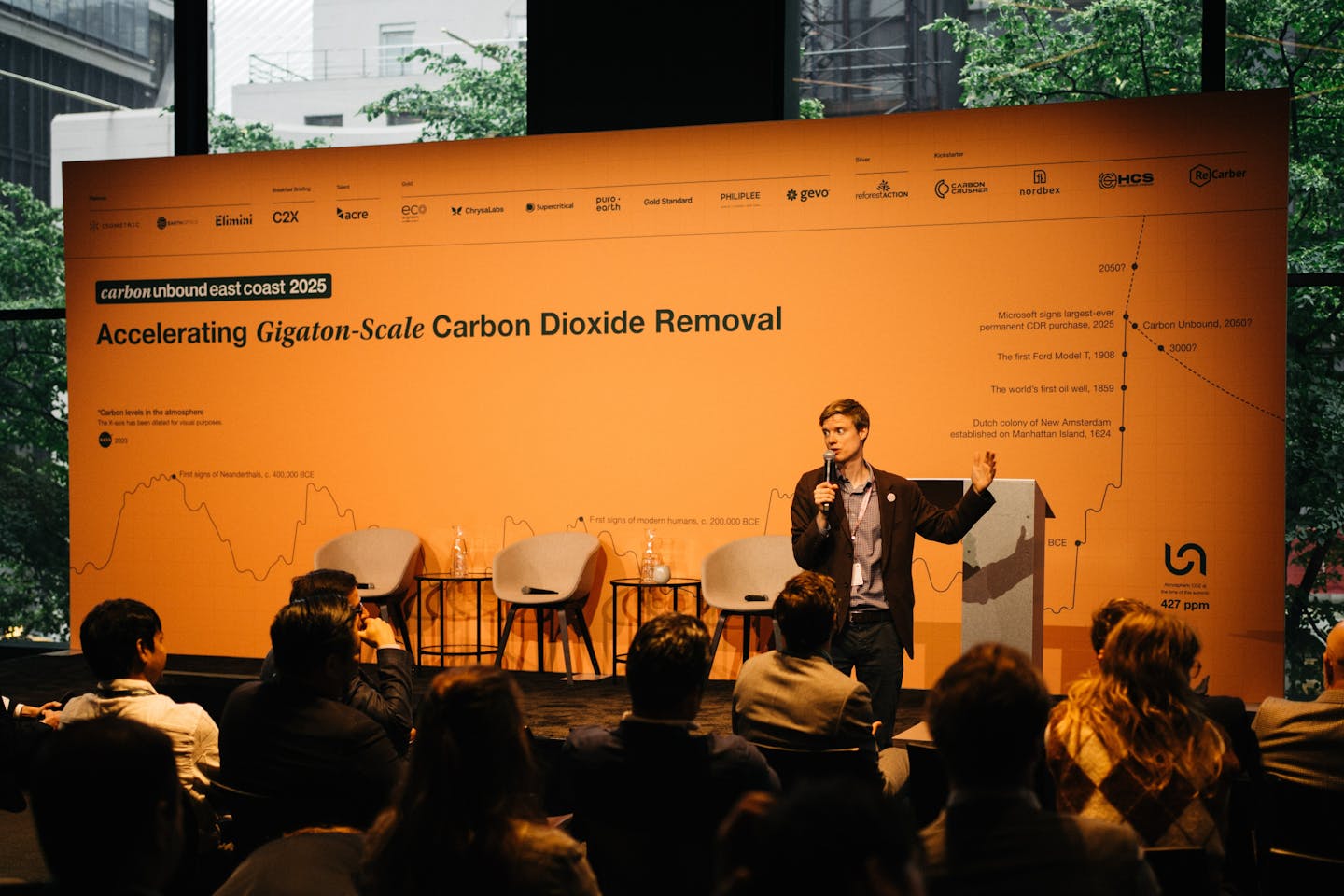
Singapore needs to establish stricter regulations for carbon credits to incentivize companies to invest in high-quality removal credits, according to Lukas May, chief commercial officer of Isometric. Current incentives are insufficient, as companies have no motivation to purchase more expensive nature-based removal credits over cheaper avoidance credits. With the carbon tax set to increase significantly by 2030, the push for clearer standards is crucial. Emphasizing successful models from the UK and EU, May highlights the need for government involvement to drive demand for engineered removal credits amid rising interest in durable carbon solutions.
Singapore must tighten carbon credit rules to spur demand for high-quality removals, says registry executive

The Bank for International Settlements (BIS) advocates a cautious view of stablecoins, deeming them unsuitable as money and arguing for a two-tier monetary system. In contrast, the U.S. aims to be the "crypto capital of the world," promoting financial transformation through decentralized technologies and stablecoins. Historical parallels can be drawn to Britain's 19th-century currency debates, where tensions between innovation and regulation emerged. The current landscape reflects similar ideological divides, with proponents of free banking favoring market-driven innovation and critics emphasizing stability and control.
Financial services
Stablecoins in the historical crossroads between innovation and regulation
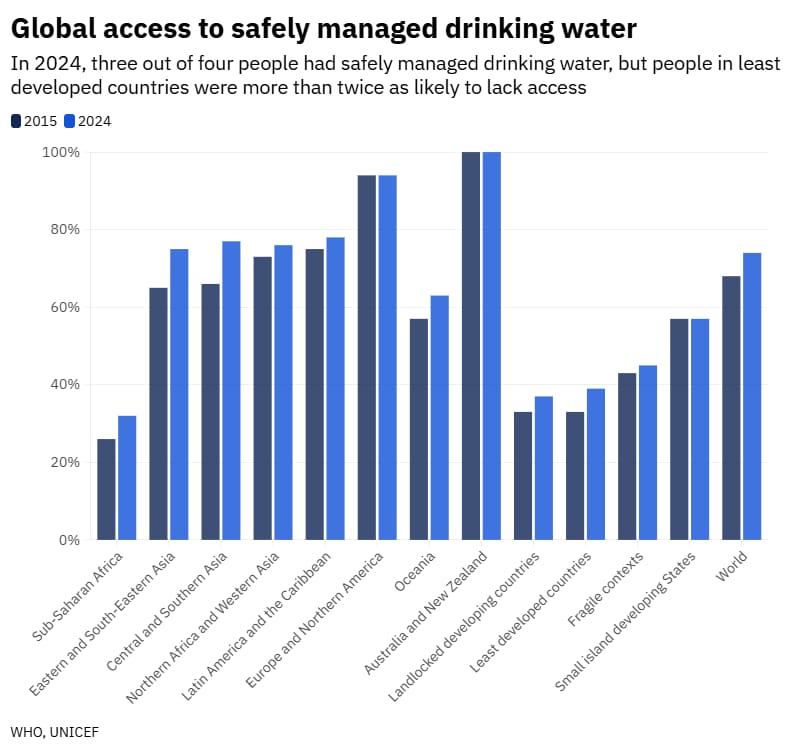
One in four individuals, equating to 2.1 billion people globally, lack access to safely managed drinking water, with those in least-developed countries being more than twice as likely to face this issue. Despite improvements since 2015, significant disparities remain, particularly affecting low-income, rural, and marginalized communities. Additionally, dengue outbreaks in the Americas correlate with climatic events, while new recommendations in diabetes treatment call for personalized approaches. Other notable health concerns include a public health emergency in Botswana due to medicine shortages and increased infectious disease screenings in China.
Health
1 in 4 people still lack access to safe drinking water, and other health stories

AI and automation are revolutionizing the driving experience by enhancing vehicle safety features and streamlining post-accident processes. Advanced technologies like Automatic Emergency Braking (AEB) and Advanced Driver Assistance Systems (ADAS) are becoming standard, yet road traffic crashes remain prevalent due to human factors. Repairing high-tech vehicles is increasingly complex and costly, with electronic components constituting 40% of vehicle costs. A connected network facilitates faster accident response, from real-time alerts to automated claims processing, improving recovery speed and efficiency after incidents. The trend toward tech-enabled claims is reshaping how insurers manage post-accident services.
How AI and automation are changing our driving experience
Open data often fails to empower all social groups equally, highlighting significant gaps in understanding its implications for equity in public administration. An interdisciplinary review of 69 studies reveals that while open data can identify inequities, it also presents challenges related to data justice due to epistemic injustices, financial constraints, and governance structures that reinforce power imbalances. To mitigate these issues, a balanced approach combining data pluralism with standardization, reflexive research practices, and collective benefit governance models is recommended. These insights aim to guide researchers and public officials in navigating open data's complexities as new technologies emerge.
ICT, Health, Education
Open Data and Equity: Naming the Issues, Blaming the Causes, and Claiming Solutions. An Exploratory and Interdisciplinary Systematic Literature Review