
Critical environmental measures, particularly the Earth system boundaries (ESBs), guide businesses in assessing and mitigating risks while improving sustainability. The ESBs, which encompass limits on climate, ecosystems, and nutrient cycles, serve as a framework for businesses to align strategies with environmental realities. Currently, six out of nine planetary boundaries are exceeded, highlighting urgent sustainability needs. Companies like Vaude utilize these indicators to foster internal understanding and integrate sustainability deeply into their operations, moving beyond incremental improvements to tackle broader societal impacts and enhance brand value.
United Kingdom | Financial services
The Planetary KPIs That Inform Eco-Friendly Strategies
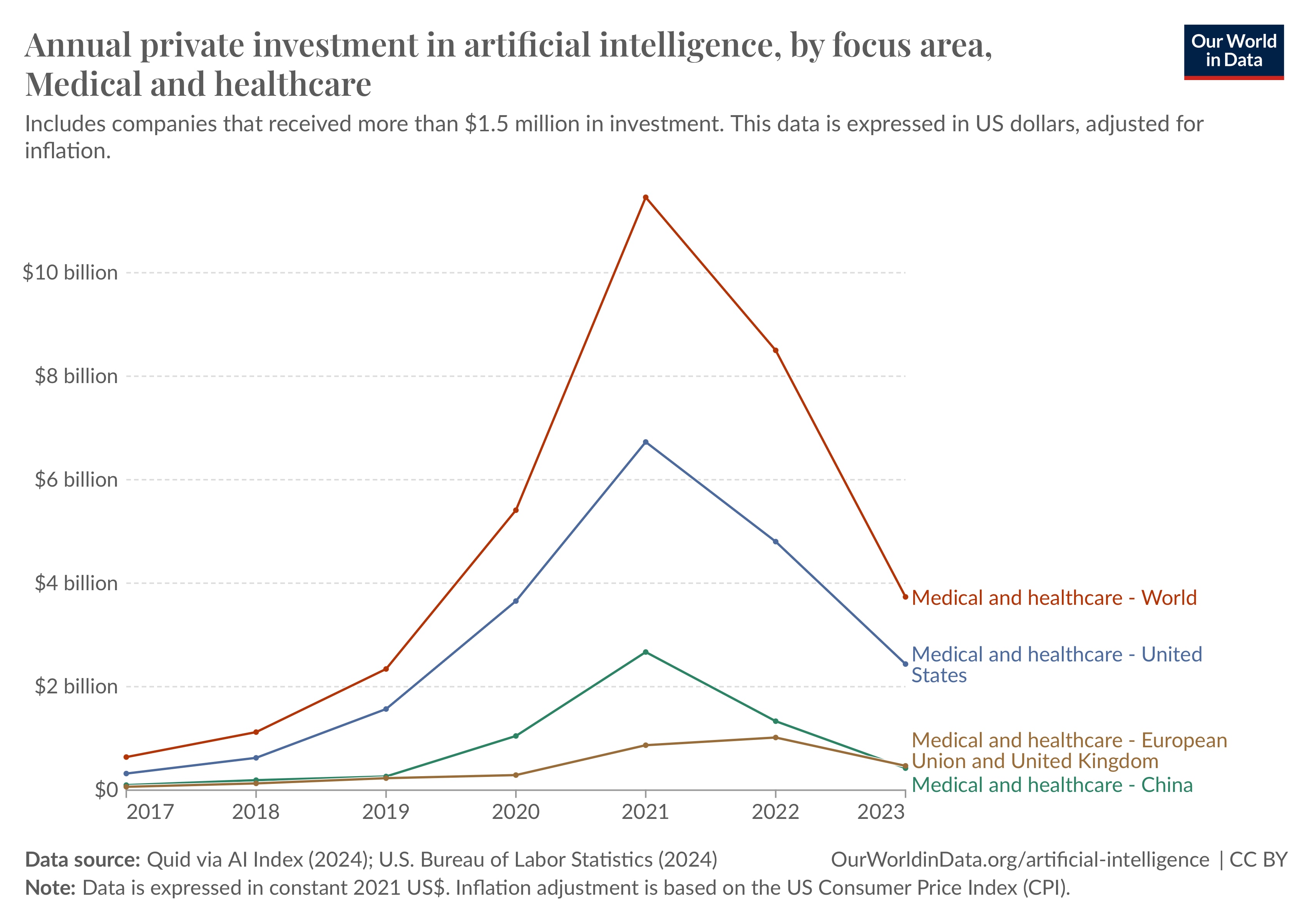
AI is transforming healthcare by addressing critical gaps in service access and improving diagnostic capabilities. With 4.5 billion people lacking essential healthcare, AI technologies are aiding in tasks like interpreting brain scans, identifying fractures, and predicting disease onset. AI software has shown superior accuracy in stroke assessments and can effectively reduce missed fractures in urgent care. Furthermore, studies indicate AI's ability to assess ambulance needs and detect early signs of diseases in asymptomatic patients. Despite its potential, concerns remain about the rapid integration of AI due to training and risk management issues.
7 ways AI is transforming healthcare
Psychological trauma in modern conflict zones is a significant and often overlooked consequence of war. The increasing levels of violence worldwide have intensified the mental health challenges faced by affected populations. Addressing psychological harm must be a fundamental part of humanitarian emergency responses, as it affects individuals' ability to recover and support their families. Integrating psychosocial care into health and aid delivery is crucial, with local humanitarian actors playing a key role. Funding for mental health should be prioritized as essential for survival, emphasizing the importance of early intervention to safeguard lives and dignity.
Health
Invisible scars: mental health programming is crucial in humanitarian response - World
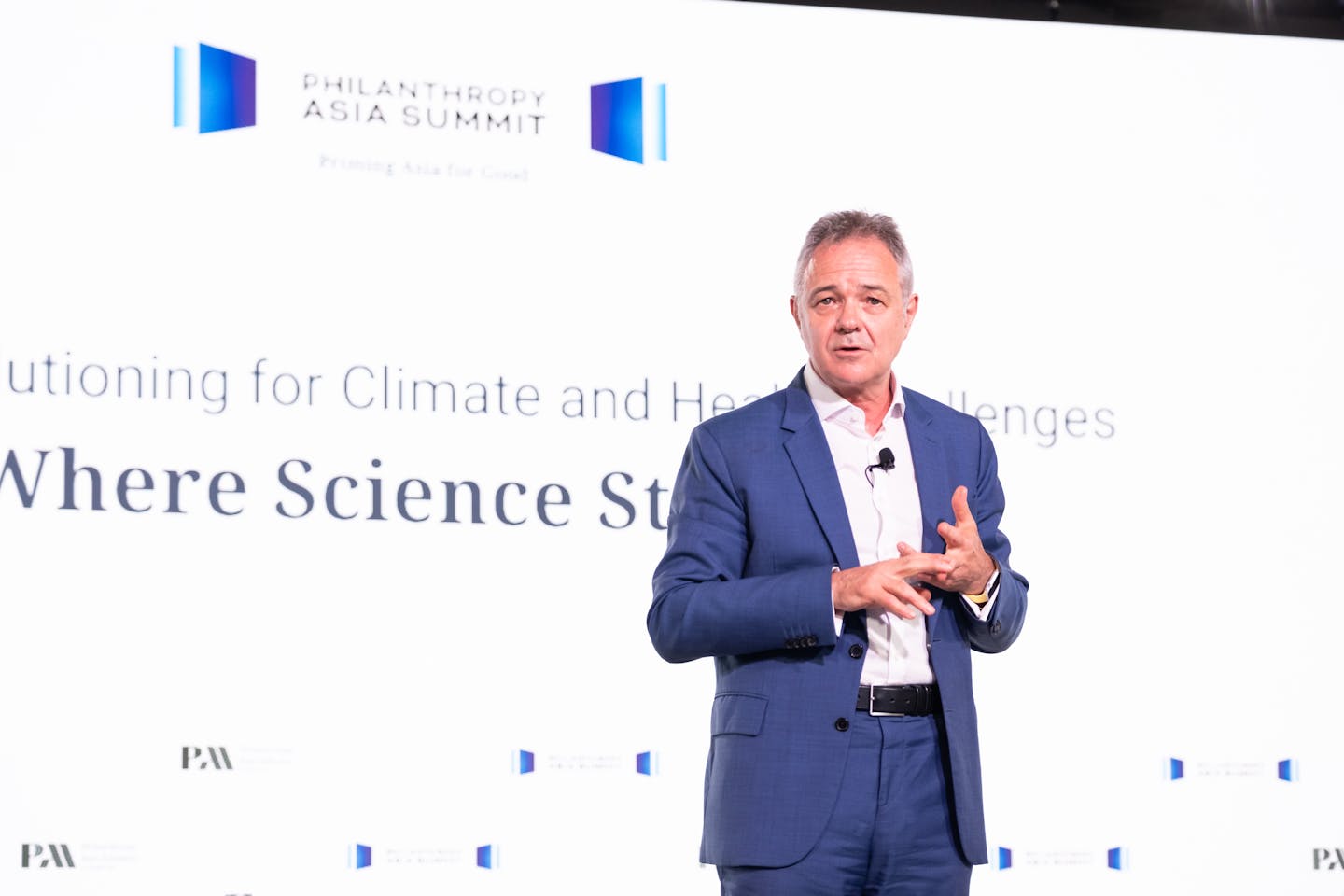
Dr. Jeremy Farrar, WHO chief scientist, warns that the U.S. withdrawal from the WHO will significantly hinder not only funding but also global cooperation and scientific progress in addressing pressing challenges like pandemics and climate change. He emphasizes the loss of U.S. leadership and expertise as detrimental, noting that many global health issues are interconnected and require collaborative responses. The move reflects a broader trend of U.S. retreat from multilateral institutions, raising concerns over its role in shaping future global health responses.
Financial services, Health
WHO chief scientist says US exit from organisation has impacts on climate and health research beyond funding loss

Sharp declines in Western development aid threaten Southeast Asia’s clean energy transition and disproportionately impact its poorest nations. The Lowy Institute’s report indicates a decrease in official development finance (ODF) for clean energy from $1.7 billion in 2018 to under $710 million in 2023, jeopardizing efforts to reduce reliance on coal. As ODF shifts towards loans from non-Western sources, Southeast Asia's reliance on bilateral financing from China, Japan, and South Korea increases, raising concerns about governance and climate commitments. Significant aid cuts are anticipated from Western nations, which may dilute engagement on climate and humanitarian issues.
Africa, ASEAN
Western aid cuts could derail Southeast Asia’s just energy transition, deepen regional divides: experts

Tensions in India and Pakistan are escalating over water sharing following India's suspension of the Indus Waters Treaty, a decades-old agreement crucial for controlling vital river systems. India plans to expedite hydropower projects across the Indus basin, threatening the Himalayan ecosystem and local tribal communities in regions like Lahaul and Spiti. Conservationists warn of increased landslides and floods due to dam construction, which could disrupt traditional farming and water systems vital for local livelihoods. The push for energy development raises concerns over the long-term environmental impact and the preservation of cultural identities in these regions.
Tribal fears mount in Himalayas with end of Indus water treaty
Economic and climate resilience significantly impact sustainable development (SD) across 31 countries from 2007 to 2021. Using advanced econometric techniques, the study reveals both types of resilience have lasting effects on SD, with findings validated through dynamic and quantile analyses. The results underscore the importance of incorporating resilience considerations into development strategies to enhance SD outcomes.
Africa | Financial services, Health
Impact of Economic and Climate Resilience on Sustainable Development: A Cross-Country Analysis

The UK’s financial services sector is currently struggling with significant structural challenges despite strong export figures. Key issues include declining productivity, stagnating output, and increasing reliance on net interest margins, raising concerns about long-term health and global competitiveness. Since the 2007-2009 financial crisis, the financial sector has contracted by 6.5% while other economic areas have grown significantly. The rise in net interest margins since mid-2020 has masked deeper issues, as core outputs like payments, transactions, and insurance services have decreased since Brexit.
Argentina, Bahrain, Barbados, Benin, Bermuda, Bulgaria, Burkina Faso, Cyprus, Denmark, Egypt, Eswatini, Finland, France, Iceland, Indonesia, Ireland, Israel, Italy, Jamaica, Kenya, Lesotho, Luxembourg, Malta, Mauritius, Namibia, Netherlands, New Zealand, Norway, Oman, Panama, Portugal, Singapore, Slovenia, Sri Lanka, Sweden, Switzerland, Tanzania, Thailand, Tunisia, United Arab Emirates, United Kingdom, Zimbabwe | Financial services
UK financial services face deep challenges

The Great Barrier Reef has experienced its largest annual coral decline since records began, with 48% of surveyed reefs showing reduced coral cover due to climate change-induced heat stress, cyclones, and crown-of-thorns starfish. Global insured losses from natural disasters reached $80 billion in H1 2025, driven primarily by wildfires in Los Angeles. France dealt with its largest wildfire since 1949, affecting 16,000 hectares. Additionally, July was the third-warmest on record, and serious water pollution incidents in England increased by 60% due to underinvestment and climate impacts.
Health
Great Barrier Reef suffers largest annual coral decline, and other nature and climate news

AI implementation in workplaces is leading to a reduction in entry-level positions, disrupting traditional career development pathways. As companies achieve efficiency gains, junior roles essential for skill-building and mentorship are disappearing, exacerbating knowledge gaps as experienced professionals retire. This automation eliminates foundational learning opportunities, hindering the development of essential judgment and problem-solving skills. Organizations risk long-term consequences, as a lack of trained professionals may impede their ability to navigate complex challenges and adapt to market changes, threatening overall resilience.
Education
Is AI Pushing Us to Break the Talent Pipeline?

Troy's fall was influenced by significant environmental strain resulting from unsustainable practices during its peak around 2500-2300 BC. The city thrived on mass production and intensive agriculture, which led to deforestation, soil erosion, and depletion of natural resources. These practices prompted a decline in ecological balance, culminating in a catastrophic fire and the abandonment of its monumental structures. Following the collapse, Troy adapted by diversifying agriculture and stabilizing its communities. This historical narrative serves as a cautionary tale about the consequences of unchecked growth in the face of environmental limits.
Troy’s fall was partly due to environmental strain – and it holds lessons for today
Family farmers in eastern England, like the Pearces, face an increasingly unsustainable agricultural landscape. Pricing for grain has stagnated for 30 years while production costs have soared, leaving average farm household incomes at merely £22,200. The Pearces express concern that farming is becoming an “impossible dream” for new entrants, with family farms at risk of being replaced by large agribusinesses. Farmers report feeling abandoned by the government, anxious about the future, and struggle with competition from higher-priced scrap metal. This reflects a broader discontent within the farming community regarding economic viability and sustainability.
Family farmers say their way of life is an impossible dream when ‘the bread of life is worth less than rusty metal’
The civic tech sector is increasingly integrating Artificial Intelligence (AI) to enhance user interfaces, including tools like chatbots and accessible PDFs, benefiting both government employees and citizens. However, the traditional focus on crafted interfaces is being challenged by the rapid advancement of generative AI tools that can rapidly create complex, high-fidelity interfaces. Major players like Shopify, Google, and AWS are developing these technologies, which could shift the landscape of interface design significantly, even though they currently face reliability issues. The industry is approaching a turning point where scalable, production-ready solutions could soon emerge.
The end of civic tech’s interface era
Regulators are intensifying efforts to establish a legal and financial framework for cryptocurrencies as they gain mainstream acceptance. The discussion highlights the ongoing tension between innovation and regulation, with experts Jessica Wachter and Timothy Massad addressing the unique challenges digital assets pose, including their decentralized nature and the intertwining of securities and non-securities. Both speakers emphasize the need for clear regulatory approaches to foster safe innovation while addressing risks such as fraud and systemic threats in this evolving landscape.
Financial services
Regulating Digital Assets | Jessica Wachter and Timothy Massad

South Asia's coastal regions face severe challenges from the dual threats of coastal disasters and extreme heat, exacerbating existing vulnerabilities linked to poverty and inequality. The article highlights insights from various experts on how rising sea temperatures and extreme heat affect livelihoods, public health, and ecosystems, emphasizing a pressing humanitarian crisis. Communities are depicted as both vulnerable and resilient amidst these intensifying climate impacts, leading to urgent calls for adaptation strategies. The need for collaboration among local leaders, planners, and policymakers is crucial to address the immediate and future challenges posed by climate change in these regions.
Coastal Disasters with a Focus on Extreme Heat: Perspectives from South Asia - India

Heatwaves are increasingly affecting the northern hemisphere, leading to rising awareness of their health impacts due to climate change. Eleni Myrivili, the global chief heat officer at UN-Habitat, emphasizes the importance of awareness, preparedness, and redesign in mitigating heat effects. She highlights initiatives like categorizing heatwaves in Athens, which links specific risks to early-warning systems, as crucial for protecting vulnerable populations. Promoting natural solutions in urban planning can also be cost-effective, addressing the challenge of extreme temperatures while reducing mortality rates from heat-related incidents.
Financial services, Education, Health
Q&A: ‘We don’t need to have people die from heat’

Youth are pivotal in addressing community challenges, as illustrated by young entrepreneurs Shadia and Fatima in Yemen, who launched Dorri to create affordable educational toys from local materials. Their initiative demonstrates the creative potential of young people amid crisis. Globally, youth play a crucial role in peacebuilding and economic development, with over 90% of the workforce projected to be under 25 by 2050. Examples from Sudan and Myanmar further underscore the importance of genuine youth participation and intergenerational collaboration. Despite their contributions, young people often face exclusion from policymaking, highlighting the need for authentic leadership engagement.
Education
Celebrating youth: ‘When young people take the lead, everyone gains’

Corporate foresight is essential for leaders to navigate uncertainty and future-proof organizations. A global study found that while 81% of companies utilize foresight for operational purposes, a gap exists in integrating it into strategic planning, with only 43% applying it for long-term strategies. Leadership engagement is mixed, with a conservative approach dominating strategic decision-making. Most firms focus on customer intelligence and innovation but overlook the potential of external foresight to shape industry narratives. Leaders should elevate foresight to a strategic level and foster a culture of exploration to fully leverage its capabilities for competitive advantage.
Education
Why companies must change their approach to corporate foresight

AI adoption is accelerating faster in data-rich industries, where vast amounts of information enable effective model training, leading to higher automation potential. Sectors like software development and customer support are particularly vulnerable due to abundant data, with adoption rates reaching 60-70%. In contrast, data-scarce industries such as healthcare and construction face significant challenges, with adoption rates below 25%. As organizations seek ways to leverage AI, some may resort to invasive data collection methods, raising ethical concerns. Understanding the varying impacts of AI across industries is crucial for workforce preparation.
Education, ICT
Why AI is replacing some jobs faster than others
Local and regional governments are crucial in shaping place-based strategies for regional development. However, limited data availability hinders the systematic understanding of their priorities. This paper presents a method utilizing web mining, natural language processing, and machine learning to analyze local governance activities. By web scraping German county and municipality websites, a dataset is created that reveals diverse government functions and strategies. Topic modeling identifies 205 topics, focusing on 30 relevant ones such as Urban Development, Climate Protection, and Business Support, highlighting variations in local governance priorities and their discursive framing across regions. The aggregated dataset is made available online.
Denmark, Germany, Indonesia, Kenya, Sweden, Tanzania, United Kingdom | Financial services, Education, Health
Mapping Local Government Priorities: A Web-Mining Approach for Regional Research