
The Global Shapers Community, a network of over 10,000 young leaders across 500 cities in 150 countries, addresses pressing global challenges like climate justice and digital inclusion. Celebrating 15 years, the movement emphasizes genuine youth engagement in decision-making, advocating for structural influence over symbolic inclusion. It integrates young people into organizational strategies, fostering sustained collaboration for impactful solutions. The decentralized model empowers local hubs to innovate based on specific community needs, showcasing their ability to drive systemic change and contribute meaningfully to global initiatives.
Education, Health
Local action, global impact: 15 years of building the Global Shapers youth movement

South Asia's youth are transforming the region’s growth narrative by addressing pressing challenges such as unemployment and climate change. Highlighted by young changemakers like Sunita Dangol, who rose from humble beginnings to political leadership, this demographic is increasingly stepping into roles across various sectors. Initiatives such as Project Accelerate provide essential skills training for job readiness, impacting over 230,000 youths, while environmentally focused projects like Treelionaire and ClimaSynth foster climate resilience and education. This surge in youth leadership is essential for sustainable growth and stability in the region.
India | Education, Health, ICT
From politics to innovation: how South Asia’s youth is rewriting its growth story

Asia Pacific has experienced significant health advancements, yet faces challenges due to global pressures and reduced national development spending. Leaders stress the necessity of new partnerships among governments, private sectors, and philanthropy to bolster self-reliance in health services. WHO's Dr. Tedros Ghebreyesus advocates for philanthropists to help countries build capacities rather than depend on aid. Initiatives like the Health for Human Potential Community aim to mobilize over $100 million for health improvement projects in Indonesia, the Philippines, and Vietnam by 2030. Philanthropy in Asia is encouraged to focus on effective interventions, with a call for a revolution in food and nutrition systems to address underlying issues affecting health and productivity.
Africa, ASEAN | Education, Health
Philanthropy’s role in defining moment for health stewardship in Asia – helping countries build self-reliance
The aftermath of the 2023–2024 Israel–Hezbollah war presents a crucial opportunity for reforming Israel–Lebanon relations. Immediate priorities include enforcing the ceasefire and bolstering Lebanese state sovereignty. Medium-term goals involve rebuilding southern Lebanon, resolving border issues, and implementing political reforms to enhance Lebanese governance. A viable peace is achievable if both nations, supported by international partners, commit to addressing fundamental grievances and nurturing mutual recognition, paving the way for eventual normalization. The ceasefire agreement reached on November 27, 2024, initiated a withdrawal process for Israeli forces and a repositioning of Hezbollah, facilitated by the U.S. and France.
Lebanon
Lebanon and Israel Today and the Day After

Asia's transition to high-income status demands sustained productivity growth and substantial private investment. The region has experienced significant economic growth but must address challenges to enhance productivity. Five growth scenarios indicate that increased investment, primarily financed through domestic savings but also utilizing international capital markets, will elevate real interest rates and influence capital flows. Despite temporary negative spillover effects on interest rates, long-term benefits will arise from heightened imports among regions with rising productivity. Continuous advancements in policies and institutions are essential, while climate change poses risks to productive investment and economic growth.
Singapore, Thailand | Financial services
Rapid Productivity Growth in Asia: Internal and External Financing

Universal health coverage (UHC) is vital for improving health outcomes and economic growth in developing countries of Asia and the Pacific. The Asian Development Bank has initiated the UHC Practitioners and Experts Knowledge Exchange and Resources (UHC PEERS) to enhance collaboration among nations, facilitating knowledge sharing and learning from each other’s experiences. The initiative aims to create a robust network of policymakers and health practitioners, focusing on key areas like health financing, digital health, and primary care. A digital platform will support resource sharing and an innovations marketplace will connect countries with relevant expertise, fostering an environment for continuous improvement and peer-to-peer learning in health systems.
Financial services, Health
Shared Lessons, Shared Solutions: Achieving and Sustaining Universal Health Coverage

Nearly 70% of consumers prefer companies that actively support diversity, equity, and inclusion (DEI), with support rising to 78% among Gen Z and 74% among women. A significant portion (36%) of consumers plans to boycott companies reducing DEI initiatives, reflecting a shift in loyalty towards brands that align with personal values. Business leaders recognize that DEI strengthens customer loyalty and correlates with better financial performance. However, many are rebranding DEI under other terms in response to political pressures, risking credibility. Companies successfully embedding DEI into their strategies attract talent, outperform competitors, and mitigate legal risks.
Consumers are holding companies accountable for diversity

Predictive analytics, leveraging machine learning on large datasets, is essential for sustainable city planning, enabling cities to anticipate and manage traffic congestion, crime, and flood risks proactively. The rise of Digital Twins facilitates real-time governance, allowing cities like Singapore and Amsterdam to optimize infrastructure management across various sectors. Integrating socio-demographic data into geospatial models aids in addressing urban vulnerability, as evidenced by equitable cooling infrastructure distribution in Indian cities. Additionally, participatory digital platforms and GIS tools enhance community involvement, fostering more inclusive urban design and responsive policymaking.
Health, Education
Data Analytics in Sustainable City Planning
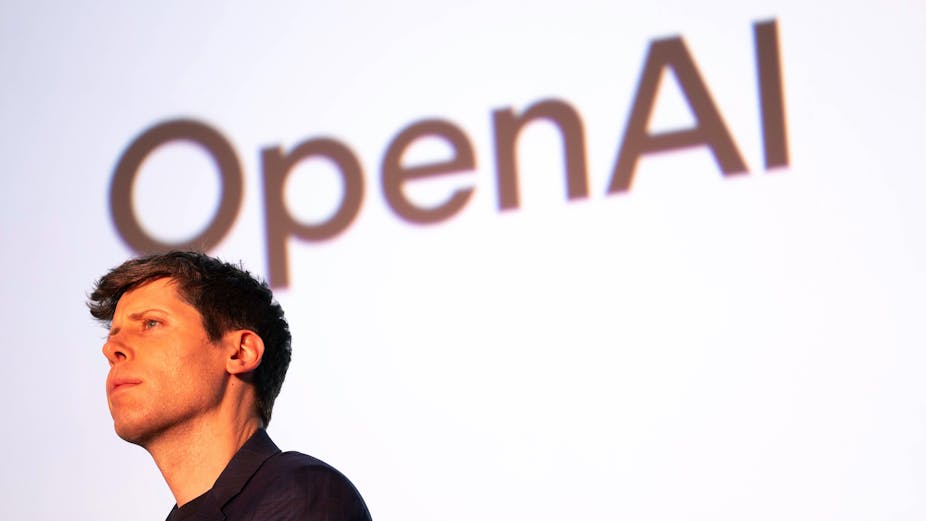
OpenAI's GPT-5 is positioned as a significant advancement toward artificial general intelligence (AGI), claiming improvements in coding, instruction following, and safety. However, challenges remain, as it lacks the ability to assess the accuracy of its information and struggles on advanced benchmarks. The main innovation is a “router” that optimizes which GPT model to use for queries, but no new algorithms or data underlie this feature. Critics suggest that GPT-5 may indicate a plateau in large language models (LLMs) and that true reasoning and experience-based learning could be out of reach without changing the underlying architecture.
GPT-5: has AI just plateaued?
Subjective social status, defined as an individual's perception of their position in society, significantly influences attitudes toward economic inequality and support for redistribution policies. A study analyzing survey data from over 51,000 individuals across 25 countries reveals that people who feel they are at the bottom of the social ladder are more likely to advocate for income redistribution, regardless of their actual economic status. Notably, perceptions often diverge from reality, with many high-income earners feeling disadvantaged and vice versa. The research demonstrates that in countries with high inequality, even those who feel privileged may support redistribution due to factors such as fear and altruism, suggesting that personal perceptions play a crucial role in shaping political attitudes and behaviors.
Where you think you are in society (not where you actually are) matters for how you think about inequality
The book "Smart City Code: Governance Handbook for Digital Transformation Managers in the Public Sector" by Luca Mora et al. provides a detailed framework for governing smart city projects and the digitalization of urban environments. It offers evidence-based insights to navigate the complexities of smart city governance, aligning with the United Nations’ initiative for enhanced strategic and technical support for urban digital transformations at all government levels.
Financial services, Education, ICT, Health
Smart City Code: Governance Handbook for Digital Transformation Managers in the Public Sector

GCC governments are prioritizing youth empowerment, recognizing that over 50% of their populations were under 25 in 2021. They are implementing youth development strategies focused on education, training, and leadership. Initiatives like Bahrain's National Strategy for Youth Empowerment and Saudi Arabia's Youth Development Strategy aim to equip young people with necessary skills and opportunities. Significant investments are made in education, with digital transformation enhancing learning accessibility. Youth-led programs are fostering entrepreneurship and leadership, enabling young people to drive positive societal change and prepare for future job markets.
Bahrain, Kuwait, Lebanon, Oman, Qatar, Saudi Arabia, United Arab Emirates | Education
How the GCC is giving young people a central role in their future

Cities are facing challenges in fostering sustainable behaviors among residents, primarily due to a gap between policy intentions and community actions. The Sustainable Urban Behaviour (SUB) framework addresses this by integrating behavioral science with urban sustainability, emphasizing that behavior change should be viewed as a systems challenge rather than individual responsibility. Sustainable choices can be fostered by designing urban environments that make these options the easiest and most socially rewarded. Successful examples from Amsterdam, Singapore, and Medellín illustrate how comprehensive, community-centered strategies can transform urban spaces and promote active stewardship of the environment.
Sustainable Urban Behaviour: the missing piece for nature-positive transformation in cities
A new blood test may provide insights into the varying rates at which different organs age. Research indicates that after age 50, ageing accelerates, particularly in blood vessels and the brain. Scientists noted significant changes in protein levels linked to disease between ages 45 and 55. Lifestyle choices, such as exercise and diet, significantly influence organ health, impacting longevity and disease risk, including Alzheimer's. While life expectancy increased in the 20th century, further advancements in understanding and addressing ageing processes are crucial to extend healthy lifespans.
A new blood test could tell us how fast our bodies are ageing

The US-EU trade deal, announced in July, is perceived as detrimental to European economic interests, with political costs expected to overshadow the economic impact for the EU. It includes a 15% tariff on most EU imports, with certain exceptions, and commitments for $600 billion in outward foreign direct investment to the US by 2028, along with $750 billion in energy imports. While the short-term economic effects are challenging, the long-term political implications are significant, particularly regarding the EU's competitive position and relations with the US. The deal could disadvantage EU manufacturers compared to US producers but may also benefit them relative to competitors like China.
The political costs of the US-EU trade deal outweigh the economic impact
Strategic timing in debt issuance paired with expanded disaster insurance can alleviate financial burdens on governments and accelerate community recovery following disasters. In Asia and the Pacific, natural disasters disproportionately impact the poorest, leading to significant economic costs and increased borrowing rates. Research indicates that waiting three months post-disaster can reduce borrowing costs significantly. Moreover, effective disaster insurance lowers risk premiums, allowing for cheaper loans. Strategies for developing countries include using quick, concessional relief, expanding affordable insurance, planning debt issuance around disaster seasons, and enhancing public communication to build investor confidence. This approach enables governments to optimize resources for urgent recovery needs.
Financial services
Getting the Timing Right: Disasters, Debt and Livelihoods

Russia is enhancing its military capabilities at Lake Ladoga, positioned near Saint Petersburg and the Finnish border, aiming to strike targets in the Baltic Sea region. Since 2023, corvettes equipped with cruise missiles have been evaluated for deployment in this area, which complicates NATO's defense strategies. Notably, simulated missile launches occurred in late 2024. The corvettes, including the Karakurt and Buyan-M classes, possess significant striking power, matching larger Western naval vessels. These developments highlight the urgent need for NATO to bolster its long-range fire capabilities to deter potential threats from Moscow effectively.
Russia’s Naval Build-up at Lake Ladoga
AI, particularly large language models (LLMs), is revolutionizing data interaction, allowing users from all backgrounds to pose complex queries in natural language. For AI systems to function effectively, the underlying data must be evaluated, validated, structured, and governed, ensuring it is "AI-ready." This concept builds on existing standards like the Fundamental Principles of Official Statistics and the FAIR principles, promoting continuous openness and reusability of development data. By ensuring data readiness, decision-making can improve, fostering better policies and innovation within the global development community.
From open data to AI-ready data: Building the foundations for responsible AI in development

Today’s humanoid robots face significant limitations due to their rigid body designs, characterized by a limited number of joints that hinder their movement and efficiency. This "brain-first" approach requires substantial energy to maintain balance and perform simple tasks, resulting in robots consuming more power than humans. Major robotics companies, primarily focused on software advancements, are hesitant to shift towards redesigning bodies for greater physical intelligence. Research into mechanical intelligence (MI) seeks to emulate nature's efficient designs, suggesting that future advancements must prioritize the physical structure alongside AI developments to enhance robot capabilities.
Today’s humanoid robots look remarkable, but there’s a design flaw holding them back
Sovereign states now bear legal responsibilities for addressing climate change and may face liabilities for failing to prevent climate harm, as established by a recent International Court of Justice advisory opinion. This ruling indicates that countries must actively work to protect the climate, with potential repercussions including compensation, ecosystem restoration, and legal challenges. It reinforces that international climate obligations are enforceable and highlights the need for all states, regardless of treaty participation, to align their policies with global environmental laws. This marks a significant shift in international accountability regarding climate action.
A new global ruling shows states are legally responsible for tackling climate change