
Floating liquefied natural gas (FLNG) technology offers a new approach to energy production in insecure regions, like Mozambique's Cabo Delgado province, known for insurgency and poverty. Eni's Coral Sul, Africa’s first FLNG project, showcases the offshore model's advantages, enabling continuous operations amid instability that disrupted land-based projects. Despite concerns that FLNG may neglect local communities and deepen development gaps, its location and scale make it less vulnerable to maritime crime. As Africa explores its significant natural gas reserves, FLNG may shape future energy strategies in high-risk areas, balancing accessibility and security challenges.
Africa, Latin America
Can floating liquefied natural gas (FLNG) outsmart insecurity or exacerbate it?

The International Renewable Energy Agency (IRENA) and UN reports highlight five key reasons for transitioning to renewable energy. The cost of renewable technologies has plummeted, making them increasingly more cost-effective than fossil fuels, with 91% of new renewable projects cheaper than new fossil alternatives in 2024. Renewables accounted for 92.5% of new electricity capacity and 74% of generation growth in 2024. Investment in clean energy surpassed $2 trillion, significantly outpacing fossil-fuel investment. Additionally, the renewable sector has created millions of jobs and contributed substantially to global economic growth. However, investment in modernizing electricity grids remains critical to support this transition.
Latin America
UN: Five reasons why switching to renewables is ‘smart economics’

African and Chinese businesses are increasingly collaborating, leveraging their cultural differences to inspire innovation and resilience. Despite facing substantial disparities, these partnerships yield new growth models. African entrepreneurs draw practical insights and inspiration from the experiences of Chinese firms, particularly those who thrived under similar challenges. Notable examples include collaborative efforts in manufacturing and sustainable development initiatives aimed at addressing regional health and energy issues. Key lessons from these partnerships emphasize adaptive learning, humility, and a broader geographic perspective for effective collaboration.
How African and Chinese businesses overcome their differences to collaborate

Viet Nam's civil society has evolved from traditional village networks into dynamic organizations, supported by foreign aid, to address poverty, empower communities, and promote sustainable development. The brief analyzes their legal frameworks and government relations, highlights funding diversification due to declining international aid, and notes the rapid adoption of technology. It emphasizes that support from the Asian Development Bank (ADB) can help bolster Viet Nam's transition to a climate-resilient and inclusive economy.
Viet Nam
Civil Society Brief: Viet Nam

Cleaner transport systems and compact city designs are crucial for reducing harmful emissions and enhancing public health. Road transport significantly contributes to air pollution, linked to chronic health issues like asthma and cardiovascular diseases. Strategies for minimizing exposure include promoting walking, cycling, and public transit. Coordinated efforts across sectors—transportation, urban planning, and public health—are necessary to implement policies facilitating cleaner vehicles and sustainable transport systems. Successful interventions in cities like London and Shenzhen demonstrate that targeted measures can effectively improve air quality and public health, promoting overall urban resilience.
Health
How Clean Transport Improves Public Health
Google Earth AI is a collection of advanced geospatial models and datasets designed to address critical global challenges, including weather predictions, flood forecasting, and wildfire detection. It enhances urban planning and public health by analyzing imagery and population dynamics. These models are integrated into widely-used features in Google Search and Maps, offering actionable insights via Google Earth, Google Maps Platform, and Google Cloud. The initiative builds on the recent Geospatial Reasoning effort.
Google Earth AI: Our state-of-the-art geospatial AI models

AI is transforming job roles and challenging traditional degree models, prompting a reevaluation of skills development by students and educators. This shift is driven by the demands of a changing labor market, leading to the need for new approaches in higher learning.
Education
How AI Is Reshaping Work and Higher Learning
The Commission has introduced a template for General-Purpose AI (GPAI) providers to summarize the data used in training their models. This template enhances transparency as required by the AI Act by allowing providers to publicly disclose crucial information about the data's origin and sources. The summary will address the interests of copyright holders and comply with upcoming EU regulations effective from August 2, 2025. This initiative is part of a broader effort to establish comprehensive rules and guidelines for GPAI models within the EU.
Commission presents template for General-Purpose AI model providers to summarise the data used to train their model
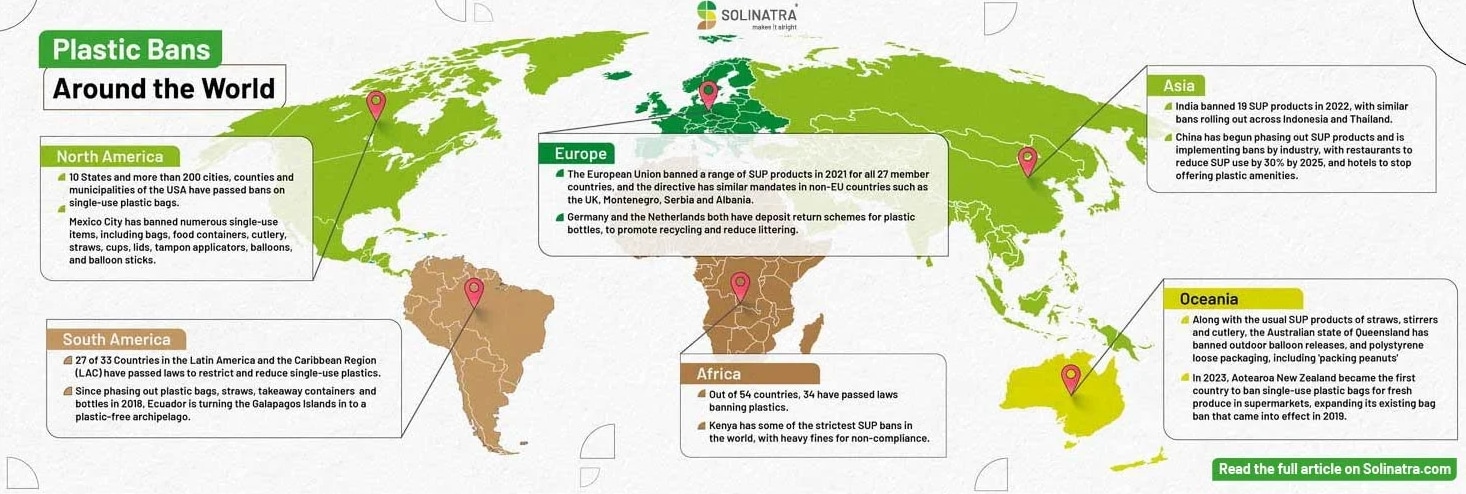
The INC-5.2 conference aims to finalize a legally binding global treaty to combat plastic pollution, addressing its entire lifecycle from design to disposal. As global plastic waste is projected to reach 1.7 billion metric tons by 2060, the treaty is crucial to mitigate its significant economic and environmental impacts, which could cost up to $281 trillion by 2040. Key negotiation topics include whether to focus primarily on waste reduction or to encompass broader lifecycle issues, including the production of primary polymers. The treaty's establishment is essential for fostering circular economies and reducing ecological harm from plastics.
Health
INC-5.2: What to expect from the global plastics treaty talks

US companies have significantly reduced investments in China, with only 48% planning to invest in 2025, down from 80% in 2024, according to the US-China Business Council (USCBC). Factors driving this decline include rising tariffs, trade tensions, and deteriorating US-China relations. Approximately 70% of companies report being affected by tariffs, prompting many to reassess investment strategies and consider alternative markets such as Southeast Asia, India, and Mexico. Despite these challenges, most firms remain profitable and continue to recognize the importance of the Chinese market for global competitiveness.
Taiwan, China
US companies cut investments in China to record lows. Here's why
Government technology increasingly influences access to essential services and rights, making technology purchasing critical. However, decision-making processes often lack robust public input. "Gear Shift: Driving Change in Public Sector Technology through Community Input" emphasizes that community input should be prioritized before procurement begins. It highlights the need for public agencies to engage affected people in technology design and advocates for a democratic reconfiguration of power in technology-related decisions that affect public life. Specific strategies and opportunities for incorporating community input are outlined to foster this change.
Education
Gear Shift: Driving Change in Public Sector Technology through Community Input
The UK government has implemented international sanctions against people smugglers, targeting asset freezes and travel bans to disrupt smuggling operations treated as national security threats. However, the adaptability of the smuggling industry, often managed through informal networks like hawala for untraceable money transfers, suggests these sanctions may be ineffective. Smugglers can quickly reorganize and evade enforcement, especially without similar international efforts. Evidence indicates that efforts to "smash the gangs" do not deter migration; instead, they may increase risks, rendering journeys more perilous without significantly reducing migration flows to Europe.
Latin America
People smugglers adapt to attempts to shut them down – financial sanctions won’t stop the boats
Research into climate tipping points reveals that some systems may collapse gradually rather than suddenly. Experiments with magnets demonstrate that systems can transition between states in either an abrupt or smooth manner, depending on their structure. Hard materials, akin to certain ecosystems, experience sudden changes when stressed, while soft materials exhibit gradual reorganization. Importantly, softer systems can recover if stress is alleviated early. However, fast changes in climate stress heighten the risk of abrupt collapses. Monitoring localized environmental shifts is crucial, as they may indicate impending larger-scale declines.
Gradual v sudden collapse: what magnets teach us about climate tipping points
Google's "AI Overviews," introduced last year, provide AI-generated summaries at the top of search results for millions of U.S. users. A Pew Research Center report indicates that this feature is linked to a decline in web traffic for online publishers, as many users prefer relying on the summaries rather than clicking through to source links. The analysis of data from 900 U.S. adults revealed that about 58% conducted searches with AI-generated summaries, and users were significantly less likely to click on links when an AI summary was present.
Google users are less likely to click on links when an AI summary appears in the results
The US and EU have finalized a trade deal that imposes a 15% tariff on most EU exports to the US, impacting competitiveness for European businesses. While the deal replaces a potential trade war and is viewed as a stabilizing measure for transatlantic commerce, it has faced criticism from European leaders who fear increased costs and higher inflation. The EU has committed to significant investments in US energy and military, while maintaining some existing tariffs on steel and aluminum. Concerns persist regarding how the higher costs will affect market dynamics and demand in the US.
United Kingdom
US-EU trade deal: What is it – and what does it mean for European competitiveness?

Denmark is proposing new legislation to protect digital identities from deepfakes, part of its digital copyright law. The amendment aims to safeguard individuals' rights concerning their appearance and voice against AI-generated content, addressing the rise in deepfake-related financial fraud and misinformation. Supported across political lines, this legislation may be the first of its kind in Europe and reflects an urgent response to the growing threat of deepfakes, which have caused nearly $350 million in financial losses globally. Other nations are also implementing measures to combat deepfake misuse.
Deepfake legislation: Denmark moves to protect digital identity
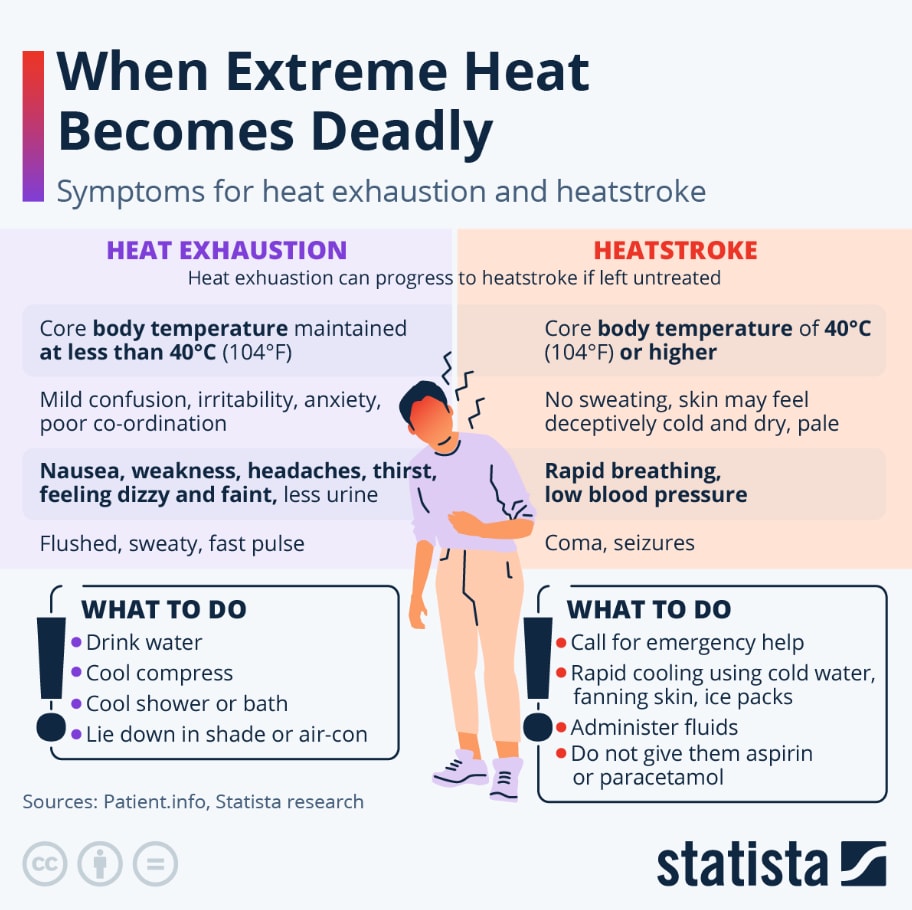
Extreme heat is the deadliest climate risk, causing nearly 489,000 deaths annually, eclipsing fatalities from floods, hurricanes, and wildfires combined. The current global temperature is 1.55°C above pre-industrial levels, with a warming rate of 0.26°C per decade. Heatwaves are intensifying in frequency and severity, particularly affecting vulnerable populations like the elderly and outdoor workers. Urban areas, exacerbated by the urban heat island effect, can be up to 15°C warmer than rural regions, complicating mitigation efforts. Proactive resilience investments are essential to address the profound public health and environmental impacts of extreme heat.
Latin America | Health
Extreme heat: What to know about the deadliest climate risk of our time

Sensitive organizations leverage artificial intelligence (AI) to identify and respond to unmet human needs, enhancing customer connections and brand equity. Unlike traditional businesses that focus solely on efficiency and short-term metrics, sensitive organizations prioritize understanding audience interests by utilizing "interest" data over "intent" data to refine their strategies. This involves internal alignment across teams and employing both narrow and generative AI to co-create relevant responses. Examples include NYX and LEGO, which effectively used AI insights to connect with niche audiences and launch successful products that resonate with consumer passions.
What are ‘sensitive’ organizations and why are they crucial in the age of AI?
The Green party is currently electing new leadership, featuring a race between co-leaders Adrian Ramsay and Ellie Chowns, and challenger Zack Polanski. This situation reflects broader themes in leadership, contrasting collective governance with the traditional single-leader model prevalent in Westminster politics. The Green party's commitment to a joint leadership structure poses a dilemma: it could hinder media coverage and voter appeal in favor of a more conventional approach. Meanwhile, Jeremy Corbyn and Zarah Sultana are set to lead a new independent pro-Gaza party, exploring collaborative leadership dynamics. Voting for the Green leadership concludes in September, potentially redefining how political leadership is perceived.
From the Green party to Corbyn’s new launch – is it time Westminster took joint leaders more seriously?
Tesla's ongoing dispute with the Swedish labor union IF Metall centers on the company's refusal to sign a collective bargaining agreement, undermining Sweden's labor model. This situation reflects a broader trend where corporations, like Exxon and Volkswagen, act against public interest for self-preservation, prioritizing their business models over societal wellbeing. The “self-preservation perspective” posits that corporations respond to threats—such as regulatory challenges—by using political power, often at the cost of public good. Effective regulation and activism can balance this corporate power.
Sweden
Why do corporations act against the public interest? We may have the answers (it’s not just greed)