
Cross-border data regulations have transformed data privacy into a crucial organizational priority, necessitating visibility into data management, a privacy-by-design approach, and adaptability to legal changes. Companies must foster shared accountability and internal education to create a proactive culture around data protection. Implementing dynamic data assessments enhances compliance and operational efficiency, enabling swift adjustments to regulatory shifts. Organizations should establish clear roles across departments, promote cross-functional collaboration, and prioritize privacy awareness at all levels, ensuring that privacy is integrated into everyday workflows rather than viewed as an afterthought.
Education, ICT
How to build a cross-border data privacy strategy that moves in sync with your business
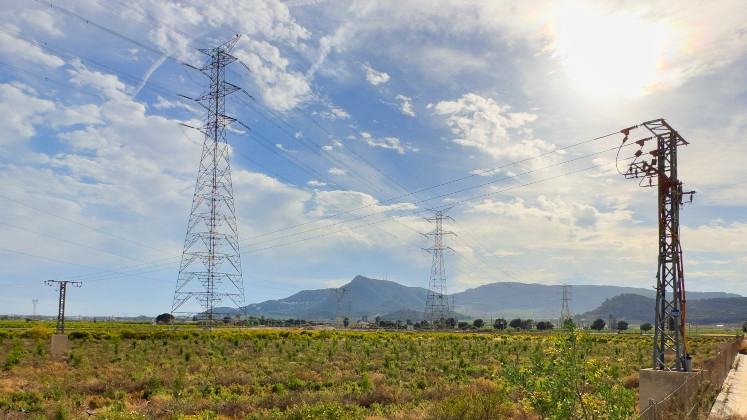
Spain's nationwide blackout on April 28 sparked widespread chaos and a surge of digital activity as citizens turned to online platforms for communication and information amidst the crisis. Social media featured a mix of humor, solidarity, and misinformation, with conspiracy theories surrounding cyberattacks by foreign powers gaining traction. Political figures and commentators exploited the situation to criticize Prime Minister Pedro Sánchez and his government, framing the outage as indicative of socialist failure. A computational analysis of 10,000 posts revealed that government blame and conspiracy theories garnered the highest engagement, highlighting how crises can amplify political divides and misinformation.
Latin America
How Spain’s blackout sparked new political currents online

Malaysia is rapidly becoming a key player in Southeast Asia's data centre industry, with MYR 99 billion in investments since 2023 and plans for an additional MYR 149 billion. Its advantages include inexpensive electricity, labor, and land. However, the environmental impact of these energy-intensive AI data centres is a concern, as they predominantly rely on fossil fuels. Malaysia's electricity is 81% coal-based, conflicting with ambitions to increase renewable capacity to 70% by 2050. Initiatives like the Corporate Renewable Energy Supply Scheme face challenges, yet some industry experts believe data centres can help drive the transition to renewable energy.
Malaysia | Financial services, ICT
Can Malaysia’s AI data centres go green?

Academics can engage in public debate and influence policy through various strategies, as illustrated by four case studies. Tom Lyon focuses on promoting responsible corporate political engagement; Nadia Lambek empowers youth to influence global food policy; Charles Cho works on establishing a global standard for corporate impact reporting; and Rezvan Sharifnia and Neda Afsham enhance environmental policy advocacy in Iran. Each approach offers unique structures and desired impacts, providing a framework for academics to effectively contribute to societal change while engaging with established organizations or through independent efforts.
Health, Education
How Academics Can Inform Public Debate and Policy: Four Case Studies

China's overreliance on coal has led to negative electricity prices during low demand periods, notably in provinces like Zhejiang and Shandong. This situation arises from a significant portion of electricity being sourced from off-market coal power agreements rather than being driven by renewables. Despite an increase in renewable energy capacity, coal continues to dominate the supply chain, complicating decarbonization efforts. Policy challenges and an over-scheduled coal generator system further exacerbate the situation, with local provinces consistently importing coal power even during excess supply.
Financial services
China’s overuse of coal is causing negative power prices

Water sector financial governance in Central Asia faces significant gaps due to growing population demands and aging infrastructure. A CAREC report emphasizes the need for prioritized funding, cooperation across sectors, and a pivotal role for the state in resource allocation. Kazakhstan requires investments in water management, while Kyrgyzstan needs $740 million for rural water infrastructure. Tajikistan’s modernization of aging systems is critical, and Turkmenistan must diversify funding sources due to projected population growth. Uzbekistan's inefficiencies necessitate strategic tariff reforms and infrastructure investments. Recommendations include innovative financing, regulatory reforms, and enhanced international cooperation for sustainable water management.
Kyrgyz Republic | Financial services
Analyzing the Water Sector Financial Governance Gap in Central Asia

Norm externalization describes how regulations and governance models developed in one jurisdiction influence others, driven by market mechanisms, policy diffusion, and power dynamics. This process reshapes the global digital order, illustrated by the European Union's GDPR prompting global compliance and China's Digital Silk Road transferring its standards to recipient countries. India similarly influences the Majority World with its digital public infrastructure. As countries navigate diverse regulatory models, especially those in the Majority World, they strive to assert their digital sovereignty amid competing governance frameworks.
Indonesia, Tanzania, United Kingdom | Financial services, Education, ICT, Health
Regional Power, Policy Shaping and Digital Futures: Norm Externalization through the Delhi and Beijing
AI can significantly enhance local service delivery by inserting technology strategically at critical points in workflows, improving efficiency without overwhelming staff. For instance, an AI model used by Stanford RegLab identified discriminatory property deeds in days, a task that would normally take years. AI should support, not replace, human discretion, particularly in managing sensitive public benefits. Furthermore, AI can facilitate discussions on refining complicated policies, as seen in San Francisco's efforts to streamline reporting requirements. These approaches help maintain adequate staffing for essential frontline services.
3 ways AI can help cities add a human touch to service delivery
The People's Republic of China (PRC) is expanding its digital infrastructure through the Belt and Road Initiative, positioning technology deals as mutually beneficial while furthering Beijing's geopolitical interests. A series of reports by GMF Technology utilizes a "tech stack" framework to analyze the PRC's influence in sectors within Kazakhstan, Kyrgyzstan, Serbia, and Uzbekistan. This framework includes network and data infrastructure, devices, applications, and governance, emphasizing the need for policymakers in Europe and the US to comprehend the PRC's technological footprint and its implications for global economics and security.
Georgia, Indonesia, Kenya, Kyrgyz Republic, Russian Federation, United Kingdom | ICT
Wired for Influence: Assessing the People’s Republic of China’s Technology Footprint in Europe and Central Asia
Large language models (LLMs) are revolutionizing academic research through two main categories of tools: AI research assistants and "deep research" AI agents. AI research assistants, including tools for concept mapping, literature reviews, searches, and analyses, are rapidly increasing in number, enhancing traditional research methods. Meanwhile, deep research AI agents leverage advanced AI technologies to conduct thorough analyses, prompting the development of new evaluation criteria focused on cost, speed, usability, and writing quality.
AI in universities: How large language models are transforming research
Global water supplies are threatened due to the over-extraction of aquifers, as highlighted by a new study. Rising temperatures and decreasing precipitation are exacerbating this issue, leading to significant groundwater depletion, particularly in 101 countries housing nearly 6 billion people. The study reveals that the unregulated pumping of groundwater accounts for 68% of fresh water loss in dry regions, contributing significantly to global sea level rise. The findings indicate an alarming acceleration of drying patterns, forming interconnected "mega" regions of water stress, notably in Europe, the Middle East, and the Americas.
Antarctica
Global Water Supplies Threatened by Overmining of Aquifers: New Study
Coffee prices surged to a record high of 4.40 US dollars per pound in February 2025, driven by adverse weather in Brazil and Vietnam, among other factors. This spike, the highest since 1977, highlighted ongoing challenges in the sector, such as rising production costs due to fuel and agrochemical price increases, as well as supply chain fragility. A significant decrease in production has been noted, with particularly harsh climate conditions threatening future coffee availability. If unresolved, these issues could lead to higher prices and diminished quality, severely impacting smallholder farmers who represent over 60% of global production.
Latin America
A Storm in Every Cup: How Coffee’s Crisis Is Brewing

The UK is set to raise the state pension age from 66 to 67 and possibly 68, amidst a review of retirement policies. The increasing retirement age raises concerns about equitable access to leisure time, particularly as many individuals may not live to enjoy retirement or may face health challenges. Countries like Japan and the Netherlands have different strategies regarding work-life balance and retirement age. The article suggests that allowing early access to retirement benefits could better distribute leisure time across individuals' lives, helping them engage in family, hobbies, and personal development when they are younger and more capable.
As the UK reviews the pension age again, could more time off when you’re young compensate for later retirement?
Global supply chains, responsible for 70% of world trade, significantly contribute to ecological degradation through increased transportation distances and energy-intensive technologies. Despite green technologies, capitalist growth often leads to higher overall production and waste. Five strategies to mitigate environmental impacts include transitioning to renewable energy, electrifying shipping, promoting durable product design, rethinking urban transport systems, and reducing meat consumption to shorten supply chains. These steps aim to shift towards a low-energy economy that prioritizes ecological and human well-being over profit.
Argentina, Belarus, Belgium, Benin, Bermuda, Brazil, Cameroon, Canada, Chile, Colombia, Costa Rica, Denmark, Ecuador, Finland, France, Germany, Ghana, Greece, Iceland, India, Indonesia, Italy, Japan, Kenya, Mauritius, Mexico, Nepal, Netherlands, New Zealand, Norway, Panama, Philippines, Singapore, South Africa, Sri Lanka, Sweden, Switzerland, Tanzania, Türkiye, Uganda, United Arab Emirates, United Kingdom | Financial services, Health, ICT
How to reduce the hidden environmental costs of supply chains

Demographic changes in the U.S. are reshaping community perspectives on political events, particularly the January 6, 2021, Capitol attack. Research by Michael S. Rocca and Gabriel R. Sanchez shows that individuals in counties with moderate demographic shifts are more likely to label the event as an "insurrection," while those in areas with significant increases or decreases in the population of people of color tend to view it as a "protest." This variation suggests that perceived community stability influences interpretations of political violence and affects broader sentiments on democracy and political legitimacy. Understanding these dynamics will be crucial as the U.S. approaches a majority-minority status by 2045.
How America’s increasingly diverse communities shape views of the January 6th insurrection

Large-scale solutions are critical for coping with extreme weather impacts, with the UK projected to incur over £2 billion annually in adaptation costs by 2030. Funding challenges persist, despite documented needs. The CLIFF initiative in Suffolk aims to address coastal erosion through innovative financing, creating mechanisms like the Coastal Accumulator Fund to ease financial burdens on authorities. Effective climate adaptation financing requires understanding the investor landscape, quantifying resilience benefits, and reducing reliance on traditional grants. Urgent government action and collaboration among stakeholders are essential to shift the system towards recognizing resilience as a priority for investment.
Financial services
Unlocking Climate Adaptation Finance For Real-World Impact

Cities are adopting innovative strategies to enhance sustainable tourism, which is projected to contribute $16 trillion to global GDP by 2034. Recent protests highlight the need for better management to tackle challenges like overtourism. Successful initiatives include Atlanta's flood-resistant parks linked to a stadium and San Diego's Tourism Accelerator for local businesses. Meanwhile, Indian cities face a $2.4 trillion infrastructure challenge by 2050 to withstand climate impacts, necessitating increased private investment. China is also shifting towards building sustainable cities, reflecting a global trend towards integrating community needs with urban tourism development.
Bangladesh, Colombia, India, Indonesia, Kenya, Philippines, South Africa, Tanzania, United Arab Emirates, United Kingdom | Financial services, Education, ICT, Health
The future of sustainable tourism – and other urban transformation stories to read this month

Art-therapy sessions in a safe shelter in Odisha, India, demonstrate the transformative power of storytelling for women and children reclaiming their identities post-trauma. Participants express memories through drawing, revealing both joyful moments and painful experiences. This trauma-informed approach highlights the significance of creative expression in healing, allowing survivors to articulate grief, loss, and resilience. The sessions foster a safe space for sharing, acknowledging the impact of gender-based violence and its effects on mental health. Children also benefited from similar activities, using art to convey complex emotions and traumatic memories, indicating the broad potential of creative therapy in recovery.
Women and Children Reclaim their Stories through Art and Storytelling

Chinese companies are rapidly adopting artificial intelligence, but only 9% realize significant value in terms of productivity, revenue, or profitability, as reported by Accenture. While 46% utilize generative AI across various functions, the majority struggle with deep implementation, with only 21% capable of scaling beyond pilot projects. Notable exceptions like Wuxi Lead Intelligent Equipment and Midea Group showcase successful AI integration, achieving substantial market advancements and cost savings. The report emphasizes the need for innovation-driven growth, resilient digital infrastructures, and effective human-AI collaboration to overcome systemic challenges and thrive in a volatile market.
Only 9% of Chinese Firms Adopting AI Are Realizing Significant Value, Accenture Study Shows

The AI agent economy is reshaping trust, which is essential for economic transactions. Trust hinges on competence and intent, with growing autonomous AI agents prompting a need for new trust frameworks. Global trust levels are declining, yet their restoration could enhance economic growth. Key trust dynamics include human-to-human interactions, agent-to-agent reliability, and human-to-agent consistency. Trust issues are compounded by clarity around AI intention and the psychological impacts of digital interactions. Addressing these areas is crucial for fostering trust in an increasingly autonomous and AI-driven world.
Trust is the new currency in the AI agent economy