Nations addressing risks from advanced artificial intelligence, particularly the U.S. and China, may develop guardrails for compliance verification via six largely independent approaches. The authors offer frameworks and implementation options while emphasizing the need for technical research and safeguards against overreach to ensure effective verification.
Verifying International Agreements on AI

The commitment of global banks, insurers, and asset managers to net-zero emissions has significantly diminished under U.S. political pressure since early 2024. Major U.S. banks, including JP Morgan and Goldman Sachs, withdrew from the Net-Zero Banking Alliance, shifting focus from a 1.5ºC to a 2ºC temperature rise goal, while the Net-Zero Insurance Alliance collapsed amid legal concerns. The Glasgow Financial Alliance for Net Zero has transformed into a less stringent entity, prioritizing finance for energy transition over strict net-zero targets, reflecting a major retreat from prior climate commitments.
Financial services
Has Trump Killed Green Finance?

African governments should adopt ring-fencing strategies for development expenditure to mitigate the mismatch between long-term developmental needs and short-term economic pressures. Recommended measures include public expenditure reviews, independent development funds, and establishing statutory spending floors. Challenges to implementation should be addressed through improved coordination, coalition building, and advanced analytical tools. Development finance should be framed as complementary to security initiatives to attract international support. The international community is urged to offer technical assistance and reform the financial architecture to strengthen long-term investments in Africa's development.
South Africa | Financial services, Education
Securing Africa’s Future: Ring-Fencing Development Financing in an Era of Security-Focused Economic Policy
The global development cooperation landscape has fundamentally shifted since Donald Trump's second term began in early 2025. The United States, previously the leading force in this arena, has withdrawn from key multilateral institutions, significantly reduced budgets, and nearly halted the operations of the United States Agency for International Development (USAID). This withdrawal signifies a transition from a Western-dominated cooperative framework to a multipolar, power-driven, and conflict-ridden world order.
Latin America | Health
Development and development policy in the Trump era
The European Union must create an "AI Social Compact" to address the significant impacts of artificial intelligence on the job market, income, and social cohesion. Current policies inadequately anticipate job displacement risks, as rapid AI adoption threatens entry-level positions. Research indicates AI could displace up to 50% of such jobs and raise unemployment by 10-20%. Thus, strategic foresight and investments in social protections, such as upskilling programs and labor safety nets, are vital. This compact aims to ensure that AI benefits are equitable across all member states. Key measures must focus on comprehensive social protection for affected workers.
Education
AI's Impact on Europe's Job Market: A Call for a Social Compact

Liquefied natural gas (LNG) is becoming essential for energy security and supply chain resilience amid geopolitical shifts. It enables rapid responses to supply shocks and supports decarbonization by replacing coal. Major LNG exporters include the US, Australia, and Qatar, with increasing demand in South and Southeast Asia, where countries like India and Pakistan are expanding their LNG infrastructure. LNG reduces coal dependency and aids in managing peak energy demand. Despite short-term price volatility, long-term growth in LNG demand is anticipated, emphasizing the need for flexible infrastructure and partnerships to ensure energy security and climate resilience.
India, Pakistan
The new energy equation: Why LNG is vital to the future of supply chains
The United States is perceived as leading the AI race, supported by significant market valuations of companies like Nvidia and Microsoft, with Nvidia recently becoming the first $4 trillion company. However, early leadership does not guarantee success, particularly in innovation. The ultimate winner will likely be determined by which country invests more in basic research, where China may have a stronger long-term position.
Who’s Winning the US-China AI Race?
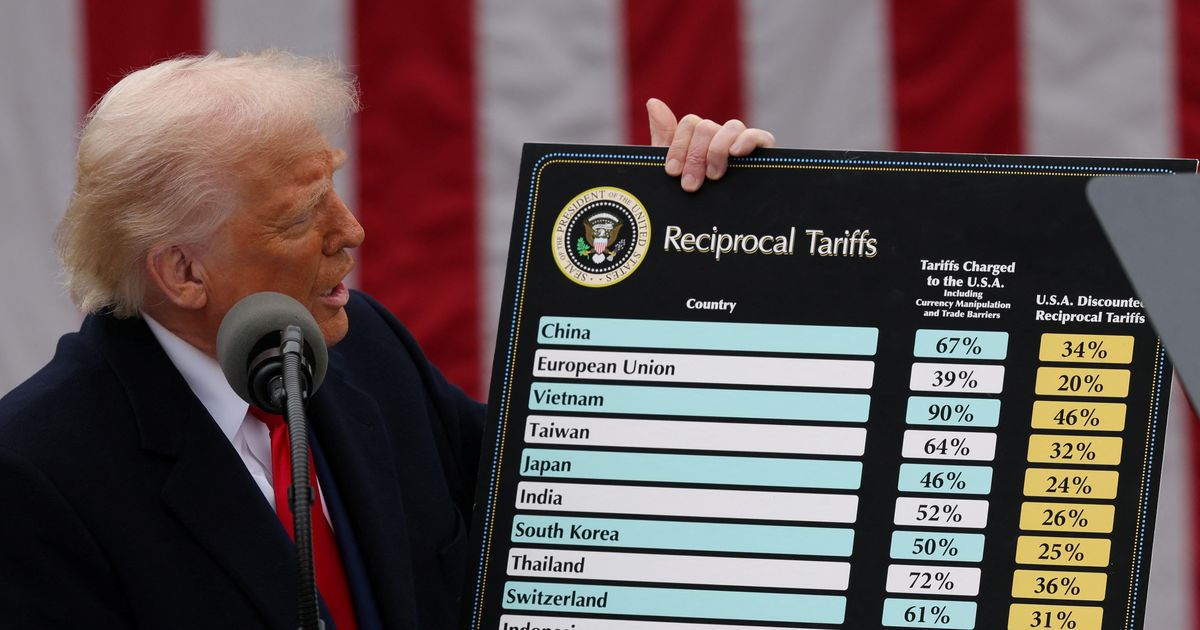
The United States and European Union face potential trade war escalation following high import tariffs imposed by President Trump on "Liberation Day." Initially set at 10% for numerous countries, including a threat of 30% tariffs on the EU, subsequent negotiations led to temporary suspensions but continued threats of high tariffs loom. By July, agreements were only reached with China, the UK, and Vietnam, while negotiations with the EU remain unresolved. Trump's use of tariffs based on national emergencies has been legally challenged, and further tariffs may arise under the Trade Expansion Act, targeting various EU products.
Latin America | Financial services
Trade War and Peace

In Ranipet, Tamil Nadu, India, tanneries supplying major global shoe brands are linked to hazardous working conditions, low wages, and significant environmental pollution. Workers often endure health risks from exposure to toxic chemicals while earning less than the mandated minimum wage. The pollution from these tanneries contaminates local water sources, impacting agriculture and public health. Despite EU laws aimed at ensuring ethical supply chains, enforcement and transparency remain inadequate, allowing companies to evade accountability. Labor rights activists highlight the hidden human cost of the leather goods consumed in Europe.
Latin America
Global shoe brands tied to toxic tannery conditions in India
Developing and strengthening women-focused institutional structures, such as women-led cooperatives, fosters resilience and positions women as key stakeholders in enhancing climate resilience within their communities. The brief outlines strategies from the Community Resilience Partnership Program, focusing on grant mechanisms for cooperatives, capacity building, empowerment, improved access to resources, and support for diversified, nature-based livelihoods.
Designing a Grant Mechanism for Women-Focused Cooperatives to Support Resilient Livelihoods

Africa’s demographic growth presents Europe with opportunities for rethinking labor, migration, and partnerships based on interdependence. By 2050, Africa's population will constitute one in four people globally, with over 60% of its populace being of working age. In contrast, Europe's population is declining and aging. This disparity will significantly impact global labor markets and geopolitical stability. To harness Africa's demographic potential, investments in health, education, and infrastructure are essential. Each African country is at a different stage of demographic transition, necessitating tailored strategies to ensure sustainable development and job creation.
South Africa | Education, Health
Africa’s future demographic dividend matters to Europe today
Elite athletes are redefining age limits in sports, with increasing numbers excelling well into their late 30s and early 40s. Notable examples include Jess Fishlock, Pepe, Cristiano Ronaldo, and Tom Brady, who continue to compete at high levels. This trend is supported by research showing rising ages of participants in major competitions. Key factors enabling older athletes' success include personalized training regimens, improved injury prevention and recovery methods, optimized nutrition, tactical intelligence, and lucrative financial incentives. These advancements allow athletes to perform competitively despite aging.
Five ways professional athletes are redefining the limits of age in sport
Artificial Intelligence (AI) systems, while increasingly integrated into societal decision-making, exacerbate existing asymmetries in data, information, and control, referred to as agency asymmetry. This paper presents Digital Self-Determination (DSD) as a framework to counter these challenges, emphasizing individual and collective agency in shaping data and AI systems. DSD aims to empower communities by offering tools for involvement in the design and use of technologies. It outlines four intervention domains—processes, policies, people, and technologies—to illustrate the operationalization of DSD throughout the AI lifecycle, addressing issues like algorithmic opacity and ecological harm.
Advancing Agency: Digital Self-Determination as a Framework for AI Governance
The United States is facing an epistemic crisis marked by a breakdown in the collective ability to agree on basic facts and engage in rational debate. Key issues include rampant political lies, misinformation, conspiracy theories, and declining trust in institutions such as science and media. Over 60% of Republicans perceive Joe Biden's presidency as illegitimate, and many Americans express skepticism about vaccines and mainstream media. While social media platforms are often blamed for exacerbating these issues, factors like algorithm-driven content prioritization and the lack of gatekeepers contribute to a polarized informational landscape, fostering beliefs in misinformation and conspiracy theories.
Scapegoating the Algorithm
Firms are adjusting prices in response to inflation and economic conditions, utilizing dynamic pricing strategies to maximize profits. John Zhang, a Wharton professor, emphasizes the need to balance profit motives with consumer perceptions and competitive market dynamics.
Understanding Dynamic Pricing in Today’s Inflationary Climate

Africa is leveraging technology to drive green growth amid global economic shifts. With over 1.1 billion mobile users and $1.1 trillion in digital transactions in 2024, the continent is advancing its digital transformation. Key challenges persist, including low internet penetration (37%), logistics inefficiencies, and reliance on fossil fuels. However, initiatives like Rwanda's renewable energy programs and investments in fintech, such as Nigeria's Flutterwave, highlight potential breakthroughs. The African Continental Free Trade Area aims to further enhance economic integration, potentially lifting millions out of poverty and increasing continental income significantly by 2035.
Angola, Benin, Burkina Faso, Ethiopia, Ghana, Kenya, Mali, Mozambique, Rwanda, Senegal, South Africa, Uganda | Financial services, Education, Health, ICT
How Africa is harnessing technology to leapfrog towards green growth
Public service providers globally are implementing chatbots to enhance citizen engagement and deliver digital services. These AI-driven technologies facilitate conversations that simulate face-to-face interactions, adapting to citizens' communication styles. The paper investigates the emerging experiences with government chatbots, highlighting the expectations for public administration practitioners and identifying gaps in understanding digital public encounters.
Public Encounters and Government Chatbots: When Servers Talk to Citizens

Sustainable development, defined by the World Commission on Environment and Development in 1987, seeks to fulfill present needs without jeopardizing future generations' ability to meet their own. The UN embraced this principle during the 1992 Earth Summit in Rio de Janeiro. Subsequent meetings, notably the 2012 Rio+20 Conference and the 2015 adoption of the 2030 Agenda, led to the establishment of 17 Sustainable Development Goals (SDGs) with 169 targets. The High-Level Political Forum on Sustainable Development (HLPF) was created to review and advance the implementation of these goals, playing a pivotal role in global sustainability governance.
Education, Health
United Nations and Sustainable Development

Food systems face the dual challenge of feeding a growing population and addressing environmental concerns. Despite past achievements in improving food access and productivity, rising hunger, micronutrient deficiencies, and resource pressures threaten future stability. The need for timely policy and investment decisions is critical, as the future relies on societal choices not yet made. A collaborative research effort, compiled from 109 diverse contributors, explores various aspects of food systems, noting current trends and gaps in knowledge. The urgency to shape effective strategies for sustainable food systems is paramount to navigating forthcoming challenges.
Financial services, Education, Health
What do we know about the future of food systems?
Significant obstacles inhibit the immediate adoption of driverless cars in the UK. Key concerns include unresolved safety uncertainties, where AI may not guarantee improved traffic safety. Regulations are lagging behind technological advancements, complicating the legal framework for deployment. The insurance industry faces challenges regarding liability and evolving risk factors associated with autonomous vehicles. Ethical dilemmas arise from programming crash decision-making algorithms, and shifting business models present resistance from consumers reluctant to abandon car ownership. These intertwined issues suggest that widespread use of driverless vehicles remains a long-term goal rather than an imminent reality.
Five reasons why driverless cars probably won’t take over your street any time soon