
A global digital transformation led by AI, cloud computing, and IoT is increasing global electricity demand, requiring sustainable approaches to harness digital innovation. Data centers, projected to consume approximately 945 terawatt hours by 2030, primarily due to AI, necessitate efficient energy use and cooling strategies. Innovative technologies, such as AI-driven analytics and IoT-based energy management, can enhance efficiency and reduce energy consumption in sectors like transportation and data services. Qatar exemplifies efforts toward balancing digital growth and sustainability through smart city projects and renewable energy initiatives, aiming to double solar production by 2030 and implement AI tools for optimizing energy networks.
Qatar | ICT
Balancing innovation and energy to create a sustainable digital future

Drought manifests differently across regions, challenging the notion of a singular global water crisis. In the UK, infrastructure deficiencies and mismanagement contribute to drought, rather than scarcity. The Horn of Africa faces extreme drought compounded by political instability and historical injustices, impacting millions. Conversely, Chile's water issues stem from extraction practices and privatized water rights, driven by global demand. Recognizing these regional distinctions highlights that solutions must address specific local conditions and governance structures, rather than framing the crisis as a uniform global issue.
Latin America | Health
Three types of drought – and why there’s no such thing as a global water crisis
Indonesia is navigating trade threats from the Trump administration while pursuing diversified alliances with Europe, BRICS, and ASEAN. Dino Patti Djalal, a former ambassador to the U.S., notes that the U.S. withdrawal from global leadership presents opportunities for middle powers like Indonesia. Indonesia's relationship with the U.S. is complicated, facing threats of tariffs and a significant trade deficit. Despite challenges, Indonesia sees potential in deepening ties with Europe and maintaining relations with China, emphasizing the need for diversified commercial partnerships rather than reliance on the U.S.
Australia, Indonesia
[Trump’s World as Indonesia sees it] Dino Patti:

Following his re-election in 2024, President Donald Trump and the MAGA movement have shifted US politics significantly, consolidating power in both the executive and legislative branches. This administration prioritizes tax cuts, dismantles administrative structures, and enforces strict migration policies using expansive executive powers, often disregarding constitutional principles. On the foreign policy front, the administration's approach destabilizes international order, challenging established norms of territorial integrity and sovereignty. This unpredictability particularly strains military alliances and risks the traditional US-European partnership, marking the most significant decline in relations since World War II.
Latin America
The United States and Transatlantic Relations
David W. Galenson's book examines when innovators are most creative and why, drawing from over two decades of research. It presents a unified theory of creativity that challenges existing beliefs about the origins of human inventiveness. Galenson identifies two distinct types of creativity: conceptual and experimental. Conceptual innovators, such as Picasso and Einstein, make bold discoveries early in life, while experimental innovators like Cézanne and Darwin achieve significant contributions later, through gradual observation and analysis. This work provides insights into the creative processes and life cycles of great innovators across various fields.
Education
Innovators
The National Strategic Review 2025 (RNS 2025) by France expands significantly on its predecessor from 2022, addressing a deteriorating security environment. It now encompasses a broader range of threats including climate change and geopolitical tensions, reflecting a "threat maximization" approach to justify increased defense spending. The document's structure has evolved, adding an eleventh strategic objective focused on technological excellence, alongside detailed progress updates and action plans for each goal. Overall, RNS 2025 emphasizes operational measures and legislative necessary for achieving its ambitious 2030 objectives, despite maintaining some conceptual ambiguities from previous iterations.
Financial services
National Strategic Review 2025: Progress and Limitations
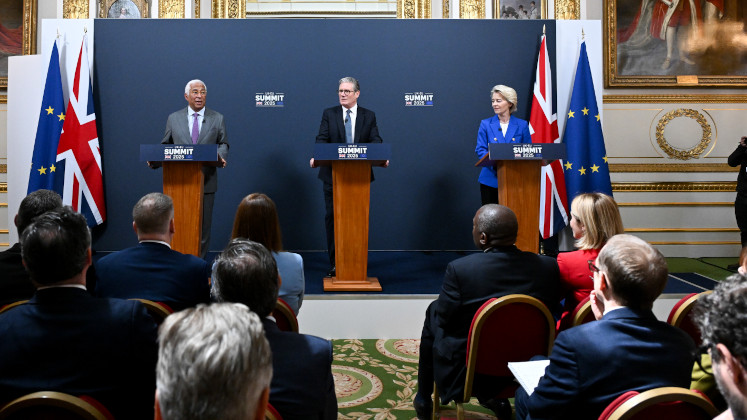
The EU and UK reset deal announced on 19 May raised uncertainties regarding internal security cooperation. Both sides have different priorities, with no specific instruments mentioned for renegotiation. Misleading statements about UK citizens using e-gates highlight confusion around the Entry-Exit System (EES), which is unrelated to bilateral agreements and may actually slow travel initially. Additionally, references to sharing facial images lack clarity on the channels involved. Efforts should focus on the micro-level dynamics of internal security cooperation rather than broad political agreements.
United Kingdom | Financial services
Can the EU and UK forge closer cooperation on internal security?
Artists play a crucial role in shaping technology by fostering innovation through cultural diversity and human values. A publication by the British Council compiles insights from 56 leaders in art and technology across 20 countries, emphasizing the importance of cultural organizations for artist-led research and development. Contributions from institutions and artists highlight education in art and technology as essential for future skills, while community ownership in heritage preservation enhances resilience. These perspectives serve as a valuable resource for policy-making and program development in the intersection of art and technology.
Education, ICT
Why technology needs artists: 40 international perspectives

Small and medium-sized enterprises (SMEs) in the Lao PDR account for 99% of registered firms and 94% of formal employment. Despite their significance, SMEs face regulatory constraints, limited financing, and skills shortages. Key reforms needed to enhance their potential include simplifying business registration, improving access to finance through credit guarantees, and strengthening vocational training. The 2024 ProFIT Survey reveals modest improvements in transparency but highlights ongoing challenges in starting a business and access to finance, with SME credit declining to 12%. Addressing taxation complexity, skills shortages, and gender disparities in trade participation are also essential for inclusive growth.
Cambodia, Denmark, Germany, Latvia, Lebanon, Lesotho, Lithuania, Luxembourg, Malta, Moldova, Philippines, Republic of Korea, Singapore, Slovakia, Slovenia, South Africa, Sri Lanka, Taiwan, China, United Arab Emirates, Viet Nam | Financial services, ICT, Education
Enhancing the Enabling Environment for SMEs in the Lao PDR

A study on decarbonisation pledges from top global firms in various sectors shows inadequate progress toward 2030 climate goals, highlighting the need for regulatory oversight of corporate climate actions. The report emphasizes that misleading accounting and overreliance on carbon credits obscure true emission reductions. While some European companies like H&M and Inditex performed moderately well, brands like Shein and Toyota scored very low on integrity. Overall, many firms lack transparency and fail to implement necessary measures for significant emissions reductions, falling short of the Paris Agreement targets.
Denmark | Financial services
Misleading accounting practices and irregular disclosures prompt calls to regulate corporate climate action
Advancements in data technology, termed the "data revolution," were initially believed to accelerate Sustainable Development Goals (SDGs) by enhancing policy efficiency and accountability. The 2014 UN report, “A World That Counts,” outlined pathways for impact, emphasizing real-time data and improved policymaking. However, despite increased data production and statistical system capabilities, progress on SDG outcomes has remained inconsistent. The study indicates that new strategies are needed to address data gaps and enhance decision-making within polycentric institutions to drive sustainable development effectively.
Health, Financial services, Education, ICT
Revisiting the assumptions of the data revolution as an accelerator of the sustainable development goals

Bold predictions regarding AI's impact on job loss are often inaccurate, according to Peter Cappelli, a management professor. He emphasizes that financial pressures shape executive decisions and that uncertainty, rather than automation, should drive future workforce strategies.
How Business Leaders Are Misjudging AI’s Workforce Impact
Chinese President Xi Jinping may be pressured to share power with his deputies due to significant political and economic challenges. Persistent economic issues, starting with a real estate crisis in 2021, have weakened the Communist Party's traditional legitimacy rooted in economic prosperity. Recent politburo meetings suggest potential shifts, hinting at a veiled warning to Xi regarding his concentrated power. Speculation also arises from the removal of Xi's allies amidst ongoing anti-corruption campaigns, raising questions about his ability to maintain authority and the possibility of emerging political rivalries.
Decoding hints that Xi Jinping may be under pressure to relinquish some of his power
Cognitive warfare, or cog war, utilizes misinformation to manipulate perceptions and behaviors, without physical violence, creating a legal blind spot in warfare. A contemporary example is the use of digital disinformation during conflicts, notably in Ukraine and the COVID-19 pandemic, where false narratives resulted in real-world health consequences. Cog war tactics, which include microtargeting and cognitive manipulation, challenge existing laws of armed conflict, as current regulations focus predominantly on physical attacks. Without clear legal definitions for psychological manipulation as an act of war, states may incite harm through disinformation without facing repercussions.
Cognitive warfare: why wars without bombs or bullets are a legal blind spot
UK government spending has often been framed as a choice between defence and welfare, but there is potential for a fairer tax system to support both. The government plans to target large profits and tax avoidance, shifting the tax burden onto wealthier individuals and sectors, particularly those with windfall gains. This strategy aims to finance increased defence spending without cutting public services. Achieving this requires effective tax reform, improved compliance, and international cooperation to close loopholes. With political will and proper execution, a fairer tax system could sustain both military commitments and essential public services.
United Kingdom | Financial services
It doesn’t have to be welfare versus warfare. Changes that make tax fairer could fund both
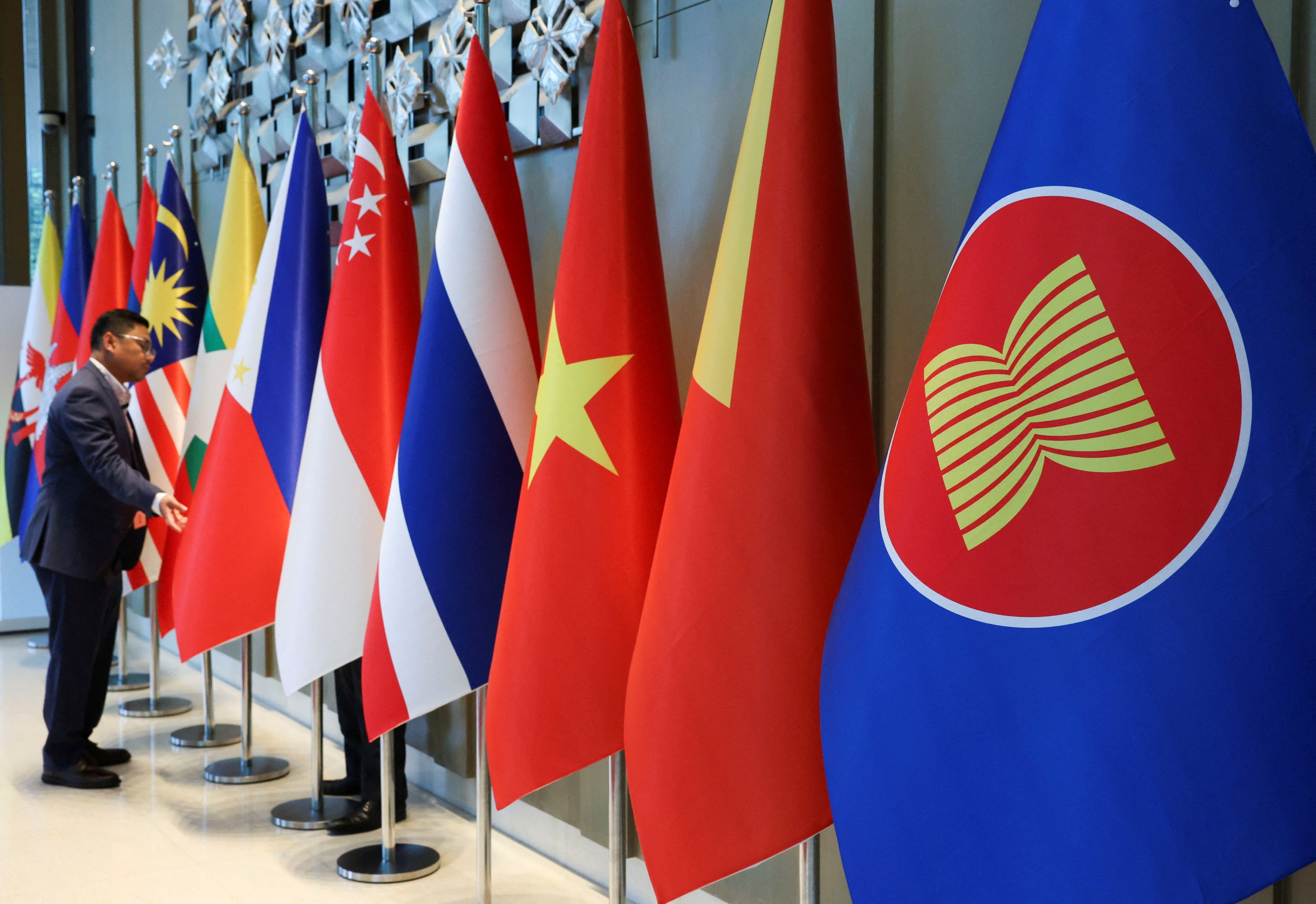
ASEAN must accelerate investment in digital infrastructure, advanced manufacturing, and energy transition technologies to enhance resilience amid global economic challenges. Key initiatives include the Digital Economy Framework Agreement (DEFA), aimed at harmonizing digital trade rules, and national efforts in Vietnam and Thailand to bolster technology and agro-processing capabilities. Regional cooperation is crucial for establishing a larger integrated market, attracting foreign investment, and enhancing supply chain resilience. Initiatives like the ASEAN Power Grid (APG) demonstrate the potential for leveraging renewable energy through greater collaboration among member states.
Denmark, India, Indonesia, Japan, Malaysia, Philippines, Singapore, South Africa, Thailand, United Arab Emirates, Viet Nam | Financial services, ICT, Education
How ASEAN can thrive through innovation and more collaboration

Generative AI poses risks of deepfake greenwashing, leading to false representations of sustainability efforts. A 2022 survey revealed over half of company leaders admitted to greenwashing, while 40% of green claims lack evidence. Incidents of manipulated content, such as doctored images and videos related to environmental issues, highlight these threats. Regulatory measures, such as the EU AI Act's requirement for labeling AI-generated content, are essential for transparency. Countries need to establish comprehensive AI legislation and collaborate with industry to mitigate deepfake risks and protect climate action integrity.
3 ways regulation can prevent deepfake greenwashing

The ESGP framework emphasizes the importance of peace in business operations, particularly in conflict-prone regions. By promoting global peace, companies can foster a sustainable business environment that benefits both their operations and local societies. Business leaders are encouraged to thoroughly understand the risks and dynamics of the areas they engage with, emphasizing active listening and perspective-taking to align interests among stakeholders. Effective communication and collaboration with local communities can prevent project failures. The concept was discussed at the 2025 Hiroshima Business Forum, highlighting the integral role of peace in economic development.
Health
How Peace Can Be Good for Business

The global consumer class is projected to surpass 4 billion individuals in 2025, despite economic challenges reducing growth expectations. The World Consumer Outlook anticipates 106 million new entrants by 2025, although inflation and geopolitical tensions may hinder this number. While consumer spending reached over $60 trillion annually, cooperation among major economies like the US, EU, and China could allow for 35 million additional entrants into the middle class by 2027. In contrast, protectionist measures could hinder growth, particularly affecting middle-class consumers. Overall, the long-term trend shows a substantial increase in the global middle class, poised to reach 5.7 billion by 2030.
Argentina, India | Financial services
How the world has achieved middle-class dominance, against the odds

Dr. Dong-Seon Chang, a South Korean neuroscientist, is authoring a book on how increased interactions with AI may alter human brains. He discussed this topic during a panel at the World Economic Forum. Chang, who has a background in social neuroscience and has held numerous academic and strategic positions, aims to communicate the implications of future technologies on society through his YouTube channel, Curious Brain Lab. He emphasizes the importance of critical thinking in the AI era, warning that reliance on generative AI could diminish cognitive abilities unless used thoughtfully.
Education
Interview Of The Week: Dong-Seon Chang