
Israel's recent attacks on Iran, an oil-exporting nation, might not significantly impact global oil prices due to strategic circumstances. Despite Iran exporting around 2 million barrels daily, OPEC's spare capacity exceeds 4 million barrels, primarily held by Saudi Arabia and the UAE. The International Energy Agency also has over 1.2 billion barrels in reserves, while China holds significant stocks and has surplus Iranian oil unsold. Prices spiked briefly but have stabilized, reflecting market caution. Any escalation might threaten the Strait of Hormuz, potentially increasing shipping costs and affecting global economic growth projections but not immediately at the pump.
Bahrain, Israel | Financial services
Why Israel-Iran tensions might not raise prices at the pump as much as feared (for now)
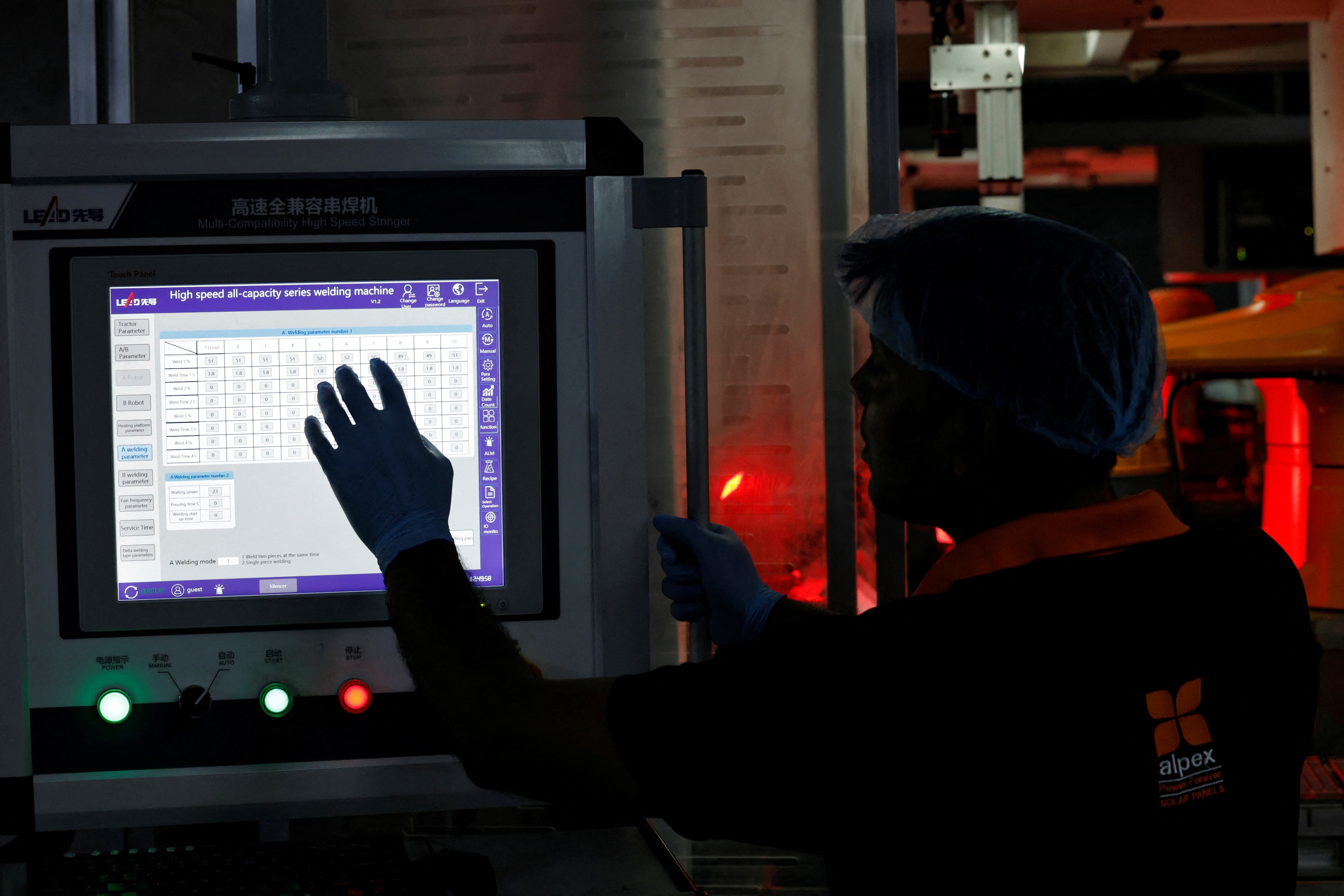
Energy and manufacturing sectors are increasingly vulnerable to operational technology (OT) cyber threats due to outdated systems, poor segmentation, and limited cybersecurity expertise. A report found that 77% of companies experienced cyberattacks that compromised data or disrupted OT. Many firms are outsourcing security measures and investing in technology innovations like patch monitoring and managed antivirus to bolster defenses. The rapid rise of artificial intelligence is intensifying these threats and driving energy demand, necessitating continuous updates and investments in OT security.
ICT
How energy and manufacturing can stay ahead of cyber threats and protect their tech
Public inquiries are the typical political response to allegations of institutional abuse, with multiple ongoing inquiries across the UK and beyond. While they symbolize official acknowledgment of wrongdoing, they often fall short in delivering truth, justice, and accountability for victims due to constraints in their terms of reference and a focus on institutional responses rather than systemic issues. Victims frequently find the inquiry process traumatic and its extensive costs delay justice. Previous inquiries have made similar recommendations that go unimplemented. A rethinking of public inquiries is necessary, emphasizing victim experiences and considering alternative models for truth recovery.
Another public inquiry into institutional abuses – why they so often fail to deliver justice for victims
China is positioning itself as a stable economic partner amid perceived U.S. unpredictability under Donald Trump. While the U.S. withdraws from international agreements and its commitment to global organizations remains uncertain, China increases its influence in trade coalitions like the Regional Comprehensive Economic Partnership and Brics. As nations question their relationships with the U.S., particularly in light of fluctuating trade policies and tariffs, China aims to fill the gap by fostering ties with developing countries. However, its ambitions are challenged by its controversial territorial claims and the need to bolster its own economy following recent crises.
Australia, Taiwan, China, Ukraine, United Kingdom | Financial services, Health
China positions itself as a stable economic partner and alternative to ‘unpredictable’ Trump
Operation Rising Lion, launched by Israel against Iran, follows significant Israeli strikes in October 2024 that severely crippled Iran's defense systems. Netanyahu leveraged U.S. backing to justify attacks, targeting nuclear facilities like the uranium enrichment plant in Natanz. The operation aims not only to diminish Iran's nuclear capabilities but also to instigate regime change. As tensions escalate, Iran is expected to retaliate, potentially drawing in U.S. and European allies to defend Israel. This situation risks broader regional conflict, particularly if Iran attacks neighboring nations or disrupts vital shipping routes.
Israel
Israel-Iran - Europeans Playing Out on the Field?

Tan Thai Yong, chairperson of the Coastal Sustainability Alliance and CEO of PaxOcean Group, emphasizes the increasing pressure on the marine logistics sector to decarbonize, particularly regarding Scope 3 emissions. Singapore's Maritime and Port Authority has mandated all new harbour craft to be electric or net-zero fuel compatible by 2030. PaxOcean is set to trial Singapore's first fully electric supply boat for multi-stop deliveries, aiming to demonstrate tangible emissions reductions. He acknowledges challenges in transitioning to electric vessels amid geopolitical uncertainties and stresses the importance of proving business benefits for industry acceptance.
Malaysia, Singapore
From 'milk runs’ to e-boats, decarbonising marine logistics sector must bring tangible business benefits: PaxOcean CEO

The rise of AI agents has intensified cybercrime, presenting a systemic threat to businesses. Cybercriminals now operate with increasing sophistication, using AI to enhance the speed and scale of attacks like phishing and identity theft. Organizations must adapt their cybersecurity strategies to address these evolving threats, which exploit outdated systems and human vulnerabilities. Successful attackers utilize techniques like social engineering, and the impact of systemic risks can be severe, as seen in high-cost incidents like the Change Healthcare attack. Businesses need to integrate advanced technology with effective governance to ensure resilience against AI-enabled cyber threats.
Financial services
AI agents: the new frontier of cybercrime business must confront
The 2025 Energy Transition Index indicates that while there is a global annual improvement in energy transition efforts, challenges persist in energy security, equity, and sustainability. The index reflects a 1.1% year-on-year increase but highlights vulnerabilities due to geopolitical issues and rising energy demand. To enhance resilience and competitiveness, five strategies are recommended: adopting stable policy frameworks, modernizing energy infrastructure (especially grids and storage), improving capital flow, leveraging emerging technologies, and fostering international collaboration. Progressive examples from countries like Luxembourg, Denmark, China, and India demonstrate effective pathways toward these goals.
Albania, Algeria, Angola, Austria, Azerbaijan, Barbados, Belgium, Benin, Bolivia, Botswana, Brunei Darussalam, Bulgaria, Burkina Faso, Cape Verde, Chad, Cyprus, Denmark, Egypt, El Salvador, Estonia, Eswatini, Ethiopia, Finland, Georgia, Germany, Ghana, Greece, Guatemala, Guinea, Haiti, Honduras, Hungary, India, Indonesia, Ireland, Israel, Jamaica, Japan, Jordan, Kenya, Kuwait, Kyrgyz Republic, Latvia, Lithuania, Luxembourg, Malaysia, Mali, Mauritius, Moldova, Mongolia, Montenegro, Namibia, Netherlands, New Zealand, Norway, Peru, Philippines, Poland, Qatar, Romania, Russian Federation, Rwanda, Senegal, Serbia, Seychelles, Singapore, Sweden, Switzerland, Taiwan, China, Tajikistan, Tanzania, Thailand, Trinidad and Tobago, Tunisia, Uganda, Ukraine, United Arab Emirates, United Kingdom, Venezuela, Yemen, Zambia, Zimbabwe | Financial services, ICT, Education
Energy Transition Index 2025: Five strategies for a more resilient and competitive energy system

Energy transition has gained momentum, with the World Economic Forum's Energy Transition Index (ETI) reporting a 1.1% improvement in 2025 across 118 countries. Key factors include enhanced energy equity and sustainability, aided by lower energy prices and subsidy reforms. However, energy security remains lagging, with only 28% of countries achieving progress in security, equity, and sustainability simultaneously. Transition readiness has slowed significantly to 0.8% year-on-year, raising concerns for future advancements. Advanced economies dominate the top rankings, while emerging regions like Europe and Asia show notable improvements through varied strategies.
Albania, Algeria, Angola, Armenia, Austria, Azerbaijan, Bahrain, Barbados, Belgium, Benin, Bolivia, Bosnia and Herzegovina, Botswana, Brunei Darussalam, Bulgaria, Burkina Faso, Burundi, Cambodia, Cameroon, Cape Verde, Chad, Cyprus, Democratic Republic of the Congo, Denmark, Dominican Republic, Ecuador, Egypt, El Salvador, Estonia, Eswatini, Ethiopia, Finland, Gabon, Georgia, Germany, Ghana, Greece, Guatemala, Guinea, Haiti, Honduras, Hungary, Iceland, India, Indonesia, Ireland, Israel, Jamaica, Japan, Jordan, Kazakhstan, Kenya, Kuwait, Latvia, Lebanon, Lesotho, Lithuania, Luxembourg, Madagascar, Malawi, Malaysia, Mali, Malta, Mauritania, Mauritius, Moldova, Mongolia, Montenegro, Morocco, Namibia, Nepal, Netherlands, New Zealand, Nicaragua, Norway, Oman, Peru, Philippines, Poland, Qatar, Romania, Russian Federation, Rwanda, Saudi Arabia, Senegal, Serbia, Seychelles, Singapore, Slovakia, Slovenia, South Africa, Spain, Sweden, Switzerland, Taiwan, China, Tajikistan, Tanzania, Thailand, Trinidad and Tobago, Tunisia, Türkiye, Uganda, Ukraine, United Arab Emirates, United Kingdom, Venezuela, Yemen, Zambia, Zimbabwe | Financial services
Fostering Effective Energy Transition 2025

Energy transition progress has accelerated, with the Energy Transition Index (ETI) showing that 65% of 118 countries improved their scores in 2025. Key advancements include a 1.2% rise in system performance, driven by increased energy equity (+2.2%) and sustainability (+1.2%). However, energy security showed minimal improvement, and transition readiness growth slowed to 0.8%. Advanced economies, particularly the Nordics, lead the rankings, while emerging regions demonstrated distinct pathways for readiness. The report emphasizes the need for adaptive policies, infrastructure modernization, and investment in clean technology to navigate ongoing geopolitical and climate challenges.
Albania, Algeria, Angola, Armenia, Austria, Azerbaijan, Bahrain, Barbados, Belgium, Benin, Bolivia, Bosnia and Herzegovina, Botswana, Brunei Darussalam, Bulgaria, Burkina Faso, Burundi, Cambodia, Cameroon, Cape Verde, Chad, Chile, Colombia, Cyprus, Democratic Republic of the Congo, Denmark, Dominican Republic, Ecuador, Egypt, El Salvador, Estonia, Eswatini, Ethiopia, Finland, Gabon, Georgia, Germany, Ghana, Greece, Guatemala, Guinea, Haiti, Honduras, Hungary, Iceland, India, Indonesia, Ireland, Israel, Jamaica, Japan, Jordan, Kazakhstan, Kenya, Kuwait, Kyrgyz Republic, Latvia, Lebanon, Lesotho, Lithuania, Luxembourg, Madagascar, Malawi, Malaysia, Mali, Malta, Mauritania, Mauritius, Moldova, Mongolia, Montenegro, Morocco, Mozambique, Namibia, Nepal, Netherlands, New Zealand, Nicaragua, Nigeria, Norway, Pakistan, Panama, Paraguay, Peru, Philippines, Poland, Portugal, Qatar, Republic of Korea, Romania, Russian Federation, Rwanda, Saudi Arabia, Senegal, Serbia, Seychelles, Singapore, Slovakia, Slovenia, South Africa, Spain, Sweden, Switzerland, Taiwan, China, Tajikistan, Tanzania, Thailand, Trinidad and Tobago, Tunisia, Türkiye, Uganda, Ukraine, United Arab Emirates, United Kingdom, Uruguay, Venezuela, Yemen, Zambia, Zimbabwe | Financial services, ICT, Education
Fostering Effective Energy Transition 2025
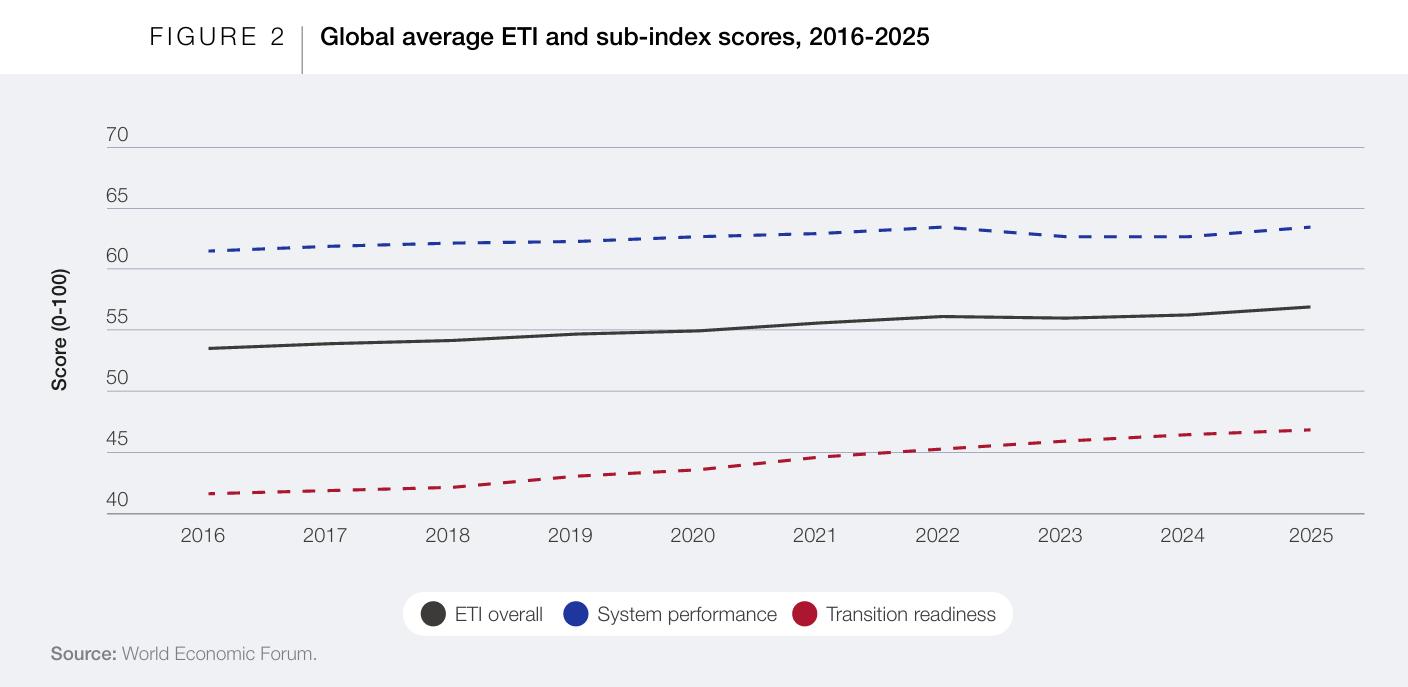
The 2025 Energy Transition Index (ETI) reveals a nuanced global shift towards net-zero energy systems, focusing on sustainability, security, and equity. The overall global ETI score improved by 1.1%, with advanced economies leading, particularly in the Nordic region. Emerging economies show varying progress; for example, Emerging Europe is making rapid advancements, while Sub-Saharan Africa faces significant barriers. Energy security remains a critical but slow-moving component of the transition, essential for economic stability. This evolving landscape underscores the need for tailored strategies to address local energy challenges and opportunities.
Albania, Algeria, Angola, Austria, Azerbaijan, Bahrain, Barbados, Belgium, Benin, Bolivia, Botswana, Brunei Darussalam, Burkina Faso, Cambodia, Cape Verde, Chad, Colombia, Denmark, Dominican Republic, Ecuador, Egypt, El Salvador, Estonia, Eswatini, Ethiopia, Finland, Gabon, Georgia, Germany, Ghana, Greece, Guatemala, Guinea, Haiti, Honduras, Hungary, Iceland, India, Indonesia, Ireland, Israel, Jamaica, Japan, Jordan, Kazakhstan, Kenya, Kuwait, Latvia, Lesotho, Luxembourg, Malawi, Malaysia, Mali, Malta, Mauritania, Mauritius, Moldova, Mongolia, Montenegro, Morocco, Namibia, Nepal, Netherlands, New Zealand, Nigeria, Norway, Pakistan, Peru, Philippines, Poland, Qatar, Republic of Korea, Romania, Russian Federation, Rwanda, Saudi Arabia, Senegal, Serbia, Seychelles, Singapore, Slovakia, South Africa, Sweden, Switzerland, Taiwan, China, Tajikistan, Tanzania, Thailand, Trinidad and Tobago, Tunisia, Türkiye, Uganda, Ukraine, United Arab Emirates, United Kingdom, Venezuela, Yemen, Zambia, Zimbabwe | Financial services, Health, ICT, Education
In charts: The energy transition in 2025
Accelerating the global energy transition requires modernizing electricity infrastructure, including grids and battery storage, to ensure energy security and resilience. Stable regulatory environments and credible investment pipelines are essential for deploying scalable solutions. The World Economic Forum's report highlights modest progress in energy access and clean technology adoption, but identifies slowing advancements in regulatory frameworks and capital investment, posing risks to system resilience. Experts emphasize the need for both supply-side innovations, like energy storage and integrated systems, and demand-side flexibility through smart technologies to achieve a sustainable energy future.
Egypt, India, Indonesia, Nigeria | Financial services, ICT, Education
‘More than ambition’: 6 experts on what's needed to accelerate the global energy transition
The AI+ Expo in Washington, DC, showcases a divide in the peace and defense sectors. While defense companies like Palantir and Lockheed Martin promote AI for military use, startups like Anadyr Horizon advocate for “peace tech” aimed at conflict prevention. Arvid Bell, cofounder of Anadyr Horizon, highlights his AI software's potential to predict conflicts, a concept evolving from fiction to serious application. The U.S. State Department and the UN have explored AI for forecasting social unrest and violence, marking a shift towards using technology to prevent rather than engage in war.
The war over the peace business
Shawn Guttman, co-founder of the PeaceTech startup Didi, is developing an algorithm called the Ripeness Index to identify optimal moments for initiating peace negotiations by analyzing data from news, politics, and social media. Amid ongoing conflicts like the Gaza situation, Guttman's approach aims to inform grassroots strategies and coalition-building in Israel. The PeaceTech movement utilizes AI to enhance negotiations, with various tools emerging to assess public sentiment and support peacebuilding initiatives. Despite financial and ethical challenges, Guttman believes in the potential of this technology to foster peace and reduce the economic toll of war.
AI is supercharging war. Could it also help broker peace?
PeaceTech is an emerging field that leverages technology to prevent conflicts, de-escalate violence, and support post-conflict recovery. Despite its potential to save lives and stabilize communities, it remains significantly underfunded, receiving scant investment compared to defense technologies, which attracted over $34 billion in 2023. The cultural perception of peace as abstract undermines recognition of its complexity and importance. Addressing violence, which costs the global economy over $17 trillion annually, offers substantial economic incentives for PeaceTech development, including advanced predictive analytics and AI tools that could transform conflict prevention and peacekeeping efforts.
Why PeaceTech must be the next frontier of innovation and investment
Scaling up climate resilience finance is essential due to increasing climate-related risks, yet significant financing gaps and unclear frameworks impede progress. The development of conceptual frameworks is critical for enhancing private sector participation and recognizing investment opportunities. This paper reviews existing approaches, addresses key data challenges, and explores areas like disaster risk finance. It highlights the need for clearer standards for reporting physical risks and adaptation actions, while noting challenges related to data availability and outcome measurement. Evolving frameworks and tools are crucial for mobilizing investments toward climate resilience.
Health, Financial services
Evolving Frameworks for Adaptation, Resilience, and Disaster Risk Finance: Basic Concepts, Financing Gaps, Disclosure, and Taxonomies
Embedding storytelling in development projects enhances their effectiveness by uncovering hidden risks and needs. Personal narratives from affected individuals can inform project design and implementation, ensuring inclusivity. For instance, in Mongolia, stories from schoolgirls prompted transportation infrastructure designs that prioritize women's safety. Similarly, indigenous women's narratives in the Philippines empowered their communities to negotiate better project outcomes. Integrating storytelling methods, creating safe spaces for sharing, and using these narratives for evidence-based decisions are vital strategies for improving project impacts and addressing marginalized voices.
Education
When Women and Girls are Heard, Projects and Lives Improve
Privacy-enhancing technologies (PETs) are essential for fostering trust in the collaborative development and sharing of AI models while safeguarding privacy and sensitive information. The OECD report outlines two main use cases for PETs: improving AI model performance with minimal input data through methods like federated learning, and enabling confidential co-creation of AI models with tools such as differential privacy. Although PETs mitigate some risks in AI governance and reduce data collection needs, they are not without limitations. Balancing utility and efficiency is a challenge. Governments can support PET adoption to promote trustworthy AI innovation.
Sharing trustworthy AI models with privacy-enhancing technologies
Research by The Alan Turing Institute and LEGO Foundation identifies a gap in studies regarding the impacts of generative AI on children, despite its prevalent use in games and educational platforms. Children’s unique needs and rights must be prioritized in tech design and governance, as they are significantly affected yet underrepresented in decision-making. The research adopts the Responsible Innovation in Technology for Children (RITEC) framework, focusing on qualitative aspects of children's wellbeing, including identity and creativity, to assess the implications of generative AI.
Understanding the Impacts of Generative AI Use on Children
Louise Casey's report on grooming gangs reveals significant institutional failings in the UK criminal justice system, highlighting a lack of support for victims. Casey recommends a new inquiry into child sexual exploitation, which has been accepted by Prime Minister Keir Starmer, aiming to address cases that did not lead to prosecution and assess at-risk children. Previous recommendations from Alexis Jay's 2022 inquiry remain unimplemented, leading to survivor distrust in authorities. While some progress has been made in reopening historic cases, comprehensive training for professionals involved in child safety and multi-agency collaboration is essential to prevent future exploitation.
Education
How to make sure the new grooming gangs inquiry is the last