Agentic AI, a development above large language models, enables AI agents to set and pursue specific goals, making decisions and adapting based on results. Companies like Salesforce are deploying these agents for tasks such as handling customer queries. The future promise of personal AI agents includes tasks like calendar management and purchasing, with prototypes already available from leading companies. However, concerns about their trustworthiness, loyalty, and transparency raise critical questions regarding their impact on user relationships and brand integrity. These issues will influence user acceptance and the overall adoption of personal AI agents.
Can AI Agents Be Trusted?
Heatwaves, floods, and cyclones are rising in the Asia-Pacific due to climate change, impacting vulnerable communities like those in Bangladesh, which suffers annual losses of $3 billion. Recent flooding affected 5 million people in Bangladesh, highlighting the need for long-term disaster management strategies. The Red Cross emphasizes improved weather forecasting and mobile alerts to prepare communities. Challenges include aiding undocumented populations in high-risk areas. Future mitigation strategies may leverage AI and innovative insurance models to protect low-income groups, which are often overlooked by traditional insurance providers.
Bangladesh, Nigeria | Financial services, Health
Q&A: Red Cross hopes AI and insurance can help with climate chaos
Urban spaces play a crucial role in promoting democratic engagement through meetings, discussions, and protests. The influence of generative AI, specifically ChatGPT-4o, on perceptions of these spaces was analyzed in Stockholm, Madrid, and Brussels. Findings indicate that AI-generated outputs often emphasize governmental and private organizations over public spaces like parks, thereby narrowing the understanding of democratic venues and favoring organized engagement. These outputs risk perpetuating powerful entities' visibility while obscuring broader opportunities for public engagement. The research advocates for a balanced approach, combining AI insights with other knowledge forms to protect urban spaces as vital democratic infrastructures.
Spaces for democracy with generative artificial intelligence: public architecture at stake
Participatory approaches are essential for establishing a social license for responsible data reuse as a global public good. While data reuse generates societal value, concerns arise over power imbalances when individuals lack control over their data. Engaging data subjects and stakeholders through innovative methods, such as The GovLab’s New York City "Data Assembly," can build trust and ensure mutual benefits. The chapter emphasizes the importance of data literacy and resources for effective citizen engagement, and concludes with a reflection on the potential of participatory processes to enhance digital self-determination.
Health
Participatory Approaches to Responsible Data Reuse and Establishing a Social License
Ørsted's cancellation of the 2.4 GW Hornsea 4 wind farm highlights significant challenges facing the UK's offshore wind industry, jeopardizing the government's target of 43 GW by 2030. Rising costs for raw materials like steel and copper, compounded by geopolitical issues and a shortage of specialized vessels, have led developers to withdraw or delay projects. Additionally, inflation and increasing demand for high-voltage cabling strain investment viability. Proposed government reforms aim to expedite planning processes, but risk awarding contracts for projects without assured viability, potentially leading to further cancellations.
Why wind farm developers are pulling out at the last minute

Emigration has significantly impacted Central and Eastern European EU member states, resulting in a lower ratio of working-age citizens to retirees. Despite concerns about increased elderly dependency, public healthcare spending has risen, driven by political pressure to prioritize the needs of those who remain. Incumbent governments, motivated by electoral considerations, are increasing healthcare expenditures to maintain support from elderly voters. This deliberate choice contrasts with trends in private healthcare spending, which remain stable. The findings suggest that the dynamics of emigration and ageing populations may challenge democratic governance in these countries.
Latin America
Has emigration led to welfare cuts in Central and Eastern Europe?

Skills intelligence leverages artificial intelligence and machine learning to analyze workforce data, creating actionable insights for effective skills development. It shifts focus from identifying skills gaps to empowering individuals and organizations, essential for building resilient economies. As 40% of core skills may change by 2030, and many employers cite skills gaps as barriers, integrating AI into existing frameworks can help adapt to rapid changes. This transition towards intelligent skills infrastructures enables real-time responses to workforce needs, enhancing job matching, reskilling, and workforce transformation on a global scale.
Angola, Egypt, Estonia, Ethiopia, Finland, Georgia, Germany, Indonesia, Ireland, Japan, Jordan, Kazakhstan, Kenya, Luxembourg, Mali, Mozambique, New Zealand, Republic of Korea, Russian Federation, Rwanda, Saudi Arabia, Senegal, Singapore, Slovakia, South Africa, Spain, Sweden, Tanzania, Tunisia, Uganda, Ukraine, United Arab Emirates, United Kingdom | Financial services, ICT, Education
What is 'skills intelligence' and how will it lead to economic resilience?

The United Arab Emirates has become a central player in the global arms economy, particularly through the export of drones to non-state actors in Africa and the Middle East. This arms supply network enables groups like Sudan's Rapid Support Forces (RSF) to conduct modern warfare using precision drones, leveling the battlefield against conventional military forces. The UAE utilizes a surrogate warfare model, providing drones in parts for local militias to assemble and operate, enhancing their strategic capabilities without direct involvement. This trend, alongside similar actions by Iran and Turkey, contributes to a regional drone arms race, transforming traditional conflict dynamics.
United Arab Emirates
UAE drones have given rise to a new arms economy
Usability for the World: Sustainable Cities and Communities emphasizes the importance of human-centered design in creating thriving, equitable urban spaces. It offers practical strategies and real-world examples to enhance urban functionality while prioritizing residents' well-being. The book explores the link between usability and sustainability, highlighting design principles that contribute to livable cities. It showcases diverse global approaches to urban development and demonstrates how user-centered design can address urban challenges, aligning with the UN Sustainable Development Goals, particularly SDG 11.
Usability for the World: Building Better Cities and Communities
Generative Artificial Intelligence (AI) is transforming public information interactions, with an increase in AI systems utilizing public datasets. The federal statistical community can leverage this by enhancing existing frameworks, like the Federal Committee on Statistical Methodology's Framework for Data Quality, to address challenges posed by AI-based queries. For statistical data to be trustworthy, they must be machine-readable and capable of supporting quality measurements and contextual information. A collaborative effort is proposed to establish best practices for optimizing APIs and data accessibility, ensuring federal statistics meet crucial quality dimensions such as accuracy and timeliness.
AI-Ready Federal Statistical Data: An Extension of Communicating Data Quality
Low- and middle-income countries (LMICs) can develop effective artificial intelligence (AI) without needing vast financial resources or reliance on Western partnerships. Initiatives in these regions focus on creating AI solutions tailored to local languages and socio-economic contexts, rather than merely scaling existing technologies. Many LMICs are enhancing their AI capabilities through funding for startups, education programs, and building research infrastructure. However, most African Union and Arab League member states still lack comprehensive AI strategies, which is essential for fostering innovation and growth in the field.
The path for AI in poor nations does not need to be paved with billions
Smart cities seek to enhance residents' quality of life through effective services and infrastructure, but inadequate data governance limits the potential of urban data. This study identifies actionable requirements for smart city data governance models based on interviews with representatives from 27 European cities. Key themes include the necessity for standardized data formats, clear data access guidelines, and improved cross-departmental collaboration. By benchmarking existing models against these requirements, the study reveals significant differences in their capacity to manage complex smart city data systems, offering insights for municipal decision-makers to refine their data governance strategies and support sustainable urban development.
ICT, Health
Assessing data governance models for smart cities: Benchmarking data governance models on the basis of European urban requirements

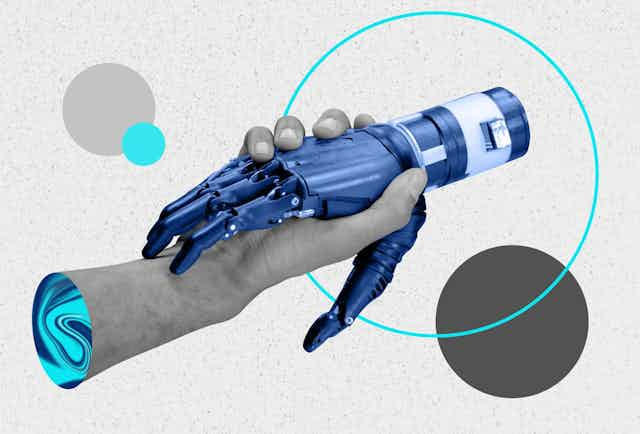
Robots can enhance the independence and quality of life for older adults, who are projected to exceed 2 billion globally by 2050. Research indicates that socially assistive robots, which can remind users to take medication or help with daily tasks, are welcomed by older individuals, particularly if they are user-friendly and affordable. However, concerns about privacy, cost, and the potential for decreased human interaction exist. Effective design must cater to the diverse needs of older adults, emphasizing empathy and real-world testing to ensure these technologies genuinely support aging well and maintaining autonomy.
Can a robot help you age better?
Half of entry-level white collar jobs may soon vanish, prompting calls for transparency standards in AI development to manage risks like cyberattacks and bioweapons. The debate surrounding AI's intelligence distracts from urgent societal adaptation. AI threatens creative industries, requiring new frameworks for human creativity alongside AI. In warfare and healthcare, explicit regulations and thoughtful integration of AI are essential. Additionally, AI impacts knowledge access, raising concerns over misinformation. Collective efforts to enhance AI literacy and establish reliable information sources are crucial, as the technology continues to evolve rapidly and presents both benefits and challenges.
Education
It’s time to stop debating whether AI is genuinely intelligent and focus on making it work for society
Pure deterrence, while historically seen as a path to peace through strength, can destabilize international relations by fostering distrust and increasing miscalculations due to lack of communication. Strong defenses and military capabilities are essential, but at times of high tension, dialogue and détente are crucial for ensuring that deterrence remains credible and effective.
Why deterrence needs dialogue and détente

The UK faces a security crisis due to increasing threats from nations like Russia and China. The latest strategic defense review emphasizes a pivot to high-intensity warfare, focusing on remote and autonomous technologies rather than counter-insurgency. It aims to enhance the UK's military capabilities with a unified digital targeting system and stronger ties between defense and tech industries. However, the review overestimates the role of AI and autonomy in warfare, neglecting the essential human element needed for effective military operations. There is a critical need for a strategy that incorporates the importance of mass in combat, as evidenced by the Ukrainian experience.
Ukraine, United Kingdom
The UK is gearing up for autonomous warfare – but missing the reality of war today
The UK government's new strategic defense review emphasizes a "Nato-first" approach, reinforcing the alliance's central role in its foreign and defense policies. This shift reflects the UK's aim to affirm its influence as a key ally of the US and a reliable partner in Europe amidst global uncertainties. The commitment to NATO serves both as a collective security guarantee against threats like Russian aggression and as a mechanism for maintaining regional and global influence, especially in the context of post-Brexit dynamics. Starmer’s administration seeks to navigate these complexities by collaborating closely with NATO allies.
What the UK’s ‘ Nato-first ’ defence approach tells us about Britain’s place in a volatile world
Buy now, pay later (BNPL) services have surged in popularity, enabling installment payments for purchases, but many consumers struggle with repayments due to inadequate financial education. Reports indicate that companies like Klarna are facing significant credit losses as a result of this trend. A systemic lack of financial literacy, especially regarding budgeting and responsible borrowing, is exacerbating consumer debt. To foster financial resilience, comprehensive education is essential, alongside initiatives from fintech and traditional financial institutions to provide guidance. Policymakers should also advocate for transparency and standards to equip consumers with necessary financial knowledge.
ICT, Financial services, Education
Buy now, pay later: How financial education can break the debt trap

The Iberian power outage on April 28 caused significant disruptions at major airports, like Madrid-Barajas and Barcelona El-Prat, resulting in 344 flight cancellations. Airports implemented contingency measures, including crisis committees and the use of backup generators, allowing 93% of commercial flights to proceed. The incident highlighted the importance of maintaining access routes, standardized communication, and effective scenario planning with external partners to mitigate future disruptions. Investment in resilience and contingency planning proved essential, preventing greater chaos and economic losses estimated at €1.4 billion.
What airports can learn from the Iberian power outage
Two reports on "The Future of United Nations Peace Operations," contributed by Annika Hilding Norberg and other experts, address critical advancements in UN peacekeeping. These reports are the Compendium of Short Issue Papers and Policy Recommendations for the UN Peacekeeping Ministerial 2025 in Berlin and the Compendium of Policy Papers focusing on enhancing the impact of peace operations. Key contributors include Brig. Gen. Marcel Amstutz and Maj. Gen. (R.) Dr. A. K. Bardalai, among others. The findings aim to strategically revitalize UN military and civilian observers.
The Future of United Nations Peace Operations