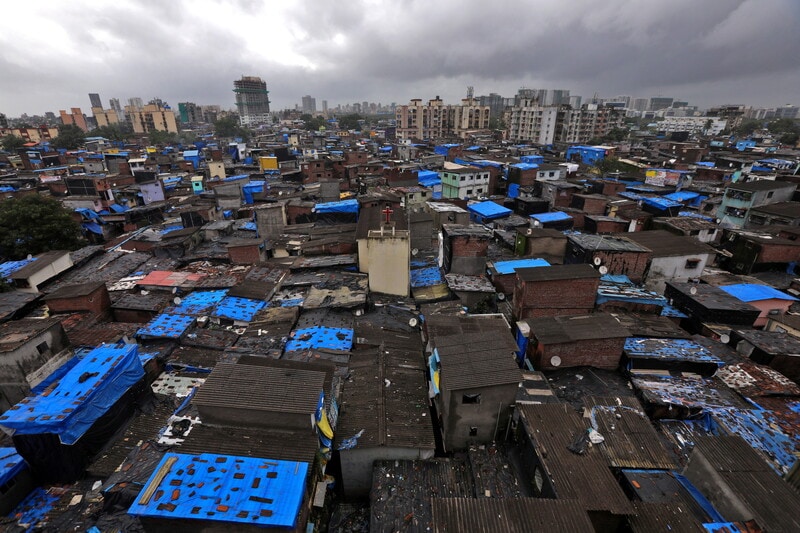
Housing affordability is a global crisis affecting owner-occupier and rental markets, driven by an imbalance between demand and supply. Private capital is essential in addressing this challenge, as many essential workers are priced out of urban areas, harming economic stability and community integrity. The U.S. faces escalating home prices and rental costs, while emerging markets like Mumbai experience severe shortages and informal housing. Solutions require collaboration between public policies and private investment to enhance housing supply, streamline regulations, and utilize innovative financing. Without significant action, the affordability crisis will worsen, threatening sustainable growth and social equity.
Latin America | Financial services
Housing affordability is a crisis; private capital must help

Colombia's coffee industry exemplifies climate adaptation in agriculture, integrating sustainable practices that enhance biodiversity, reduce emissions, and improve farmer livelihoods. With rising temperatures threatening coffee production, innovative agroforestry techniques, such as growing coffee under native tree canopies, help maintain cooler microclimates and promote ecosystem health. Advances in breeding resilient coffee varieties and eco-friendly processing techniques further support sustainability. Additionally, a comprehensive Coffee, Forest & Climate Agreement aims to enhance resilience and reduce greenhouse gas emissions. Colombia's approach serves as a model for aligning agriculture with global climate goals, demonstrating successful public-private collaboration.
Colombia
Colombia's sustainable coffee sector and its lessons for climate solutions
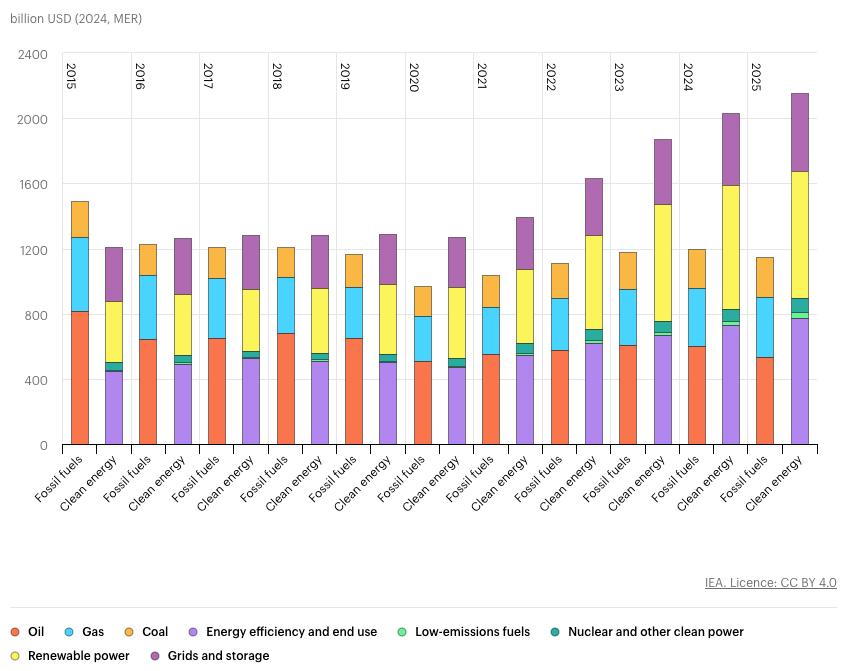
Global energy investment is projected to reach a record $3.3 trillion by 2025, with $2.2 trillion dedicated to clean energy technologies in 2023 despite economic uncertainty. Key technologies driving this energy transition include intelligent grid systems, renewable energy storage, and decentralized energy markets. The World Bank is investing $1 billion into a significant hydropower project in the Democratic Republic of Congo. Additionally, companies like Meta are expanding nuclear energy partnerships to support AI demands, highlighting a shift towards sustainable practices in energy production.
Afghanistan, Argentina, Bolivia, Canada, Denmark, Egypt, Ghana, India, Liberia, Nigeria, Norway, Pakistan, Papua New Guinea, Poland, Senegal, Sudan, Tunisia
Energy investment on track for record $3.3 trillion, and more top energy stories

The European Union faces significant geopolitical challenges from the assertive actions of Russia, China, and the United States, which threaten its foundational principles and stability. As tensions rise, neutrality emerges as a strategic trap, risking Europe’s position in global power dynamics. The EU must navigate complex trade wars and military threats while grappling with internal issues like low birth rates and defense spending shortfalls. Current strategies relying on sanctions may no longer suffice, highlighting the urgent need for a robust political and military response to these international crises.
Belgium, Chile, Colombia, Denmark, Egypt, Ethiopia, France, Georgia, Germany, India, Indonesia, Ireland, Japan, Kenya, Luxembourg, Paraguay, Peru, Philippines, Poland, Portugal, Russian Federation, Rwanda, Senegal, Seychelles, Singapore, South Africa, Spain, Switzerland, Taiwan, China, Tanzania, Thailand, Tunisia, Uganda, Ukraine, United Kingdom, Viet Nam | ICT
The European Union’s Most Dangerous Hour

Five disruptive trends are transforming industries in the Gulf Cooperation Council (GCC) region, bolstered by strategic positioning, a youthful demographic, and supportive innovation policies. Key trends include:

1. **Friendshoring**: Emphasizing trusted trade partnerships, Bahrain has attracted investments like Mondelēz's 'Factory of the Future' and Lenovo's Riyadh factory.
2. **AI-Powered Entrepreneurship**: GCC nations are embracing AI, with initiatives like Saudi Arabia's strategy to create 300 AI startups and educational reforms in STEM fields.
3. **Green Tech Investment**: Committing $100 billion to renewable energy, the GCC aims for a 20% emissions reduction by 2030, aligning regional standards and focusing on carbon neutrality efforts.
Algeria, Angola, Austria, Azerbaijan, Bahrain, Barbados, Belgium, Benin, Bolivia, Botswana, Brunei Darussalam, Burkina Faso, Cape Verde, Chad, Chile, Denmark, Dominican Republic, Egypt, Estonia, Ethiopia, Finland, Gabon, Georgia, Germany, Ghana, Guinea, Haiti, Iceland, Indonesia, Ireland, Israel, Jamaica, Japan, Jordan, Kenya, Kuwait, Kyrgyz Republic, Lebanon, Luxembourg, Malaysia, Mali, Mauritania, Mauritius, Morocco, Mozambique, Namibia, Netherlands, New Zealand, Nigeria, Oman, Philippines, Qatar, Republic of Korea, Rwanda, Saudi Arabia, Senegal, Seychelles, Singapore, Switzerland, Tajikistan, Tanzania, Thailand, Trinidad and Tobago, Tunisia, Uganda, Ukraine, United Arab Emirates, United Kingdom, Viet Nam, Yemen | Financial services, Education, Health, ICT
5 innovations disrupting industries in the GCC
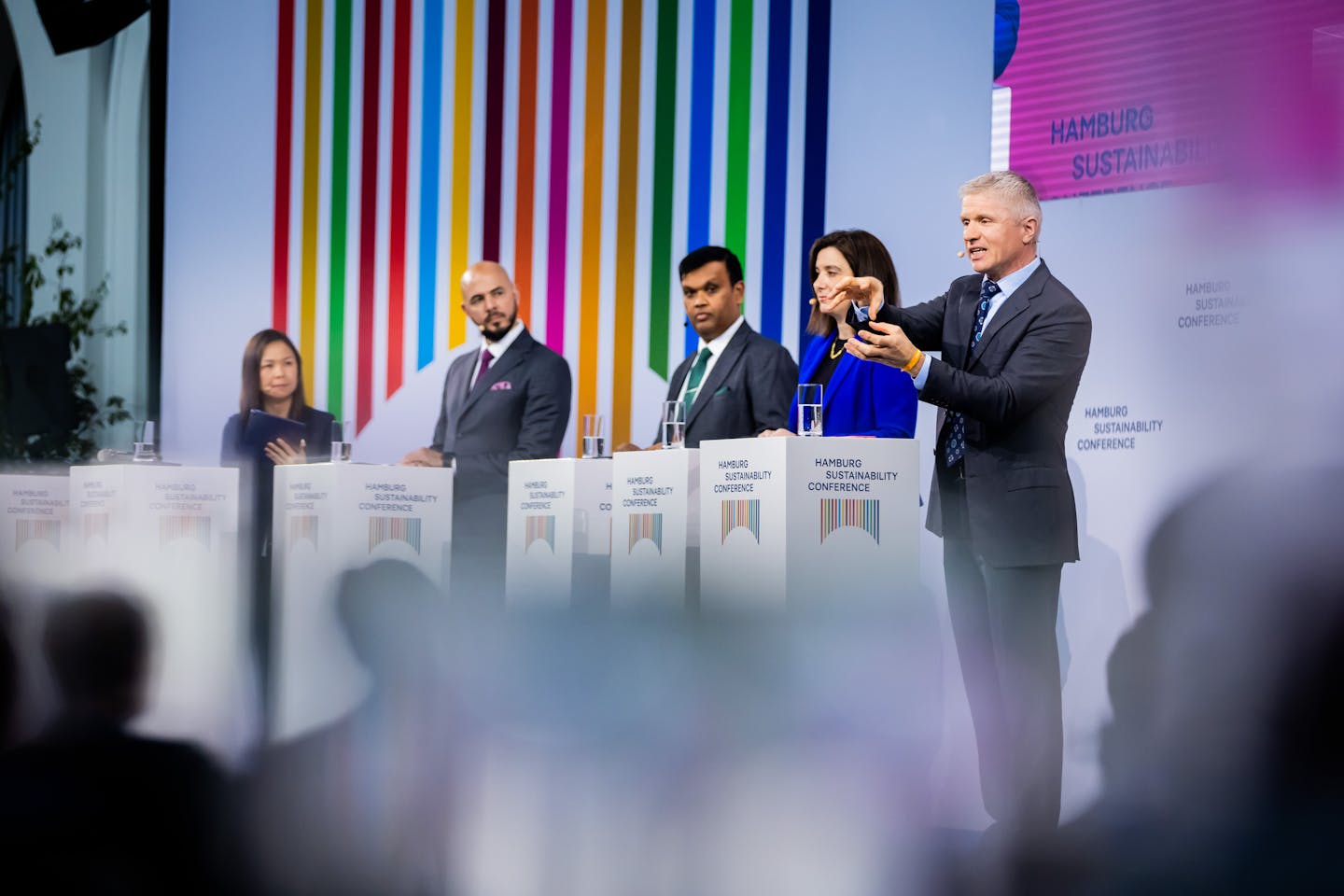
State leaders from Germany, Canada, and other countries, along with major institutional investors, are establishing a new company to standardize blended finance and enhance investment flows for sustainable development. Named Scaling Capital for Sustainable Development (SCALED), the initiative aims to address the $4.3 trillion annual funding gap for sustainable development goals. The company will focus on developing standardized investment vehicles and improving collaboration between public and private sectors, with plans for launch by the end of 2025. This move is crucial given the declining public contributions and the need for effective mobilization of private capital.
Africa, Latin America | Education, Financial services, Health
Setting personal politics aside: Governments, corporates to form new company aimed at 'fixing blended finance'

The UAE's Stargate project exemplifies the integration of AI into national infrastructure, positioning Abu Dhabi for a future reliant on sovereign AI capabilities. This initiative, a 1-gigawatt AI supercomputing cluster developed with OpenAI, aims to provide national AI infrastructure akin to essential utilities like roads and power grids. By building local AI capacity, countries can ensure equity, adapt global models to local contexts, and avoid dependency on foreign systems. The project also reflects broader geopolitical ambitions, with implications for emerging economies seeking to enhance inclusivity and control in the AI landscape.
Algeria, Angola, Ghana, Guinea, Haiti, Indonesia, Kenya, Mali, Rwanda, Senegal, Tanzania, United Arab Emirates | Education, Health, ICT
The UAE's Stargate project hints at how AI can be integrated into national infrastructure

Munib Madni has been appointed as the inaugural CEO of Singapore's FAST-P office, focused on facilitating the deployment of up to US$500 million from the government for clean energy infrastructure. He previously served as chief investment officer for Asia at Morgan Stanley and founded Panarchy Partners. The FAST-P initiative aims to raise US$5 billion from various sources to accelerate the region’s clean energy transition, with the Green Investment Partnership targeting marginally bankable projects. Additionally, two more thematic funds will focus on decarbonizing sectors and energy transition projects.
Financial services
Singapore’s blended finance initiative FAST-P office appoints Munib Madni as CEO
The European Union's Carbon Border Adjustment Mechanism (CBAM) will significantly influence trade and emissions in the Asia-Pacific region, which generates 60% of global greenhouse gas emissions. CBAM imposes carbon tariffs on high-emission imports, potentially impacting $45 billion in exports and challenging small to medium-sized enterprises. Countries in the region need to enhance domestic carbon pricing and adopt Article 6 mechanisms from the Paris Agreement. A proposed multiplier system could help align local prices with EU standards, fostering fair competition. Urgent regional cooperation and investment in low-carbon technologies are essential to mitigate CBAM's trade disruptiveness and support economic growth while meeting climate goals.
Financial services
The Carbon Border Adjustment Mechanism, Article 6 Credits, and Domestic Carbon Pricing Instruments: A Proposal for Integration in Asia and the Pacific
Trust is essential for effective governance, but it is challenging to measure in urban settings. A new framework is proposed for city officials to assess and enhance civic trust through observable indicators and interventions. It differentiates between trust drivers—such as direct experiences and institutional actions—and its emotional and behavioral effects. The framework includes a three-phase approach: assessing baseline trust indicators, analyzing causal drivers, and evaluating targeted interventions. It is illustrated with hypothetical and real-world cases, aiming to provide public institutions with a practical method for measuring and improving civic trust.
Making Civic Trust Less Abstract: A Framework for Measuring Trust Within Cities
The UK government plans to reduce low-skilled migration, linking it to skills development, but research indicates this approach is flawed. Evidence shows that migration can encourage employer investment in local training and that migrants do not displace inactive youth; rather, poor job conditions deter young workers. Temporary migration systems have proven ineffective, leading to exploitation and instability for both workers and businesses. Furthermore, the belief that migration harms the economy overlooks external factors such as Brexit and the pandemic as primary causes of economic decline. Migrants play a crucial role across various essential sectors, challenging the view of them as merely low-skilled.
United Kingdom | Education
Four myths about ‘ low-skilled ’ migration busted
The UK government is considering the introduction of military gap years for young people as a strategy to enhance recruitment amid rising geopolitical tensions and a shortage of soldiers. This initiative, inspired by a similar program in Australia, would allow individuals over 18 to experience military life for 12 months. The proposal aims to reconnect youth with the armed forces, promote understanding of military roles in schools, and increase youth cadet programs. While this approach may appeal to some due to economic pressures, it reflects broader societal issues, including national security concerns and youth employment challenges.
Education
UK looks to military gap years to boost recruitment in the face of growing geopolitical tension

Blended finance offers a solution to Asia's $2.5 trillion annual sustainable investment gap by leveraging concessional capital to attract private investment in sustainable development goals (SDGs). As traditional funding sources decline due to geopolitical changes and post-COVID finance challenges, innovative funding models are essential. With an estimated $4.5 trillion in private capital seeking investment, Asia’s financial ecosystems are primed for this approach. Opportunities in energy, infrastructure, agriculture, and financial inclusion highlight a $2 trillion potential, but scaling blended finance remains a challenge despite its proven concept.
Bangladesh | Health, Financial services
How blended finance could narrow Asia's $2.5 trillion annual sustainable investment gap

Entrepreneurship is a key driver for growth in a stagnant global economy, particularly in countries like India and Bangladesh. By embracing risk and innovative solutions, entrepreneurs can address real-world challenges while balancing profits and positive societal impact. The emergence of businesses that aim for both income generation and societal benefit is a strong model for sustainable growth. Governments can further foster entrepreneurship through supportive policies, funding, and infrastructure. An entrepreneurial mindset is crucial, not only for startups but also within established organizations, to encourage agility and innovation across all sectors.
Bangladesh, Ethiopia, India, Indonesia, Pakistan, Republic of Korea, Senegal, Singapore, Viet Nam | Financial services, ICT, Education
How entrepreneurship can spur growth in a stagnant global economy
President Lula will visit France from June 4 to 9, 2025, highlighting the strengthening of Brazil-France relations amid declining US influence. Key agenda topics include military collaboration on nuclear submarines, climate initiatives, cultural exchanges, and multilateral reforms. The visit symbolizes Brazil's shift away from US military reliance and emphasizes partnerships with France, particularly in areas like climate change and cultural cooperation. Challenges, such as the EU-Mercosur trade agreement and Brazil’s ties with Russia, will also be addressed, indicating a push for a more robust bilateral partnership.
Brazil, Burkina Faso, France, Portugal
Lula’s Visit to France: a Growing (European) Partnership
The Trump administration's aggressive trade policies may accelerate de-dollarisation, challenging the US dollar's status as the primary global reserve currency. This shift poses risks to America's military funding, financial sanction capabilities, and geopolitical influence. While countries seek alternatives to the dollar, substantial hurdles remain, such as the dollar's stability as a safe haven and the inadequacies of alternative currencies. Current US financial management concerns are diminishing confidence in dollar-based assets, leading to rising Treasury yields and reduced economic growth forecasts. Ultimately, de-dollarisation faces significant obstacles, despite geopolitical shifts.
Latin America | Financial services
De-Dollarisation and the Second Trump Term
The UK government’s Advanced Research and Invention Agency (Aria) is funding 21 research teams with £56 million to investigate climate cooling methods, marking a significant step towards greater investment in geoengineering. Focused on solar radiation management (SRM), key projects include brightening marine clouds to reflect sunlight and experimenting with Arctic refreezing techniques to enhance ice accumulation. Additionally, research will explore the injection of particles into the atmosphere to block sunlight. Experts emphasize the importance of this funding for enhancing understanding of these techniques, though concerns over their feasibility and environmental impacts persist.
Antarctica
UK funds controversial climate-cooling research
The AI Policy Playbook by the AI Policymaker Network and Deutsche Gesellschaft für Internationale Zusammenarbeit (GIZ) GmbH offers practical guidance for developing AI policies in emerging economies, emphasizing localized solutions over a one-size-fits-all approach. It identifies shared challenges, such as limited research capacity and fragmented data ecosystems, while showcasing national innovations. The Playbook includes insights from policymakers, analyzes existing policies, presents case studies, and provides actionable recommendations. It promotes peer learning and co-creation among over 30 government partners, ensuring that frameworks are both theoretically sound and socially implementable.

The AI Policy Playbook
The agreement announced on 19 May marks a significant step toward closer UK-EU cooperation, aiming to transcend the divides created by Brexit. The UK and EU are establishing a more flexible partnership that includes renewed collaboration in defense, security, energy, and societal connections. Key areas of focus involve strategic initiatives on youth mobility, cultural exchanges, and enhanced coordination on issues like migration and research. This reset signifies an opportunity for evolving relations, emphasizing shared norms and trust rather than solely contractual obligations.
United Kingdom
The reset deal has opened a new chapter in UK-EU relations

Geopolitical shifts within NATO and the G7 could significantly influence Africa's future. Upcoming summits may reveal deep fractures in the Western alliance and a shift away from a unified bloc identity. As G7 nations collectively represent over half of the global economy and military expenditure, any realignment may lead to decreased aid and developmental support for Africa amidst rising defense budgets. The focus may narrow to security issues tied to migration and resources rather than a comprehensive African strategy, potentially resulting in more militarized interventions in African conflicts.
Burkina Faso, Ghana, Kenya, Namibia, Nigeria, South Africa | Health
NATO and the G7: global power fractures that Africa must watch