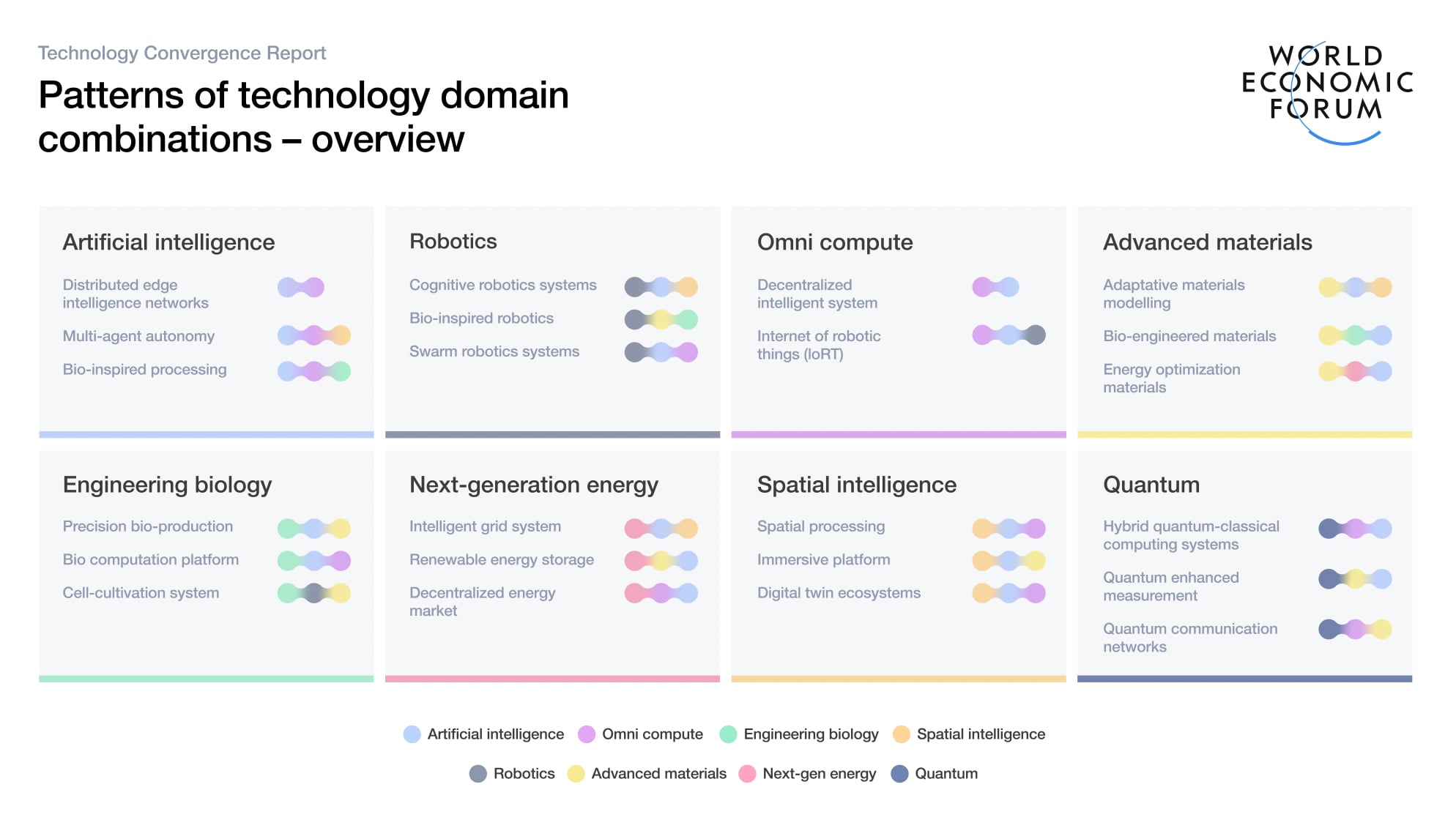
The Technology Convergence Report by the World Economic Forum explores the impact of eight foundational technologies—Artificial Intelligence, Omni Computing, Engineering Biology, Spatial Intelligence, Robotics, Advanced Materials, Next-generation Energy, and Quantum Technology—on creating new value chains. It introduces the 3C Framework, which helps organizations identify technology pairings for integration (Combination), participation in new value chains (Convergence), and exponential adoption (Compounding). Examples, such as electric vehicles and robotics, illustrate how firms are leveraging this convergence to drive innovation and operational efficiency across industries.
Tanzania | Education, ICT
8 technologies, '3Cs' and one new innovation paradigm: How converging tech is redefining value chains

The accelerating convergence of technologies like artificial intelligence (AI), quantum computing, and engineering biology is transforming industries and creating new economic opportunities. The Technology Convergence Report introduces the 3C Framework—combination, convergence, and compounding—to guide organizations in strategically investing in these intersections. Key insights include how convergence is reshaping value chains, AI's role as a catalyst, and the importance of early investment to capitalize on compounding advantages. The report emphasizes the need for strategic timing in investments and the significance of regulatory frameworks as technologies evolve within interconnected ecosystems.
Financial services, Education, ICT
Technology Convergence Report

The Technology Convergence Report identifies how the integration of technologies like artificial intelligence (AI), quantum computing, and engineering biology is reshaping industries and creating new economic opportunities. It presents the 3C Framework—combination, convergence, and compounding—enabling organizations to strategically navigate this transformation. The report, based on insights from 2,000 global executives, highlights 23 high-potential technology pairings and emphasizes that AI acts as a catalyst, enhancing diverse domains and fostering innovation through advanced intersections. Early adopters of these converging technologies can unlock significant value and drive cross-sector transformation.
Financial services, ICT, Education
Technology Convergence Report

Serbia and Israel are advancing innovation-driven bioeconomies through strategic investments and technological integration, highlighted in the white paper "Pathways to Bioeconomy and Bioconvergence: Perspectives from Serbia and Israel." Serbia focuses on digital infrastructure and biotechnology, exemplified by the BIO4 Campus initiative. Israel prioritizes bioconvergence, combining biology, engineering, and computation. The paper details how regulatory innovation, talent cultivation, and market facilitation convert scientific breakthroughs into socio-economic benefits. It emphasizes policy development and cross-sector collaboration, providing a roadmap for leveraging science and technology in the transition to a sustainable bio-based economy.
Bosnia and Herzegovina, Israel, Serbia
Pathways to Bioeconomy and Bioconvergence: Perspectives from Serbia and Israel

Serbia and Israel are developing innovative bioeconomies through strategic investment and technological integration. Serbia focuses on digital infrastructure and biotechnology, highlighted by the BIO4 Campus, a future biotech hub. Israel prioritizes bioconvergence, merging biology, engineering, and computation. The collaborative white paper includes case studies demonstrating how regulatory innovation, talent cultivation, and market facilitation convert scientific advances into socioeconomic benefits. It provides insights into policy development and ecosystem building, serving as a roadmap for stakeholders aiming to foster a sustainable bio-based economy.
Bosnia and Herzegovina, Israel, Montenegro, Serbia | ICT
Pathways to Bioeconomy and Bioconvergence: Perspectives from Serbia and Israel

The US-China trade conflict is increasing China's demand for Brazilian agricultural products, potentially exacerbating deforestation in Brazil, particularly in the Amazon and Cerrado regions. Analysts warn that efforts to meet this demand may fuel land-grabbing and illegal deforestation as farmers expand crop and cattle production. Notably, soybeans and cattle are significant contributors to this environmental issue. While Brazil's 2006 Soy Moratorium has helped mitigate deforestation, it faces mounting pressure from agricultural lobbies. A new European deforestation ban on imports is set to take effect in December 2025, highlighting growing international scrutiny on Brazil's environmental practices.
Brazil
Brazil's Cerrado, Amazon may be next victims of US-China trade war

Urban Shift, coordinated by RCE Vienna at the Vienna University of Economics and Business, is a transdisciplinary program that teaches students to launch climate-friendly startups. The program combines efforts from multiple educational institutions and business partners, focusing on challenge-based learning to tackle urban sustainability issues. Participants engage in a collaborative experience that includes virtual meetings and in-person sessions in Vienna and Barcelona, where they develop innovative solutions such as a passive cooling façade and tiles from eggshell waste. The program emphasizes skills in design thinking, business viability, and cross-disciplinary collaboration.
Education
Transdisciplinary Program Prepares Students for Climate Change
AI-enabled search tools are showing signs of collapse, leading to diminished accuracy and reliability. Users report increasingly poor search results, particularly regarding hard data, as the AI systems often pull from unreliable sources instead of original reports. This decline stems from three primary factors: error accumulation wherein each model inherits flaws, the loss of rare data that blurs important concepts, and feedback loops that reinforce biases. Collectively, these issues contribute to a phenomenon known as AI model collapse, where systems become skewed by their own outputs, resulting in degraded performance.
Some signs of AI model collapse begin to reveal themselves
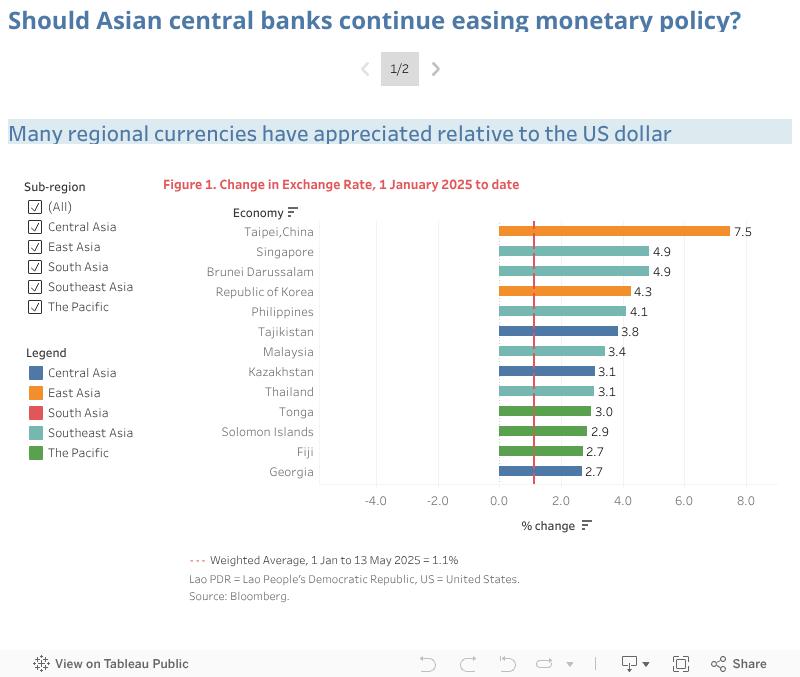
Central banks in Asia face pressure to cut interest rates amid declining inflation, high real interest rates, and slowing growth. Though some economies have already reduced rates, further cuts could stimulate investment and consumption, helping to offset external trade uncertainties. Inflation is decreasing, with many countries now meeting or exceeding targets. High real interest rates constrain economic activity, and forecasts suggest a slow down in growth for many regional economies. Additionally, the weakening US dollar provides greater leeway for Asian central banks to ease monetary policy.
Latin America | Financial services
Why Central Banks in Asia Should Consider Cutting Interest Rates
The collection of essays from the Carnegie Endowment for International Peace examines how local actors engage with the evolving digital landscape. Key topics include Lillian Nalwoga's analysis of Starlink's impact in Africa, stressing the importance of regulatory frameworks. Jonathan Corpus Ong and Dean Jackson address counter-disinformation funding discrepancies, advocating for better-aligned strategies. Janjira Sombatpoonsiri discusses local involvement in foreign influence operations in Southeast Asia, highlighting financial incentives and power dynamics. The essays delve further into digital repression, national strategies, and pressing tech policy questions.
Angola, Egypt, Ethiopia, Kenya, Mali, Senegal, South Africa, Tanzania, Uganda | Financial services, Health, ICT
Digital Democracy in a Divided Global Landscape

Governance of frontier technologies is crucial as emerging tech rapidly evolves, influenced by geopolitical tensions and trade conflicts. Unregulated technologies pose risks, such as algorithmic errors and dual-use applications, potentially leading to crises. Current governance efforts, like the Political Declaration on Responsible Military Use of Artificial Intelligence, remain voluntary and insufficient. The private sector drives innovation, yet regulation lags, leaving gaps in accountability. Effective governance can enhance global trust, resilience, and strategic advantage, emphasizing that regulation is essential for market access and long-term stability in an increasingly fragmented world.
Financial services, Health, ICT, Education
Why frontier technology governance is essential in an increasingly fragmented world
Modern Britain faces a political division stemming from a pervasive sense of disempowerment among citizens. This division has fueled rightwing populism, while traditional political parties struggle to genuinely address voter concerns. A shift is occurring in personal politics, with society pushing for equality and participation across diverse identities, contrasting with formal political trends. Empowering marginalized groups, especially disabled individuals, offers crucial insights for fostering genuine alliances. Real change necessitates grassroots movements that highlight shared experiences and build inclusive coalitions, shifting from superficial populism to authentic participation in governance.
Does the key to uniting against divisive politics lie in our personal lives?
Ukrainian forces executed a successful drone strike, Operation Spiderweb, on June 1 against five Russian airbases, damaging or destroying over 40 aircraft. The operation, planned over 18 months, involved the use of adapted first-person-view drones launched from within Russia. It revealed systemic vulnerabilities in air defense, demonstrating how low-level drone attacks can exploit gaps in surveillance and response capabilities. The attack's effectiveness hinged on meticulous planning and flexibility rather than the drones' individual capabilities, underscoring a significant shift in threats to airspace security that requires a reevaluation of defense strategies.
Ukraine drone strikes on Russian airbase reveal any country is vulnerable to the same kind of attack
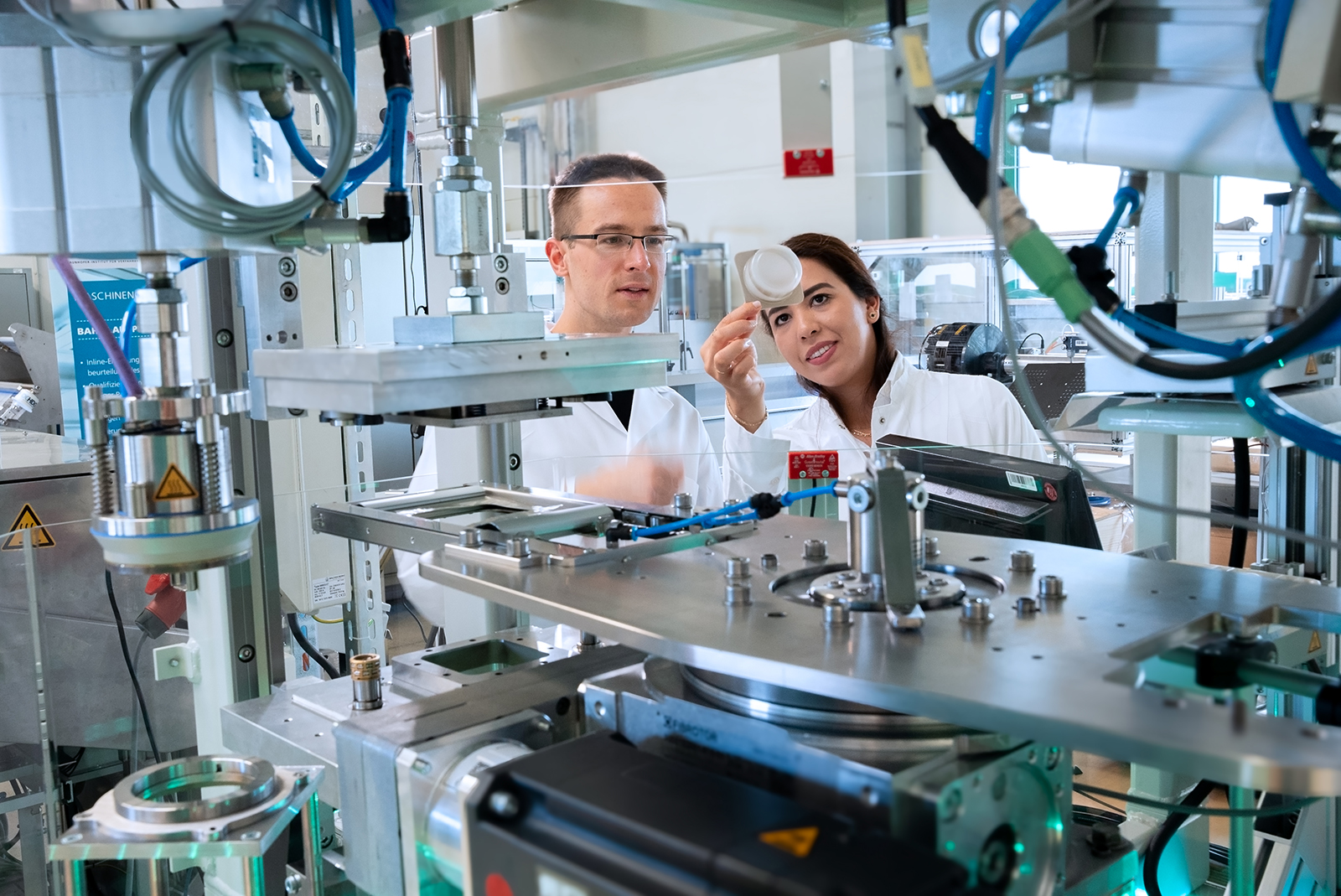
Researchers at the Fraunhofer Institute's KIOptiPack lab, along with 51 industry partners, are developing AI-driven tools and a interconnected data space to optimize plastic packaging recycling. The initiative aims to enhance sustainability and minimize environmental impact by creating packaging that incorporates up to 35% recycled materials by 2030. AI tools will analyze and improve the quality of recycled plastics, facilitate systematic data sharing across the industry, and ensure optimal packaging designs. This collective effort seeks to address the projected 30% gap between the supply and demand for recycled plastics by 2030.
AI: A Game Changer for Plastic Packaging
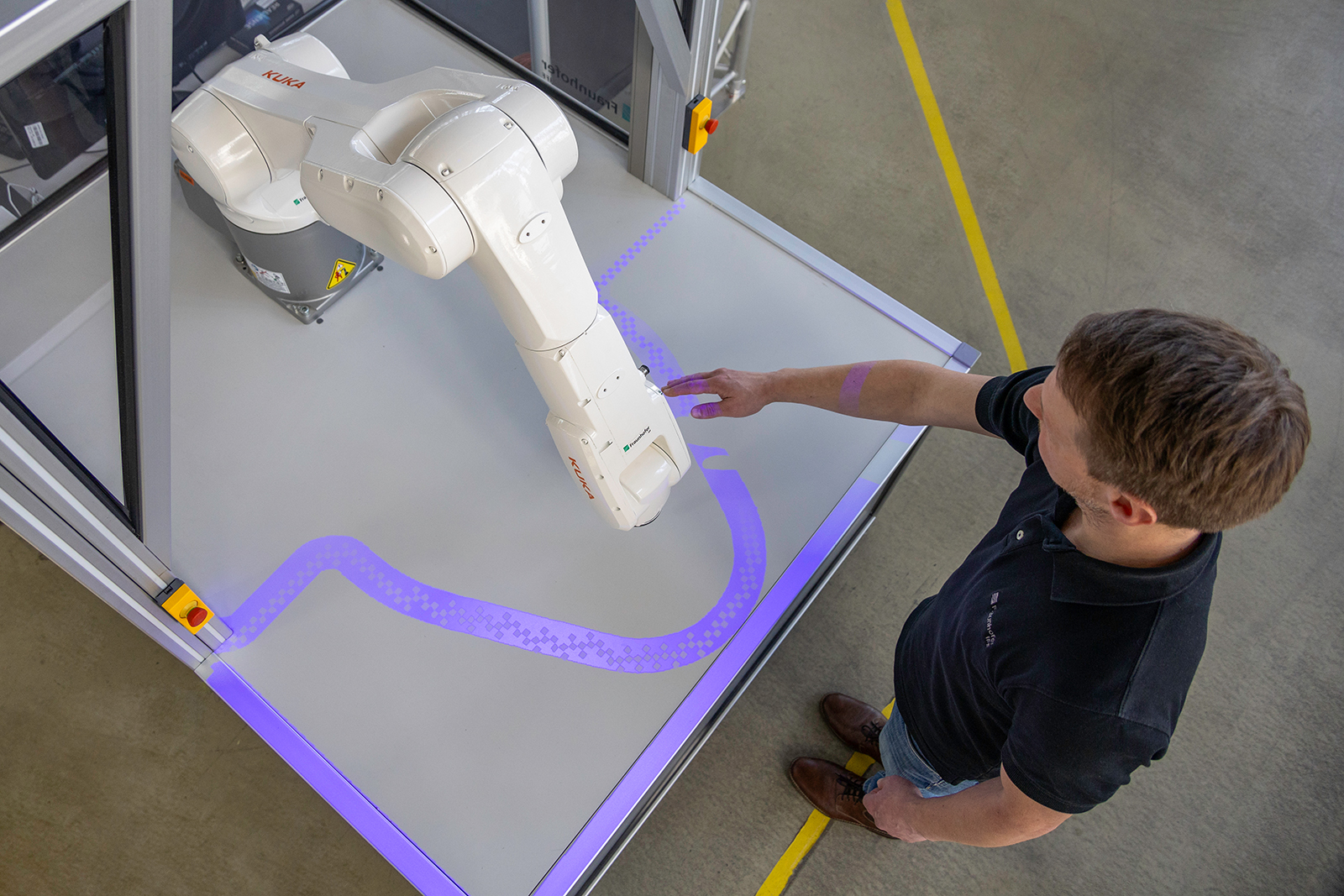
Researchers at the Fraunhofer Institute for Factory Operation and Automation IFF have developed cognitive robots capable of performing complex manufacturing tasks autonomously in unstructured environments. These robots utilize AI for motion control and learn from experience, adapting to various scenarios without prior knowledge of objects. Advances include PARU, a patented safety technology that uses projectors and cameras to create visible safety zones around robots, ensuring safe human-robot collaboration. Additionally, Computer-Aided Safety (CAS) software enhances the safety and efficiency of these interactions. Demonstrations will occur at the automatica event in Munich from June 24 to 27, 2025.
Cognitive Robotics and New Safety Technologies for Human-Robot Collaboration

Women’s health has been historically underfunded and under-researched, leading to significant disparities in care and outcomes. The UK government introduced a women’s health strategy in 2022, establishing health hubs aimed at improving access to gynecological and menopause services, but recent funding cuts threaten their continuation. Despite advancements in women’s health technology, such as the femtech sector, issues of bias and inequitable access persist. To combat the gender health gap, sustainable funding, cross-sector collaboration, and improved health literacy are essential for meaningful change.
Education, Health
From period pain to heart disease, the gender health gap is real – here’s how to close it
The UK’s recent trade deal with the US allows significant access to US agricultural exports, particularly beef and ethanol, which raises concerns among British farmers and food safety advocates. Critics fear that cheaper imports may undermine local producers and lead to lower food standards, despite government assurances that existing bans on hormone-treated beef and chlorine-washed chicken remain in place. Surveys indicate strong public support for maintaining high food standards. The deal could pressure UK agriculture, especially given increases in US beef quotas and the elimination of tariffs on US ethanol, threatening local biofuel production. While cheaper imports may alleviate rising food costs, they also pose health risks and may compromise domestic farming integrity.
Cheaper food or a compromise on standards? Why the UK’s trade deal with the US is sounding alarm bells
The landscape of international relations (IR) is influenced by seven interdependent forces, including technological advancements, non-state actors, new strategic domains, collective risks, transcultural historical tensions, and economic interdependence. A fundamental aspect is human nature, which traditional IR theories have speculated about without explicit understanding. This paper proposes Symbiotic Realism, integrating life sciences with realist IR theory. It emphasizes the need for national interests to align with transnational and transplanetary goals through pragmatic, symbiotic, and non-conflictual approaches, fostering sustainable and peaceful relations amid changing global dynamics.
Indonesia, Jordan, Russian Federation, Singapore | Health
Symbiotic Realism: a transdisciplinary approach to understanding international relations

Amazonia cities, like Iquitos, Peru, must secure jobs, housing, and services while protecting their natural environment. Home to over 50 million people, the region faces challenges from deforestation and biodiversity loss. Most urban areas lack essential infrastructure and face vulnerabilities to climate events, impacting indigenous populations and their traditional livelihoods. A new sustainable urban agenda aims to improve resilience and infrastructure in these cities, enhancing their roles as hubs for services and economic opportunities. The Inter-American Development Bank is developing a regional program focused on resilient infrastructure for Amazonia cities.
Africa, Latin America
Securing Amazonia cities for a resilient and sustainable planet
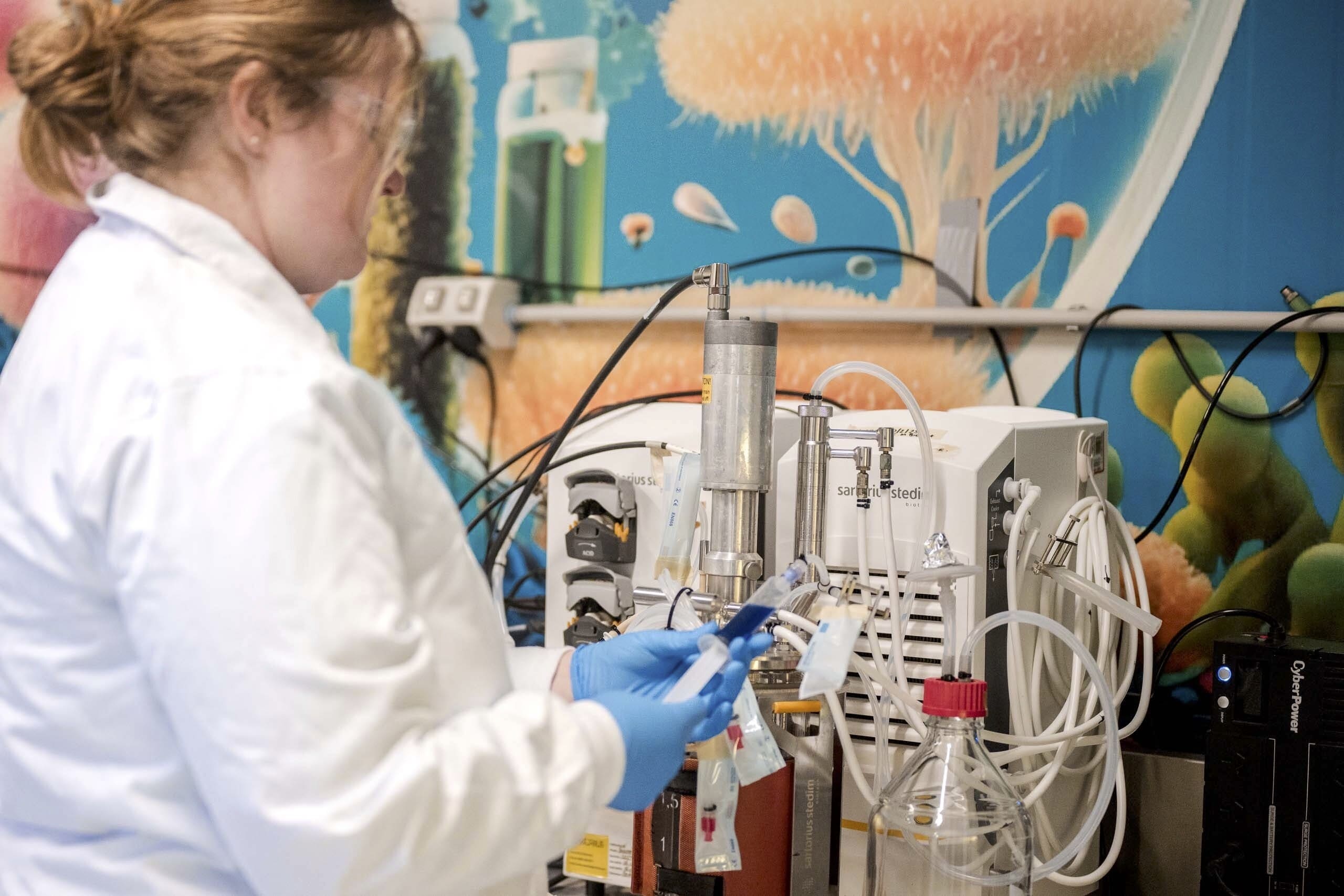
A bioindustrial revolution could transform industrial production, with up to 60% of global physical inputs potentially produced biologically. However, significant scaling of bioindustrial manufacturing is required to achieve this potential, necessitating investments in microbial fermentation, bioproduction technologies, and regional manufacturing capacity. Key industries poised for this shift include food, where biomanufacturing can improve food security; chemicals, facilitating domestic self-sufficiency; and critical minerals through biomining, thus reducing geopolitical risks. A coordinated, international approach is essential for leveraging biomanufacturing's benefits and ensuring future resilience.
India | Financial services, ICT, Education
These three industries are primed for a bioindustrial revolution