
Twenty years ago, Facebook introduced the News Feed, revolutionizing social media by shifting from static profiles to an algorithm-driven system that pushed personalized content to users. This increased engagement but sparked early privacy concerns and protests. The algorithm, known as Edge Rank, enabled Facebook to optimize content for longer user retention and influence behavior, transforming the platform into a powerful data-driven commercial entity. Today, Meta and other tech companies face regulatory challenges amid growing scrutiny of algorithmic impacts, especially on youth. The focus is now shifting toward AI and machine learning advancements, raising questions about how governments will address these emerging technologies compared to past responses.
How Facebook’s News Feed introduced the age of the algorithm 20 years ago

The OECD report provides a policy framework to help governments promote private investment in digital transformation, emphasizing its role in long-term economic growth, resilience, and societal well-being. Building on existing OECD investment standards, it identifies key policies to enable and harness investment in digital technologies to strengthen economic resilience and inclusive development.
Africa | Health, ICT, Education
Investment Policy Framework for Digital Transformation
The term "AI slop" describes large volumes of low-quality, minimally exerted outputs from generative AI systems that burden recipients and degrade cultural domains such as creativity, research, and work. These outputs flood platforms, peer-reviewed journals, and workplaces, causing negative consequences. AI slop exists on a spectrum characterized by negligible human effort, asymmetric impact on recipients, and institutional degradation. Recognizing AI slop helps distinguish harmful AI-generated content from meaningful human work and informs policy discussions on managing generative AI's social effects.
AI Slop
The Bank of England is leveraging artificial intelligence, web-scraping, and real-time financial data to enhance its economic understanding. Chief Economist Huw Pill explains that AI models extract quantitative signals from qualitative sources like corporate reports, surveys, and dialogues with regional agents. The Bank also employs new data technologies, including anonymized real-time mortgage and bank account data, to improve monetary policy analysis. This approach helps policymakers better identify genuine economic signals amid noisy, volatile data, addressing a key modern challenge in effective economic forecasting.
Financial services
Bank of England turning to AI and real-time data
Joao Gomes, Wharton finance professor and senior vice dean, highlights the need for the Federal Reserve to focus more on financial stability amid the booming AI sector. He stresses that how AI investments are financed poses significant risks, drawing parallels to the housing crisis and internet boom. Gomes calls for improved models to understand these financial risks, noting that current Fed attention is overly focused on inflation rather than the potential systemic impacts of private credit in AI-driven growth.
Financial services
The Hidden Financial Risks of the AI Boom

Recent extreme climate events across Europe, such as wildfires, drought, and heatwaves, have produced powerful and alarming images that bring the reality of climate change closer to home. These images evoke strong emotional responses and can make climate impacts more immediate and relatable, especially when they depict familiar places and human vulnerability. While fear-inducing images risk causing disengagement by making problems seem overwhelming, research shows they can also raise awareness, influence attitudes, and motivate involvement in climate action. Visual storytelling of local climate effects offers a crucial opportunity to engage people meaningfully and inspire action as climate change impacts become increasingly visible in everyday life.
Africa
Climate change images are getting scarier – could fear help drive action?

Meteorologist James Stagg’s June 1944 D-day forecast was critical for the success of the Normandy invasion. Modern research recreated Stagg’s challenge using digitized historical data, advanced weather models, and AI forecasting systems. Findings show that while today's AI-based forecasts likely would have supported delaying the invasion on June 5, they would have underestimated the severity of June 6 conditions. Despite technological advances, D-day weather forecasting remained complex and uncertain. The study highlights the evolving nature of meteorology, combining physical models and AI pattern recognition to improve prediction, yet even modern tools face challenges in predicting chaotic atmospheric systems like those on D-day.
War drama Pressure depicts D-day’s weather forecast – what we found when we recreated the challenge using modern systems
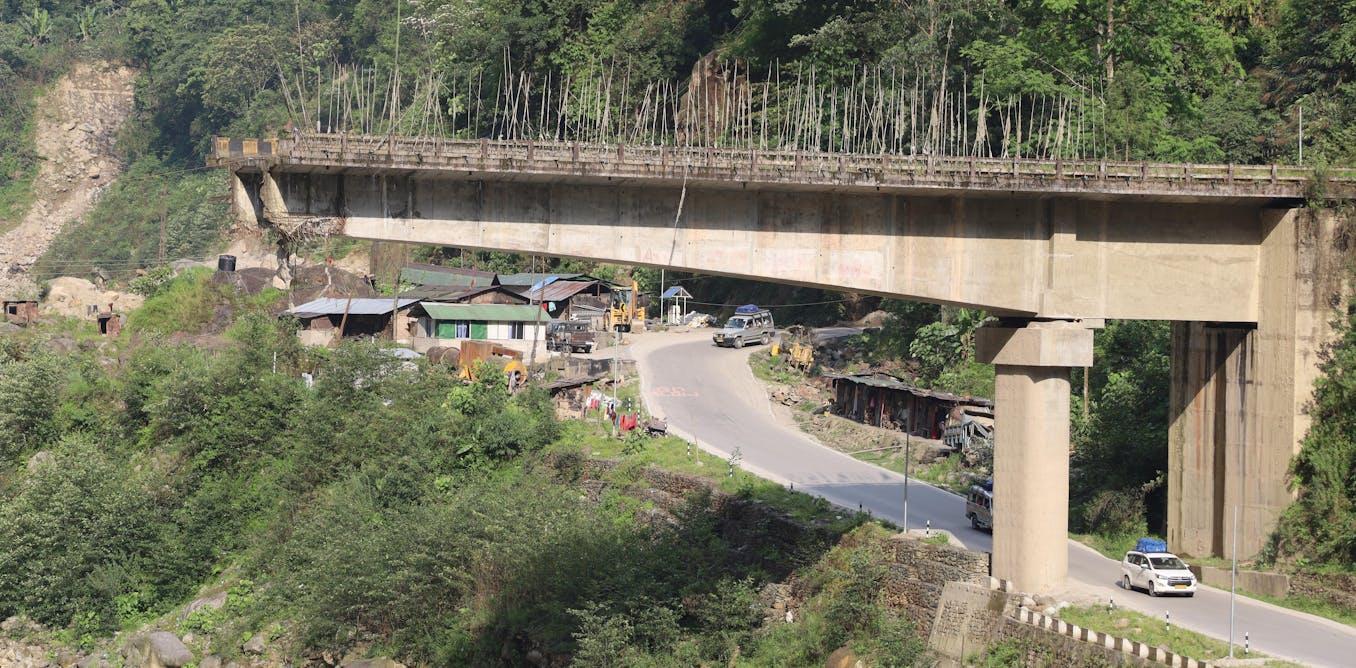
The 2023 glacial lake outburst flood (GLOF) in India's Sikkim and West Bengal regions devastated communities with massive debris flows and ongoing instability, hampering recovery due to political, economic inequalities, and recurring hazards. Meanwhile, a 2026 flood in Nepal-Tibet caused similar destruction, underscoring the Himalayan region's heightened vulnerability to climate change-induced disasters. Reconstruction efforts are challenged by complex geographical, social, and infrastructural factors, with inadequate funding and uneven support exacerbating community suffering. Both disasters highlight the need for compassionate, equitable recovery approaches and trans-boundary cooperation, linking local impacts to broader global failures on climate action and sustainable development.
Africa
Rebuilding in Nepal-Tibet will be challenging – communities in India are still recovering from 2023 glacial disaster
South Korean President Lee Jae-Myung's state visit to France on September 8, marking 140 years of diplomatic relations, highlights growing France-South Korea partnerships amid shifting global dynamics. Both nations are deepening collaboration in high-tech sectors such as semiconductors, aerospace, artificial intelligence, and energy, driven by shared concerns over U.S.-China rivalry and economic security. French firms are increasingly integrated into Korean value chains, while Korea offers mass production capabilities complementing France’s research strengths. Strategic cooperation focuses on compatibility in corporate culture and joint project execution, with promising opportunities in semiconductors, AI, space, and defense industries to strengthen future economic and technological ties.
Africa, ASEAN
President Lee Jae-Myung’s State Visit: France-South Korea, a Partnership for the Future?

AI-powered digital twins are transforming competitive advantage by enabling organizations to create real-time, predictive virtual replicas of customers, operations, and environments. This shift moves competition away from physical assets toward mastering digital twin maturity and ecosystem integration. Success depends on evolving digital twins from internal tools to shared infrastructures that facilitate coordination and collaboration across data ecosystems. Organizations fall into archetypes based on twin maturity and ecosystem connectivity: isolated players risk obsolescence, while those integrating across ecosystems gain long-term value. Effective governance balancing trust and data sovereignty is crucial to sustaining these arrangements across industries.
ICT
Digital twins as a new foundation of competitive advantage
Traditional European mainstream parties are increasingly adopting far-right, reactionary policies, contributing to the "far-righting of the mainstream" rather than merely reacting to external far-right pressure. The 2026 migration crisis in Ceuta exemplifies this shift, with EU leaders—including center-left figures—supporting stricter border controls and deterrence measures, while ignoring the human costs like migrant deaths and forced repatriations. EU agreements with authoritarian regimes and new Return Regulations exacerbate human rights abuses and racialized migration policies rooted in colonial legacies. This trend reflects deep internal dynamics within mainstream parties that promote exclusionary and dehumanizing narratives toward migrants and minority groups.
Africa, Latin America
Far-righting the EU mainstream in Ceuta
Russian military spending surged by 30% in the first half of 2026, reaching 10.7 trillion rubles or 4.7% of GDP, defying planned cuts and threatening to exceed 9% of GDP by year-end—a post-Soviet record. This unplanned increase undermines fiscal consolidation efforts, contributing to a budget deficit of 2.8% of GDP, nearly double the target. Dwindling National Wealth Fund reserves and expensive domestic borrowing, with bond yields nearing 17%, exacerbate financing challenges. Amid rising war costs and economic strain, the Kremlin suppresses dissent, as exemplified by the dismissal of a prominent economist who warned of these fiscal and economic pressures.
Africa | Financial services
Russian military spending soars, upending the Kremlin’s budget plans
Indigenous communities face risks from AI including exclusion from technological progress and unauthorized use of their cultural knowledge and languages. Establishing pathways for Indigenous peoples to control data collection, governance, and usage is crucial. Data commons present a promising approach for achieving data self-determination, but governance solutions must be adaptable, avoiding one-size-fits-all models that impose top-down control. Large institutions must actively support Indigenous efforts to manage their data, ensuring respect and empowerment in the digital age.
Health, ICT
Navigating Indigenous Data Sovereignty in the Age of AI
Knowledge twins integrate data, evidence, foresight, and tacit knowledge to help governments make better decisions and learn more effectively. Building on tools like evidence syntheses, knowledge graphs, digital twins, and systems maps, they aim to unlock AI's potential for policy-making in areas such as economic growth, decarbonization, mental health, and poverty. Emphasizing transparent, evidence-based causal models, knowledge twins promote shared intelligence and scrutiny across government sectors, requiring new institutions, methods, and mindsets to create essential cognitive infrastructures for modern governance.
ICT, Health, Education
Knowledge Twins
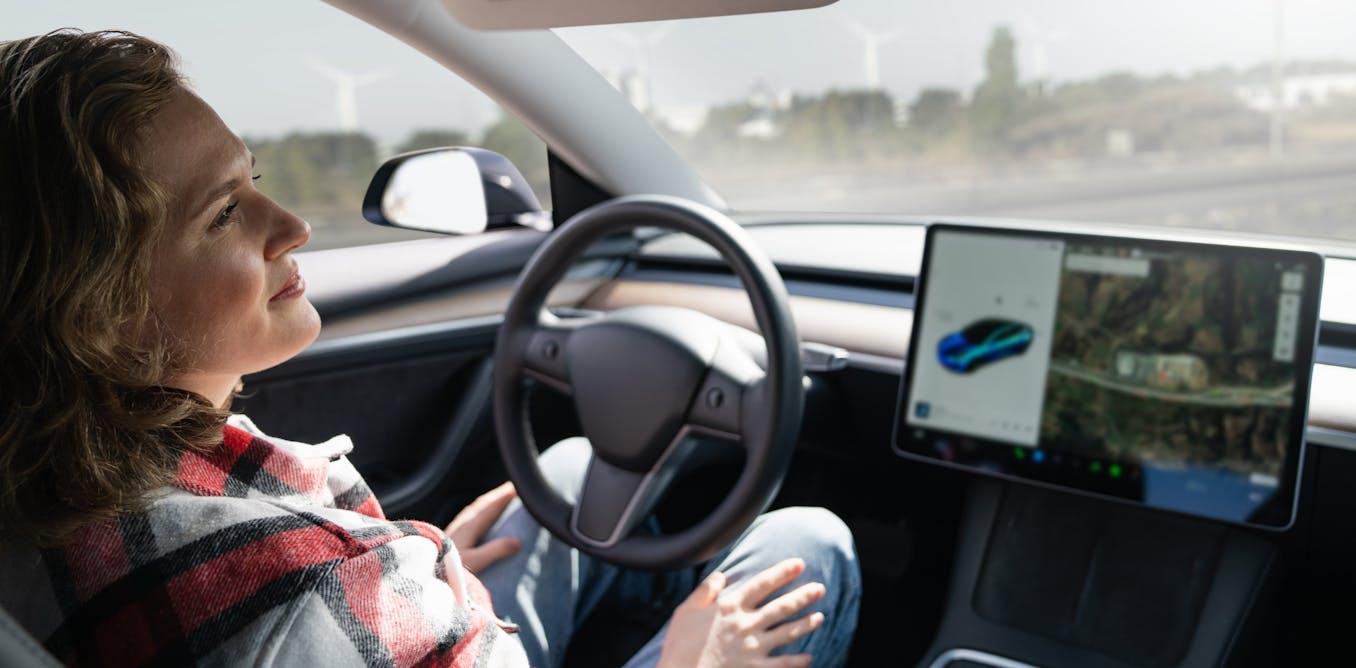
Autonomous robotaxis operating in London feature human safety drivers tasked with supervising rather than actively driving. While automation handles routine driving, humans must monitor, recognize issues, and intervene when necessary. This role shift risks skill degradation, as less hands-on driving reduces practice in critical situations—a challenge known as the "irony of automation." Similar skill declines have been observed in other AI-assisted fields, such as medicine. Meaningful human oversight requires retained expertise, authority, and confidence to challenge machines. London's robotaxi deployment delays highlight regulatory, ethical, and social readiness issues, emphasizing the need to preserve human skills and judgment for effective supervision before fully driverless operations become widespread.
Education
Human ‘safety drivers’ in Uber robotaxis could lose skills if all they do is observe
Europe’s strategic autonomy relies on keeping science both open and secure, expanding research capacity beyond elite institutions and member states. The EU’s Horizon Europe program fosters global collaboration with countries like Canada, South Korea, Australia, and India, enhancing knowledge networks vital for economic security and technological development. Strategic autonomy involves managing interdependencies, not self-sufficiency, ensuring critical technologies are safeguarded against risks such as unwanted knowledge transfer and foreign interference. Integrating research security into all cooperation phases is essential, but disparities in institutional resources risk deepening divides within the European Research Area.
Africa | Health, Financial services
Europe’s strategic autonomy depends on open and secure science

A recent devastating flood on the Nepal-China border was triggered by a rare, large-scale collapse of rock and ice, resulting in a rapid debris flow that outpaced current early-warning systems. Existing systems typically address regular floods or glacial lake outburst floods but often miss complex, cascading mountain hazards intensified by climate change. Cross-border cooperation between Nepal and China, crucial for sharing real-time data and coordinating warnings, remains limited despite prior agreements and warm gestures. Effective early-warning systems require integrating seismic, satellite, and local community data, formal institutional frameworks, and political commitment to enable timely alerts spanning countries and communities. Improved technology paired with sustained international collaboration is essential to manage increasingly complex Himalayan hazards.
Health
Himalayan hazards are becoming more complex. Our warning systems need to catch up

AI's introduction into the workplace may lead to longer working hours rather than more free time. Workers fearing job loss to automation tend to increase effort to signal their value, intensifying a rat race where everyone works harder without gaining advantage. Employers often rely on time spent working as a productivity proxy, driving longer hours. AI heightens this dynamic by automating tasks and raising employer expectations, which can increase work intensification. Additionally, rapid AI advancements require ongoing worker retraining, adding to time demands. However, if AI is designed to augment skills and empower workers, it could enhance bargaining power and lead to more favorable work conditions.
Education
How AI could make us work even harder

Delegates from 196 nations met at the UN desertification summit (Cop17) in Mongolia to address drought and land degradation but failed to reach a consensus. Key disagreements centered on whether to adopt a legally binding global drought protocol or flexible, country-specific approaches. The summit underscored the global severity of droughts exacerbated by climate change, impacting every continent. The UN Convention to Combat Desertification (UNCCD), established in 1994, is the main legal framework addressing these issues but operates separately from related climate and biodiversity treaties, causing fragmentation. The International Court of Justice recognized combating drought as a legal climate obligation linked to fundamental human rights, highlighting the urgent need for clearer legal frameworks and stronger political action.
Antarctica
Why the world can’t agree how to tackle drought

European defence modernisation intensified following Russia’s full-scale invasion of Ukraine in 2022, resulting in increased spending and joint initiatives. Despite technical advancements, political cohesion lags, hindering full European strategic autonomy—the ability to develop independent defence capabilities and act collectively without heavy reliance on external actors. While small frontline states achieve operational autonomy in areas like counter-uncrewed aerial systems, dependence on the U.S. persists in strategic airlift, long-range strike, and space intelligence. Small states play a crucial role through operational innovation, industrial contribution, and shaping institutions, even without EU-wide consensus. The EU Drone Wall exemplifies how small-state-led bilateral partnerships can advance capabilities faster than broader EU processes but also highlights political divisions that limit integration.
Africa
Unity or Fragmentation? European Defence Modernisation, Small-States’ Strategies, and the EU Drone Wall