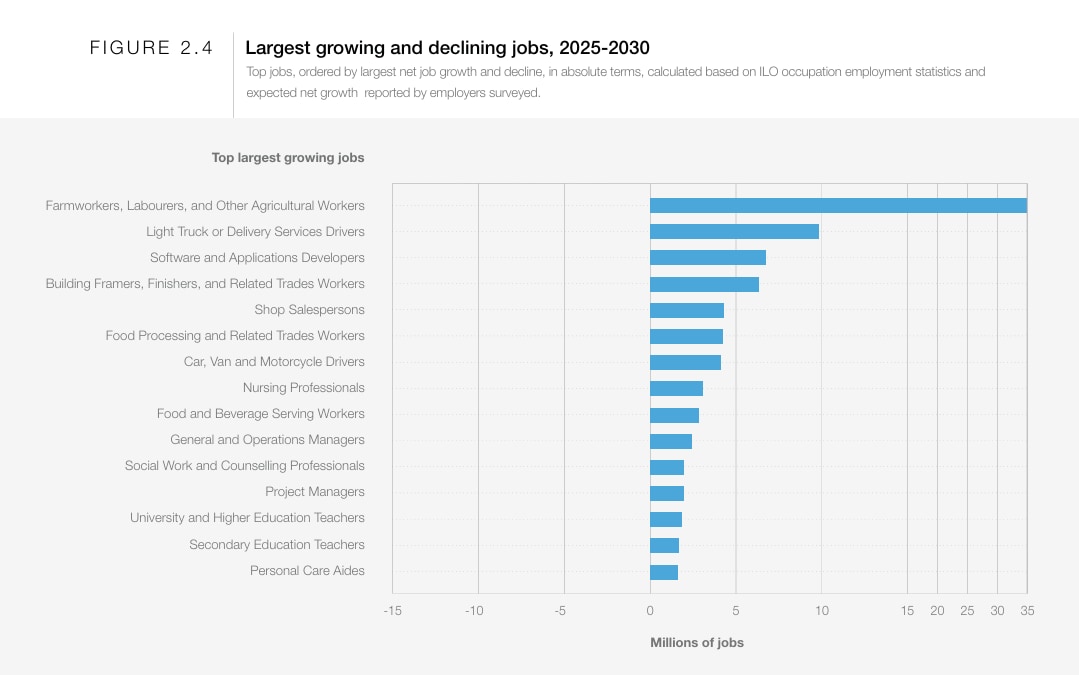
The global agricultural sector faces a critical shortage of young farmers, as the average farmer's age exceeds 55 while food demand is increasing due to a rising population, projected to reach 10.3 billion by the mid-2080s. To address this gap, Arnold Puech Pays d'Alissac of the World Farmers' Organisation emphasizes the need for training, access to agricultural land, and affordable finance for prospective young farmers. Initiatives like the World Economic Forum’s 100 Million Farmers aim to promote sustainable farming practices and improve financial support, essential for transitioning to resilient food systems.
Africa
The world urgently needs more young farmers, says this expert
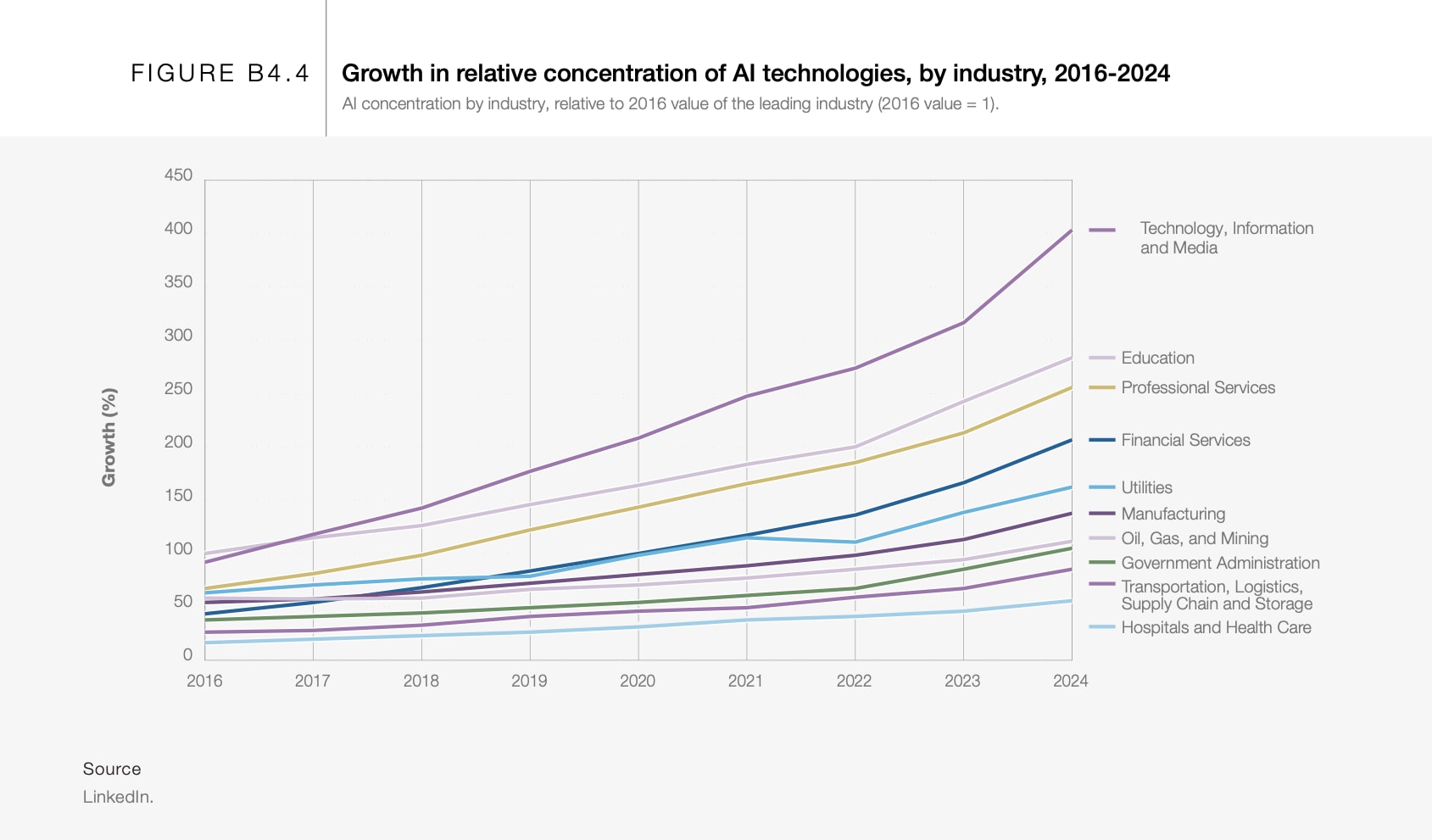
The manufacturing sector is evolving significantly, adopting AI technologies and focusing on sustainability and inclusiveness. Industry leaders debunk five misconceptions about manufacturing: 

1. It is not just assembly lines; technology has transformed the workforce into a mix of skilled experts.
2. Modern manufacturing environments are clean and high-tech, contrary to outdated views of dirty factories.
3. Manufacturing is dynamic and continuously adapting to technological advancements.
4. Sustainability efforts are integral to manufacturing, challenging the notion that it is environmentally harmful.
5. The industry offers diverse, innovative opportunities for the next generation, moving beyond traditional perceptions.
ICT, Education
5 misconceptions about manufacturing that belong in the past

Africa has attracted only 3.5% of global foreign direct investment (FDI) from 2010 to 2023, significantly lower than Asia and Latin America. The continent's FDI inflows are predominantly focused on extractive sectors, hindering broader industrial transformation and sustainable development. Despite the political push for more manufacturing investment, commitment remains inconsistent. This lack of diversified FDI has resulted in short-term growth without lasting economic transformation. The study, using Ghana and Senegal as case studies, assesses the role of sector-specific FDI in fostering economic growth and structural change across 49 African countries.
Angola, Burkina Faso, Democratic Republic of the Congo, Ethiopia, Ghana, Senegal, South Africa, Tanzania
Leveraging Sector-Specific Foreign Direct Investment for Economic Transformation in Africa
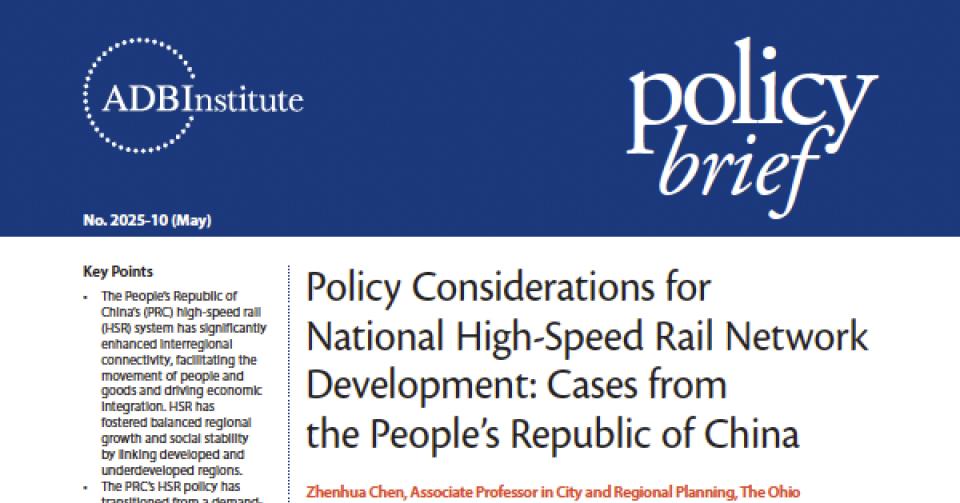
The People’s Republic of China's high-speed rail (HSR) system has greatly improved interregional connectivity, promoting economic integration and balanced regional growth. The policy has evolved from a demand-driven model to a supply-driven approach, influencing urbanization and economic development. Since 2013, financing has shifted to national-provincial collaboration, leading to rapid expansion but raising sustainability concerns. Centralized governance, effective planning, stakeholder collaboration, and robust workforce training are critical components of the HSR's success, providing insights for other economies aiming to develop similar infrastructure.
Policy Considerations for National High-Speed Rail Network Development: Cases from the People’s Republic of China

Subnational Health-Adjusted Dependency Ratios (HADRs) reveal significant variations in aging population dynamics across the People's Republic of China, India, Indonesia, Japan, Pakistan, and the Philippines from 1990 to 2021. The study highlights that regions with strong health systems exhibit lower aging burdens, contrasting traditional old-age dependency ratios (OADRs). While some areas have improved convergence in health outcomes, others are seeing increasing disparities. The findings suggest that enhanced population health contributes to prolonged healthy aging, questioning the effectiveness of OADRs in policy-making.
Health
Subnational Dependency Ratios Adjusted by Health in the People’s Republic of China, India, Indonesia, Japan, Pakistan, and the Philippines, 1990–2021
The rise in electronic waste (e-waste) in Africa, driven by increased production of electrical gadgets, poses significant health and environmental risks, particularly within the informal sector. Transboundary movement of e-waste from Western countries exacerbates these challenges. Although recoverable materials in e-waste can provide economic value, only a small portion is processed effectively. Strengthening local policies and transitioning to a circular economy can unlock opportunities for job creation, technological innovation, and resource reuse. This study analyzes the e-waste sector in Ghana and South Africa, identifying gaps and providing recommendations for improving e-waste management and harnessing its economic potential.
Eswatini, Ghana, South Africa
Towards a Circular Economy: E-waste Management in Africa
The UK and India have finalized a free trade agreement (FTA) after extensive negotiations, marking the UK's largest trade deal since Brexit. Expected to increase bilateral trade by 39%, the deal is projected to grow the UK’s GDP by £4.8 billion annually. Key features include significant tariff reductions on goods such as Scotch whisky, food products, and luxury cars, as well as duty-free access for 99% of Indian imports. The agreement simplifies trade rules and facilitates easier movement for skilled workers, enhancing market opportunities for UK businesses while addressing concerns about labor market impacts. This FTA aligns with both nations' strategic economic goals amidst global uncertainties.
India, United Kingdom
UK’s India trade deal offers wider access to a surging economy – and could make food imports cheaper
An AI model can predict racial categories from heart scans with up to 96% accuracy without being explicitly programmed with racial information. This finding underscores the misconception of AI objectivity and highlights the absorption of societal biases in AI systems. Race, a social construct, influences healthcare access and outcomes. Imbalanced training data may lead to AI treating patients differently based on race, due to flawed associations learned from irrelevant features. Addressing these issues requires diversifying training data and enhancing transparency in AI decision-making to avoid reinforcing existing disparities and ensuring patient safety.
AI can guess racial categories from heart scans – what it means and why it matters

Scenarios developed in 2018 regarding cybersecurity futures for 2025 highlighted that rapid technological changes, particularly in AI and semiconductors, were correctly anticipated. However, key omissions included the implications of global talent movement and the evolution of ransomware. Efforts to establish global quantum computing non-proliferation regimes failed as technology spread uncontrollably, while the internet split into two governance models: one favoring tech firms and the other embracing state control. Significant advancements in generative AI have exacerbated security challenges, particularly regarding digital identity and synthetic media. The intricate dynamics of government-corporate partnerships and economic incentives were underestimated, revealing gaps in earlier strategic foresight.
Africa | Financial services, Health, Education, ICT
Cybersecurity futures 2025: What the scenarios got right, and what we learned

AI infrastructure is advancing rapidly, outpacing necessary governance frameworks, particularly concerning energy and resource consumption. The growth of AI models necessitates significant compute power, raising environmental concerns regarding energy use, e-waste, and reliance on non-renewable resources. Asia, particularly Singapore, exemplifies efforts to align AI infrastructure with sustainable governance, addressing mismatches in functionality, spatial coordination, and timing. The transition to advanced cooling technologies in data centers is vital to manage increased thermal loads efficiently. Effective governance must establish clear sustainability standards and practices that evolve alongside AI systems to ensure environmental accountability.
ICT, Education
Greening intelligence: Why AI infrastructure and governance must evolve together
Chasing economic growth at all costs can lead to significant environmental and wellbeing harms, as exemplified by the Heathrow airport expansion debate. Tourism contributes to 8% of global CO2 emissions, escalating even with technological advancements. Overcrowding and reduced quality of life in popular destinations necessitate a rethinking of tourism that prioritizes community wellbeing and environmental sustainability. Approaches like "degrowth" and "doughnut economics" offer models beyond mere economic gain, advocating for lower-carbon travel and improved local quality of life. Cities like Amsterdam and Copenhagen are implementing measures to mitigate the impact of overtourism, yet these often fall short without broader governmental support.
Governments shouldn’t chase growth at all costs. The harms of over tourism show why

Gen AI presents a transformative opportunity for Africa, potentially unlocking up to $100 billion in annual economic value across various sectors. The continent has shown a strong capability to adopt technology, evidenced by innovations in mobile payments and cloud solutions. Over 40 percent of African institutions are actively experimenting with or implementing gen AI solutions, indicating a promising start. However, significant potential remains unexploited in both gen AI and traditional AI, suggesting that focused efforts to overcome existing barriers could greatly enhance productivity and economic growth in Africa.
Africa
Leading, not lagging: Africa’s gen AI opportunity
The tourism sector significantly contributes to global economic growth, generating 337.7 million jobs and representing 10.5% of global GDP in 2024. This growth relies on public investment, yet challenges such as geopolitical shifts and climate change hinder effective resource allocation. Traditional data sources often lag, limiting policymaking. To address this, the World Bank collaborated with Visa to utilize anonymized credit card spending data in the Caribbean, alongside tools like satellite mapping and AI, enabling better analysis of demand patterns, visitor satisfaction, and socio-economic impact.
Barbados, Bermuda, Canada, Costa Rica, Egypt, Georgia, Ghana, Jamaica, Malta, Panama, Republic of Korea, Spain, Switzerland, Taiwan, China, Tajikistan, Tanzania, Tunisia | Financial services
New data tools enhance the development effectiveness of tourism investment
The book "Crowded Out" by Sarah Sunn Bush and Jennifer Hadden explores the evolving landscape of international non-governmental organizations (INGOs). Key trends include a decline in new INGOs despite ongoing global needs, a move toward specialization amidst complex issues, and a global dispersal of activities rather than focusing on critical areas. Through extensive data analysis, case studies, and practitioner interviews, the authors reveal how INGOs face challenges in crowded environments and underscore the necessity for innovation to tackle contemporary global problems effectively.
Health
Crowded Out: The Competitive Landscape of Contemporary International NGOs

Economic growth projects that harm nature can lead to significant financial repercussions for individuals and societies, affecting livelihoods and costs associated with food, healthcare, and insurance. Nature destruction increases food prices due to declining pollinator populations and collapsing fish stocks, impacting millions reliant on these resources. Natural ecosystems also provide essential climate resilience, with loss leading to increased disaster costs and insurance rates. Investing in nature could yield considerable economic benefits, generating $9 trillion by 2030 through restoring ecosystems. Despite this, funding for nature conservation is declining, highlighting the urgent need to prioritize environmental health as integral to economic stability.
Financial services
Is there a hidden tax to nature’s destruction?
The Capability Approach (CA) significantly enhances the understanding of engaged citizenship by identifying the resources and processes necessary for activation and performance. Utilizing insights from critical citizenship studies and empirical research on youth involvement in western Kenya, the paper distinguishes between two interrelated aspects of engaged citizenship: activation and performance. The authors argue that integrating CA with critical citizenship studies can operationalize engagement insights and demonstrate effective support for both activation and performance in civic participation.
Activating citizens: the contribution of the Capability Approach to critical citizenship studies and to understanding the enablers of engaged citizenship
The proposal for a Right to AI emphasizes the need for individuals and communities to actively engage in the development and governance of AI systems. By viewing AI as societal infrastructure, the paper highlights the complexities introduced by generative agents and diverse cultural values. It advocates for grassroots participatory methodologies to reduce bias and promote social responsiveness, asserting collective data ownership. A four-tier model for the Right to AI is developed, incorporating inclusive recommendations for data management and design processes, while advocating for participatory approaches over market-driven or state-centric solutions.
The Right to AI
Artificial Intelligence (AI) systems are increasingly influential in decision-making across various sectors, necessitating safe and ethical operation. Traditional one-size-fits-all alignment approaches may harm trust and stability due to the neglect of moral diversity. The paper introduces the appropriateness framework, rooted in conflict theory and institutional economics, advocating for addressing persistent disagreements through contextual grounding, community customization, continual adaptation, and polycentric governance. This shift from moral unification to conflict management is deemed both necessary and urgent for effective AI governance.
Societal and technological progress as sewing an ever-growing, ever-changing, patchy, and polychrome quilt
The European Data Cooperative (EDC) is a collaborative initiative by Invest Europe and national association partners to gather comprehensive industry data across Europe, focusing on fundraising, investments, divestments, economic impact, and ESG factors. The EDC platform is shared among private equity and venture capital associations, consolidating data from 4,000 firms, 10,900 funds, 86,700 portfolio companies, and 330,900 transactions. This standardized approach facilitates the creation of consistent and robust pan-European statistics for better comparability across the region.
The European Data Cooperative (EDC)
The updated "Marine Environment Protection Law of the People’s Republic of China," effective January 1, 2024, integrates land and marine development more effectively by expanding from 97 to 124 articles and increasing regulatory clauses from 3 to 8 for oversight bodies. The law enhances Chapter II on supervision and control, adds clauses for effective marine ecological protection, and establishes a clearer framework for authorities' responsibilities. This legislation aims to foster coherent land-sea environmental governance, promote interaction between marine and land economies, and improve ecological conservation efforts in response to growing environmental challenges.
Taiwan, China
China’s land-sea environmental regulatory system: reforms and impacts