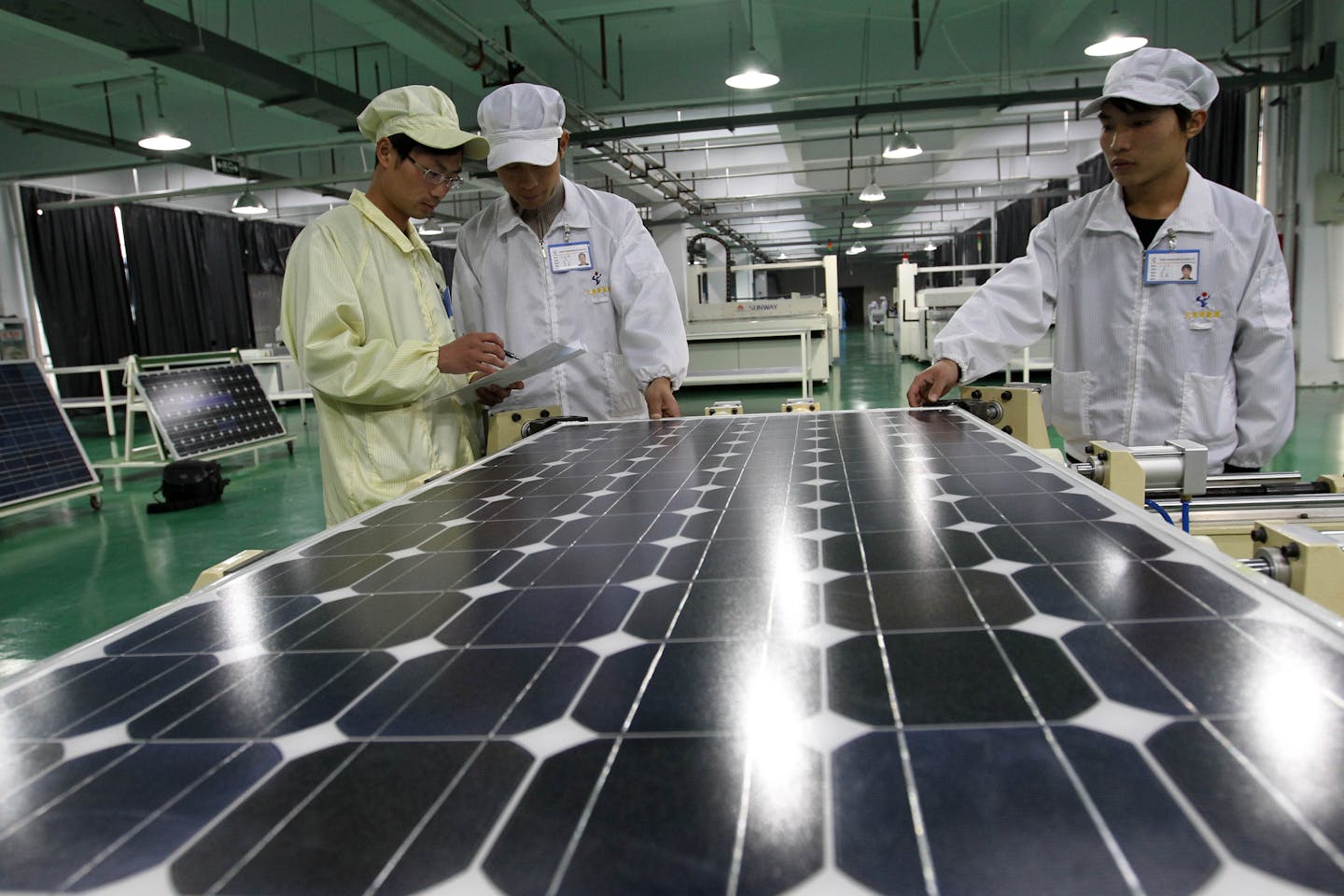
The US has implemented record-high tariffs on solar panel exports from Cambodia, Thailand, Vietnam, and Malaysia, following a year-long investigation into dumping and unfair subsidies. The tariffs vary significantly, with Cambodia facing the steepest rate at over 3,521%. Smaller manufacturers in these Southeast Asian countries will bear the brunt of the tariffs, as larger Chinese companies have already relocated operations. The new tariffs, which exceed previous rates, are expected to disrupt the manufacturing industry and significantly decrease solar panel exports, with Cambodian exports projected to drop nearly 60% in the coming year.
New record-high US solar tariffs leave uneven impact across Southeast Asia’s solar industry

Women’s participation is crucial for effective peacekeeping, yet they remain underrepresented in UN Peace Operations, especially in leadership and operational roles. The Measuring Opportunities for Women in Peace Operations (MOWIP) assessment, conducted in 20 troop and police contributing countries (TPCCs), identifies four key barriers to women's meaningful participation. Recommendations to address these barriers are provided, contributing to the Future of Peacekeeping Report targeted at TPCCs and the UN for improving inclusivity in peacekeeping efforts. The Global MOWIP report was released in June 2022.
The Future of Peacekeeping Needs Everyone

Southeast Asia has committed to tripling renewable energy deployment by 2030, with only Indonesia and Vietnam abstaining. However, the region's current growth rate in renewables falls short of the 16.4% needed to meet global targets. The Philippines is particularly lagging, failing to increase its renewable energy share since 2015. New policies aim to boost investments in renewable projects, with significant interest emerging. Malaysia and Thailand also have limited renewable capacities but are implementing strategies to enhance investments and infrastructure. The overall effectiveness of these pledges remains uncertain, emphasizing the need for tangible actions.
Philippines, Singapore, Thailand
Is Southeast Asia on track to meet global clean energy targets?

The UK labour market is shifting towards skill-based hiring in response to the rising demand for AI and green jobs, with specific skills becoming more valued than traditional degrees. AI job postings requiring degree-level qualifications have decreased by 15% from 2018 to 2024, while green occupations increasingly favor vocational qualifications. The wage premium associated with advanced degrees in these fields has diminished, as employers prioritize practical competencies over formal education. This trend reflects the urgent need for skilled workers in rapidly evolving sectors, prompting a shift towards alternative training pathways like bootcamps and online courses.
United Kingdom | Education
AI and green jobs are outpacing traditional degrees in the UK
Understanding electricity markets is essential for effective energy policy design in developing Asia, where energy demand is rapidly increasing. Game-based learning enhances policymakers’ motivation and comprehension of market complexities. The ADBI–PESD workshop serves as a vital capacity-building tool, illustrating that a cost-based system may hinder social welfare by discouraging investment in efficiency. It also highlights the complexities in determining true costs and the implications of pay-as-bid auctions and forward contracts on market dynamics. Future initiatives may leverage pilot programs and data-driven evaluations to enhance capacity-building effects.
Education
Enhancing Energy Policy in Asia Through Game-Based Learning on Wholesale Electricity Markets

Coastal communities in Indonesia's Central Java province, particularly in the Demak district, face significant challenges due to climate change and land subsidence, which is occurring at rates nine times faster than global sea level rise. Women like Sunarti, who have lost their livelihoods due to flooding and brackish water, are adapting by transitioning to fishing despite economic hardships. The risks of gender-based violence are escalating as environmental stressors compound economic difficulties, with women and children disproportionately affected. Historical perspectives highlight that women have held significant power in the region, yet today's climate crisis exacerbates their vulnerabilities.
Climate fallout tests coastal women in historic Javanese sultanate

A survey of over 500 political scientists reveals a consensus that the United States is rapidly shifting from liberal democracy toward authoritarianism. The Bright Line Watch survey rated American democracy at 67 following Trump's election, which plunged to 55 during his second term. Scholars express concern over attempts to expand executive power, characterizing the situation as a move toward "competitive authoritarianism," similar to regimes in Hungary and Turkey. This form of governance involves undermining checks and balances, appointing loyalists to key positions, and attacking independent media and organizations.
Hundreds of scholars say U.S. is swiftly heading toward authoritarianism
The Behavioral Insights Team's playbook outlines practical strategies for integrating test-and-learn methodologies within government. It emphasizes flexible methods that cater to various stages of the innovation cycle, addressing challenges like service improvement and policy development. The playbook highlights the importance of AI as a key resource throughout this process, enhancing research, analysis, and modeling. It aims to make the test-and-learn approach accessible to newcomers while providing advanced tools for experienced practitioners, ultimately fostering better governance and service delivery.
Education
Test and learn: a playbook for mission-driven government
Advancements in AI are transforming decision theaters—interactive environments for collaborative problem-solving that integrate diverse expertise with AI tools. These spaces allow stakeholders to visualize complex scenarios, enabling real-time interaction with AI projections and adjustments based on local knowledge. By fostering iterative dialogue and ethical deliberation, decision theaters ensure that technological solutions align with community values and desires. They democratize decision-making by involving a broad range of participants, enhancing transparency and trust in AI insights, and prioritizing outcomes beneficial for society over mere profitability.
The Future is Coded: How AI is Rewriting the Rules of Decision Theaters
The white paper outlines the challenges in developing large language models (LLMs) for low-resource languages, noting a digital divide where most LLMs perform poorly for non-English languages, particularly in the Global South. Key limitations include a lack of labeled data and poor data quality. Strategies to address these gaps include exploring massive multilingual models, regional multilingual models, and monolingual models, each with distinct trade-offs. The report emphasizes the importance of cross-disciplinary and community-driven approaches to enhance investment and ensure fair data ownership in LLM development.
Mind the (Language) Gap: Mapping the Challenges of LLM Development in Low-Resource Language Contexts

The Trump administration's import tariffs, set to begin in April 2025, could generate up to $5.2 trillion over a decade but may also negatively impact GDP, wages, and demand for U.S. Treasury bonds. Tariffs are projected to reduce GDP growth by 6% and wages by 5% over 30 years, resulting in a significant financial loss for households. The tariffs will complicate capital flows and increase economic uncertainty, potentially reducing investment by 4.4% in 2025. Consumers may shoulder the majority of these costs, leading to a decline in consumption.
The Economic Impact of Tariffs
Generative AI is transforming marketing at Mondelēz International by enhancing consumer engagement and creating standout content for brands like Cadbury, Toblerone, and Oreo. Jonathan Halvorson, the senior vice president for consumer experience, emphasizes that while AI aids in campaign creation and execution, human ingenuity remains crucial for brand differentiation. Mondelēz's AI-augmented campaigns have significantly improved brand awareness and revenue, showcasing AI's potential for innovative marketing solutions. Ultimately, AI is enhancing, rather than replacing, human creativity, allowing teams to focus on producing unique and high-quality content efficiently.
Education
How AI Can Be a Game Changer for Marketing

Data centres are rapidly expanding due to the rising demand from the digital economy and AI, with the industry valued at approximately $242.72 billion, projected to exceed $584 billion by 2032. The majority of data centres are located in developed economies, particularly the US, but emerging markets are starting to attract investment. These facilities are critical infrastructure for economic growth and national security, yet they face challenges such as energy consumption, regulatory complexities, and geopolitical tensions. Data centres serve as vital assets for innovation, job creation, and digital resilience, underlining their significance in national transformation strategies.
Ireland, United Kingdom | Financial services, Education, ICT
This is the state of play in the global data centre gold rush

Brazil is at the forefront of leveraging GovTech and digital public infrastructure to enhance public services, particularly in the Global South. It has initiated significant digital transformations, such as the gov.br portal, which centralizes services for over 150 million citizens, and local innovations like digital scheduling for vaccinations. Programs such as participatory budgeting in Piauí and citizen monitoring for roadworks exemplify effective citizen engagement. To maximize the benefits of GovTech, Brazil emphasizes treating digital infrastructure as essential public goods, adapting regulations, investing in capacity building, fostering collaborations, and prioritizing citizen experiences in service delivery.
Financial services, Health, ICT, Education
How Brazil uses GovTech and digital public infrastructure to drive development
The global workforce is aging, with over half of workers in many EU countries expected to be over 50 by 2030. Older workers represent valuable experience and stability but are often overlooked in AI training initiatives, which predominantly target younger employees. Misconceptions about older workers' tech adoption capabilities, along with ageist biases in hiring algorithms and tech designs, exacerbate their exclusion from the digital landscape. An age-neutral approach in technology design and targeted retraining programs for older workers are essential to ensure their participation in the evolving workforce, supporting both economic and social well-being.
Education
AI is inherently ageist. That’s not just unethical – it can be costly for workers and businesses
Democracy is evolving due to significant technological, social, and political changes, leading citizens to seek greater involvement in governance, particularly in relation to artificial intelligence (AI). A seven-part essay series by experts in deliberative democracy, civic technology, and AI governance examines how deliberative democratic processes, such as citizen assemblies and civic tech, can enhance AI governance and promote inclusive decision-making.
ICT
Deliberative Approaches to Inclusive Governance
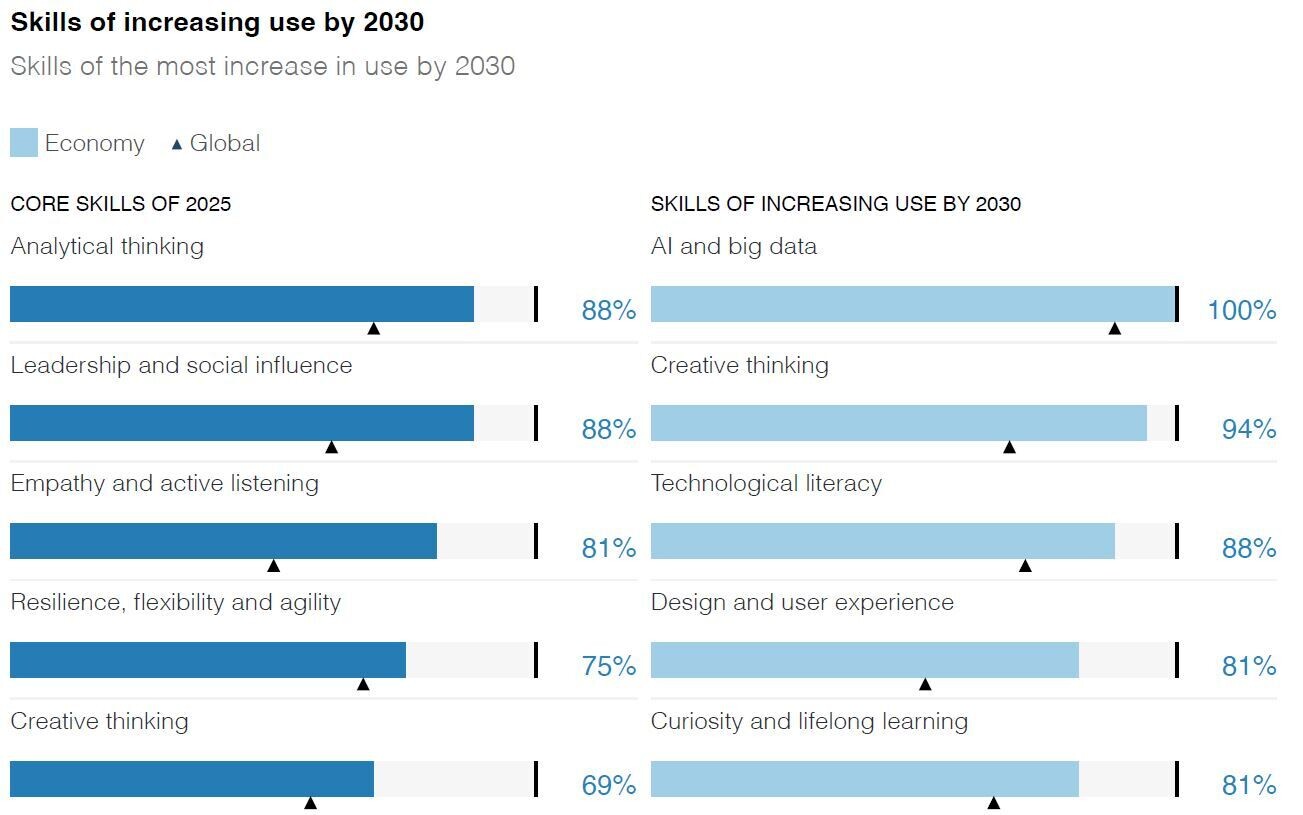
In Latin America and the Caribbean, 84% of employers intend to upskill their workforce to address the rapidly growing demand for digital and tech talent, as revealed by the World Economic Forum’s Future of Jobs Report 2025. There is an increasing need for soft skills, particularly leadership and resilience, amidst changes driven by automation and climate issues. Barriers to transformation include outdated organizational cultures and regulations, with a significant push for public policies that enhance hiring flexibility. Notably, roles in big data and AI are expected to surge, and the sustainability specialist position is projected to grow by 29% by 2030.
Costa Rica, Dominican Republic, Panama, Republic of Korea | ICT, Education
The future of jobs in Latin America and the Caribbean: digital skills gap must close quickly to satisfy evolving employer demands

Donald Trump’s tariffs on the EU and UK are expected to have a lesser impact on exports than typically assumed. The uncertainty generated by such policies poses significant economic risks. In a scenario of full employment in the US, tariffs lead to increased consumer prices but do not substantially raise domestic production or employment. Conversely, if full employment is absent, tariffs may heighten prices, potentially causing wage increases that lower US competitiveness. In both scenarios, net exports from other countries could balance out as shifts occur in global trade dynamics, with the EU and UK potentially benefitting over time.
Trump’s tariffs will hurt EU and UK exports much less than we think

The agricultural sector must undergo a transformation to empower farmers and promote sustainable food systems. India exemplifies how public-private partnerships can enhance agricultural productivity and resilience. As food systems gain prominence in international discussions by 2025, it's essential to devise mechanisms that reward farmers for their contributions. Key strategies include improving access to micro-insurance, promoting crop diversification, and creating markets for sustainably produced crops. The goal is to provide farmers with resources and support that ensure consistent production despite climate volatility, thereby driving a new green revolution in agriculture.
Financial services, Education, Health
The world needs a new food revolution. Here's how to empower farmers to make it happen

San Francisco, the birthplace of Earth Day, is emerging as a climate innovation hub, integrating nature-positive, climate-resilient strategies to foster shared prosperity. The city reduced emissions by 48% from 1990 to 2020, while increasing its population by 21%. Key initiatives include the India Basin Park Restoration and strategies for responsible innovation, exemplified by companies like Waymo, which emphasize equity and sustainability. San Francisco's model showcases the importance of strong governance, equitable access, and collaboration to inspire global cities in addressing climate change and promoting inclusive growth.
Financial services, Health, Education, ICT
How the birthplace of Earth Day became a climate innovation hub