
Since the arrest of Istanbul Mayor Ekrem İmamoğlu on March 20, Turkey has faced significant turmoil. İmamoğlu, a prominent opposition figure, was detained on charges of corruption and ties to a terrorist organization, which sparked widespread protests across the country. The political crisis occurs three years before the presidential election, coinciding with a period where President Erdoğan appeared strong internationally due to geopolitical developments. The situation has fueled public skepticism regarding the judicial process, with over 60% of the populace viewing the charges as politically motivated. The upheaval presents a critical challenge to Erdoğan's authoritarian rule amidst growing opposition mobilization.
Financial services
Turkey: A Crisis of Legitimacy and Massive Social Mobilization in a Regional Power
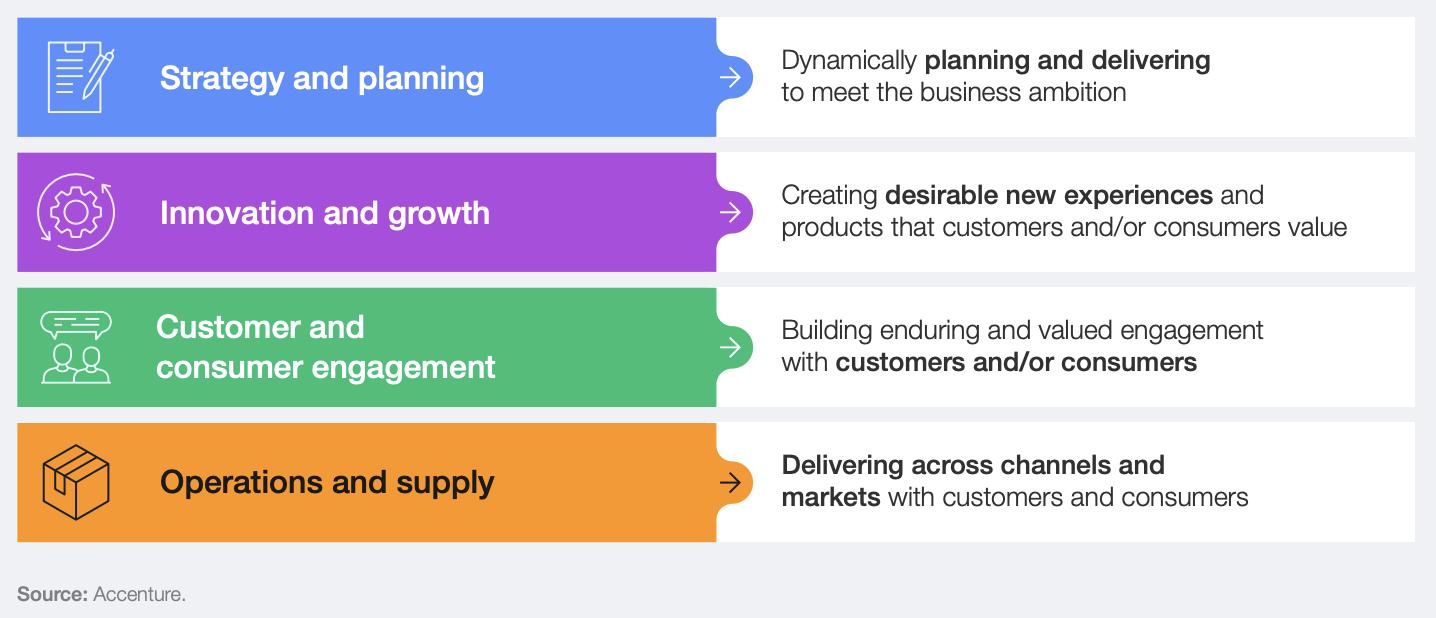
The AI transformation in consumer industries significantly impacts business, expectations, and society. Key sectors like agribusiness, consumer goods, and retail are leading AI integration, enhancing efficiency, innovation, and customer engagement. Organizations are encouraged to adopt an enterprise-wide perspective, leveraging AI 'mega processes' for strategy, innovation, and operations. Expected benefits include 10-20% revenue increases, reduced costs, and improved innovation success rates. AI also enables deeper consumer relationships through personalized experiences. Overall, these advancements present essential lessons for all businesses aiming to integrate AI effectively.
What the AI transformation of consumer industries can teach others
Brexit has intensified divisions regarding the Irish border, reinforcing Unionist and Nationalist sentiments over Northern Ireland's future. However, recent polling from the Irish Times and the Arins project indicates a shift, with increased acceptance of the possibility of Irish reunification, especially among Unionists, rising from 21% in 2022 to 29% in 2025. Economic benefits from the Northern Ireland Protocol, which facilitates trade access to both Irish and EU markets, contribute to this changing perspective. The evolving attitudes suggest a potential for more constructive discussions about the island's future, emphasizing the need for thorough exploration of various unification models.
Ireland
How Brexit hardened attitudes about the Irish border – and why things might be changing
AI-controlled fighter jets are becoming a realistic prospect, with U.S. Navy officials suggesting that upcoming combat jets could be the last to have a human pilot. The advantages of uncrewed options include enhanced kinematic performance, reduced costs, and decreased risk to pilots. Current military systems are evolving from "human-in-the-loop" to "human-out-of-the-loop" operations, allowing AI to engage targets autonomously. While the potential for swarming low-cost drones is envisioned, AI's limitations, particularly in complex combat scenarios, remain a significant barrier to deployment.
AI-controlled fighter jets may be closer than we think — and would change the face of warfare

Arctic and Antarctic ice is melting at alarming rates due to climate change, reaching critical tipping points that threaten global ecosystems. Melting glaciers could shift the North Pole, altering the Earth's rotation and causing climate chaos. This ice loss leads to rising sea levels, with the Antarctic capable of increasing levels by 57 meters, and worsens global warming as less ice means more heat absorption by oceans. Businesses must understand these risks and develop strategies for climate resilience, adaptation, and mitigation to navigate the impending challenges.
Antarctica
Ice is melting at alarming rates. Why business leaders must pay attention
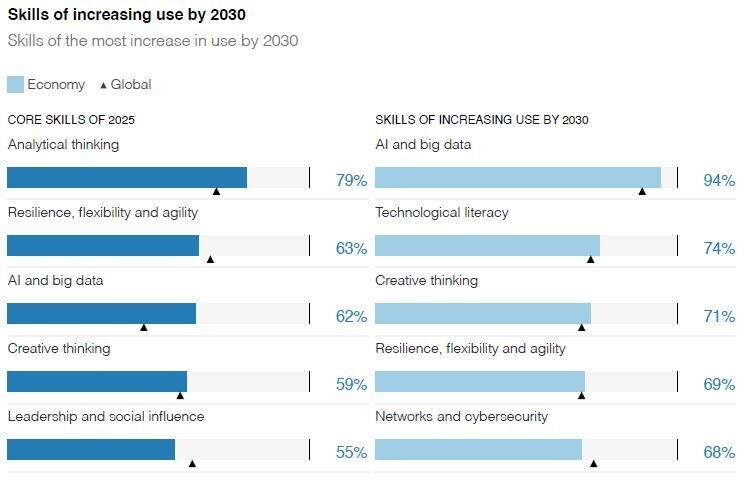
Two-thirds of companies in India aim to diversify talent pools to address emerging job roles, significantly exceeding the global average. There is a focus on upskilling through training and apprenticeships, as many top tech talents migrate abroad for better opportunities. The Indian government has initiated programs like the IndiaAI Mission to enhance digital skills and workforce participation among underrepresented groups, particularly women. However, a skills gap persists, with 63% of workers needing training by 2030. Employers are prioritizing skills over degrees and investing in technologies like AI and semiconductors to spur growth.
India, Singapore | Education, ICT
The future of jobs in India: employers seek to boost tech talent to drive AI and digital growth
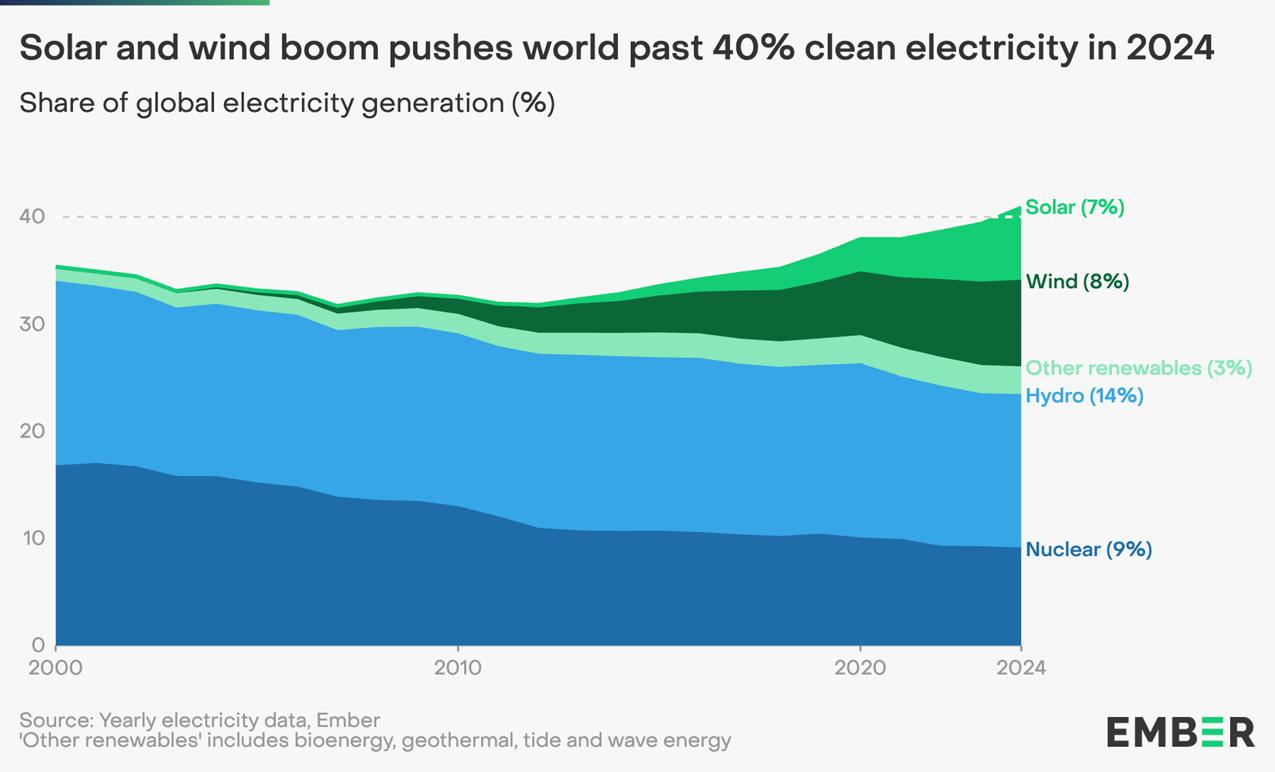
Clean energy surpassed 40% of global electricity generation in 2024, driven by record renewable growth, particularly solar power, which doubled over three years to over 2,000 TWh. Europe experienced its warmest March on record, with a temperature anomaly of 2.41ºC above the historical average. The US administration has withdrawn from shipping decarbonization talks and made significant policy changes affecting climate initiatives. Meanwhile, AI chip production spikes electricity demand in East Asia, raising concerns about fossil fuel reliance. Research also indicates a lack of media focus on biodiversity in comparison to climate issues.
Clean energy's share of world's electricity reaches 40%, and other nature and climate stories you need to read this week
The trade war between the US and China has escalated, marked by a 125% tariff on Chinese imports from the US, leading to retaliatory measures from China. Despite rising geopolitical tensions, global financial firms have expanded in China, adapting to its state-driven financial model rather than pushing for liberalization. The opening of Chinese capital markets poses significant growth potential, attracting investments from various global firms. However, US investments have halved since their 2020 peak due to geopolitical pressures and underwhelming market performance. While some US investors deem China “uninvestable,” others, particularly from Asia and the Middle East, are increasing their investments, indicating a shifting financial landscape.
Taiwan, China | Financial services
Wall Street caught between a rock and a hard place as tensions between US and China rise
The UN's International Maritime Organization has established a global emissions pricing scheme for shipping, marking it as the first industry with a legally binding carbon price. Despite the achievement, significant opposition from petrostates and limited engagement from the US hinder ambitious action. The agreement introduces a carbon-trading scheme with targets that become increasingly stringent, rewarding early adopters of low-emission technologies while penalizing those unable to invest. Critics argue the measures do not align with scientific recommendations and lack sufficient revenue allocation for equitable transitions, leaving vulnerable nations to bear the cost.
How petrostates succeeded in watering down the world’s plan to cut shipping emissions
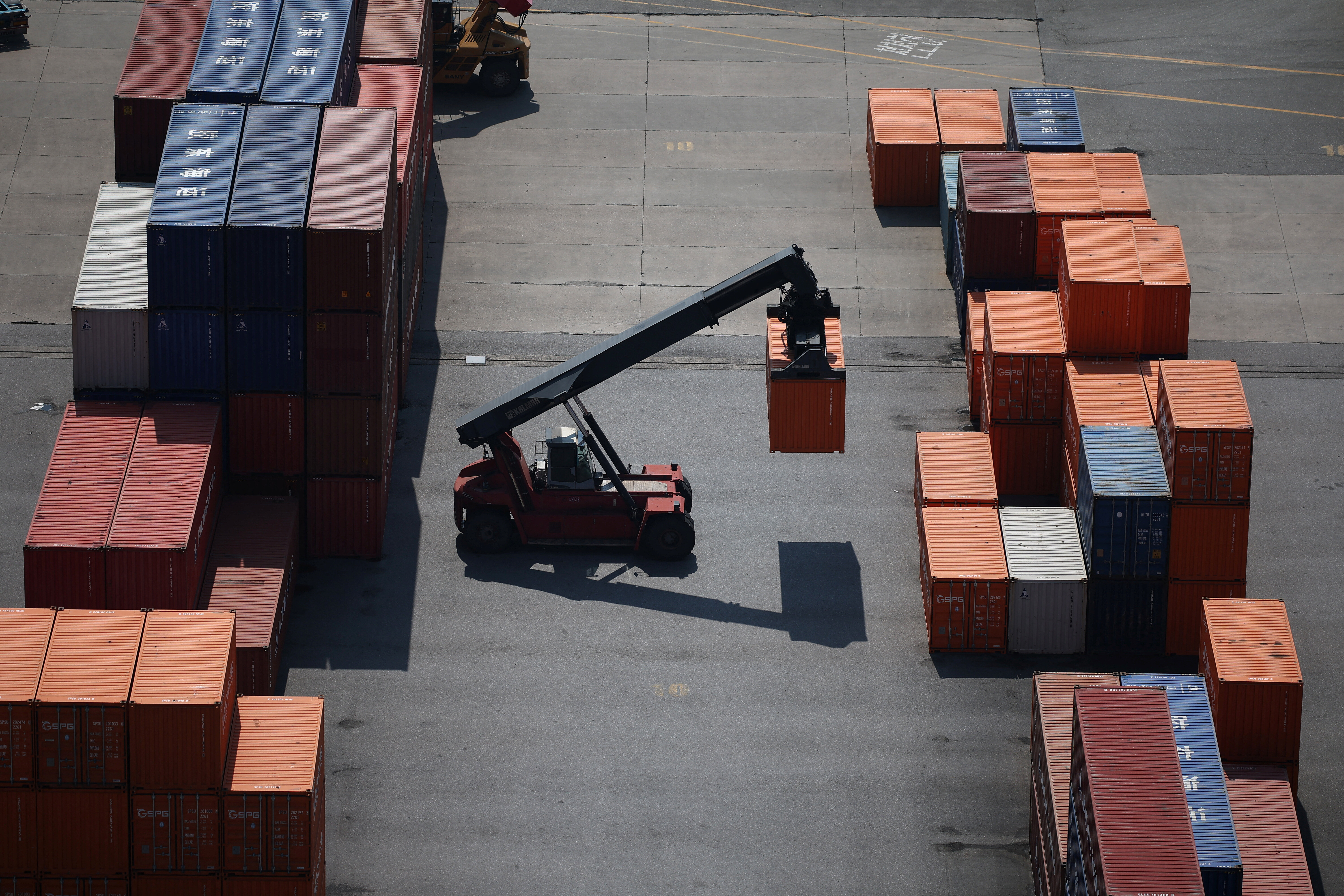
The ongoing trade tensions between the US and China jeopardize the global economy, creating an opportunity for Europe and other nations to mediate a cooperative resolution. The current tariff pause offers a chance to address fiscal imbalances and promote international economic stability. A proposed "G3" accord among the US, Europe, and China could involve substantial reforms in fiscal, monetary, and trade policies, focusing on raising China's consumption levels and reducing the US fiscal deficit. This collaboration aims to stabilize the world economy and mitigate the risks of escalating trade conflicts.
United Kingdom | Health, Financial services
The game of 'chicken' being played with the world economy can be brought to a cooperative end

New US tariffs have significantly disrupted global trade, causing volatility in financial markets. In April, global stock markets fell sharply after the announcement of a new tariff regime by President Trump, erasing trillions in value. Continued tariff threats introduce uncertainty regarding global supply chains and production costs, affecting investor confidence and corporate decisions. Experts indicate that such trade tensions can slow global economic growth, delay investments, and contribute to inflation, ultimately weakening consumer demand and financial stability. The ongoing market turbulence raises concerns for both developed and emerging economies.
United Kingdom | Financial services
Why trade tensions are a ‘storm cloud’ over financial markets

Samir Saran and Anirban Sarma argue that the dominance of big tech has led to an under-regulated form of "capitalism on steroids." They identify four main design flaws highlighting the tensions between technology, geography, and society. These flaws include the imposition of Silicon Valley ideologies on varied cultural markets, the mediating role of private companies in state-citizen relationships, the neglect of privacy and ethics in the pursuit of rapid innovation, and the need for regulatory frameworks that support innovation without being predatory. The authors advocate for light-touch regulations that empower businesses and protect citizens.
Ireland, Thailand, United Kingdom | Health, Financial services, Education, ICT
2 experts on the 'design flaws' in today's era of 'capitalism on steroids'

Cities in low- and middle-income countries are increasingly experiencing the urban heat island effect, exacerbated by rapid, unplanned urbanization and loss of green spaces. This phenomenon contributes to worsening climate change impacts and social inequalities, with urban areas heating at an average rate of 0.021 degrees Celsius annually. Informal settlements in cities like Cairo and Nairobi, which often lack adequate cooling infrastructure, are particularly vulnerable. Researchers advocate for locally tailored solutions, such as rooftop gardens and reflective surfaces, alongside international support to help these regions develop climate-resilient infrastructure.
Financial services, Health
Urban heat islands ‘increasing faster’ in poorer cities

In 2024, countries facing severe barriers to girls' education spent four times more on debt servicing than on education. This financial strain leads to diminished budgets for crucial social services, particularly impacting girls' access to education, nutrition, and safety. Over 122 million girls globally are out of school, exacerbated by austerity measures tied to debt obligations. Investment in education is well below international targets, perpetuating cycles of inequality. Historical debt relief initiatives have proven effective in improving educational outcomes, highlighting the urgent need for rethinking debt management to prioritize human development and gender equality.
Financial services, Health, Education
Why we must rethink country debt to protect education and unlock long-term development

Digital control is increasingly undermining democracy, particularly in Africa, where 2024 recorded 21 internet shutdowns across 15 countries, driven by governments citing national security during protests and elections. A global high of 296 shutdowns occurred in various nations, with Ethiopia, Sudan, and Senegal notably affected. The trend reflects a broader pattern of 1,700 shutdowns since 2016, disrupting economies, isolating activists, and deepening digital inequality. While technology firms manage online platforms with little oversight, their content moderation practices remain controversial. This struggle raises questions about who controls digital access and its implications for democracy as societies grapple with government and private sector influences.
Africa | Financial services, ICT
Democracy, disconnected: the quiet rise of digital control

Global data centres are projected to consume more electricity than Japan by 2030, with consumption jumping from 415 terawatt-hours (TWh) in 2024 to 945 TWh, primarily driven by the US and China. AI's impact on energy efficiency is noted, though coal remains a major energy source. Renewable energy could meet nearly 50% of new demands due to growth in solar, wind, and hydro sources. Additionally, a new prototype for green hydrogen production can generate drinking water as a byproduct, potentially reducing costs significantly. Lego is opening a $1 billion clean energy factory in Vietnam by 2026.
Education
Global data centres expected to consume more electricity than Japan by 2030, and other technology news you need to know

Digital public infrastructure (DPI) is essential for fostering a connected future, enabling everyone to access digital goods and services safely and equitably. As emerging technologies like artificial intelligence (AI), extended reality (XR), and quantum computing reshape industries, DPI must evolve to accommodate these advances. Successful examples like India's Aadhaar and the Open Health Stack demonstrate the potential of DPI. While public and nonprofit efforts have made strides, private sector innovation is also vital. However, current DPI systems are not fully prepared for new technologies, necessitating a global collaborative approach to drive efficient and inclusive development.
Financial services, Health, ICT, Education
Why digital public infrastructure is key to building a connected future
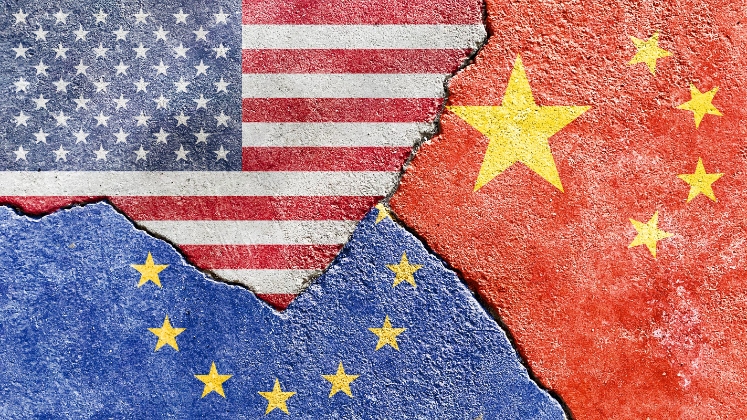
US-China trade tensions are escalating, with proposed tariffs potentially raising the average US tariff above 20%, a peak not observed since the 1930s. The US has enacted significant tariffs, including a 125% duty on Chinese imports, heightening the conflict into what could become the largest trade war in history. The US government's justification for these tariffs focuses on addressing non-tariff barriers that it claims distort trade. Critics argue that the policies overlook the benefits of comparative advantage and fail to consider domestic economic factors affecting trade balances. There are suggestions that a primary goal of these tariffs may be to revive US manufacturing jobs, despite the broader advantages of trade with China.
US-China tensions could become the biggest trade war in history

Since Russia's full-scale invasion of Ukraine in February 2022, the European Union's external actions have increasingly securitized, blurring lines between the Common Foreign and Security Policy (CFSP) and the Common Security and Defence Policy (CSDP). This shift, however, does not enhance the EU's capacity for decisive action; rather, it distracts from necessary reforms. The US has stepped back as Europe's security guarantor, revealing the need for European nations to take responsibility for their security amidst increasing geopolitical competition. A consensus has emerged within the EU for enhanced investment in national armed forces and potential coalitions but without significant progress on institutional reforms for the CFSP and CSDP.
Ukraine | Financial services
Strengthening Europe’s Capacity to Act in Foreign and Security Policy

AI development relies heavily on data input, particularly from social media platforms where users generate vast amounts of content. This data is valuable for training models, as it is less susceptible to copyright issues. Major companies like Meta and xAI leverage user-generated posts for their AI projects, effectively transforming users into contributors in AI development. Microsoft, while benefiting from LinkedIn for original content, does not share this data with OpenAI, prompting speculation about OpenAI's potential social network initiative.
AI Needs Your Data. That’s Where Social Media Comes In.