
Social media can enhance content creation by utilizing social signals, but this often compromises the social fabric it relies on, prioritizing engagement for ad revenue. A proposed platform model incorporates social cohesion by making community affiliation a key component, allowing citizens to engage with diverse internal viewpoints. Content would be labeled for its community relevance, and users could influence content visibility through subscription payments. Additionally, advertisers could target specific communities with consent, fostering support for emerging groups while rewarding content creators and curators. Applications span productivity, political, and cultural platforms.
Prosocial Media
The integration of artificial intelligence (AI) in the defence sector presents both opportunities and challenges. AI can streamline processes, eliminate low-value tasks, and enhance military capabilities through applications such as autonomous weapons systems, drones, and cybersecurity. However, ethical concerns arise due to the lack of transparency in AI systems, particularly regarding lethal military hardware and potential biases in data that may lead to discriminatory practices. Additionally, reliance on AI heightens cybersecurity risks, as adversaries could exploit these technologies. Effective oversight, transparency, and collaboration are essential for addressing governance risks in AI deployment within defence.
Artificial intelligence and the defence sector

Retail investing has significantly transformed, with individual investors increasingly participating in global markets historically dominated by institutions. Barriers such as limited financial education, economic uncertainty, and complex technology still hinder many investors. The 2024 Global Retail Investor Outlook, created by the World Economic Forum, Boston Consulting Group, and Robinhood Markets, analyzes trends in retail investor behavior through a survey of 13,000 investors across 13 countries. It highlights structural shifts like greater access to diverse financial products, AI-driven platforms, and emerging demographics, particularly focusing on younger individuals, emerging market participants, and women. The report emphasizes the importance of enhancing access and financial literacy to empower retail investors and promote inclusive market participation.
Financial services
2024 Global Retail Investor Outlook

Retail investing has shifted significantly, with a growing share of individual investors entering global markets traditionally dominated by institutions. Despite this, barriers like limited financial education and economic uncertainty remain. The 2024 Global Retail Investor Outlook, developed by the World Economic Forum, Boston Consulting Group, and Robinhood Markets, analyzes trends influencing retail investor behavior from a survey of 13,000 individuals across 13 countries. Key findings include expanded access to diverse financial products, AI-driven platforms, and the emergence of retail investors from underserved demographics such as younger individuals, women, and those from emerging markets. Enhanced access and financial literacy are vital for fostering inclusive market participation and empowering wealth-building.
Financial services
2024 Global Retail Investor Outlook

The world is currently experiencing a critical demographic transition, with over 25% of the population in peak demographic countries. This change, characterized by rising life expectancy and declining birth rates, poses significant challenges and opportunities. Five key trends shaping the longevity economy are identified: developing resilient public retirement systems, transitioning savings to decumulation, enhancing employer roles in financial well-being, addressing caregiving economics, and promoting financial growth pathways. Immediate action is essential to avert financial instability, care system overload, and an unprepared workforce, underscoring the need for collaborative efforts among governments, businesses, and society.
Africa, Latin America | Education, Financial services, Health
Future-Proofing the Longevity Economy: Innovations and Key Trends

The demographic transition is reshaping the world, with over one in four people in countries experiencing population peaks, alongside increasing life expectancy and declining birth rates. This situation poses urgent challenges and unique opportunities. Key trends include the need for resilient retirement systems, transitioning financial strategies from savings to spending, enhancing employer roles in financial well-being, addressing caregiving economics, and fostering growth pathways. Without decisive action, the potential for financial instability and overwhelmed care systems grows, necessitating collaboration among governments, businesses, and civil society to ensure generational prosperity.
Africa, Latin America | Financial services, Education, Health
Future-Proofing the Longevity Economy: Innovations and Key Trends
Artificial intelligence is revolutionizing financial services by enhancing credit scoring, customer service, fraud detection, and risk management. AI applications, including generative AI, improve efficiency and decision-making across areas such as financial intermediation, insurance, asset management, and payments. However, challenges persist, including cybersecurity risks, potential biases in AI models, and systemic risks from reliance on a few dominant tech entities. Effective AI regulation is crucial, balancing innovation with safety to ensure benefits while mitigating risks, necessitating global cooperation and adaptable principles.
Financial services
Artificial Intelligence Meets Real Finance: Innovation, Risk, and Regulation

By 2050, one in six people globally will be aged 65 or older, necessitating rapid adaptation in health care for ageing populations, especially in low- and middle-income countries. Family involvement is crucial in the success of health initiatives for older adults; however, most approaches focus on professional-family collaboration rather than empowering families directly. Family-led strategies, such as online training for young adults in Singapore and an educational app in Thailand, show promise in improving health outcomes for elderly patients. To optimize these efforts, scalable models for engaging families must be developed and evaluated.
Health
Empower families to lead the design of their ageing loved ones’ health care
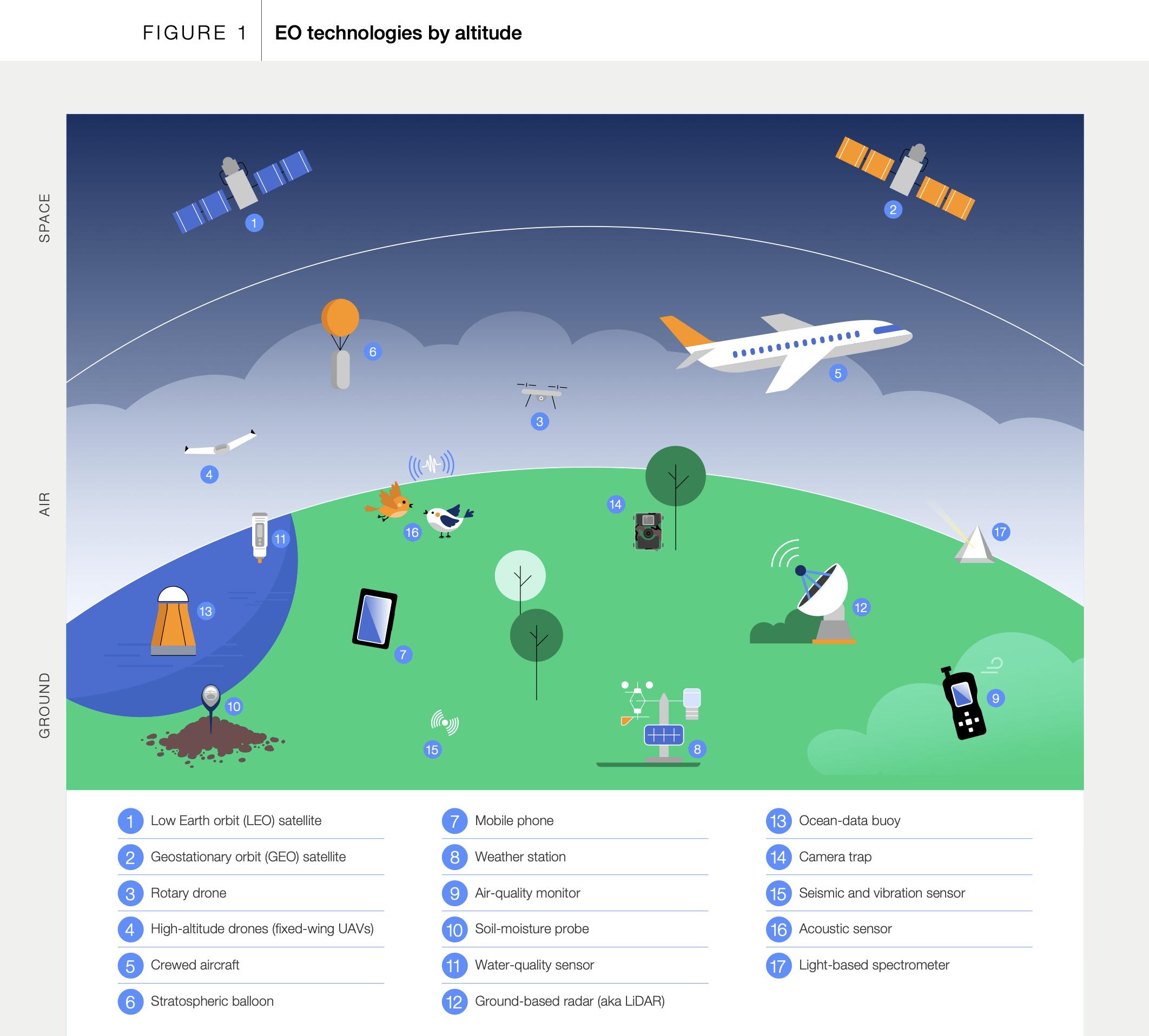
Earth Observation (EO) integrates data from various sources to enhance decision-making in business and policy, enabling organizations to anticipate risks and respond effectively to global challenges. Key applications of EO include early warning systems for natural hazards, vulnerability analysis to assess environmental risks, and improved accountability through transparent monitoring of environmental impacts. EO also drives efficiency in sectors like agriculture, construction, and logistics by providing precise data for resource management. Successful EO implementation requires organizations to remain agile, leveraging evolving technologies while addressing barriers to adoption.
Cape Verde, Estonia, Ethiopia, Indonesia, United Arab Emirates | Health, ICT, Education
Earth Observation can help tackle global challenges from space – here’s how

Urgent action is required to reduce fossil fuel reliance, and offtake agreements can de-risk investments in climate tech. These agreements guarantee cash flow by securing buyer commitments for future production, thus attracting investment. A strategic approach involves utilizing different types of offtake agreements throughout a project's lifecycle: soft agreements at the prototype stage, binding agreements during pilot phases, and bankable agreements for scaling. Successful strategies include securing key partners early, diversifying offtakers to mitigate risks, and ensuring adaptability in contracts to respond to uncertainties, ultimately enhancing investor confidence in climate tech projects.
4 winning offtake agreement strategies to scale climate tech

Women in South Asia play a crucial yet often unrecognized role in the economy, with rising female entrepreneurship facilitated by online platforms. Increasing women's workforce participation could significantly boost economic growth; for instance, a rise to 50% in India could enhance its growth rate by 1.5%. However, socio-cultural barriers, financial constraints, and regulatory challenges hinder women’s entrepreneurial efforts. Most work in the informal sector, limiting access to financial resources and recognition. While some progress has been made in areas like Nepal, broader systemic changes are necessary to fully integrate women’s contributions into the economy.
Bangladesh, South Africa, Sri Lanka | Education
Women are south Asia’s ‘silent contributors’ – changing that could transform economies

Africa's migration governance is evolving towards better integration and economic growth, but outdated frameworks and fragmented regional approaches pose challenges. The 16th African Economic Conference highlighted free trade and freedom of movement as crucial for economic prosperity. Although progress, like the 2024 Africa Visa Openness Index, reflects advancements in free movement, further action is needed. Effective management of migration requires harmonized policies, better cooperation, and the implementation of existing frameworks. Key reforms include streamlining regional efforts, enhancing monitoring, building capacity, and promoting safe migration to unlock migration's potential for development.
Burkina Faso, Ethiopia, Gabon, Ghana, Guinea, Kenya, Malawi, Mali, Mauritania, Mozambique, Namibia, Nigeria, Rwanda, Senegal, South Africa, Tanzania, Uganda, Zambia | Health
Africa’s migration governance structure is built bloc by bloc

The paper, developed with LinkedIn for the Global Gender Gap Report, examines the challenges and opportunities of AI-driven economic transformation concerning gender parity. It explores workforce dynamics, skilling, and innovation, offering strategic insights into how women and men engage with AI. Additionally, it prompts industry, policy, and multilateral leaders to consider GenAI as a catalyst for advancing gender parity.
Gender Parity in the Intelligent Age
This paper, developed in collaboration with LinkedIn for the Global Gender Gap Report, examines the challenges and opportunities presented by an AI-driven economic transformation regarding gender parity. It explores workforce dynamics, skilling, and innovation, offering strategic insights into women's and men's engagement with AI. The findings prompt reflections for industry, policy, and multilateral leaders, aiming to further investigate how generative AI can act as a catalyst for gender parity.
Gender Parity in the Intelligent Age
International business taxes significantly impact U.S. multinational firms, which traditionally operate under a worldwide tax system, taxing income generated globally. However, many countries are shifting to territorial taxation, taxing only local profits. This shift affects investment and job creation in the U.S. Lower overseas tax rates can potentially enhance the competitiveness of U.S. firms, increasing their size and wealth, which could lead to more domestic hiring. Nonetheless, a substitution effect may also occur, leading businesses to favor operations outside the U.S. due to lower marginal costs.
Barbados, Belgium, Denmark, Germany, Hungary, Iceland, Ireland, Japan, Luxembourg, Netherlands, Poland, Singapore, Slovakia, Sweden, Taiwan, China, United Kingdom
International Taxation and U.S. Businesses | Daniel Garrett

Growth equity is crucial for scaling climate solutions, as it bridges the gap between early-stage innovation funded by venture capital and the commercialization of these technologies. By investing in high-growth businesses, growth equity firms provide essential capital and operational expertise. This approach accelerates decarbonization while achieving attractive returns for investors. Key sectors identified for investment include grid infrastructure, e-mobility, and carbon transparency solutions. Institutional investors are increasingly focusing on quantifiable impacts alongside financial returns, making rigorous sustainability assessments standard practice in the industry.
Bolivia, Cape Verde, Chile, Denmark, Egypt, Estonia, Eswatini, Ethiopia, Finland, Germany, Ghana, Haiti, Iceland, Indonesia, Jordan, Paraguay, Peru, Qatar, Rwanda, Senegal, Seychelles, Singapore, Sweden, Switzerland, Tanzania, Uganda, United Arab Emirates, United Kingdom | Financial services, Health, ICT, Education
How growth equity can accelerate investment in climate solutions

AI is transforming the role of CFOs by enhancing automation, data analytics, and risk management. While it presents opportunities for financial resilience and innovation, the adoption of AI raises challenges related to cybersecurity, regulatory issues, and workforce displacement. CFOs emphasize the importance of strategically investing in AI to ensure returns, while also developing frameworks to measure its financial impact. As AI evolves, maintaining cybersecurity and aligning AI investments with business objectives are crucial for sustainable growth in the rapidly changing financial landscape.
Financial services
AI is transforming finance, CFOs say. Here's how

Polarisation is prevalent worldwide, with poorer countries exhibiting greater divisions on economic issues, while richer countries show more disagreement on social norms. Poor nations like Ethiopia and Myanmar are more prone to civil unrest due to economic polarisation. In contrast, wealthier nations experience splits over issues like abortion and LGBTQ rights, as fewer social conformity pressures exist. Education impacts these divisions differently; in poorer countries, it heightens economic polarisation, whereas in richer ones, it influences social attitudes. Furthermore, increasing economic inequality correlates with rising polarisation, suggesting ongoing cultural conflicts, particularly in the West.
Latin America
Polarisation: poor countries disagree over the economy, richer countries on social issues – new findings

The Regional Comprehensive Economic Partnership (RCEP) is the world's largest free trade agreement, encompassing 15 economies including China, Japan, and ASEAN members. It emerges as a significant force for reinforcing multilateralism and regional cooperation amidst rising global protectionism. Since its implementation, intra-ASEAN trade has increased by over 7%, with projections indicating RCEP could elevate 27 million more people to the middle class by 2035. The agreement promotes economic integration and inclusivity, despite varying political systems. While not as comprehensive as other trade deals, RCEP offers a pragmatic approach to global trade challenges, particularly in light of increasing geopolitical tensions and shifts in supply chains.
Indonesia, Malaysia, Philippines, Russian Federation, Taiwan, China, Thailand
RCEP: How will this trade agreement shape the future of multilateralism?

The global trend of voter dissatisfaction with incumbent governments is evidenced by significant electoral defeats for ruling parties across various countries, irrespective of their political ideologies. Voters perceive a failure to meet their expectations, a situation exacerbated by rising populism, polarization, and misinformation. Factors like unemployment, inflation, and corruption contribute to this sentiment. A notable example is former Chilean President Ricardo Lagos, whose public housing initiatives were overshadowed by constituents' rising expectations. This disconnect between government capacity and public demands—termed the "Lagos paradox"—has intensified, indicating a global challenge for incumbents.
Africa, Latin America | Financial services, Health
Why Everyone Thinks Their Government Has Failed