India faces a significant misinformation crisis exacerbated by its expanding digital landscape. Following events like the 2019 Pulwama attack, false information spread rapidly across social media, revealing vulnerabilities in both mainstream and online platforms. The World Economic Forum's 2024 report highlighted India as a leader in misinformation prevalence due to rising internet usage, which threatens democratic processes and social stability. Contributing factors include a lack of media literacy and the exploitation of uncertainty during crises, such as the COVID-19 pandemic. Efforts to combat misinformation include new regulations and frameworks, but challenges remain in effective implementation.
India | Education
India’s Growing Misinformation Crisis: A Threat to Democracy

A diverse energy generation infrastructure is essential to meet the growing global electricity demand, with emerging markets expected to drive 85% of this increase by 2040. A mix of renewable energy, traditional power plants, energy storage, and modernized grids is required for a reliable, affordable, and sustainable supply. Immediate measures include optimizing existing infrastructure, enhancing grid capacity, and improving energy efficiency. Long-term strategies involve expanding renewable energy, deploying more energy storage, and integrating advanced technologies. Reducing the cost of capital is critical for scaling investments in clean energy technologies.
Financial services, ICT, Education
Powering the future: How to meet global energy demand in the age of electricity

Google has launched AI Collaboratives, a funding initiative aimed at addressing global challenges such as wildfires and food insecurity by uniting public, private, and nonprofit sectors. For wildfires, Google.org has partnered with over 15 organizations to develop AI tools for real-time monitoring, risk assessment, and mitigation strategies. Regarding food insecurity, the collaborative focuses on enhancing global food systems' resilience through AI, research, data-sharing, and coordinated action, with 10 organizations currently involved in the effort.
New AI Collaboratives to take action on wildfires and food insecurity
Immersive technologies, including augmented reality, digital twins, and virtual worlds, provide new ways to engage with information and environments. They offer innovative commercial applications and can help address societal issues while also posing risks such as data collection, misuse, and cyber threats. The paper discusses policy opportunities and challenges to maximize benefits while minimizing risks, using real-world examples like remote healthcare and education for individuals with disabilities. It underscores the importance of anticipatory governance and international collaboration for the responsible development of these technologies.
Germany, United Arab Emirates | Financial services, Health, Education, ICT
An immersive technologies policy primer
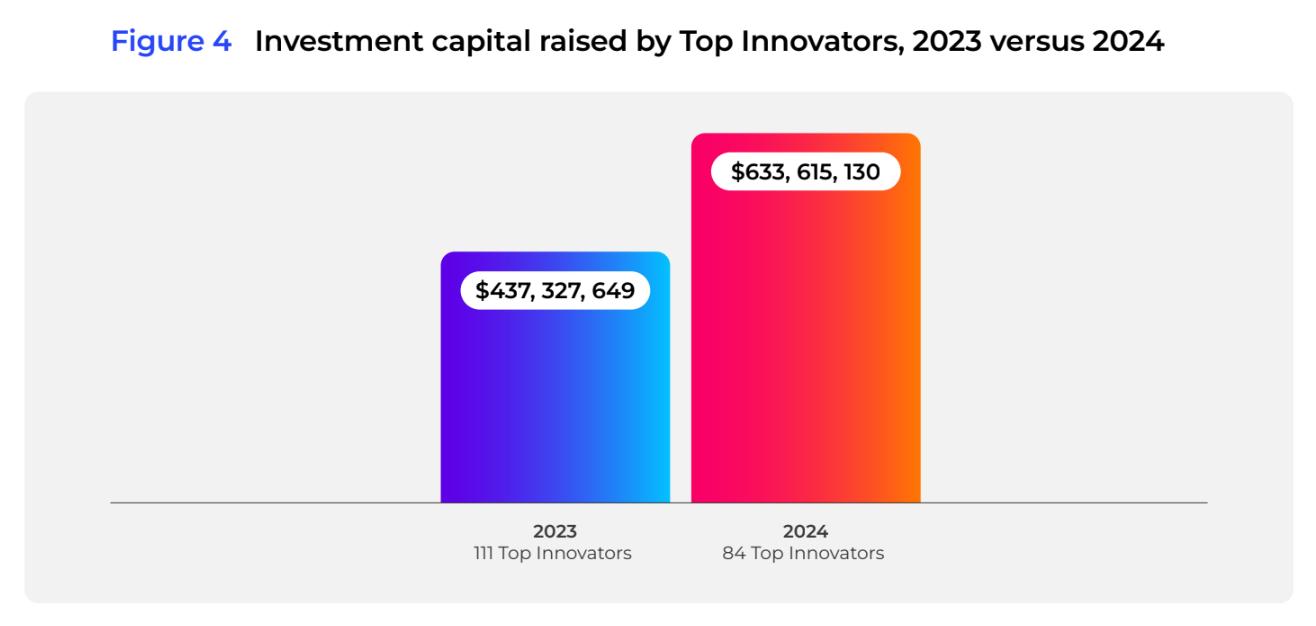
UpLink, a World Economic Forum initiative, has accelerated the growth of impact-focused start-ups since 2020, directly contributing to the UN's Sustainable Development Goals. In 2024, its Top Innovators raised $633 million in investment capital and achieved over 40% growth in customer count. These innovators created over 30,000 jobs, tracked 28 million tonnes of waste, and treated 2.5 billion litres of wastewater. Additionally, they protected 140 million hectares of land, demonstrating significant social, economic, and environmental impacts through innovation and collaboration.
Brazil, Ethiopia | ICT, Health, Education
7 stats to understand the impact innovative start-ups can have on the world’s biggest challenges
AI development must expand beyond individual behavior changes to include relational cognition and collective intelligence. As AI-generated content risks becoming insular, with predictions that half will stem from self-created material within five years, diverse human input is essential. Platforms like Google’s AI for Social Good and Unanimous AI’s Swarm help by aggregating real-world data, keeping AI relevant and grounded. Continuous human oversight ensures AI learns from varied perspectives, fostering personal growth and resilient communities.
Education
Expanding the Horizons of Collective Artificial Intelligence (CAI): From Individual Nudges to Relational Cognition

Malaysia's booming data centre industry raises concerns about water resource strain, prompting investor demand for enhanced water risk disclosures, particularly in the technology sector. Companies are urged to assess water risks and engage with suppliers. Water-related disclosures are becoming critical for corporate reporting, especially as regulatory frameworks in Southeast Asia evolve. While some sectors, including construction and consumer products, face initial water disclosure requirements, coverage remains limited, capturing only direct usage and pollution. As of 2023, Malaysia reported significant water-related disclosures, but broader industry engagement and more comprehensive regulations are needed.
Malaysia | Financial services, ICT
Making water-related disclosures – a growing priority for Asia's listed companies
The term “ESG” (environmental, social, and governance) is declining in corporate language, with usage peaking in 2021 and experiencing a significant drop since, particularly in the Asia Pacific. A study analyzed communications from over 72,000 companies, indicating that a politically-driven backlash against ESG, regulatory complexities, and scrutiny over greenwashing have prompted firms to avoid ESG terminology. While companies are shifting to terms like "responsible business," they continue to implement sustainability initiatives. The global ESG investing market is expected to grow, but firms must re-establish the relevance of ESG to communicate effectively about it.
Financial services
'ESG' is fading from corporate lexicon: study
The term "ESG" (environmental, social, and governance) is declining in corporate language, with significant usage drops noted since peaking in 2021. Analysis of corporate filings from over 72,000 companies revealed a steep decline in ESG-related terminology, particularly in the Asia Pacific. Factors contributing to this trend include political backlash, regulatory complexities, and fears of greenwashing, leading firms to adopt alternative terms like "responsible business." Despite this linguistic shift, sustainability initiatives are still being pursued, and the ESG investing market is projected to grow. The challenge lies in finding relevance for ESG discussions amid evolving political landscapes.
Financial services
ESG is quickly fading from corporate lexicon: study

Renewable energy is now the leading source of new installed power capacity globally, largely due to lower manufacturing costs. US tariffs under President Trump pose a potential threat to the clean energy sector, particularly regarding investments in solar, wind, and electric vehicle technologies. However, these trade tensions may strengthen ties between China and developing nations, as they increasingly import Chinese clean energy technologies. Emerging markets like South Africa and India are key growth areas for solar and wind exports. Rising energy demands and the need for grid improvements present further opportunities for investment in renewable technologies.
Egypt, India, Rwanda, Singapore, Taiwan, China, United Kingdom | Financial services, ICT
Tariff wars may strengthen China’s clean energy supply chain ties with developing nations: GIC

AI systems are rapidly improving in completing long tasks, with the potential to match human capabilities sooner than expected. A new metric, developed by METR, tracks AI progress by comparing task completion times against human experts. Analysis shows leading models have been doubling their task-completion times approximately every three months since 2024, with predictions indicating AI could handle tasks requiring a month of human expertise by 2029 for 50% reliability. Despite this advancement, experts warn that long-term predictions may be unreliable due to uncertainties in AI application and effectiveness.
AI could soon tackle projects that take humans weeks
The latest issue of the Asian Development Review emphasizes city-to-city learning, addressing environmental issues, food security, and trade. Key topics include the significance of urban green spaces for flood reduction, the benefits of growing mungbeans in minimizing chemical fertilizer use, and how internet access boosts farmers' incomes. Further analysis covers trade costs in Central Asia and their impact on exports. Studies evaluate the effects of trade openness on poverty reduction, e-commerce's role in productivity for informal firms, and the consequences of pollution information in China on labor outcomes.
Afghanistan, Armenia, Australia, Austria, Azerbaijan, Bahrain, Bangladesh, Barbados, Belgium, Benin, Bolivia, Bosnia and Herzegovina, Brazil, Bulgaria, Burkina Faso, Burundi, Cambodia, Chad, Chile, Colombia, Costa Rica, Czech Republic, Democratic Republic of the Congo, Denmark, Dominican Republic, Ecuador, Egypt, El Salvador, Estonia, Eswatini, Ethiopia, Finland, Gabon, Georgia, Germany, Ghana, Guatemala, Honduras, Hungary, India, Indonesia, Ireland, Israel, Jamaica, Japan, Jordan, Kazakhstan, Kenya, Kyrgyz Republic, Latvia, Lebanon, Lesotho, Lithuania, Luxembourg, Madagascar, Malawi, Malaysia, Malta, Mauritania, Mexico, Moldova, Mongolia, Morocco, Mozambique, Myanmar, Namibia, Nepal, New Zealand, Nicaragua, Oman, Pakistan, Panama, Paraguay, Peru, Philippines, Poland, Portugal, Republic of Korea, Romania, Russian Federation, Rwanda, Saudi Arabia, Senegal, Seychelles, Singapore, Slovakia, Slovenia, South Africa, Spain, Sri Lanka, Sudan, Sweden, Switzerland, Taiwan, China, Tajikistan, Tanzania, Thailand, Trinidad and Tobago, Tunisia, Türkiye, Uganda, Ukraine, United Arab Emirates, United Kingdom, Uruguay, Uzbekistan, Venezuela, Viet Nam, Yemen, Zambia, Zimbabwe | Financial services, Health
Asian Development Review: Volume 42, Number 1
The US tech industry, led by major companies like Microsoft, Google, Amazon, and others, is significantly influencing the transition to green energy. These companies are not only major buyers of renewable electricity but are also signing extensive power purchase agreements (PPAs) to secure energy from new sources, including smaller nuclear plants and geothermal initiatives. The rise of energy-intensive AI models has heightened the demand for reliable energy sources, prompting innovations in energy supply management. Despite potential risks of dependency on a few tech giants, their investments and initiatives could accelerate the global shift toward cleaner power.
How the US tech industry is shaping the transition to green energy

Meeting the energy challenge posed by data centres is crucial for the transition to renewable energy. These centres, which consumed about 1% of global electricity in 2024, are expected to increase their usage significantly, impacting the carbon footprint. Solutions like small modular reactors are being explored, but a shift to a 'datacentric perspective' is necessary where data use informs energy generation and consumption decisions. This approach will help regulate and limit the environmental impact of data centres, ensuring the viability of renewable energy.
Financial services, ICT, Education
Meeting the energy challenge posed by data centres is central to a green future

Caregivers derive meaning from their work through four key dimensions: skill level, impact, personal development, and rich relationships. They recognize their specialized skills, appreciate making a difference in lives, and value learning from both care recipients and their experiences. Relationships with clients often resemble deep friendships, enhancing their sense of purpose. Additionally, external influences from employers, colleagues, and family play a significant role in reinforcing or undermining caregivers' sense of meaningfulness. Recognizing and valuing caregivers' contributions is essential for improving job satisfaction and retention in the evolving healthcare landscape.
What meaning at work means for caregivers
The introduction of artificial intelligence (AI), particularly through generative and large language models, reshapes scientists' research incentives, encouraging a shift towards more innovative and socially valuable projects rather than incremental advancements. By improving precision in well-defined knowledge domains, AI tools allow researchers to strategically align their work to enhance the effectiveness of decision-making. This transformation could lead to systematic expansions of knowledge or cycles of deeper strategic research, potentially aligning private research incentives with societal goals and addressing inefficiencies in scientific innovation.
A Quest for AI Knowledge
In the 1930s, British tariffs on Irish exports, primarily in retaliation for a debt dispute, initiated a trade war that lasted nearly six years. Éamon de Valera, the Irish leader, sought to redirect these funds for domestic growth, prompting British tariffs that impacted Ireland's economy significantly. While Ireland's key exports collapsed and industries, including Guinness and Ford, relocated to avoid tariffs, a bilateral agreement in 1938 ultimately resolved the conflict. This historical trade war highlights the economic and diplomatic ramifications of such policies, reminiscent of contemporary tariff disputes under President Trump.
Ireland, United Kingdom
What Trump could learn from the British and Irish trade war of the 1930s
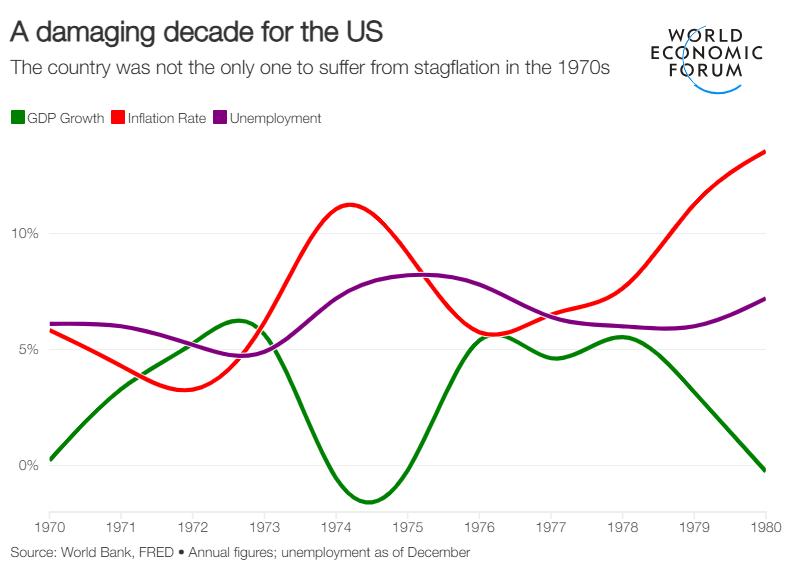
Anticipation of stagflation, characterized by poor growth and rising inflation, is resurfacing in the US and globally. The term emerged during the dismal economic conditions of the 1970s, where inflation soared alongside declining GDP and increasing unemployment. Although policymakers shifted from Keynesian intervention to neoliberal approaches to mitigate such risks, the current mix of government intervention, geopolitical tensions, and uncertain economic indicators raises concerns that stagflation could reemerge. Historical lessons underline the delicate balance policymakers must maintain between curbing inflation and fostering economic growth.
Africa, Latin America | Financial services
Stagflation forced us to rethink how we manage economies. Will it make a comeback?

Millions of children worldwide remain out of school, with the poorest countries facing severe educational deficiencies. An annual investment of $97 billion is essential to bridge the learning and skills gap among youth. Three key strategies include innovative funding mechanisms like the International Finance Facility for Education (IFFEd), prioritizing early childhood education for significant long-term returns, and implementing evidence-based program design that leverages technology. Coordinated efforts among stakeholders and low-cost behavioral interventions can enhance school participation, ultimately fostering a generation prepared for the evolving workforce and improving global prosperity.
Rwanda, South Africa, Tanzania | Financial services, Education, Health
3 steps to address the education crisis and power global prosperity

Urgent action on youth brain health is essential for economic stability, as brain health disorders cost the global economy $5 trillion annually, projected to triple by 2030. Current mental health challenges among youth, such as anxiety and depression, jeopardize cognitive development and future workforce readiness. Investment in cognitive skills and modernized education systems is crucial to foster adaptability and resilience in young people. Initiatives like Germany's Dare2Care exemplify successful approaches to enhance socio-emotional competencies. Without immediate intervention, future productivity and innovation face significant risks, threatening global economic growth.
Financial services, Education, Health
Why we must take urgent action on youth brain health for the sake of the global economy