
Access to public data could generate value for the public sector beyond charging fees. Challenges of a "pay to access" model include pricing difficulties, potential barriers for startups, and risks to privacy governance. Alternatives include securing discounts on products utilizing public data, implementing royalties, taking equity stakes in startups, establishing targeted levies, or using general taxation. Additionally, non-financial conditions for data access can enhance value. Each approach must balance encouraging data use, providing public sector returns, fostering equitable innovation, creating social value, and building public trust.
What is a fair exchange for access to public data?
DataLumos is a crowd-sourced repository designed for valuable government data, maintained by the ICPSR, which is dedicated to preserving and sharing US government and social science data. The platform allows community members to deposit public data resources and suggest additional resources for inclusion. Financial contributions are encouraged to support the sustainability of DataLumos.
A crowd-sourced repository for valuable government data
Artificial intelligence (AI) applications in life sciences promise significant advancements in biological discovery and design, surpassing traditional methods in speed and efficiency. However, these AI-enabled tools also pose biosecurity risks, as they could be misused for harmful purposes, including the creation of biological weapons. A report by the National Academies of Sciences, Engineering, and Medicine, commissioned by the Department of Defense, explores the implications of AI in this context and discusses how advancements can both elevate biosecurity threats and provide means for risk mitigation.
The Age of AI in the Life Sciences: Benefits and Biosecurity Considerations
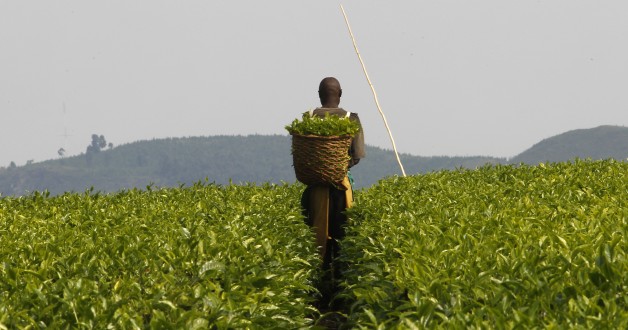
Africa's youth face a crucial decision at a crossroads defined by "waithood," a state of prolonged dependency due to unemployment and lack of opportunities. This situation results in three potential responses: apathy, anarchy, and activism. 

Apathy manifests as a sense of resignation, with many young Africans feeling excluded from economic and political participation, even though they represent a significant portion of the population. Anarchy, though less common, presents a dangerous path where frustration could lead to violence and instability, as evidenced by protests in Nigeria. Conversely, a hopeful activist minority seeks to confront these challenges with constructive action and optimism, exemplified by movements like Kenya's youth-led tax protests.
Africa, Latin America
Apathy, anarchy, activism: three paths ahead for Africa

The Paris AI Action Summit revealed the need for critical skills among business students in an evolving job market influenced by AI. Key takeaways highlighted the lack of global AI governance, significant investments by countries like France in technology infrastructure, and a shift in focus from risk management to market opportunities. Business students should focus on hard technical skills alongside soft skills and critical thinking. Educational institutions are in the early stages of adopting AI in teaching and research, with the potential for innovative practices and the need to address ethical concerns.
Education
Job Opportunities Abound: B-School Profs Share Insights from the Paris AI Action Summit

An Australian parliamentary inquiry has emphasized the critical need for enhanced civics education to strengthen democratic participation. The report, titled “From Classroom to Community,” outlines 23 recommendations aimed at improving knowledge of the electoral system among citizens, particularly through mandatory civics courses for high school students. It highlights the importance of preparing individuals to vote effectively, considering Australia's complex preferential voting system. Additionally, the report stresses the necessity of civics education for new migrants to foster a sense of citizenship. Increasing media literacy and understanding electoral processes is essential to combat misinformation and rebuild trust in democracy amidst rising disengagement and distrust.
Australia | Education
In the Face of Disengagement and Distrust: Civics Education in Australia Is Critical
The book "Activated Citizenship: The Transformative Power of Citizens' Assemblies" by Marjan H. Ehsassi addresses citizen disengagement from political institutions through democratic innovations, particularly citizens' assemblies. These assemblies facilitate consistent participation and meaningful input in governance, creating impactful platforms for engagement. Ehsassi introduces a new concept of the Activated Citizen, using a mixed-methods approach that includes field research, surveys, interviews, and storytelling across multiple cities. The book presents case studies on critical issues and concludes with a blueprint for enhancing the effectiveness of government-led deliberative platforms to promote active citizenship.
Activated Citizenship: The Transformative Power of Citizens' Assemblies

Trust in AI extends beyond technical performance, incorporating ethical principles and human values. Reliable AI systems deliver consistent, error-free outcomes across varied environments, fostering trust akin to that placed in humans. Trust is relational, involving broader social and technical networks, including designers, users, and institutions. Experts emphasize the importance of transparency and interdisciplinary collaboration in developing trustworthy AI. Openness about data and model development is crucial, as it allows independent verification and builds confidence in AI systems, ultimately aiming to balance innovation with responsible use.
Trustworthy AI – reliable and predictable

Migration communication campaigns are increasingly prevalent in Europe, aimed at influencing public attitudes and behaviors regarding migration. Researchers James Dennison, Lorenzo Piccoli, and Mariana C. Duarte propose a unified research agenda to study these campaigns, presenting an open-access database of 301 campaigns from 2012 to 2022. These campaigns are deemed vital by policymakers for achieving objectives like upholding human rights, reducing xenophobia, and correcting misinformation. The authors emphasize the need for interdisciplinary approaches to analyze campaign variations, their effects, and the development of a typology to enhance understanding and cooperation among researchers, policymakers, and communicators.
Latin America
Making sense of Europe’s boom in migration communication campaigns

National agencies frequently restrict access to crucial climate data under the guise of security, privacy, or commercial concerns, hindering scientific progress and effective climate policies. Open data sharing is essential for validating climate models and reanalysis data, which inform global strategies against climate change. Although organizations like the World Meteorological Organization advocate for data sharing, progress remains slow. Arguments against transparency, such as national security and commercial confidentiality, overlook the public benefit of state-funded environmental data and the potential for stimulating innovation through unrestricted access.
Health
Governments must stop hoarding climate data

On 8 December 2024, the Assad regime in Syria was overthrown by a rebel alliance led by Hay’at Tahrir al-Sham (HTS), resulting in the establishment of a transitional government under Ahmad al-Sharaa. This government faces significant economic, social, and political challenges, including threats from jihadist groups like the Islamic State and remnants of the former regime. The interim government has begun to integrate former regime forces into a new army while dealing with sectarian violence and human rights issues. International support, particularly from Germany and the EU, is crucial for a successful transition and reconstruction, emphasizing the need for de-escalating geopolitical tensions.
Syria
The Political Transition in Syria: Regional and International Interests
One in three internet users is a child, yet digital spaces are predominantly designed by adults. Despite this divide, digital platforms allow children to participate in political and cultural life. The UN Convention on the Rights of the Child emphasizes children's rights online, particularly their right to be heard. Meaningful participation requires strategic planning to ensure that children have space, voice, audience, and influence in shaping decisions that affect them. This approach stresses the necessity of actively listening to children's views while safeguarding their rights and ensuring inclusive access.
ICT, Education
Being heard: Shaping digital futures for and with children
Concerns about space, particularly regarding threats like asteroid impacts, stem from deep-rooted human fears about the unknown and self-destructive tendencies. The asteroid 2024 YR4 exemplifies fears of catastrophic events, despite a low risk of impact. Political scientist Daniel Deudney suggests reducing human activities in space to mitigate risks of conflict and disaster. This fear is echoed in ancient tales, UFO conspiracy theories, and even theories linking pandemics, such as COVID-19, to extraterrestrial viruses. Overall, fear of space drives both societal anxieties and conspiracy belief systems.
Why we are so scared of space – and how this fear can drive conspiracy theories
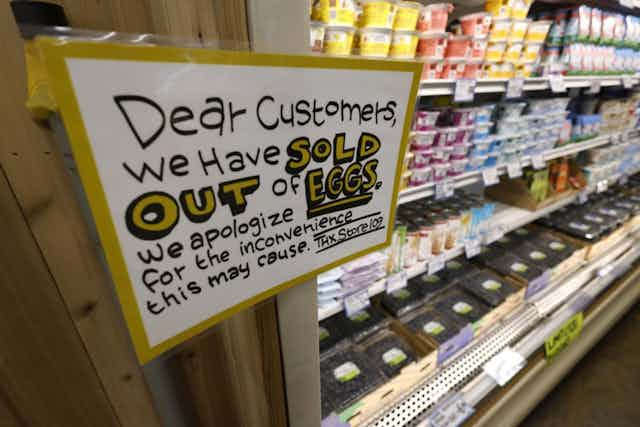
Egg prices in the US have surged from $1.20 in June 2019 to around $4.90, with spikes over $8. The avian flu outbreak has led to the slaughter of over 166 million birds, exacerbating the crisis. In response, the US plans to import 100 million eggs and has allocated $1 billion for bio-security measures. The rising prices have become a significant political issue, influencing voter perceptions of the economy, especially as nearly all Americans purchase eggs. Trump has capitalized on this issue, promising to reduce prices, while the immigration policies may further strain the industry.
Why Americans care so much about egg prices – and how this issue got so political

During Donald Trump's second term, the S&P 500 has fallen over 10% amid concerns about a potential trade war, resulting in a $5 trillion reduction in US stock values. Economists attribute the decline to Trump's aggressive tariff strategies and political brinkmanship, which have led to increased uncertainty among investors. A JP Morgan report raised the recession chances to 40%, with Moody's Analytics citing tariffs as a contributing factor. Despite this economic turmoil, the Trump administration remains focused on its trade agenda, asserting that short-term losses may be necessary to revitalize American manufacturing.
Financial services
Trump shrugs off stock market slump, but economic warning signs loom

NBS’s February 2025 compilation features the latest business sustainability research, emphasizing in-press articles from premier journals, including Financial Times Top 50. Key topics include sustainable business school development, organizational resilience, the impact of litigation on environmental disclosure, and the dynamics of mutual aid. Various book reviews cover issues from shareholder primacy to digital crowdfunding, highlighting ongoing debates in business ethics, governance, and corporate responsibility. This issue aims to advance understanding of sustainability in diverse business contexts.
Belgium, Denmark, Ethiopia, Indonesia, Netherlands, Philippines, Serbia, Singapore, United Arab Emirates | Health, Education, Financial services
Table of Contents: February 2025

Changes in speech and language can signal early signs of Alzheimer’s disease. Key indicators include frequent pauses and hesitations when speaking, using words incorrectly (like saying "cat" instead of "dog"), discussing tasks rather than executing them, reduced vocabulary, and difficulty finding the right words. Age is the primary risk factor, with the likelihood of developing the disease increasing significantly after 65, though early-onset Alzheimer's can affect younger individuals. Recognizing these symptoms early is crucial for timely support and care.
Health
Changes to speech and language can help detect Alzheimer’s early – here are five things to look out for

Localized approaches to habitat creation reflect cultural and environmental contexts, but have been overshadowed by industrialization and globalization. Current urbanization trends necessitate a return to human-centered design, integrating insights from cognitive neuroscience and environmental psychology. The Davos Baukultur Alliance promotes a holistic model for building culture, emphasizing community well-being through criteria like governance and sense of place. Successful examples include youth-led initiatives in Bandung, Indonesia, which transformed underutilized infrastructure into vibrant public spaces, fostering community engagement and pride.
Education
How 'Baukultur' can help build human-centred habitats

Regenerative urban design restores ecosystems, enhances biodiversity, and builds community resilience, moving beyond sustainability to net-positive urbanism. Successful examples from Calgary include the University District, transforming an underpopulated area into a vibrant, walkable community, and the retrofitting of the MacKimmie tower, which reduced significant carbon waste while promoting social interaction. Such projects emphasize a systems approach, integrating local ecosystems, planning for resilience, and enabling economic collaboration. Regenerative design serves as a catalyst for broader urban transformation, addressing interconnected social and environmental challenges.
How regenerative urban design transforms spaces for people and the planet
The article examines the intersection of climate change citizens' assemblies and legal frameworks. It presents a roadmap for research on the legal aspects of climate assemblies, focusing on six key areas: the outcomes of these assemblies, their public law dynamics, the formation of climate legislation, societal authority of norms, transnational climate governance, and the design of equitable legal systems. The goal is to inspire legal scholars to investigate these relevant questions and encourage interdisciplinary collaboration with social scientists.
Climate Assemblies and the Law: A Research Roadmap