
Software development is increasingly reliant on AI, leading to the emergence of AI agents that can autonomously perform programming tasks. These systems hold potential for users without coding skills to create and customize applications via easy-to-understand blueprints. However, challenges such as code vulnerability, inefficiency, and bias must be addressed, particularly regarding ethical software design. Researchers are focused on testing large language models to ensure safety and accuracy. Mechanisms are being developed to guide AI behavior, aiming to empower everyone to create effective software solutions responsibly.
Software is increasingly being built by AI – so it’s vital to know if it can be trusted

A rapid transition to low-carbon energy is crucial for tackling climate risks and ensuring energy security. However, innovative renewable energy projects face challenges in obtaining consistent and affordable insurance, hampering funding opportunities. To address this, insurers should engage with financial stakeholders to understand risk transfer needs, co-design innovative coverage solutions, and adopt technology-driven risk assessment methods. By leveraging real-time data and advanced technologies, insurers can improve underwriting practices, enhance resilience in the sector, and support growth in renewable energy investments, which could significantly increase premium revenues by 2035.
Financial services
How insurers can protect and nurture innovative low-carbon energy projects

Economic barriers significantly hinder women's participation in politics, limiting their representation despite recent elections where many women ran for leadership. In 2024, men were re-elected as heads of state three times more than women were elected. Though legislative representation saw some improvements in countries like Mexico and Rwanda, 80% of legislative leadership positions went to men. Institutional mechanisms like candidate quotas have increased the number of female candidates but have not substantially improved elected representation. Economic autonomy is essential for closing the political gap and enhancing women's influence, necessitating collaboration among various sectors to dismantle existing barriers.
Latin America
Priced out of power: How economic barriers are limiting women in politics
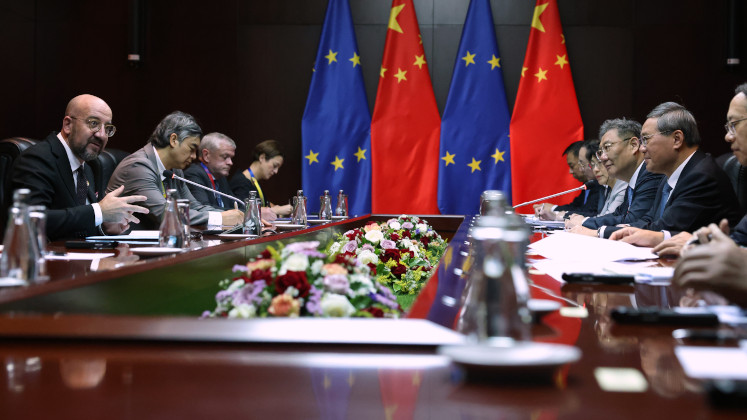
China and the EU are both pursuing leadership roles in combating climate change, with an opportunity for increased cooperation stemming from Donald Trump's presidency. While Xi Jinping positions China as a responsible global player advocating for multilateralism, domestic policies reveal hesitance to sacrifice economic growth for climate goals. China remains the largest greenhouse gas emitter and has set a 2060 net-zero target, later than the US and EU's 2050 benchmarks. Additionally, the EU's Carbon Border Adjustment Mechanism has created trade tensions, yet recent dialogues indicate potential for collaborative climate policies despite significant obstacles.
Latin America
Could Trump’s presidency boost EU-China climate cooperation?
The deadline to implement the 2030 Agenda for Sustainable Development is just five years away, yet no country in the Asia Pacific is on track to meet the Sustainable Development Goals (SDGs). The United Nations estimates it will take an additional 32 years for the region to achieve these goals. The "Unlocking Capital for Sustainability" summit aims to bridge the action gap through finance, gathering decision-makers from finance, business, government, and civil society to discuss mechanisms for facilitating Asia's equitable transition to net-zero emissions. The 2024 summit was held in Thailand, leading up to COP29 in Baku, Azerbaijan.
Bangladesh, Singapore | Financial services, ICT, Health
‘Unlocking capital for sustainability’ Insights Report 2024

By 2027, AI-driven investment tools are projected to serve as the primary source of advice for retail investors, with anticipated usage reaching around 80% by 2028. While AI can enhance efficiency and data-driven insights, key challenges remain in replacing the emotional intelligence and trust associated with human advisors. Trust hinges on credibility, reliability, intimacy, and self-orientation—factors where AI has strengths but also considerable limitations. A hybrid model integrating AI's analytical power with human empathy is seen as essential for building trust-based relationships in wealth management.
AI, wealth management and trust: Could machines replace human advisors?

Asia is responsible for 51% of global carbon emissions and 82% of coal generation, making it crucial to address climate impacts while offering significant investment opportunities in nature and climate solutions. The impact investment market in Asia is still developing, facing barriers like market immaturity and risk perceptions. Strategies such as blended finance and public-private-philanthropic partnerships can help mitigate risks and attract investment. The report provides actionable recommendations for stakeholders to enhance climate-smart solutions and transition towards a net-zero economy, fostering ecosystem protection and sustainable economic growth.
Nigeria
Accelerating Impact Investments for Climate and Nature in Asia

Asia, contributing 51% of global carbon emissions and hosting 82% of coal generation, faces significant climate vulnerabilities alongside opportunities for impactful investments in nature and climate solutions. The nascent impact investment market in the region offers potential for growth by mobilizing capital while delivering financial returns. Key barriers include market immaturity, risk perceptions, and lack of standardized impact measurement. Solutions like blended finance and public-private-philanthropic partnerships can de-risk investments. Practical recommendations aim to scale climate-smart solutions and sustainable infrastructure, fostering a transition to a net-zero economy, ecosystem protection, and long-term economic growth.
Nigeria
Accelerating Impact Investments for Climate and Nature in Asia

Asia's mega deltas, including the Mekong and Ganges-Brahmaputra, face significant threats from climate change, impacting food security for millions. A study conducted by the International Rice Research Institute and partners evaluates agricultural systems in these deltas, emphasizing a food systems approach for adaptation. Key findings indicate the Mekong Delta's agricultural productivity but highlight vulnerabilities due to socioeconomic challenges. Crop diversification, such as integrating cash crops, enhances income and nutrition. However, obstacles like weak value chains and competition for resources hinder sustainability. Cambodia faces even greater risks with lower adaptive capacity.
Bangladesh, Nigeria
Climate Resilience in Asia’s Mega Deltas: A Spatial Approach to Adaptation Planning

Georgia aims to transition to a green economy by 2050, focusing on energy, construction, and transport sectors. The report evaluates plans for renewable energy power plants, energy efficiency in new buildings, and revamped bus networks to lower emissions. It highlights the trade-offs between higher costs for vulnerable populations and benefits like job creation and enhanced services, offering recommendations for achieving an inclusive and sustainable transition.
Albania, Azerbaijan, Estonia, Ethiopia, Georgia, Ghana, Serbia
Just Transition Socioeconomic Impact Assessment for Georgia
Smallholder farms are crucial for food security in Asia but face challenges due to limited access to essential resources. Neglecting agriculture leads to severe repercussions for food security and economic stability, especially in a changing geopolitical context. The agriculture sector suffers from inadequate investment and poor resource allocation. The book advocates for targeted policy reforms and investments to support smallholders, emphasizing the need for sustainable practices and resilience in farming. It provides insights into various country experiences and concludes with policy implications to enhance the viability of smallholder agriculture.
Bangladesh, Nigeria, Pakistan
The Future of Smallholder Farming in Asia

Real-time metrics could help address the challenges of obtaining accurate economic and health data from China, especially following the abrupt end of its zero-COVID policy in 2022. The country's significant global role makes it essential for policymakers to have a clear understanding of its economic trajectory. Given the unreliability and untimeliness of official data, the use of digital data sources, including satellite imagery, social media, and online payments, combined with advances in artificial intelligence, offers a promising solution for gathering more reliable insights.
Denmark, India, Japan, Singapore, Taiwan, China | Financial services, ICT, Health
Can Real-Time Metrics Fill China’s Data Gap?
The integration of generative artificial intelligence (GenAI) into transportation planning can transform demand forecasting, infrastructure design, policy evaluation, and traffic simulation. A new framework is proposed to guide the adoption of GenAI, featuring a taxonomy that categorizes applications into transportation planning tasks and computational techniques. Key advancements include data preparation and domain-specific fine-tuning, while challenges such as data scarcity, explainability, and bias mitigation are discussed. The goal is to connect traditional transportation methods with modern AI, promoting ethical and impactful use in the field.
Generative AI in Transportation Planning: A Survey

The UK Court of Appeal upheld the prison sentences of 16 environmental activists, including notable figures from Extinction Rebellion, despite reducing some terms. The court rejected claims that their disruptive actions, such as throwing soup on artworks, were violent but maintained the sentences were appropriate. An article argues for the "integrity principle" in trials of non-violent protesters, emphasizing the importance of defendants being able to explain their motives, which are often aimed at benefiting the community rather than personal gain. It calls for juries to engage with these motives as part of the judicial process, challenging recent legal reforms that limit defendants' rights to present their motivations.
Let juries judge disruptive protesters like Just Stop Oil on their integrity – expert view
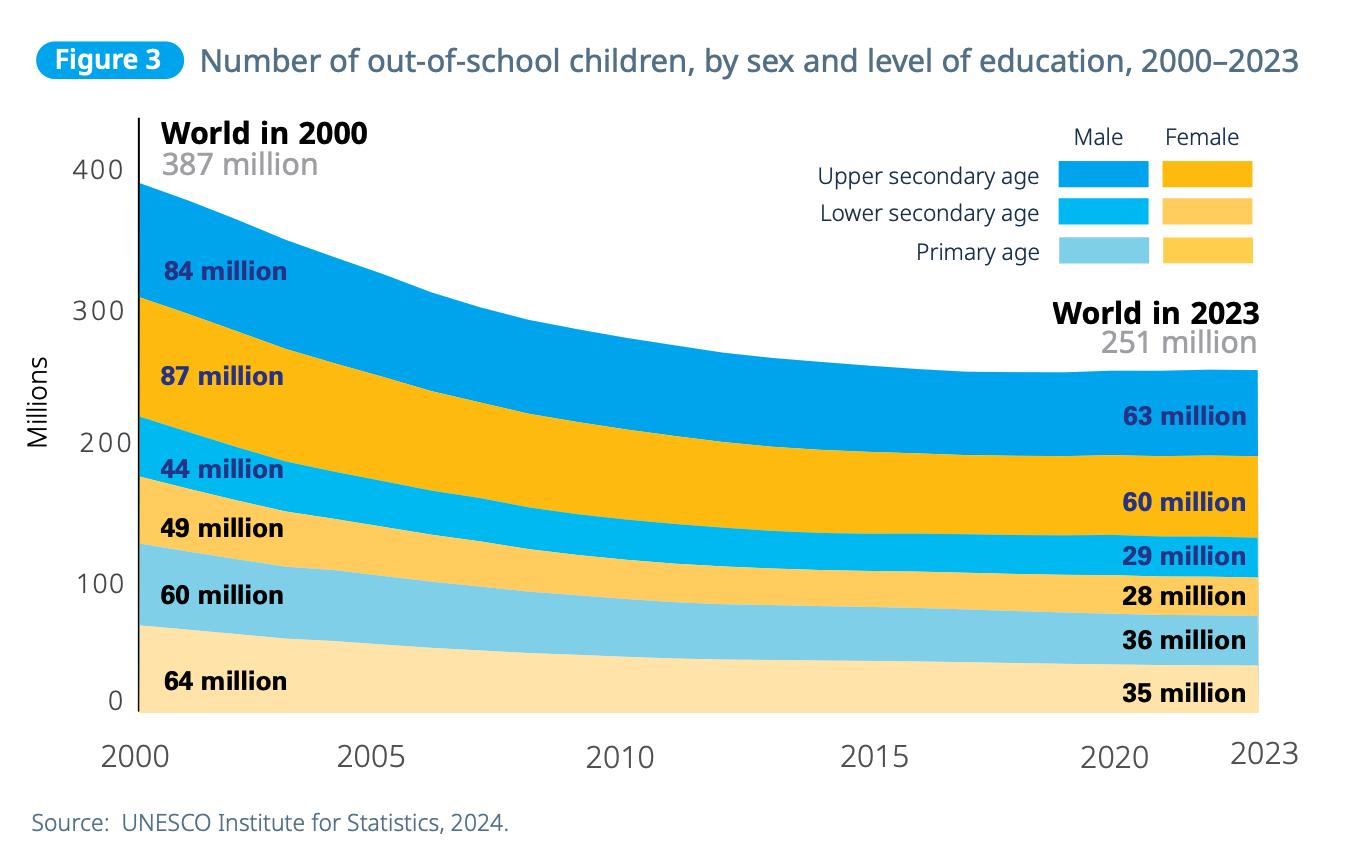
Over the past 30 years, significant disparities remain for girls regarding education, health, and opportunities. Despite a 39% reduction in girls out of school since 2000, there are still 122 million girls not in education. Twice as many adolescent girls compared to boys are not in education, employment, or training globally. Health outcomes for girls also lag behind, as a 15-year-old girl in a low-income country can expect 12 years less life than her peers in high-income regions. Gender-based violence and limited access to digital resources further exacerbate these challenges, highlighting the ongoing need for gender parity initiatives.
Health
Women's History Month: This is how girls' lives have changed in the past 30 years

Major cities are advancing clean air initiatives, utilizing new technologies like AI for pollution modeling and exposure tracking. A shift toward increased funding for air quality programs is emerging, driven by the urgent need to address air pollution's severe health impacts, especially on children. Notable achievements include the Breathe Cities initiative aiming for 30% reductions in emissions by 2030, successful European policies leading to fewer pollution-related deaths, and innovations in personal air quality tracking. Global collaboration for improved data access and investments in air quality projects, like the World Bank's $1 billion guarantee, signal positive momentum in the fight against air pollution.
Latin America | Health
6 inspirational clean air stories from 2024

Violence in Syria's coastal governorates has surged since March 6, 2025, resulting in over 1,000 civilian deaths and significant destruction, including damage to hospitals. Maryam, a 21-year-old from Homs, highlights the suffering of her generation, many of whom had hopeful futures cut short by the conflict. UNFPA calls for de-escalation and humanitarian access, citing urgent needs for medical and mental health support. Efforts are being made to empower youth through education and civic engagement, aiming to rebuild Syria and create a peaceful future. Maryam expresses hope for a brighter tomorrow, emphasizing the resilience and potential of her generation.
Syria | Health
“The people in Syria are destroyed from war”: A call for peace after violence in the coastal region

Keir Starmer’s administration is attempting to reform the UK civil service, expressing dissatisfaction with its performance and highlighting an urgency for change. Reforms include performance reviews for officials, minimizing the influence of regulators, and promoting the use of artificial intelligence to enhance productivity. Starmer advocates for "mission-led government," focusing on long-term goals, inter-agency cooperation, greater autonomy for frontline staff, and input from external organizations. However, significant challenges exist due to entrenched practices in Whitehall, a rigid accountability system, and skepticism about empowering outside interest groups in the policy process.
Financial services
Keir Starmer’s civil service reforms: what is mission-led government and why is it so hard to achieve?

Governments in Latin America and the Caribbean can enhance decision-making and public policy by better utilizing administrative data they already collect. A World Bank report highlights that with investment in data analytics, significant improvements in governance efficiency, accountability, and transparency are possible. Successful examples include Chile's health sector saving millions through reduced missed appointments and Guatemala's education sector decreasing dropout rates. Challenges remain, such as insufficient data infrastructure, lack of skilled analysts, and poor data quality frameworks. Collaborative efforts are needed to address these issues and unlock the potential of government analytics for transformative change.
Angola, Barbados, Bolivia, Colombia, Costa Rica, Dominican Republic, El Salvador, Guatemala, Haiti, Honduras, Jamaica, Nicaragua, Panama, Paraguay | Health, Education
How data can transform government in Latin America and the Caribbean
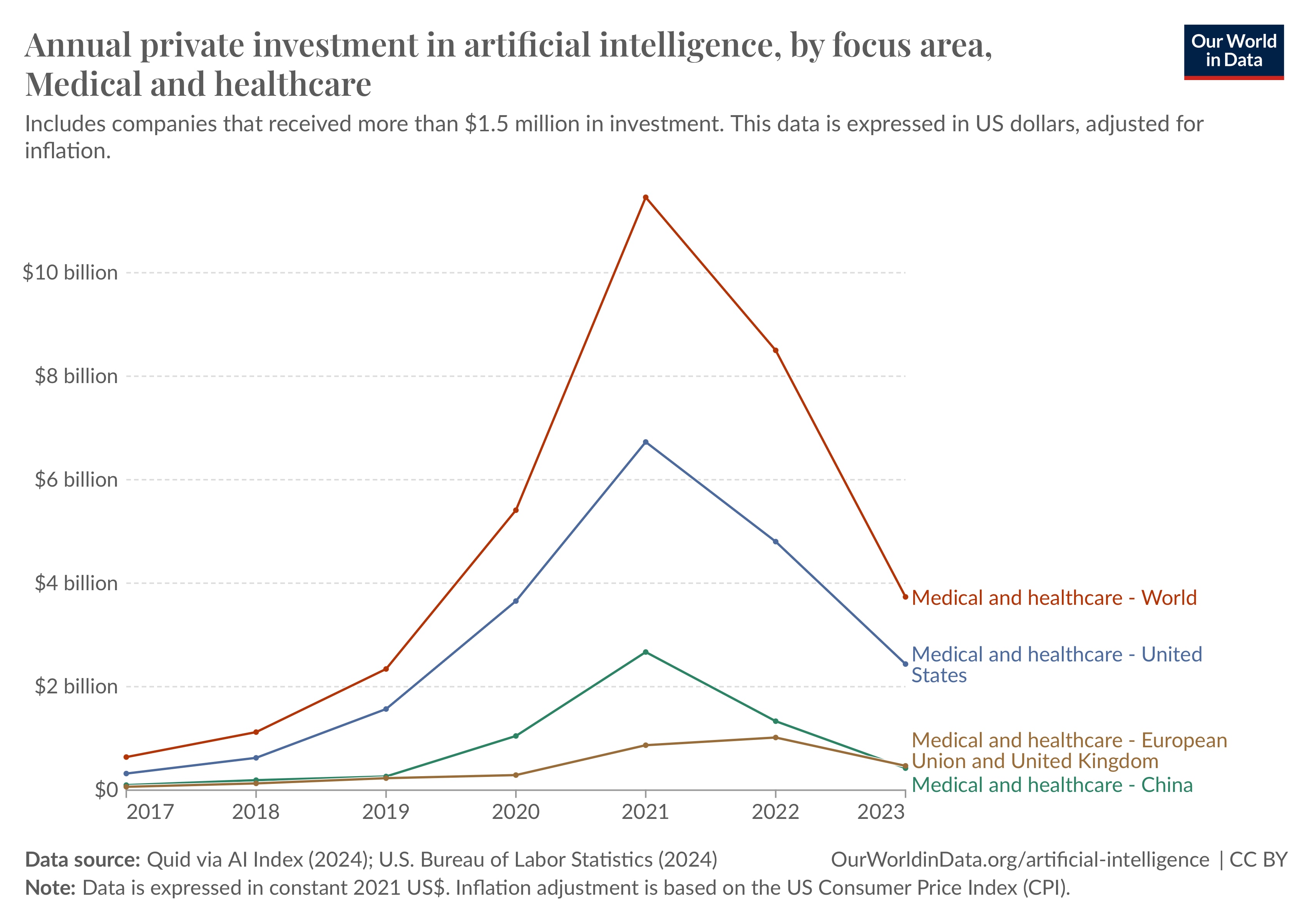
AI is transforming healthcare by addressing the significant gap in access to essential services, with 4.5 billion people currently lacking care. It enhances diagnostics, such as analyzing stroke brain scans more accurately than professionals and identifying fractures often missed by doctors. AI also aids in predicting ambulance needs, accurately determining hospital transfers in 80% of cases. Furthermore, AI can detect early signs of over 1,000 diseases using data from large health repositories, enabling earlier intervention. Despite its potential, healthcare's adoption of AI remains below average compared to other industries, highlighting the need for comprehensive training and consideration of risks.
6 ways AI is transforming healthcare