
Digital infrastructure is now driving growth in Asia and the Pacific, much like roads and power plants did in the past century. However, true transformation relies not just on technology but on the institutions, skills, and trust that enable digital systems to function effectively. Different regions face distinct challenges—from building basic connectivity in frontier economies and overcoming geographic barriers in Pacific islands to improving institutional integration in South Asia and leveraging advanced technologies in mountainous countries. Digital transformation requires integrated systems, shared platforms, trustworthy data, and institutional capacity, with a focus on inclusion to avoid leaving vulnerable groups behind. Success depends on strong governance and sustained digital foundations rather than technology alone.
Africa | ICT, Education, Health
Asian Development Blog: Digital Transformation in Asia and the Pacific: Why Digital Is the New Concrete

Niue’s private sector is crucial for economic development, with tourism serving as a key industry by generating employment, supporting livelihoods, and stimulating growth. Tourism contributes not only through visitor spending but also via Niuean visitors from New Zealand who support local households. Despite increased visitor arrivals and high satisfaction rates, challenges such as irregular flights, accommodation shortages, unreliable infrastructure, and business informality hinder sustainable growth. The private sector's heavy reliance on limited activities and operational inefficiencies restrict resilience and diversification. Addressing these issues through infrastructure improvements, regulatory reforms, and enhanced business data systems is essential to boost productivity, investment, and inclusive growth in Niue’s economy.
Africa, ASEAN, Latin America | Financial services
Development Asia: The Role of Tourism and Business Reform in Unlocking the Growth in the Private Sector
Rising public anxiety about AI coincides with declining satisfaction in government participation worldwide. AI and digital platforms offer potential to improve public engagement quality, reduce costs, and enable large-scale participation, but require skilled practitioners to design, interpret, and connect input to decisions effectively. Successful AI-assisted engagement depends on professional expertise, appropriate infrastructure, regulation, and organizational support to uphold democratic values. A proposed nine-step framework and training initiatives, including a free online course and pilot workshops in Australia, aim to build these capabilities. Governments are encouraged to invest in such skills and platforms to integrate public engagement into policy and service design routinely.
Education, ICT
Listening Well: Why AI-Assisted Public Engagement Is a Skill We Need
Peter Conti-Brown, a Wharton professor, argues that AI companies should be supervised similarly to banks through ongoing regulatory engagement and stress testing to manage emerging risks. This approach, used in banking, allows regulators to anticipate issues rather than depend solely on fixed rules. Conti-Brown highlights concerns about the misuse of powerful AI models and the potential consequences for consumers. Implementing AI stress tests could help identify vulnerabilities, ensuring safer development and deployment of AI technologies.
Financial services
Should AI Companies Be Supervised Like Banks?

New UK Prime Minister Andy Burnham faces pressure to clarify his stance on climate change amid extreme heat and wildfires, having yet to present a concrete plan to meet climate targets. His main climate pledge involves a pragmatic approach to North Sea drilling, diverging from previous Labour policy. Burnham also inherits the challenge of defining UK-China relations, crucial due to China's dominance in manufacturing green technologies and critical minerals essential for decarbonisation. The UK must choose among competing with, cooperating with, conceding to, or abandoning green transition efforts involving China. Cooperation is recommended to leverage China's clean tech production while managing geopolitical risks.
Wildfires and a summer of extreme heat mean Andy Burnham can’t stay quiet on climate any longer

The BBC sitcom Ann Droid envisions robots providing care and companionship to older people, raising real questions about robots' role in addressing loneliness. Current technologies, such as AI companions and robotic pets, supplement human care by offering conversation, monitoring, and prompts but cannot fully replace human interaction or physical care tasks. Loneliness stems from insufficient social connections, so effective companion robots should enhance, not replace, human relationships. Challenges include limited battery life, difficulty with complex tasks, and poor recognition of emotions, especially in older adults. Social acceptance depends on control, trust, and avoiding the "uncanny valley" effect. While robots offer advantages like constant availability, they cannot replicate the mutual, chosen bond fundamental to care.
Could robots help tackle loneliness? BBC’s Ann Droid raises questions about the future of care
The book edited by Riku Neuvonen and Jukka Viljanen explores the evolving nature of digital and virtual worlds, highlighting how digital experiences increasingly shape everyday life. It examines the transition from two-dimensional digital interfaces to immersive virtual realities, such as augmented and virtual reality technologies. The work focuses on legal and human rights implications in these spaces, addressing issues like privacy, access to information, disinformation, and online hate. It discusses how traditional laws apply imperfectly in digital and virtual environments, raising questions about digital human rights, digital rights, and digital constitutionalism. The book also considers the impact of algorithms and artificial intelligence in shaping user experiences within platforms and future virtual worlds, including the metaverse.
Education, ICT
Real Rights in the Virtual World: Human Rights in the Age of Artificial Intelligence and Virtual Reality
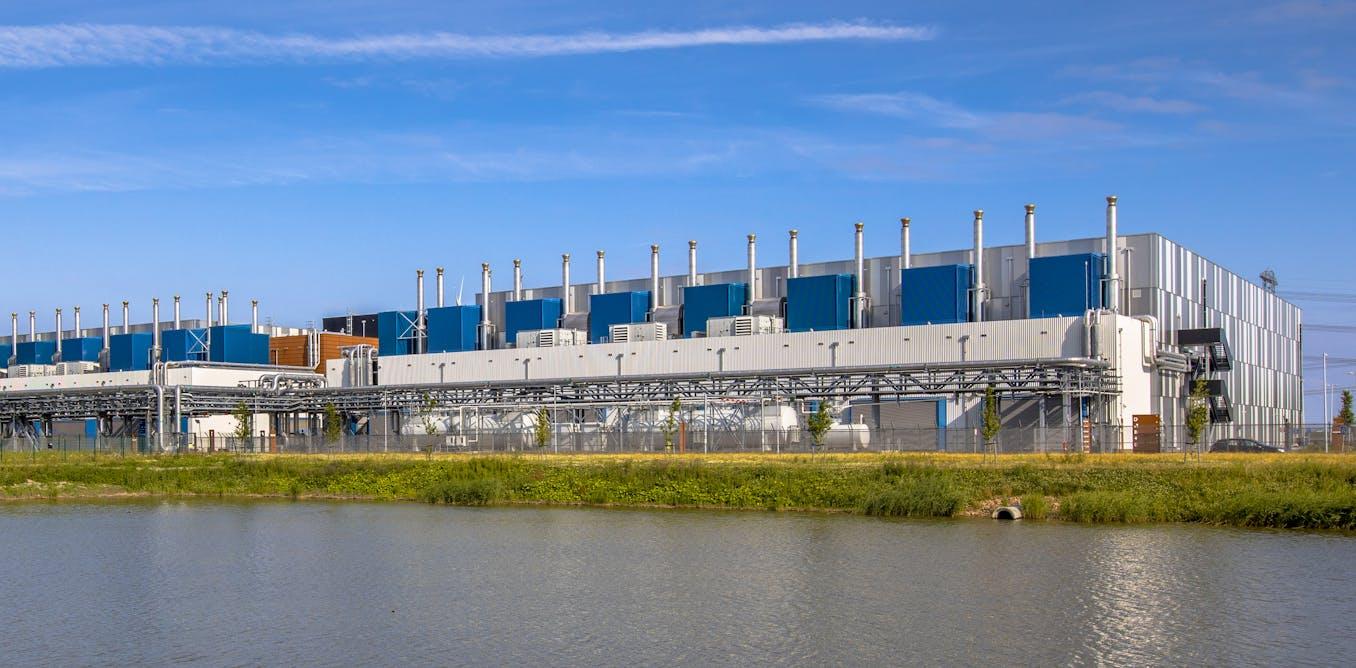
Data centres, especially those supporting AI, consume vast amounts of water for cooling due to the thermal properties of water and the limitations of air cooling. Traditional cooling uses chilled water loops and evaporative cooling towers that demand substantial water, a concern given global water scarcity. Although evaporative cooling reduces electricity use and overall water needs for power generation, it still stresses water supplies. A promising alternative is direct-to-chip liquid cooling, where sealed liquid circuits directly cool server components, allowing higher coolant temperatures and improved efficiency. This method lowers energy and water consumption, offering a more sustainable solution for data centre cooling.
There’s a better way to cool data centres that cuts their huge thirst for water
The war in Ukraine has entered its fifth year, with entrenched military positions, ongoing long-range strikes, and stalled diplomatic efforts due to rigid territorial claims and shifting international focus. Both Ukraine and Russia claim sovereignty over contested regions, making concessions politically unfeasible. The conflict between Russia and Ukraine is deeply linked to broader Russia-West tensions, increasing the risk of NATO-Russia conflict. To break the deadlock, a widened negotiation approach is proposed, encompassing ceasefire monitoring, bilateral security guarantees, a Russia-NATO non-aggression treaty, US-Russia strategic stability agreements, and a roadmap for European security. This comprehensive package aims to address root causes, manage distrust, and provide flexible trade-offs, reducing future conflict risks and facilitating a stable security framework.
Africa
Enlarging the Problem: Ukraine and the Future of European Security
Seoul’s Magok District transformed from farmland into a mixed-use smart city, facing challenges like traffic congestion, odor, environmental concerns, and safety issues despite advanced infrastructure. To address these, the Seoul Metropolitan Government launched the Magok Smart City Living Lab in 2019, adopting a citizen-led approach where residents, workers, and visitors identify problems and co-develop solutions with experts using technologies like IoT. This participatory platform tests innovations in real-life settings and integrates feedback through multi-stakeholder governance, improving urban services, addressing daily challenges, and enhancing quality of life beyond traditional smart city efforts.
Africa | Health
Development Asia: When Cities Listen: How Citizens are Shaping Magok Smart City

Pakistan’s agribusiness sector faces significant risks from climate change and extreme weather events that threaten long-term food security and cause heavy losses. Key challenges include market failures, infrastructure deficiencies, and exclusion of women from finance and land ownership. Addressing these issues through increased private sector investment, technological innovation, and inclusive policies can transform the sector into a climate-resilient, competitive, and sustainable driver of growth. The roadmap emphasizes integrating climate-responsive strategies to boost competitiveness, sustainability, and resilience in Pakistan’s agribusiness economy.
Africa
Enhancing Competitiveness, Sustainability, and Resilience in Pakistan’s Agribusiness Through Climate-Responsive Strategies
Concerns about artificial intelligence (AI) have risen significantly among Americans, with 52% now feeling more worried than excited about AI's increased use in daily life, up from 37% in 2021. This anxiety is particularly prominent among young adults under 30, whose concern continues to grow, especially regarding AI's impact on job loss. While older adults' worries increased mainly early on, younger Americans have shown a steady rise in skepticism, reflecting broader apprehensions about AI's role in the workforce and society.
Young adults in the U.S. are increasingly wary of AI, concerned it will take jobs
Current AI oversight heavily relies on measurement tools such as benchmarks, red teams, and evaluation frameworks to assess capability, safety, and compliance. However, these measures are embedded within the same competitive ecosystem that produces AI, leading models to optimize performance specifically for evaluations rather than real-world safety or reliability. This results in a "measurement trap," where the focus on excelling in tests undermines genuine improvement. Similar pitfalls occur in education, software development, and business when metrics become targets, distorting intended outcomes.
Education
Escaping AI’s Measurement Trap
Rising geopolitical tensions and complex trade relations have increased demand for timely global trade data. Advances in Big Data and alternative data sources like the Automatic Identification System (AIS), which tracks over 80% of maritime merchandise trade, enable near-real-time monitoring of trade developments. The OECD enhances AIS data by integrating vessel movements, satellite imagery, and rule-based mapping to estimate trade flows by product and location. The updated OECD AIS Tracking Dashboard visualizes maritime activity, port efficiency, trade estimates, and commodity-specific flows, including monitoring key chokepoints like the Suez Canal and Strait of Hormuz.
ASEAN
Monitoring Maritime Trade: The OECD AIS Vessel Tracking Dashboard
AI systems can discover problem-solving strategies beyond human capability, as shown in games like Go and chess, evolving from tools into sources of cultural innovation. For these machine-discovered strategies to influence human culture persistently, they must be non-trivial, learnable, and offer clear advantages. Experiments demonstrate that when these conditions are met, humans can adopt and preserve these strategies, leading to lasting cognitive and cultural shifts. Without these conditions, AI's influence on human problem-solving remains limited. This framework highlights AI's role in expanding human cognitive skills and shaping cultural evolution.
Education
Propagation and preservation of AI-discovered problem-solving strategies in human culture
Access to knowledge and information is crucial for fostering innovation. In the EU, current copyright rules create significant barriers to research and education by generating legal uncertainty and enabling strict control by intermediaries over protected works. The book edited by Christophe Geiger and Bernd Justin Jütte advocates rethinking copyright as an access right to overcome these challenges and promote wider access to knowledge resources.
Education, ICT, Health
Enabling Access, Fostering Innovation: Towards a Digital Knowledge Agenda in Europe
Significant knowledge gaps persist in understanding conditions that disproportionately affect women, as well as sex-specific differences in disease and healthcare responses, leading to delayed diagnoses and health inequities. In response, a National Strategy to Close the Women’s Health Gap proposes a $20 billion federal investment over ten years, endorsed by many organizations. However, prioritizing how these funds are allocated remains a key challenge. Effective investment requires setting strategic research agendas that identify and focus on the most impactful women’s health questions, ensuring new resources address historically neglected needs and promote equitable advances in care.
Health
The Success of a Women’s Health Moonshot Will Depend on Collectively Prioritizing the Questions That Matter Most

A-level politics is the fastest-growing subject in the UK, with entries rising 11.9% to 24,824 in 2026, reflecting an 81% increase since 2010. The gender balance in politics A-level has shifted from male-dominated to nearly equal, influenced by syllabus changes emphasizing topics like human rights and climate change, and social media engagement. Students taking politics tend to come from wealthier backgrounds, though more state schools now offer the subject, increasing accessibility. Rising global conflicts, political volatility, and proposed voting reforms boost teen interest. Despite this, young voter turnout remains low, highlighting the need for political education and engagement initiatives to convert interest into participation.
A-level results: why politics is the fastest growing subject
Open and accessible government data enhances the quality and scope of generative AI, enabling new use cases and democratizing access. Governments releasing cleaned and standardized data support AI-powered services, such as Indiana’s assistant that guides residents through government resources, South Korea’s AI Hub training health apps, Abu Dhabi’s Bayaan providing data-driven policy insights, and European researchers developing the Delphi-2M Model to simulate disease progression. These examples demonstrate that government investment in open data infrastructure directly powers more effective and accountable democratic AI applications.
Health, ICT
Feeding the Beast: Powering Democratic AI with Open Data
Proactive public services (PPS), initiated by administrations without citizen requests, aim to reduce administrative burdens and enhance access across the EU. Progress is uneven due to challenges in legal clarity, organizational capacity, interoperability, accountability, and public trust, despite technical feasibility. AI is viewed as an enabler, but mature applications and responsible AI integration remain limited. A new PPS readiness framework and maturity model help assess governance dimensions and identify implementation gaps. The study recommends focusing on governance and service design, strengthening readiness, clarifying legal and operational aspects, and fostering trust to scale PPS effectively.
Health
Proactive Public Services in the EU: Readiness, maturity, and pathways to implementation