
Europe faces increasing economic and social risks from more frequent and intense heatwaves due to climate change, particularly impacting labor productivity and welfare by 2050. Current adaptation efforts have reduced heat-related deaths by about 80%, but projected losses could still reach up to 15% of GDP per capita without increased investment. Droughts already cost the EU and UK around €9 billion annually, with other impacts like wildfires and disease often underreported in economic assessments. Despite planned investments of €70 billion per year until 2050, funding gaps remain, risking fiscal stability and sovereign credit ratings. Enhanced adaptation can yield significant returns by preventing losses, boosting economic activity, and delivering social and environmental benefits.
Latin America | Financial services
Beating the heat – why Europe must invest in climate adaptation
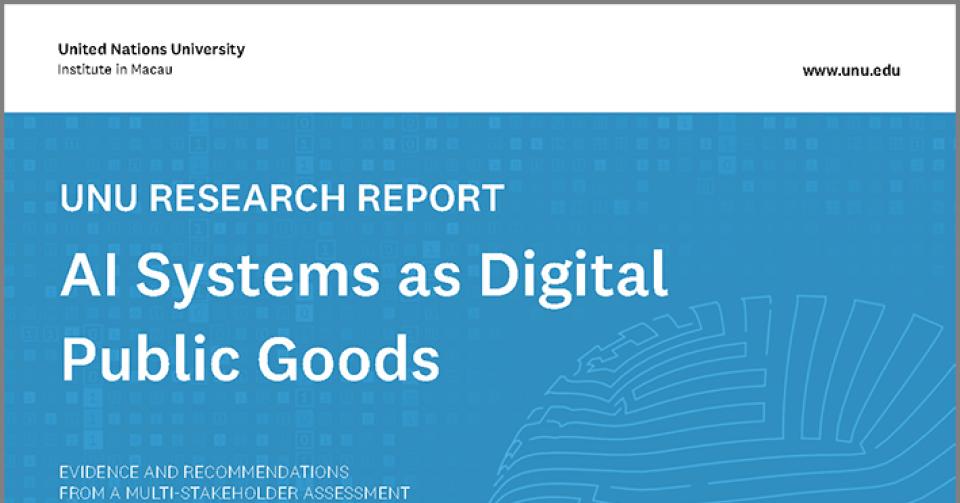
AI systems are increasingly recognized as Digital Public Goods (DPGs) but few currently meet established DPG standards. Global commitments emphasize developing open-source software, data, AI models, and standards, yet practical, evidence-based criteria for openness and governance remain unclear. This lack of clarity risks making the "AI as Digital Public Goods" label either unattainable or diluted, which could hinder innovation or trust. Research conducted by the United Nations University and partners identifies key challenges and offers strategic recommendations to create credible, reusable, interoperable, and locally adaptable AI solutions that align with public interest and safety.
ICT, Education
AI Systems as Digital Public Goods: Evidence and Recommendations from a Multi-Stakeholder Assessment
Health systems across Asia and the Pacific face financial strain due to aging populations and rising chronic diseases, demanding a shift from reactive, episodic care to a life course approach focusing on continuous health investment. This approach emphasizes sustained care from birth to old age, integrating maternal and child health, chronic care, prevention, and social protections. Thailand's community-based long-term care pilot and Indonesia’s use of private providers through public insurance illustrate progress toward continuous, accessible care. Challenges include fragmented funding and underprioritized prevention, with philanthropy aiding early-stage innovations. Tailored solutions are essential for the region's unique demographics, informal workforces, and limited fiscal space, prioritizing prevention, continuity, and equitable access throughout life.
Africa, Latin America | Financial services, Education, Health
From Paying for Illness to Investing in Health: A Life Course
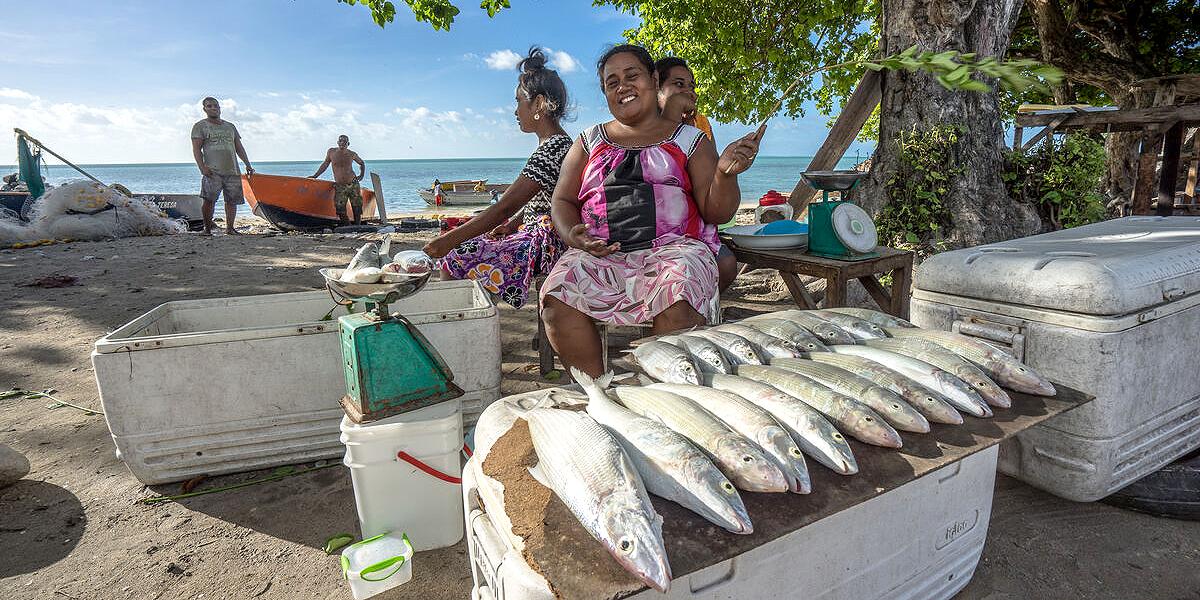
Kiribati faces severe food security challenges due to limited arable land, poor soil, scarce freshwater, and high climate vulnerability, resulting in heavy reliance on imported staple and processed foods. This dependence contributes to poor nutrition, manifesting as both undernutrition and widespread obesity, with high rates of non-communicable diseases and child malnutrition. The government’s multisectoral strategy focuses on boosting local food production, promoting healthy diets, and integrating programs like home gardens, fisheries management, and nutrition education. However, implementation is hampered by environmental, institutional, and logistical constraints. Recommended measures include climate-smart agriculture, social protection for vulnerable groups, improved value chains, and development of overseas horticultural hubs to enhance food availability and nutrition resilience.
Bangladesh, Namibia
Strengthening Food and Nutrition Security in Kiribati

Private credit markets face increasing risks due to liquidity mismatches, valuation uncertainties, and investor redemptions. AI-related pressures are affecting software borrowers, compounding stress within the sector. The interconnectedness of private credit with banks and insurance companies raises concerns about potential systemic market contagion.
Financial services
Private Credit Risks and the Threat of Market Contagion

Businesses often compromise ethics and sustainability during crises, as seen in the diesel emissions scandal involving major carmakers and in the global COVID-19 pandemic's impact on supply chains. Such "crisis relativism" risks undermining commitments to labor rights, environmental stewardship, and social fairness. The rollback of the UN's sustainable development goals in conflict zones like Gaza highlights the broader consequences. To prevent ethical backsliding, companies must implement robust strategies, including digital technologies like end-to-end traceability, to maintain accountability and protect vulnerable workers, communities, and the environment even under pressure.
Financial services, Education
Businesses often row back on ethics when times get tough. Here’s how technology can keep them on track
Brexit has diminished London's international financial influence but the City has remained a resilient global financial hub. While some financial sectors favored Brexit and others relied on EU access, worst-case predictions of a mass exodus have not materialized, with some firms reversing earlier relocations. London's strengths lie in its history, geography, legal framework, and diverse markets, which continue to underpin its status despite Brexit-related challenges. The City's adaptability and pragmatic approach suggest it can maintain its significance, although it faces a more complex role in a shifting global economic order dominated by large trading blocs.
United Kingdom | Financial services
How tricky is it to destroy an international financial centre? Brexit and the City of London
China's energy strategy prioritizes security over the energy transition, recognizing its heavy dependence on imported oil, natural gas, and uranium as a structural vulnerability. Despite leading in renewable technologies and expanding domestic resources like coal, Beijing remains cautious about increasing reliance on imported natural gas, including from Russia, to maintain strategic flexibility. The Strait of Hormuz crisis highlights China's exposure to Middle East instability and the broader economic risks from volatile oil prices. Consequently, China seeks to reduce oil dependency by boosting electrification, expanding strategic reserves, and enhancing financial tools to mitigate external risks while ensuring stable, affordable energy supplies vital for economic and political stability.
Pakistan | Financial services
[China Trends #26] - Energy Security First: What Hormuz and Chinese Sources Reveal About Beijing’s Strategy

Recent advancements in generative and agentic AI are rapidly transforming financial services. The AI Playbook for Financial Services, created with Accenture and based on insights from over 150 leaders across 100 institutions, provides practical guidance on AI strategy, governance, workforce transformation, data management, and scaling agentic AI systems responsibly. It includes global case studies demonstrating effective AI applications and measurable outcomes across diverse financial sector use cases.
The AI Playbook for Financial Services

Recent advancements in generative and agentic AI are rapidly transforming financial services, prompting institutions to shift from experimentation to large-scale deployment. The AI Playbook for Financial Services, developed with Accenture and based on insights from over 150 leaders across 100 institutions, provides practical guidance on AI strategy, governance, workforce transformation, and data foundations. It emphasizes responsible and secure scaling of AI through frameworks supported by global case studies demonstrating real-world applications and measurable results across the financial sector.
The AI Playbook for Financial Services

Mongolia possesses one of the world's largest untapped critical mineral reserves, presenting a strategic chance to meet rising global demand. To convert this mineral wealth into sustained economic value, Mongolia can adopt a three-pillar approach: implementing policy reforms, developing targeted industry strategies, and investing simultaneously in infrastructure, skills development, exploration, and community benefit sharing. This integrated strategy aims to enhance Mongolia's role in diversified global supply chains for critical minerals.
Mauritania, Mongolia, Mozambique
Climate-Smart Critical Minerals Mining in Mongolia
Asia and the Pacific must strengthen health systems, enhance regional cooperation, and secure fast crisis funding to better prepare for future pandemics. The COVID-19 pandemic exposed weaknesses like workforce shortages, disrupted services, and financial strains. Key strategies include integrating pandemic preparedness into routine health policy and budgets, improving regional data sharing and vaccine access coordination, and establishing predictable, flexible “day-zero” funding for emergencies. These measures, combined with steady investments and private sector engagement, will build resilience against future health crises and support broader regional stability and prosperity.
Africa, Asia Pacific | Financial services, Health
How Asia and the Pacific Can Get Ready for the Next Pandemic
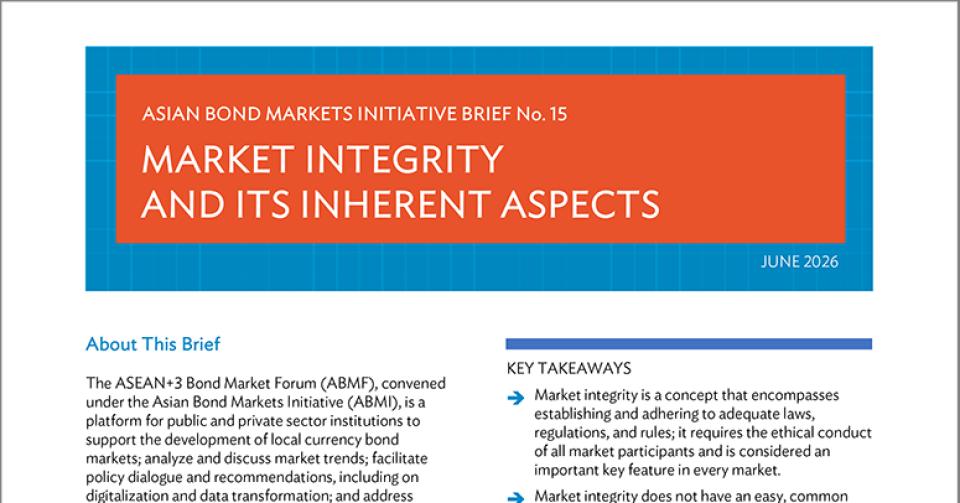
Market integrity is essential for the development of regional financial and capital markets, encompassing key elements like soundness, fairness, transparency, accountability, efficiency, and safety. Its maintenance is a shared responsibility among market institutions and participants, demanding vigilance, collaboration, and ethical commitment. Given the complexity and immediacy of modern economic systems, continuously ensuring market integrity is critical. This brief contributes to strengthening the integrity of regional financial and capital markets by exploring foundational components, challenges, lessons learned, and emerging issues.
Financial services
Market Integrity and Its Inherent Aspects
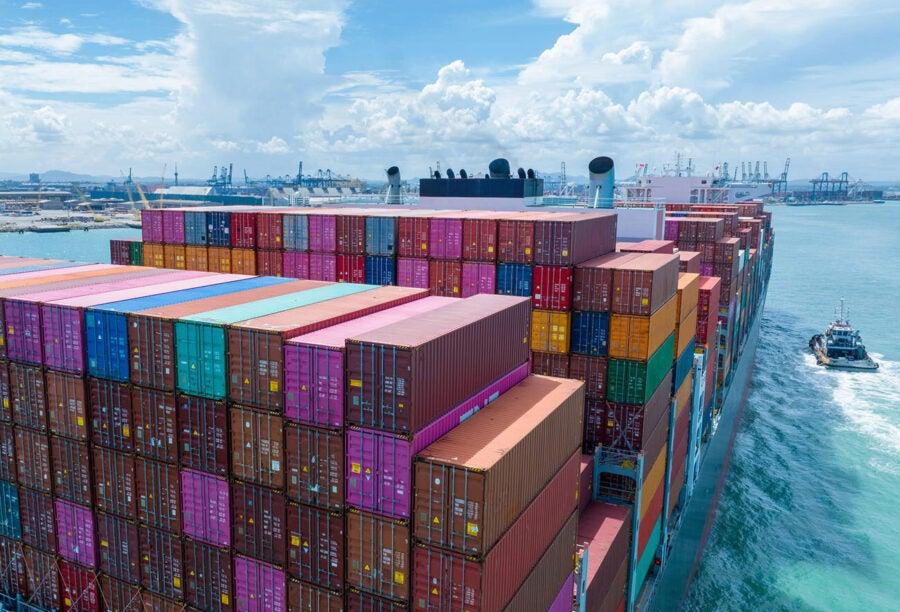
Increased public and regulatory scrutiny of forced labor in global supply chains has led U.S. importers to seek redaction of their identities in shipment records to avoid reputational, legal, and regulatory costs. A study analyzing about 100 million maritime shipments from 2013 to 2023 finds that roughly 25% have redacted identities, with higher redaction rates linked to shipments from countries vulnerable to forced labor issues. Notably, redactions surged after heightened scrutiny of Chinese cotton and apparel supply chains following reports on Uyghur labor abuses and enforcement of the Uyghur Forced Labor Prevention Act. This behavior reflects firms' efforts to limit exposure when forced labor risks in their supply chains become public.
Latin America
How Forced Labor Scrutiny Shapes Supply Chain Transparency

A study led by Wharton professor Christian Terwiesch found that AI-generated ethical advice from ChatGPT was rated as helpful and even preferred over human advice by various groups, including ethics experts and MBA students. In blind tests with questions from The New York Times' "The Ethicist," participants could not reliably distinguish AI advice from that of philosopher Kwame Anthony Appiah. Initial skepticism about AI’s capacity for nuanced ethical judgment—termed "algorithmic aversion"—diminished as people were exposed to the AI’s quality reasoning. The research suggests growing public trust in AI for moral guidance despite AI’s lack of lived human experience.
Would You Trust AI for Ethical Advice?
A nation’s reputation significantly impacts investment, tourism, trade, and global influence. Switzerland remains highly respected globally, while the United States dropped out of the top 10 in the 2026 Best Countries Index, based on data from over 15,000 respondents. Perceptions of AI vary worldwide, highlighting the evolving challenges nations face. Countries must increasingly adopt branding strategies to compete effectively in the global marketplace.
Algeria, Austria, Belgium, Botswana, Chad, Chile, Costa Rica, Cyprus, Czech Republic, Egypt, Eswatini, Germany, Ghana, Guinea, Iceland, Indonesia, Israel, Japan, Jordan, Kenya, Kuwait, Mongolia, Namibia, New Zealand, Peru, Philippines, Qatar, Russian Federation, Rwanda, Slovakia, Slovenia, Spain, Sweden, Switzerland, Tanzania, Tunisia, Ukraine, United Arab Emirates, United Kingdom
The Business of National Reputation
Britain was often seen as an "awkward partner" in the EU due to its late entry, public skepticism, and opt-outs, but this view overlooks its deep involvement and significant influence on EU integration. Despite a public façade of reluctance, the UK played a leading, constructive role and secured one of the most favorable membership deals ever. Other member states have also been "awkward," sometimes more so, but the UK maintained a strong record of abiding by EU laws and contributing to defense. Brexit represents a tragedy partly because the UK failed to acknowledge or communicate its effective role within the EU.
United Kingdom
The tragedy of Brexit is that Britain was the EU’s most effective member state

AI mental health support, such as chatbots like ChatGPT, can provide accessible, non-judgmental, and instant responses, which some users find helpful during difficult moments. However, true therapy relies heavily on the therapeutic alliance—the trusting, empathic relationship between therapist and client—and the therapist’s ability to embrace uncertainty rather than offer quick answers. Human therapists engage with nuanced cues beyond words, maintain ethical responsibility, and support client agency through intersubjective presence, aspects AI currently cannot replicate. While AI shows potential in screening and psychoeducation, it lacks the capacity for genuine human connection and ethical accountability essential in mental health care.
The danger of confusing AI mental health support with therapy
Brexit has significantly reshaped UK universities, primarily through a sharp 57% decline in EU student enrollment by 2023-24 due to the loss of home fee status, leading to higher international tuition fees. While EU postgraduate and first-class degree students decreased, total international student numbers rose, particularly from non-EU countries like India and Nigeria, supported by the UK’s International Education Strategy and favorable visa policies. However, recent governmental immigration tightening and restrictions on postgraduate dependents have caused a 15% decline in postgraduate research students, impacting academic capacity and finances. Meanwhile, transnational education abroad has expanded, offsetting some domestic challenges.
United Kingdom | Financial services, Education
What impact has Brexit had on UK universities?
Following a conflict initiated on February 28 involving the U.S. and Iran, a memorandum of understanding was signed to cease hostilities. The war yielded mixed results: Iran’s leadership shifted toward younger, more radical figures, its economy and military weakened, yet Tehran demonstrated its geopolitical leverage by threatening the Strait of Hormuz, vital for global oil trade. The agreement reopened the Strait and paved the way for potential nuclear negotiations, accompanied by financial incentives like unfrozen assets and reconstruction funds. However, uncertainties remain about Iran's nuclear ambitions and regional repercussions, leaving the situation precarious despite a tentative peace.
Iran: President Trump’s Failed War