
Many patents filed by companies are rarely used or economically valuable, with fewer than 10% justifying their costs, while a small minority generate most returns. Notably, extreme technological breakthroughs often fail to deliver immediate profits due to challenges in commercialization, lack of complementary assets, and competitive pressures. Successful firms manage this tension by diversifying innovation efforts across technologies at different maturity stages and leveraging complementary assets like manufacturing, distribution, and branding. Breakthrough innovations often originate from startups but require established firms to scale and monetize them effectively. Key lessons include recognizing multiple success metrics, pursuing temporal diversification, and prioritizing complementary assets for value capture.
Many of the patents companies file are useless. So how do firms create real breakthroughs?
Cambodia's solar panel export boom, driven by foreign investment and temporary US tariff suspensions, surged to over $2 billion by 2023 but collapsed after the US imposed duties by ruling that assembly alone does not change product origin. This highlights the need for Cambodia to strengthen comprehensive rules of origin legislation, including product-specific regulations and broader coverage, to protect export growth. Practical training for exporters and officials on customs procedures is essential to maintain market access, especially ahead of Cambodia’s 2029 graduation from least developed country status. Ultimately, Cambodia must focus on building export strategies based on genuine productivity improvements, infrastructure, and skills development rather than relying on short-term trade policy advantages to ensure sustainable growth.
Armenia, Australia, Bahrain, Bangladesh, Barbados, Bolivia, Bulgaria, Burundi, Cambodia, Cameroon, Canada, Chile, Colombia, Czech Republic, Democratic Republic of the Congo, Denmark, Djibouti, Ecuador, Egypt, El Salvador, Eswatini, Gabon, Georgia, Germany, Ghana, Hungary, India, Indonesia, Jamaica, Japan, Jordan, Kazakhstan, Kenya, Kyrgyz Republic, Madagascar, Malaysia, Mauritania, Mexico, Moldova, Morocco, Mozambique, Myanmar, Namibia, Nepal, Pakistan, Panama, Papua New Guinea, Paraguay, Peru, Philippines, Poland, Republic of Korea, Romania, Russian Federation, Rwanda, Saudi Arabia, Senegal, Singapore, Slovakia, South Africa, Sri Lanka, Sudan, Sweden, Taiwan, China, Tajikistan, Tanzania, Thailand, Tunisia, Uganda, Ukraine, United Arab Emirates, United Kingdom, Uzbekistan, Viet Nam, Zambia, Zimbabwe
Sun Rise, Sun Set: How Cambodia’s Solar Story Can Shape Rules of Origin and Export Strategy
The 2026 FIFA World Cup features advanced technologies including AI tools that analyze player movements, AI-generated 3D player avatars to assist referees, and sensor-equipped smart balls to detect handballs. Real-time analytics on player behavior and tactics will be available to all teams, democratizing access to data. Most clubs now employ sports scientists and even embed PhD students to apply research practically. Key research areas focus on AI integration in decision-making, wearable technologies, sports analytics, and managing training loads to maintain player health.
Education
This World Cup could be the most high-tech yet — the innovations to watch for
Earth's energy imbalance, the difference between energy entering and leaving the planet, has doubled over recent decades, now reaching record levels due to human-caused greenhouse gas emissions. Approximately 90% of excess heat is absorbed by the oceans, causing warming, ice melt, permafrost thaw, and rising sea levels—currently increasing at over 3.6mm per year, more than double the early 20th-century rate. This warming leads to more frequent marine heatwaves, extreme weather events, and disrupts global climate patterns, especially when combined with natural phenomena like El Niño. Human-induced global warming has reached about 1.37°C above pre-industrial levels, nearing the critical 1.5°C threshold, emphasizing the urgent need to reduce emissions and restore Earth's energy balance to prevent escalating climate risks.
Antarctica
Earth’s energy imbalance has doubled – here’s why that matters
California's slow vote-counting process, driven by its size and mail-in ballot policies, has sparked conspiracy theories and growing concern among Democrats, especially amid heightened election denialism by President Trump and GOP allies. The week-long delay in finalizing major primary results, including the gubernatorial race and key congressional contests, fuels doubts about election integrity, potentially undermining trust. Some Democratic officials now advocate for speeding up the count to ensure timely results and counter misinformation, emphasizing the need to balance voter participation with efficiency to prevent erosion of public confidence ahead of the crucial November elections.
North America
Democrats Are Starting to Worry About California
Message drift occurs when content becomes separated from its original context as it is clipped, reposted, and reframed across digital platforms. This process unfolds through small transformations driven by limited user attention and platform algorithms favoring quick, easily shareable content. Audiences interpret statements based on contextual cues like captions and visuals, which can alter the message's perceived tone or meaning. Examples include viral courtroom clips from the Depp-Heard trial, AI-generated images during the 2024 US election, and miscaptioned political speech excerpts. Message drift contributes to online polarization and misinformation by promoting simplified, emotionally charged versions that overshadow original messages. Recognizing message drift is key to understanding and mitigating escalating online conflicts.
Message drift: why things get taken out of context online and why it matters
A 2026 Cornell reunion event celebrated the impact of Entrepreneurship at Cornell, founded in 1992 by alumnus Robert W. Felton ’61. The event, held at Kennedy Hall, brought together over 75 alumni to network and share entrepreneurial experiences. Felton’s vision helped formalize the university’s entrepreneurship program, which has significantly influenced careers, including that of Anne Kayani Mathew ’96, whose internship shifted her career path. Attendees like Leroy Butler ’86, Kat Carter ’90, and Usman Piracha LLM ’16 shared their ventures and sought collaborations. The event, the largest yet, underscores alumni’s vital role in sustaining and expanding Cornell’s entrepreneurial ecosystem.
Education
Reunion event highlights entrepreneurship’s impact on campus
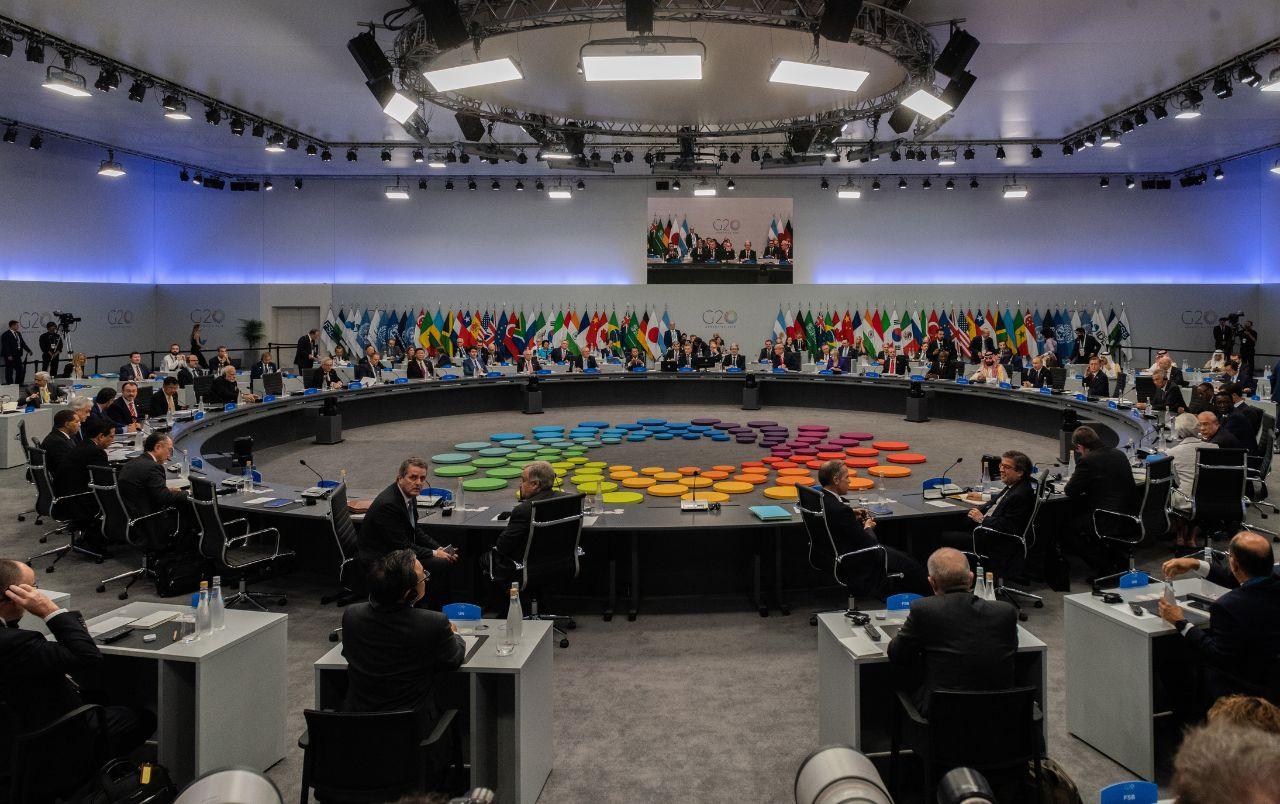
International development cooperation is evolving due to geopolitical shifts, changing priorities, climate challenges, debt concerns, technological advances, and calls for more equitable partnerships. Southern Voice, in collaboration with the OECD, held regional roundtables in Africa, Asia, and Latin America to gather Global South insights on the future purpose, impact, priorities, governance, and necessary reforms for development cooperation. These discussions informed the OECD Conference on the Future of Development Co-operation and Southern Voice’s flagship initiative, emphasizing inclusive global development dialogue.
Africa, Latin America | ICT, Health
The Future of International Development Cooperation: Insights from the Global South
Multinational companies are redefining China’s role from merely a growth market to a crucial innovation platform. Despite slower growth and tougher operating conditions, firms like Pfizer, BMW, and Nvidia leverage China’s rapid regulatory approvals, integrated R&D and manufacturing ecosystems, and abundant engineering talent to accelerate innovation cycles and validate technologies. China enables faster experimentation and evidence generation, especially in sectors such as biopharma, allowing companies to rapidly test and refine innovations before global rollout. Firms mitigate geopolitical and operational risks by controlling knowledge sharing and diversifying R&D and supply chains while benefiting from China’s unique innovation advantages.
Chile, Denmark, Egypt, Germany, Ghana, Japan, Malaysia, Philippines, Poland, Republic of Korea, Russian Federation, Rwanda, Singapore, Switzerland, Taiwan, China, Tanzania, Thailand, United Arab Emirates, United Kingdom | Financial services, Education
Where Does China Fit in Your Company’s Innovation Strategy?
Colombia's outgoing president Gustavo Petro aimed to reduce reliance on fossil fuels by promoting renewable energy, economic diversification, and democratic control over energy. His government increased non-hydro renewable electricity from under 2% in 2022 to 15% in 2025, largely through solar power, and supported community energy initiatives in poor and conflict-affected regions. However, efforts to halt fossil fuel development faced strong opposition, with ongoing contracts and subsidies persisting. Political instability, lack of parliamentary majority, and legal challenges hindered reforms like banning fracking. Colombia’s experience highlights the difficulties fossil fuel-producing countries face in transitioning towards sustainable energy while balancing economic and political pressures.
Latin America
Breaking free from fossil fuels is urgent but hard – Colombia shows why
AI decision systems significantly affect individuals in critical areas like housing, employment, and bail, often reflecting historical social disparities and encoded discrimination. These systems are primarily designed by corporations and overseen by governments with limited public input, especially from those directly impacted. To address this, a Decision Subject Representative Program, modeled after the FDA’s Patient Representative Program, is proposed to embed affected individuals in AI oversight and governance. Pilots could involve the GSA in procurement, NIST in standards development, and congressional incorporation of this program in regulation to enhance public trust, safety, and legitimacy in AI decision-making.
The Federal Government Should Pilot a Decision Subject Representative Program for AI Systems
AI twins—digital replicas embodying an individual's knowledge, traits, memories, beliefs, preferences, values, and behaviors—raise unique legal and ethical challenges regarding data ownership and personal identity. Current legal frameworks emphasize the technological infrastructure ("shell") rather than the personal data ("ghost") that defines each twin's identity and value. By consolidating personal data within self-controlled environments, individuals meet traditional property criteria—definable asset, exclusive control, and owner value—supporting claims of ownership over their AI twins. This human-centric approach advocates for individual sovereignty, private-by-default data governance, and equitable stewardship to address socio-legal issues in AI-mediated identities.
Who owns my AI twin? Data ownership in a new world of simulated identities
Agentic AI systems autonomously plan, decide, and act across workflows, transforming data access, combination, storage, and propagation within enterprises. Their autonomous execution can modify records and trigger transactions in real time while orchestrating cross-system data flows, extending data exposure beyond traditional boundaries. This creates five key risk categories: propagation risks from data spreading uncontrollably, persistence risks from sensitive data lingering in memory layers, autonomy risks from agents acting without human oversight, emergence risks from unexpected behaviors arising from agent interactions, and third-party risks due to reliance on external systems. Data quality gains critical importance as flawed data can drive unsafe autonomous decisions before human intervention, demanding enhanced governance and controls.
Agentic AI Is Rewriting the Rules of Data Risk Management
Firms investing in genuine sustainability lose out to those focusing on green marketing due to ineffective environmental signals. Consumers express concern for sustainability but often fail to purchase accordingly, reflecting the "attitude-behaviour gap." The issue lies not with consumer awareness but with the market’s structural failure: environmental claims are frequently unverifiable credence attributes and often lack costly, credible signals. This allows firms to mimic sustainability without real effort, eroding consumer trust and investment returns. The EU’s emerging regulatory shift targets fixing these claims rather than consumer behavior, aiming to enhance signal credibility and address systemic market shortcomings to effectively combat greenwashing.
Financial services
The EU’s drive against greenwashing will only work if it fixes the market, not the consumer
Since early 2025, increased tariffs, trade restrictions, and geopolitical tensions have fragmented the global financial system, reducing global economic output by nearly $300 billion and raising inflation by 0.2 to 0.3 percentage points. The US faces output losses of 0.4 to 0.6 percentage points due to its earlier tariffs. Conflict-related oil price surges further exacerbate inflation and growth declines. A severe East-West trade breakdown could slash global output by $6.9 trillion and spike inflation dramatically. Fragmentation threatens emerging markets, especially in Africa, where rapid growth and infrastructure needs depend heavily on foreign capital, which becomes scarcer and costlier amid fragmentation. This evolving economic fragmentation challenges decades of global integration and prosperity.
Afghanistan, Cameroon, Denmark, Egypt, Ethiopia, Georgia, Germany, Ghana, Jamaica, Kenya, Madagascar, Malaysia, Mauritania, Morocco, Mozambique, Namibia, Russian Federation, Rwanda, Senegal, Seychelles, South Africa, Tajikistan, Tanzania, Tunisia, Uganda, Ukraine, United Arab Emirates, United Kingdom, Yemen, Zambia, Zimbabwe | Financial services
Latest trade barriers lead to more inflation and less growth
Open finance in Asia and the Pacific is expanding access to financial services by enabling secure data sharing among institutions, fostering innovation, competition, and tailored products that benefit underserved individuals and small businesses. It improves credit assessments and financial management while providing regulators with enhanced oversight capabilities. However, risks include increased data privacy and cybersecurity vulnerabilities, uneven digital infrastructure and literacy limiting accessibility, and potential imbalances in competition due to differing regulatory obligations. Effective governance, infrastructure investment, and updated consumer protection measures are crucial to maximizing benefits and managing these risks.
Africa, ASEAN | Financial services, Education, ICT
Expanding Access While Managing Risk in Open Finance in Asia and the Pacific
Innovative insurance solutions can protect Asia’s vulnerable middle class—small businesses and households—from escalating disaster risks that threaten to reverse progress and deepen poverty. With only a small fraction of losses insured, many face severe financial setbacks after events like typhoons or floods, leading to loss of assets and credit. Emerging tools include parametric insurance with automatic payouts, platform-based coverage bundled with gig work, community-run micro-mutuals, and government-backed regional insurance schemes. These approaches enable faster recovery, sustained credit flow, and long-term investments in resilient infrastructure, helping prevent disasters from intensifying inequality and economic precarity.
Financial services
How Better Insurance Can Protect Asia’s Precarious Middle from Disasters
Geopolitical tensions are influencing global greenfield foreign direct investment (FDI) flows, but the extent of production relocation remains limited due to deep global value-chain integration. Detailed project-level data and new measures of geopolitical exposure reveal that while investment patterns are shifting amid geoeconomic fragmentation, firms face constraints in moving production on a large scale, maintaining established value-chain linkages despite heightened geopolitical risks.
Egypt, Georgia, Germany, Ghana, Jordan, Kenya, Russian Federation, Tanzania, Ukraine
The Great Reallocation Revisited: How Foreign Direct Investment Is (and Is Not) Shifting amid Heightened Geopolitical Tensions
Research shows that while AI tools like ChatGPT enhance the style and vocabulary of college essays, they significantly reduce the originality and diversity of ideas, limiting true creative thinking. Analysis of over 370,000 college application essays reveals that post-AI essays appear more creative linguistically but rely on homogenized concepts. This decline in genuine creativity poses challenges for students' ability to navigate uncertainty, adapt in the workforce, and contribute innovative solutions to society.
Education
What 370,000 College Essays Tell Us About A.I.’s Effects on Creativity
Instant payments via platforms like Zelle, Stripe, and Pix improve convenience but expose banks to liquidity management challenges and new risks. Unlike traditional delayed settlements, instant payments eliminate banks’ ability to net transactions, forcing them to hold more liquid assets like government bonds and cash. This shift reduces funds available for lending and leads smaller, less profitable banks to take riskier lending positions to compensate. A study analyzing Brazilian banks using Pix revealed these banks significantly increased liquid asset holdings and narrowed their balance sheets after Pix's adoption. The findings suggest that as instant payments, stablecoins, and tokenization grow, banks face more pressure, heightening systemic risk due to altered liquidity and risk-taking behaviors.
Financial services
How Instant Payments Expose Banks to New Risks