
The UK has struck a border security deal with China to disrupt the supply of engines and equipment used in small boat crossings of the English Channel, aiming to reduce unauthorized arrivals and target people smuggling supply chains. Although Chinese nationals are not primary Channel crossers, many engines originate from Chinese manufacturers, enabling intelligence sharing to identify illicit sales. This builds on similar agreements with Turkey and other countries, alongside expanded enforcement and sanctions against smuggling networks. However, evidence suggests that such supply-chain crackdowns may increase risks by pushing migrants into overcrowded, unsafe boats and more dangerous conditions rather than reducing crossings.
Why the UK has announced a border security deal with China – and what it could mean for small boat crossings

Economists and environmental scientists perceive environmental issues differently, influencing their preferred solutions. Climate change is the most commonly identified problem by both groups, but environmental scientists also emphasize broader issues like biodiversity loss and pollution, which economists tend to overlook. This divergence leads economists to favor market-based and technological solutions, while environmental scientists support more systemic approaches such as environmental regulation, degrowth, and civil disobedience. These differing perspectives contribute to debates about addressing environmental crises and the feasibility of green growth, highlighting the need for a broader shared understanding beyond carbon-centric views to foster more comprehensive solutions.
Financial services, Health
Economists and environmental scientists see the world differently – here’s why that matters
The world’s ocean crises—such as overfishing and ecosystem collapse—are deeply rooted in historical ideas and practices that shaped how societies used and valued marine resources. These challenges are not purely scientific or technical but are connected to cultural, political, and economic values developed over centuries, often under imperial and market influences. Historical analysis reveals why harmful behaviors were normalized and why past conservation efforts failed to address underlying social factors. Sustainability should be understood as an evolving cultural relationship with the sea, shaped by access, values, and responsibility across societies and time. The Blue Sustainability and Society Initiative explores this history to inform more effective and culturally aware ocean stewardship today.
Health
History holds the key to understanding the crises facing our oceans

The United States has long shown interest in acquiring Greenland due to its strategic location and resources, with President Trump making a notable bid in 2019, citing national security as justification. Denmark and Greenland have rejected the sale, emphasizing self-determination and welcoming strategic cooperation instead. While concerns about Chinese and Russian Arctic activities exist, there is no imminent military threat to Greenland. Trump's pursuit appears driven partly by geopolitical strategy to control the North American hemisphere and partly by personal ambition for territorial acquisition. The situation raises critical questions about security, sovereignty, and potential future policy options for Europe.
Antarctica, Denmark
America’s Fixation on Greenland
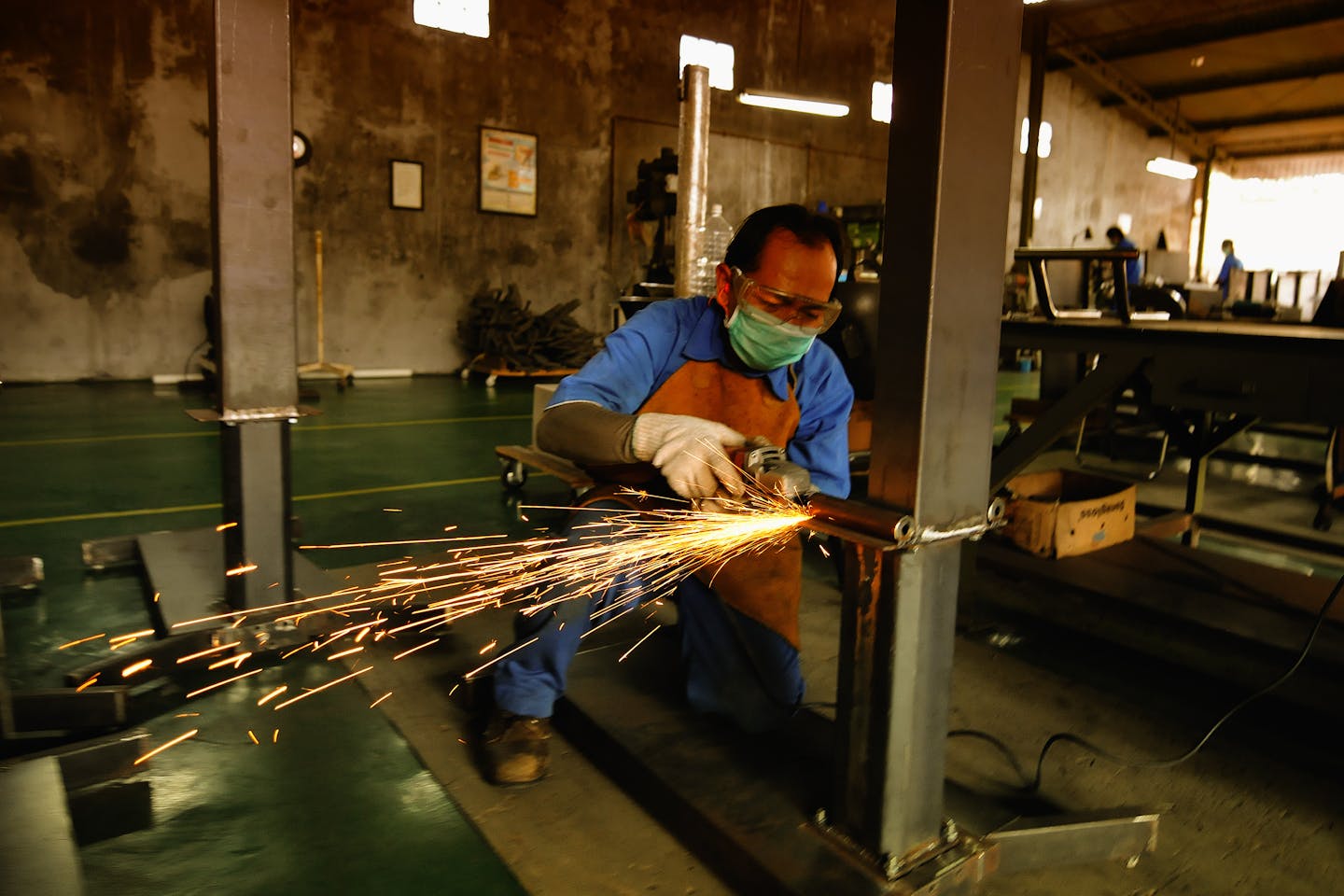
Indonesia’s steel industry is rapidly growing and becoming one of the country’s largest sources of greenhouse gas emissions due to heavy reliance on coal-based blast furnace steelmaking. Producing about 16.8 million metric tons in 2023, Indonesia ranks as the 15th-largest steel producer globally. If current practices continue, steel output and emissions could multiply over tenfold by 2060, potentially contributing 31% of national emissions and jeopardizing Indonesia’s net-zero goals. Although the government has introduced policies and green standards to encourage decarbonization, critics argue these measures lack binding targets, enforcement, and comprehensive data, risking continued high emissions and limited access to global markets demanding low-carbon steel.
Indonesia’s steel boom risks emissions spike
Maps give the illusion of permanence but constantly change over time as landscapes, borders, and technologies evolve. The world is too complex for perfect mapping; maps serve as simplified models ranging from detailed physical representations to abstract digital abstractions. Despite their abstraction, maps require a connection to real-world truth, grounding them in reality. Cartography shapes how we understand and interact with a fractured, dynamic world amid ongoing geopolitical and technological shifts.
How to map a fractured world
Mass deliberation is not inherently limited by population size or people's capacity to deliberate, but by the way modern societies structure time and political economy. Democracy is often treated as an after-hours activity and political participation as a luxury, making it impractical for large numbers of people to engage simultaneously without economic disruption. Effective mass deliberation requires reorganizing societal schedules and economic systems to support broad participation rather than constrain it.
Why Millions Can Deliberate: It Just Requires an Economy That Supports Mass Participation
Fiscal policies tailored to women-led businesses in the Pacific can enhance livelihoods, revenues, and economic resilience. Despite women’s central role in micro-enterprises and informal sectors, many face barriers to formalization due to complex fiscal systems, high compliance costs, and lack of visible public benefits. Over 90% of women-owned businesses operate informally, limiting access to finance, social protection, and government support. Uniform taxes and fees disproportionately impact women’s narrow profit margins. Effective reforms involve fair, simple, and inclusive tax regimes designed around women’s economic realities, coupled with accessible digital and offline administrative tools. Regional differences necessitate tailored approaches to unlock women entrepreneurs' full potential.
Fiscal Policies Can Unlock the Potential of Women-Led Businesses Across the Pacific
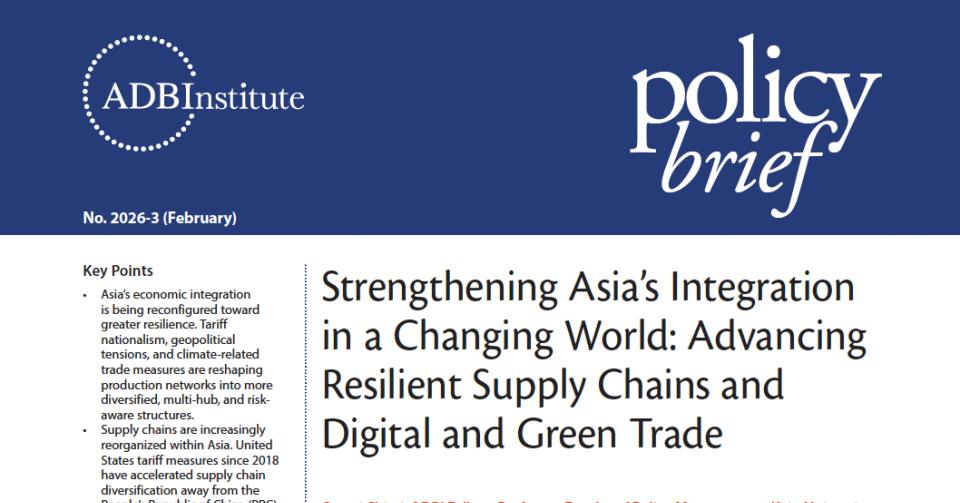
Asia is reshaping its economic integration to enhance resilience amid tariff nationalism, geopolitical tensions, and climate-related trade measures. Supply chains are diversifying within the region, partly due to U.S. tariffs prompting shifts away from China. Intra-Asian trade remains focused on intermediate goods, though China is becoming a more significant source of final demand. Challenges to deeper integration include complex rules of origin, administrative hurdles, and varying institutional capacities. The future integration phase centers on digital trade facilitation, interoperable payments, and green trade driven by decarbonization and critical minerals. India is increasingly engaging with regional supply chains, leveraging its market and digital strengths to integrate into Asia's evolving multi-hub production network.
ASEAN, Latin America | Financial services, Health, ICT
Strengthening Asia’s Integration in a Changing World: Advancing Resilient Supply Chains and Digital and Green Trade
The Journal for AI Generated Papers (JAIGP) fosters learning through collaborative exploration between humans and AI, emphasizing that understanding arises from inquiry rather than perfect knowledge. It challenges traditional views of authorship, creativity, and expertise by embracing productive uncertainty. Each submitted paper serves as an experiment in human-AI collaboration, offering insights into both research topics and the evolving nature of knowledge creation in the AI era.

The Journal for AI Generated Papers
Psychoanalysis, founded by Sigmund Freud, is experiencing a resurgence amid rising authoritarianism and technological change. Once marginalized by behavioral psychology and pharmaceuticals, it remains culturally influential in regions like South America and has historically helped people process trauma under oppressive regimes, such as Argentina’s dirty war. Key thinkers including Frantz Fanon and Theodor Adorno utilized psychoanalysis to resist fascism and colonialism. Today, figures like neuropsychoanalyst Mark Solms argue for its long-term mental health benefits, while others emphasize its relevance for understanding political and social crises. Psychoanalysis provides a framework for making sense of trauma, repression, and unconscious processes in turbulent times.
Why Sigmund Freud is making a comeback in the age of authoritarianism and AI
The global sports economy generates approximately $2.3 trillion annually, projected to grow to $3.7 trillion by 2030, driven by sports tourism, investment opportunities, women’s sports, and emerging markets. However, rising inactivity, climate change, and environmental degradation pose risks to this growth. Sustainable development can be achieved through resource stewardship, integrating sports into urban planning, and fostering purpose-driven investments that align with climate and social goals. Leveraging sports’ cultural influence can promote healthy lifestyles, environmental responsibility, and inclusive communities, creating resilient revenue streams while supporting planetary health and social impact.
Health
Unlocking The Trillion-Dollar Potential In Sports Economy
Uganda faces a youth unemployment crisis due to significant skills gaps, hindering economic growth and transformation. Technical and vocational education and training (TVET) is critical for equipping young people with future-ready skills, especially in science, technology, engineering, and math, aligned with the Fourth Industrial Revolution. However, Uganda’s TVET system is outdated, underfunded, focuses mostly on traditional courses, and suffers from negative perceptions. The government’s 2020 4IR strategy seeks to promote STEM skills and equal participation of women. Strategic policy interventions are needed to modernize TVET, enhance funding, and reshape public attitudes to drive inclusive socioeconomic development and economic transformation.
Africa, Latin America | Education
Building TVET Systems for Economic Transformation in Uganda
Technical and vocational education and training (TVET) is vital for Rwanda’s Vision 2050 to develop a middle-income economy with a skilled workforce. Rwanda emphasizes TVET to address skills gaps, promote inclusive growth, and prepare workers for the digital age through reforms like mass vocational training, workplace learning, and dual learning models. However, challenges persist, including inadequate infrastructure, limited institutes, instructor shortages, and slow digital adoption. The government and stakeholders are urged to implement policies and strategic interventions to modernize TVET systems, enhancing their role in Rwanda’s socioeconomic development and economic transformation.
Rwanda | Education
Building TVET Systems for Economic Transformation in Rwanda
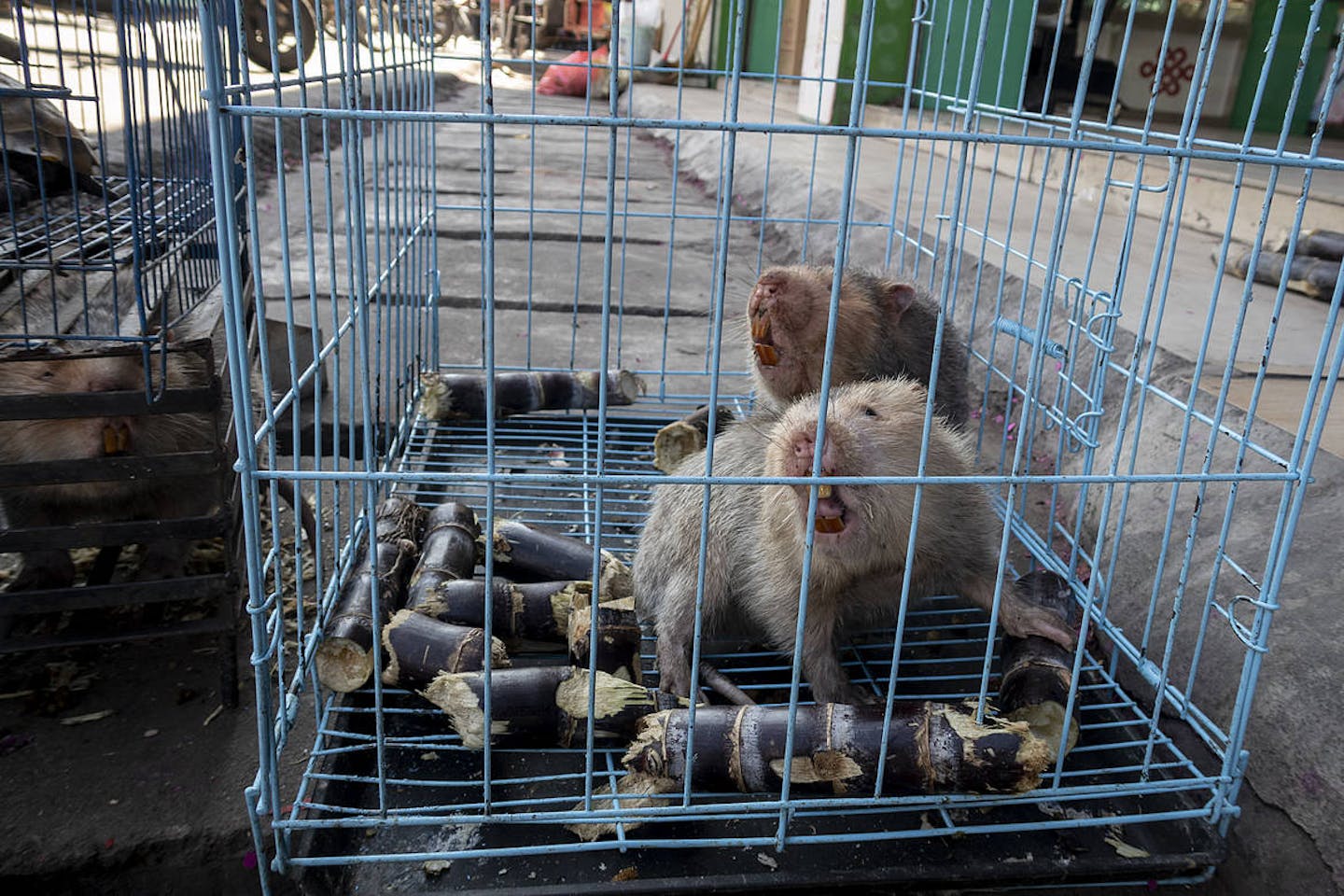
The European Union-Asean Business Council urged the Philippines, chairing Asean in 2026, to prioritize combating illicit trade, which threatens tax revenue, market competition, and supply chain trust amid regional integration efforts. The council recommended stronger licensing and oversight for high-risk goods such as fuel, wildlife, tobacco, pharmaceuticals, and alcohol, enhanced transparency via registries and clear market declarations, and formalized joint operations against smuggling. It also called for classifying large-scale illicit trade as serious economic crime to protect health, safety, and the environment while supporting the region’s goal of boosting trade, investment, and supply chain resilience.
Australia, Cambodia, Cyprus, Ecuador, Eswatini, Indonesia, Lebanon, Lesotho, Malaysia, Malta, Panama, Peru, Philippines, Romania, Sri Lanka, Thailand, Viet Nam
Philippine Asean chairship pressed to deepen cooperation against illegal trade, including fuel, wildlife
The ASEAN sustainable finance taxonomy employs a three-tier system—green (fully sustainable), amber (transitional), and red (harmful)—to classify economic activities supporting net zero targets. Industry leaders stress the importance of recognizing and accepting amber transition activities, such as retiring coal plants, as essential steps toward decarbonization. Clear guidance and safeguards are needed to prevent misuse of the amber classification, ensuring genuine progress. Given Southeast Asia's heavy reliance on fossil fuels, gradual transitions with credible regulatory support are critical for effective regional climate action.
ASEAN
Asean needs to improve acceptance of 'amber' transition activities: finance leaders

Taiwan is advancing its circular economy through new laws, green funding, and AI-driven industrial upgrades, aiming to become a regional hub for resource-efficient industry. The circular economy sector in Taiwan grows about 9% annually, contributing significantly to its green tech industry, valued at US$16.3 billion. Key initiatives include amending waste management laws, deploying AI for recycling, and enhancing industry-academia collaboration on resource recycling technologies. Taiwan targets doubling resource productivity, cutting material use by 30%, and boosting circularity by 2.5 times by 2050. The government also plans an advisory council, green growth fund, and studies EU governance models to strengthen circular economy standards and global competitiveness.
Taiwan, China
Taiwan ramps up circular economy push with new laws, AI and green funding
Lumina is a new AI-powered industrial intelligence platform developed by the World Economic Forum to enhance manufacturing and supply chain operations. It leverages eight years of data from the Global Lighthouse Network and the Lighthouse Operating System to provide organizations with evidence-based insights across industries. Lumina helps companies identify effective technology combinations, workforce practices, and transformation pathways, enabling faster operational gains, reduced revenue volatility, and higher returns. The platform aims to democratize advanced industrial transformation knowledge, extending access from leading corporations to small and medium-sized enterprises worldwide.
Education
Lumina: A New AI Intelligence Platform for Manufacturing and Supply Chains
Germany's innovation potential hinges on rapid and effective knowledge transfer from scientific research to practical applications. Accelerating this process requires clear responsibilities, reliable funding, and strong collaboration among research, industry, and public sectors. The government can drive progress by acting as an anchor customer, particularly in deploying AI-enabled solutions for public administration digitalization. Developing trustworthy German AI depends on high-quality data access, supported by the Research Data Act and enhanced AI computing infrastructure. Strengthening security-related research centers and innovation-friendly procurement within the Bundeswehr is critical for technological sovereignty. Additionally, simplifying innovation frameworks for SMEs, including reduced bureaucracy and easier skilled immigration, will boost growth and resilience.
Austria, Germany | Education
Effective Knowledge Transfer and Greater Speed for Growth, Sovereignty and Progress
Approximately 220,000 people are trapped in organized "scam compounds" in Cambodia and Myanmar, where they are coerced into conducting online fraud targeting global victims. These industrialized fraud factories operate openly within legitimate economic zones, often protected by state actors and integrated into global financial systems. Victims are frequently recruited through personal networks and deceived with false job offers. Inside, workers have specialized roles and endure harsh control measures, including confiscation of passports and physical abuse. These operations thrive in deregulated Special Economic Zones, supported by corrupt officials, enabling the laundering of billions of dollars annually. The distinction between victims and perpetrators is blurred, complicating efforts to address this widespread, state-enabled criminal industry.
Cambodia | Financial services
Inside Southeast Asia’s industrialised fraud factories