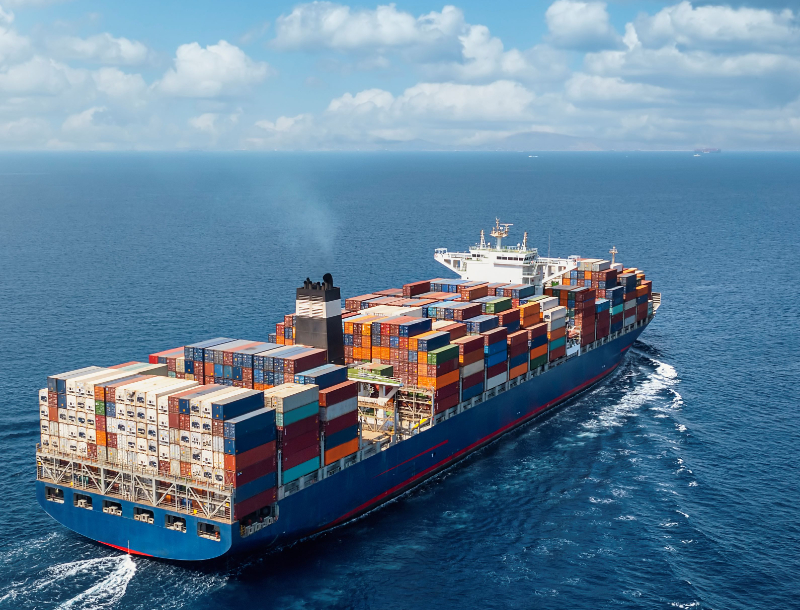
Green shipping corridors (Rotterdam-Singapore Green Corridor)
Description
Green shipping corridors are specific trade routes where public and private stakeholders collaborate to catalyse low-emission shipping by coordinating fuel supply, infrastructure, delivery, and demand.
Why it matters
In the early stages of the industry, widespread fuel supply and infrastructure are lacking: shipowners are reluctant to order green vessels without assured fuel access, producers hesitate to scale capacity without guaranteed offtake, and ports will not invest in infrastructure e.g., bunkering without demand certainty. This “first-mover problem” leaves all parties exposed to high risk and stalls investment.
By concentrating action on defined routes, green shipping corridors bring together ports, carriers, fuel suppliers, cargo owners, and regulators to reduce risk for early adopters and create replicable models for wider deployment.
Advantages
Green shipping corridors accelerate the transition to clean shipping by concentrating resources on specific trade routes, which reduces costs, de-risks investment, and speeds up learning. By aggregating demand from cargo owners and charterers, they create the scale and certainty producers and shipowners need to commit capital. With government involvement, corridors also help align regulations, reduce policy uncertainty, and foster international cooperation, providing practical blueprints for scaling zero-carbon fuels and vessels globally
- Aggregating demand from cargo owners and charterers to create investable volumes of clean fuels and vessels
- Reducing first-mover risk for shipowners, producers, and ports by coordinating supply, infrastructure, and demand
- Increasing efficiency and learning by focusing deployment on targeted routes to reduce costs, accelerate learning, and demonstrate feasibility
- Aligning regulation via enabling public-private collaboration that harmonizes standards, clarifies rules, and reduces policy uncertainty
- Producing replicable and scalable models that can be expanded to other routes and regions, helping to globalize zero-carbon shipping
Challenges
Green corridors demand complex coordination across ports, carriers, suppliers, and regulators; without broad port buy-in (e.g., widespread methanol bunkering), ships risk being confined to single routes rather than enabling wider impact.
Case study
The Rotterdam-Singapore Green Shipping Corridor demonstrates how two leading ports, global carriers, and energy suppliers can work together to de-risk early adoption of clean fuels by ensuring vessels have reliable access and suppliers have assured demand.
The corridor has already delivered pilots with biofuels and methanol, including a 100-tonne waste-based liquefied bio-methane bunkering, contributing toward its goal of cutting GHG emissions on large containerships using the route by 20–30% by 2030, while partners map pathways for ammonia and hydrogen in the 2030s.
It also serves as a testbed for lifecycle emissions accounting, safety, and operational standards, leveraging the busiest Europe-Asia container route to demonstrate scalability and practical value, and generating knowledge spillovers for other corridors.
More broadly, the model provides a blueprint for replication across other long-haul trade routes and adaptation to sectors such as long-haul trucking, though scaling will require consistent regulation, harmonized standards, and mechanisms to bridge the cost gap for zero-carbon fuels.
Rotterdam-Singapore Green Corridor – at a glance:
- Launched: 2022 (by the Maritime and Port Authority of Singapore, Port of Rotterdam, with 28 partners across shipping value chain including Maersk, CMA CGM, Shell, bp)
- Scope: Container and bulk shipping route between Europe’s largest port and Asia’s leading hub
- Objective: Enable deployment of scalable low-carbon solutions (biofuels, e-methanol, ammonia, H2), targeting 20-30% GHG emission reduction for large container vessels on the route by 2030
- Mechanism: Coalition of ports, shipping companies, and fuel providers coordinating on standards, fuel supply, and infrastructure deployment
- Impact: Pilots with biofuels and methanol are underway, leveraging the world’s busiest Europe-Asia container route to set shared standards and coordinate investment; partners are preparing scale-up to ammonia and hydrogen towards the 2030s.