Our insights and tools

Access reports and frameworks to navigate and shape the future of work effectively.

A woman presenting at a glass board with sticky notes while colleagues observe, representing strategic frameworks.

Future of Jobs Reports

The Future of Jobs Reports explore how jobs and skills will evolve over the next five years, and analyses employer expectations, identifying trends that will shape the workplace of the future.

The Future of Jobs Report 2025

The Future of Jobs Report 2025 brings together the perspective of over 1,000 leading global employers to examine how these macrotrends impact jobs and skills, and the workforce transformation strategies employers plan to embark on in response, across the 2025 to 2030 timeframe.

The Future of Jobs Report 2023

The Future of Jobs Report 2023 explores how jobs and skills will evolve over the next five years. This fourth edition of the series continues the analysis of employer expectations to provide new insights on how socio-economic and technology trends will shape the workplace of the future.

The Future of Jobs Report 2020

This report aggregates the views of business leaders on the frontlines of decision-making regarding human capital with the latest data from public and private sources to create a clearer picture of both the current situation and the future outlook for jobs and skills. 

Our Interactive Data Explorer

Explore the data from the The Future of Jobs Report 2025.

Chief People Officers Outlook

The Chief People Officers Outlook, written in consultation with the World Economic Forum’s community of more than 130 global people leaders, explores priorities for building resilient, inclusive and tech-enabled workforces.

Chief People Officers Outlook - May 2026

The Chief People Officers’ Outlook – May 2026 examines how geopolitical fragmentation, economic volatility and accelerating AI adoption are reshaping global labour markets and workforce strategies. As organizations navigate a divided outlook – with 50% of leaders expecting improved talent availability and 30% anticipating deterioration – skills mismatches, rather than overall supply, are emerging as a defining challenge.


Defining good work

Discover the framework that sets the standard for creating productive and sustainable workplaces, and the tools to guide implementation. 

Exploring key trends in the future of work

Dive into our reports to uncover insights on global digital jobs, green and social job opportunities, the impact of AI and large language models, and strategies for navigating job transitions worldwide.

Matching Talent to the Jobs of Tomorrow: A Guidebook for Public Employment Services

This report  introduces a five-step framework for public employment services to enhance job matching, alongside technological innovations that can support the process.

Leveraging Generative AI for Job Augmentation and Workforce Productivity

This report considers alternative scenarios for the way GenAI could shape the workplace and outlines key steps organizations need to take to maximize its benefits. 

Realizing the Potential of Global Digital Jobs

This report explores how global digital jobs can alleviate labour shortages and connect skilled workers from regions with surplus to those with labour shortages.

The Rise of Global Digital Jobs

This report identifies the jobs most conducive to global work and estimates the size of global digital jobs.

Jobs of Tomorrow: Large Language Models and Jobs – A Business Toolkit

Defines and addresses key concerns on the impact of large language models on jobs and emphasizes the need to adopt proactive and responsible strategies to manage these changes.

Jobs of Tomorrow: Large Language Models and Jobs

Examines the potential impact of large language models on jobs, impacts on productivity gains and the creation of new types of jobs, as well as the risk of potential job displacements and exacerbating socioeconomic disparities.

Jobs of Tomorrow: Social and Green Jobs for Building Inclusive and Sustainable Economies

Calculates  the additional Social Jobs and Green Jobs needed to progress social mobility and the green transition by 2030, across 10 major economies. 

Partner case studies

We collect case studies from our partners across sectors on future of work initiatives to showcase innovative approaches, share practical insights, and inform evidence-based solutions.

Discover the case studies from our Partners

Megatrends such as AI, digitalization, automation and sustainability unlock new opportunities, but also pose challenges for Siemens as an organization, as job profiles are constantly evolving. Existing jobs are changing, new jobs are emerging, and both require new skills. Therefore, Siemens must proactively tackle workforce transformation to have the right people in the right jobs with the right skills at the right time. This creates important demand for recruiting, upskilling and reskilling measures to close the gap between the workforce of today and the workforce of the future. #NextWork is a modular and systematic approach to drive workforce transformation and identify the roles and skills needed for a future-proof workforce, with a focus on business-specific action fields. To help people grow and meet future requirements, #NextWork provides tailored up- and re-skilling paths and gives orientation on where to focus learning. Dedicated development paths are implemented based on the #NextWork results in collaboration with local and global P&O business partners, business units, skill and learning partners. ‘My Skills’ derives the diagnostic measures both at organizational level (job profile) and at the individual level, and provides learning measures in various ways: people can use the digital learning platform ‘My Learning World’, needs-based training opportunities (SiTecSkills Academy), or further offerings. Both the analysis with #NextWork and the implementation of the measures take place in close cooperation between P&O (HR) and the business. This has proven to be a key success factor, as the topic is implemented well beyond the diagnosis and is thus anchored sustainably in the organization.
Global | IT and Communications (ICT)
#NextWork Initiative
Siemens
In Brazil, women are vastly underrepresented in technology roles, particularly women from economically disadvantaged backgrounds. They typically have lacked the technical and soft skills required to enter the technology sector. Only 16.4 percent of Afro-Brazilian women aged 18 to 24 attended high school in 2023, and only 6.5 percent obtained a diploma that year, according to data from PNAD. Women have little presence in the science, technology, engineering and mathematics (STEM) labor markets in Brazil. UNESCO in partnership with the British Council reports that while women represent 45 percent of all formal workers in the country, they make up only 26 percent of workers in STEM fields.The Ada Lovelace Initiative seeks to close the gender skills gap by bringing women from underprivileged communities into the labor market, particularly focused in technology. By providing opportunities for women from economically disadvantaged backgrounds, this program also stands to help ADP and its clients hire skilled talent. The Ada Lovelace Initiative pilot was launched as a collaboration between ADP Brazil Ltda, public high schools, and a corporate image consulting NGO. The goal is to support the integration of young women from underprivileged communities into information technology jobs and address a critical gender and skills gap.Such partnerships are crucial for the holistic development of students and necessary to ensure alignment with educational standards and industry requirements. The initiative, named after a pioneering figure in computing, developed and delivered a curriculum to provide the skills necessary to thrive in information technology.The curriculum provides technical training in coding and payroll processing using proprietary ADP platforms. It also offers soft skills development, including workshops on impostor syndrome, emotional control, time management, and financial empowerment. To scale the training and increase accessibility, ADP trains students on the same platform it uses to train clients. Corporate image consulting and professional portrait sessions are provided to enhance employability through platforms such as LinkedIn. ADP associates volunteer to mentor students and answer technical questions, creating a robust support system for participants.
Brazil | IT and Communications (ICT)
Ada Lovelace Initiative
ADP
Recent technological advancements and concerns about the future of work have made it challenging to find suitable jobs across all age groups in Austria. Young people struggle to navigate the range of professions and find future-proof education and training, while adults find it also difficult to identify sought-after skills and training courses. The AMS websites have extensive job-related content, but it's hard for users to search quickly and effectively. Additionally, Austria is seeing an influx of non-German speakers, who lack information on finding suitable jobs. The challenge is to help workers transition into future proof jobs, by enabling better job matching efficiency. Since January 2024, the AMS (Public Employment Service) has been using the Berufsinfomat, a customized AI system based on ChatGPT, to provide real-time occupation information. This AI tool accesses AMS knowledge databases on professions, training, and education, offering quick and comprehensive answers. Users can ask questions in any common language and get relevant answers in the same language or translated to German. This tool can be used by users to understand what jobs are currently available, increase job matching efficiency, and hence lead to job transitions. The stakeholders of the Berufsinfomat Project include a various and diverse set of people and departments from the President of the AMS (Austrian Public Employment Services) to IT service providers, gender equality and research experts of universities and in-house experts. Partnerships were established with organizations involved in digital humanism, trustworthy and ethical AI (value-based engineering) and safe internet experts. Extensive exchanges on the relevance and implication of the new AI Act were had, as well as roundtable discussions and working groups to demonstrate a proactive and “first-movers-advantage” attitude as a public sector organisation in Austria. Collaboration was also established with other Ministries in their efforts to facilitate the employability of the youth and use our tool for the career research.
Austria | Government
Berufsinfomat Project
Federal Ministry of Economy, Energy and Tourism of Austria
Japan is facing significant labour market challenges due to its declining and aging population: the country is experiencing a growing imbalance between the available labour force and the demand for workers across various industries. Additionally, there is a notable shortage of skilled workers, particularly in technology fields. This shortage is exacerbated by Japan's traditional focus on established industries and a lack of emphasis on technology and innovation, which has contributed to a scarcity of engineers and technology professionals. The challenge is hence to bridge this skills gap, and enable workers to transition into engineering, digital and IT roles. To address these challenges, Randstad Japan implemented a Boot Camp Training program, designed to facilitate career transitions into digital and IT roles. The program offers intensive training courses lasting three to four weeks, combining online and face-to-face classroom instruction. Participants gain hands-on experience with actual equipment, focusing on entry-level digital and IT infrastructure skills. Upon completion of the training, Randstad's sales team works proactively with existing clients and prospects, particularly system integrators, to secure entry-level job opportunities for program graduates. The key stakeholders involved in this initiative include Randstad Temp Division (RT Temp) and Randstad's client companies, primarily system integrators, who have a strong demand for workforce and are willing to accept individuals who complete the Boot Camp Training.
Japan
Boot Camp Training program
Randstad
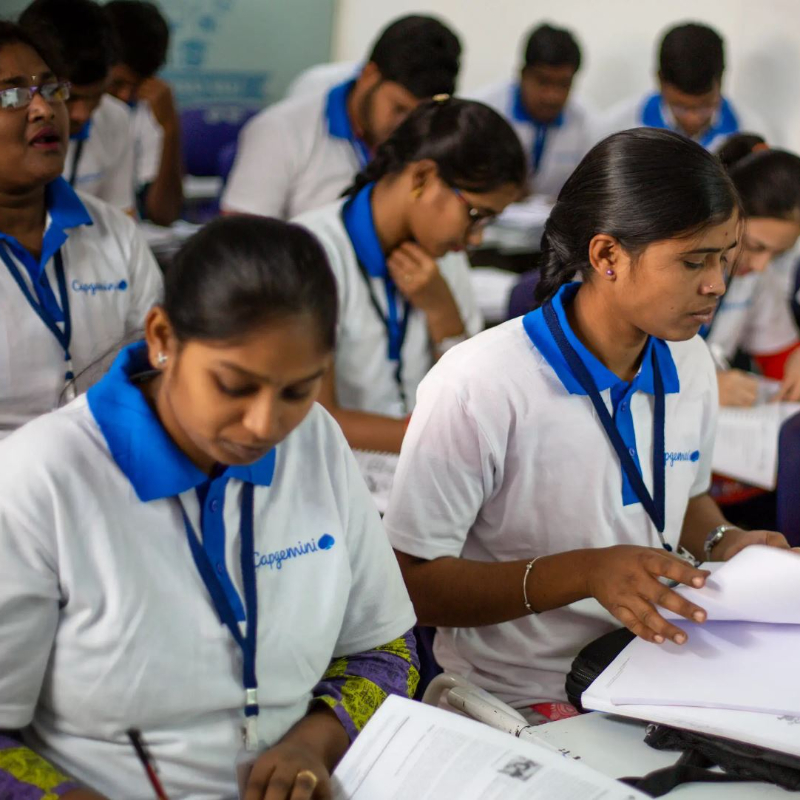
Capgemini Group’s employee base has undergone a rapid expansion in the last decade, tripling in size to over 335,000 employees in 2024. As new departments formed, they struggled to harmonize processes, leading to the use of multiple skills taxonomies and talent platforms that complicated the process of horizontal and upward mobility. To enable employees to more effectively and smoothly transition between roles in the company, Capgemini needed to implemented new tools and systems that could harmonise processes. What was the solution? To address this challenge, Capgemini Group introduced the Global Talent Deployment program on a global scale to streamline and enhance the efficiency of resource allocation and job transitions within the company. to revitalise. The program focusses on five major processes: business pipeline fulfilment, talent supply management, resource scheduling optimization, employee growth and workforce planning. The stakeholders involved in this program span multiple organizational functions, bridging Business, Delivery, Human Resources, and Learning and Development departments.
Global
Capgemini Global Talent Deployment Program
Capgemini
Lyre, a company operating in consumer goods and E-commerce, specifically the non-alcoholic beverage industry, aimed to grow its global market presence by establishing a distribution network and local sales teams in strategic markets. The company sought to engage with customers and support product distribution across various locations, but setting up legal entities in each country was costly and time-consuming, potentially delaying growth. Deel’s Employer of Record (EOR) solution allowed Lyre’s to hire local employees without creating legal entities. The EOR acted as the legal employer on behalf of Lyre’s, handling local compliance, payroll, and benefits. This enables Lyre to quickly deploy sales teams in target countries, facilitating local sales and distribution without delays, as well as to expand exports and reach new customers by hiring local talent for direct engagement with distributors and retailers. Deel’s solution enables Lyre to onboard employees compliantly across various countries, with Deel managing legal and administrative requirements, freeing Lyre’s to focus on market growth.
Global | Technology
Deel helps Lyre's achieve their global objectives and live the future of work
Deel
Supporting Salesforce to sustain enterprise-wide peak performance and productivity through increased workforce resilience, well-being, and adaptability.BetterUp helped Salesforce achieve a 7% increase in individual performance and 8% increase in productivity during a period of significant change by strengthening employees’ resilience and well-being.When the COVID-19 pandemic disrupted lives and markets globally in 2020, Salesforce knew their employees needed support to navigate new stressors and to manage heightened levels of uncertainty.At the same time, the company had lofty business goals and needed to maintain its culture of high performance. The VP of Global Benefits, Well-being, and Mobility knew that higher employee wellbeing led to higher performance, and was seeking new ways to help employees overcome both workplace and personal challenges.Salesforce offers BetterUp Care™ to all employeesIn 2021, Salesforce launched a global pilot program with BetterUp and offered it to 10,000 employees to assess its impact. Employees received a 1:1 certified coach who has experience coaching for well-being at work. Employees also had access to an extended network of optional, specialty coaches who specialize in topics such as sleep, grief, nutrition, and working parents.The experience extended beyond coaching. Employees completed a short onboarding assessment to measure baseline well-being and holistic mindsets and behaviors required to thrive at work like focus, emotional regulation, and cognitive agility. They also completed periodic pulse check assessments to measure growth and progress. Finally, employees had access to Care Guides to help them navigate resources available to them outside of BetterUp, including Employee Assistance Program benefits like therapy.After seeing wide adoption and success of the initial well-being pilot, Salesforce offered BetterUp to all of its 73,000 employees in 2023. The purpose of expanding access was to support employee wellbeing, as Salesforce firmly believes that will ultimately drive sustainable business performance.To further promote adoption, the Global Benefits team capitalized on key employee lifecycle moments that usually have higher uncertainty and stress, like performance evaluations, when employees likely had a higher need for coaching and were more receptive to coaching. The team created an invitation campaign to increase awareness and connect with employees when they most needed support. Individual performance increases 7% and productivity increases 8% at SalesforceAfter the initial, limited rollout of BetterUp in 2021, Salesforce saw 23% of low well-being employees shift out of that low well-being state. The initial rollout revealed that many employees, especially those not in a low well-being state, also benefited from coaching. Adaptability increased 26% overall.After expanding access to BetterUp and offering it to all 73,000 employees, Salesforce saw 20% of employees activate BetterUp in the first year, with an additional 10% new activation year over year. Employees who used BetterUp: - Increased resilience by 9%- Increased productivity by 8%- Increased individual performance by 7%- Decreased employees in a low well-being state by 19%One employee who took advantage of 1:1 resilience and agility coaching from BetterUp in 2021 reported: “My coach has been an integral part of my development and resilience over the last several months. I've experienced one of the most challenging chapters of my life and my coach has helped me navigate it with new tools that have kept me sane, focused, and optimistic. Without her support, I wouldn't have been able to balance the obstacles in my personal life in a way that would allow me to show up at work as my best self.”— Salesforce employee who used BetterUpAnother employee who used BetterUp in 2023 reported: “I'm entering a really exciting, but challenging period on the job. I'm fired up and ready to take it on, but it's a lot. My coach went beyond focusing on the positives and helped solidify my optimism and commitment to make my absolute best effort -- without burning the candle at both ends. Exactly the type of boost that I needed, with so much workload to juggle right now.”—Salesforce employee who used BetterUp 
Global | Technology
Delivering the people outcomes that drive business performance
BetterUp, Salesforce
The rapidly evolving job market presents significant challenges for job transitions, particularly for underserved communities at risk of exclusion. These individuals often lack the necessary skills and support to enter or transition into tech careers, leaving them vulnerable to unemployment and economic instability in an increasingly digital-driven economy. Capgemini's Digital Academy addresses this issue on a global scale by providing customized digital technology training to disadvantaged individuals, offering in-demand tech skills and career opportunities. The programs include digital training, soft skills development, job interview preparation, and ongoing mentoring. As of 2024, over 50 Digital Academy programs operate in 11 countries, training learners in skills such as DevOps, coding, Java, full stack development, software testing, cloud web services, cybersecurity, and Artificial Intelligence. These programs are designed in partnership with Capgemini’s ecosystem to meet market needs and enhance employability. For instance, in India, Capgemini partners with AWS on the AWS re/Start program, offering technical coursework, hands-on labs, and professional skills training for cloud roles. In the UK, the partnership with Code Your Future since 2019 provides web development training to refugees, asylum seekers, and minority groups to prepare them for technology careers. The stakeholders involved in the Digital Academy programs include local strategic partners, NGO partners, clients, and business partners. Capgemini customizes the curriculum to meet specific employment needs through these partnerships. HR teams validate content alignment with market demands and assist in recruiting graduates, while business teams support through sponsorship, volunteering, and hiring.
Global
Digital Academy Initiative
Capgemini
iFood, a food delivery company based in Brazil, faced the challenge of low educational attainment of its workforce. 45% of the Brazilian population have not completed high school, including at least 30% of iFood's employees. This educational gap limits career advancement and salary potential, prompting iFood to focus on reskilling and educational initiatives to enhance employability and foster a more inclusive digital economy. iFood's extensive network of over 250,000 riders, 300,000 restaurants and more than 30,000 grocery stores means that the company can play an impactful role in Brazil’s labour market through enabling reskilling and job transitions on its large labour force. iFood has implemented several initiatives to support job transitions and enhance productive inclusion. A High School Completion Project helps partners complete their high school education, providing recorded and live classes, a physical study kit, and financial incentives for exam participation. The Decola Platform - a continuous technology microlearning platform - offers certifications and skills crucial for professional growth (upward job transitions), such as financial literacy and entrepreneurship. The MovTech Initiative, a coalition of over 35 companies, focuses on promoting education and productive inclusion in technology. Key programs within the initiative include the Potência Tech Program, which offers scholarships and employability activities to support vulnerable students in the tech industry, and the Maratona Tech, a school competition aimed at increasing the number of public-school students entering the technology field. The stakeholders involved include government partnerships with over 10 Brazilian states and municipalities, educational technology partners that assist in project development and execution, big tech contributions from companies like Google, Oracle, and IBM, which provide technology scholarships, and corporate support from Brazilian companies such as Mercado Livre and the Coca Cola Institute, which contribute to funding education and productive inclusion projects.
Brazil | Food & Retail
Educational and Job Transition Initiatives
iFood
Rural and semi-rural communes of the Metropolitan and Valparaíso Regions in Chile were faced with the challenge of high unemployment rates among vulnerable young people and women. These groups often struggled to secure formal job opportunities with decent salaries and social security benefits due to lack of skills, proper linkages to opportunities and biases among recruiters. The unemployment rates for young women were particularly high, reaching up to 24.1%, significantly above the national average. This situation highlighted a need for targeted interventions to improve employability and access to quality jobs for these vulnerable populations, enabling them to transition from unemployment into the labour market. To address these challenges, Anglo American, IDB Lab and Technoserve created the EmpleaT Program to develop a comprehensive model that aligns the skills of women and youth with labour market demands, enabling them to transition into the labour market. This includes certified training in high-demand trades and personalized counselling to enhance socioemotional skills, coupled with workshops focused on empowerment skills like self-leadership and self-confidence. Technical training in the program was supported by the National Training and Employment Service (SENCE). The program emphasizes strengthening the labour ecosystem by improving coordination among institutions and promoting female inclusion in traditionally male-dominated fields, such as industrial maintenance and welding. EmpleaT drove a significant transformation within the private sector by partnering with recruiters to dismantle misconceptions that excluded women from jobs. Through creating gender inclusion action plans and comprehensive mentorship, EmpleaT successfully supported private actors in achieving gender inclusion goals. Key stakeholders in this initiative include the government, local municipalities through OMIL, the Women Heads of Household Programs under the National Service for Women and Gender Equality, local private companies, and technical-professional education institutions. This program was initiated by Anglo American and co-financed by IDB Lab for the first three years and then supported by Anglo American due to the company's focus on supporting employment in young people and women.
Chile | Oil & Gas
EmpleaT Program of Anglo American
TechnoServe
The European labour market is currently undergoing significant transformations due to the digital and green transitions. These shifts are necessitating a change in the skill sets required by workers, as companies adapt their operations and products to stay competitive. The challenge lies in ensuring that the workforce can acquire these new skills rapidly and efficiently to meet the evolving demands of the market, to avoid companies struggling to find appropriately skilled workers, and employees facing difficulties in securing or retaining employment. To address this challenge, the European Union has initiated the 'Pact for Skills' under the umbrella of multi-stakeholder partnerships involving private and public organizations across the EU's 27 Member States. This initiative aims to upskill and reskill Europe’s workforce by facilitating training that aligns with current job market needs, so that workers are able to retain employment or transition into a new role where needed. It focuses on supporting the green and digital transitions and promoting local and regional growth strategies. The European Commission aids these partnerships by offering advice and guidance on funding instruments and programs for skills development, as well as facilitating partnership opportunities through resource- and knowledge-sharing hubs. Organizations that join the Pact for Skills sign a charter that commits them to uphold principles of quality training, lifelong learning, and inclusion and to translate these commitments into tangible actions. These partnerships can be organized as 'large-scale' or 'regional' skills partnerships, targeting specific geographical or sectoral areas. The initiative also aligns with the European Pillar of Social Rights and the EU's targets for 2030, which aim for at least 60% of all adults to participate in training annually and for at least 78% of the population aged 20 to 64 to be employed.
Europe
European Union Pact for Skills, 2020-2023
European Commission
In the age of automation, the world of work is changing at a rapid pace. This presents a challenge to ensure workers have insights and data available so they can adapt and thrive in an evolving world of work and make more informed career choices, especially job transitions. Technologies are needed to analyse data to empower workers with insights about pay, skills, and work trends so they can take charge of their own future of work. WorkVue develops such technologies, providing workers with data and information to help them make dynamic career and job transitions. To support this, WorkVue has also assembled an independent body, the Future of Work Leaders Advisory Council: a collaborative initiative joining young professionals with the goal to provide an environment where members can voice their ideas, propose innovative solutions, and contribute to the development of tools that will empower their peers in navigating their careers and job transitions. Its purpose is threefold. Firstly, to drive impact: The Future of Work Council was set up to use the voices of young leaders to help shape data and insight solutions to empower people in work. Secondly, the Council aims to influence policy by becoming a leading voice for employees in the knowledge economy, engaging in community-building and advocating for a future of work that meets people's needs and aspirations. Lastly, the Council proposes innovative services, products, and features that address the real challenges and needs of people navigating their careers and job transitions. Members of the Advisory Council range from university graduates to professionals in large global corporations and government workers. The Council has also joined the Equal Pay International Coalition (EPIC). The Council focuses on the following key themes: pay (how to ensure income stability or growth during the process of job transitions); skills (with a focus on how we shift the balance on value for tangible and non-tangible skills); and the impact of AI and automation on jobs.
United Kingdom | Technology
Future of Work Leaders Advisory Council
WorkVue
As AI automates routine tasks, many traditional roles are becoming obsolete, while entirely new job categories are emerging. This will present a critical challenge on how to transition a displaced workforce into new roles. In the face of this seismic shift, companies face the challenge of how to help transition workers, which not only requires a deep understanding of the interconnected skills across departments, but also a dynamic talent mobility process.HirewithEve.ai is a solution that assists companies during an employee’s job transition phase by mapping the current work flows in several departments within an organization. When a job becomes obsolete, HirewithEve.ai can be utilized to assess an at-risk employee's transferable skills for jobs where their skills can be leveraged.The solution employs a two-step process. Firstly, collaboration with all departments across the organization is established to understand their current workflows and the challenges that employees work on. This helps create a comprehensive library of workflow for all levels and departments in the organization.The documented workflows and the challenges are then converted into AI powered workflow-simulations. In the second step, this workflow simulation becomes an AI-powered assessment tool that helps organizations evaluate a broad spectrum of skills, from cultural fit to technical expertise, ensuring a holistic view of each candidate’s potential. HirewithEve.ai also offers candidates to prepare for the upcoming interviews.
Finland, India | Technology
HirewithEve.ai
HirewithEve.ai
Founded in 1985 as part of the Sonae Group with Portugal's first hypermarket, MC has grown significantly over the past four decades. Today, a key challenge for MC, Portugal’s top grocery retailer and a leader in Health, Wellness, and Beauty across Iberia is preparing the organization for future demands, which involves ensuring that its workforce is prepared with the necessary skills to thrive in an evolving market.  MC recognized the need for a structured approach to upskilling and reskilling its employees, focusing on developing future skills in three key domains: cognitive, socio emotional, digital & technological, which are essential for implementing the company's strategy. The "Eu Escolho Aprender" (I Choose to Learn) program is a broad upskilling and reskilling initiative designed to address future skills needs, including empathy, programming, leadership, and business analytics. MC's Learning & development strategy is executed through two major streams. The first stream is “Rapid Initiatives” which is designed to quickly reach more employees, leveraging self-learning content, partnering with LinkedIn Learning and Learning Hubz. The Learning & Development team and several internal experts across the organization reviewed over 10,000 hours of online content to create tailored learning journeys addressing priority skills. The second stream is “In Depth Initiatives”, for skills that cannot be developed solely through self-learning or require significant time and effort, MC developed specific programs in collaboration with recognized partners. Examples include the Business Analytics program that aim to foster a data driven approach to business decisions, the Reboot MC programming initiative, designed to identify and nurture programming talent within the company or the empathy program. The program also embraces innovative learning methodologies such as adaptive learning, simulated training, mixed reality, gaming, and microlearning, which enhance the learning experience and ensure that learning is integrated into daily work promoting the self -learning as an important axe of the strategy.
Portugal | Food & Retail
I Choose to Learn
Sonae
Indonesia faces some mismatch between its education system and labour market needs. Despite the popular belief in Indonesia that vocational schools such as Sekolah Menengah Kejuruan (SMK) better prepare students for employment, SMK graduates face the highest unemployment rates, even surpassing elementary school graduates. As of August 2023, the unemployment rate for SMK graduates is triple that of elementary-level graduates, highlighting a critical gap between the skills taught in vocational schools and the demands of the job market. This situation demonstrates that longer school years and vocational tracks do not necessarily correlate with better employment chances. Additionally, as an archipelago highly vulnerable to climate change, Indonesia recognizes the urgent need to shift towards green jobs to ensure environmental and economic sustainability. The Indonesian government has implemented a comprehensive strategy to revitalize its Technical and Vocational Education and Training (TVET) system. This strategy focuses on fostering green jobs to address climate change challenges and promote sustainable development. It adopts a demand-driven approach to workforce development, aligning skills training with market needs. A key component is the establishment of a labour market information system to bridge the gap between labour supply and industry demand. The government has launched several initiatives, including the SMK-PK (Sekolah Menengah Kejuruan – Pusat Keunggulan) program to improve cooperation between vocational schools and industries. This program aims to transform SMKs from public schools into local enterprises called BLUD (Badan Layanan Usaha Daerah), enabling them to implement the ‘teaching factory’ concept and generate income through commercial cooperation with industries. Another significant initiative is the development of community training centres (BLK Komunitas) in regions with limited TVET facilities. The Ministry of Manpower selects community proposals and provides assistance from construction to training packages. Community training center (BLK Komunitas) is perceived to provide up-skill training that is needed at the local communities, such as construction sectors or skills for machinery operation, forklift knowledge, irrigation knowledge in agriculture sectors. Furthermore, the government has enacted Presidential Regulation Number 68 of 2022 to upgrade the quality of vocational training and education, ensuring it meets international standards and addresses specific skill sets required in the workforce. The revitalization effort involves multiple stakeholders, including the Ministry of Education and Culture, Ministry of Manpower, Ministry of National Development Planning (Bappenas), National Team for TVET Coordination (TKNV), Indonesia Chamber of Commerce (KADIN), World Bank, vocational schools (SMKs), local industries and businesses, and labour unions. The TVET National Team was established as a strategic body to oversee and coordinate vocational training nationwide, ensuring that programs align with national economic goals. To further accelerate the coverage of the re-skill and up-skill program and other empowerment program, Bappenas and Ministry of Labor have collaborated to develop one integrated data between competency-based vocational training programs and Socio-Economic Registry data that cover almost all Indonesian population. By converging and integrating the data, we can improve the targeting system based on their needs as well as their socio-economic status.
Indonesia | Government
Indonesia’s Green Jobs Initiative and Vocational Training
Ministry of National Development Planning of Indonesia
It is increasingly difficult for early-stage talent in emerging markets to find employment due to growing working age population, high levels of unemployment and technology impacting particularly lower-skilled entry level positions. The challenge is hence to bridge the gap between young graduates and the labour market. Localized provides a solution to this problem through a talent tech platform bridging global employers with top early-stage talent in emerging markets, to help young talent either transition from unemployment or education into the labour market, or transition jobs. Localized works with global employers including Trend Micro, Google, Amazon, PayPal and Cisco and interacts with HR leaders worldwide every day. Localized provides access to a variety of job postings, including internships, entry-level roles, and remote positions across different industries, as well as career Guidance, offering resources and support for career exploration, including webinars, workshops, and expert sessions to help users navigate their career paths. Localized also fosters connections between students and industry professionals, enabling users to join communities focused on specific career interests and industry trends.
South America, North America, Middle East & North Africa, Africa | Technology
Localized Career Tech Platform
Localized
Many organizations are currently facing a growing business continuity challenge as significant portions of the workforce approach retirement eligibility. This reality highlights an increasing risk of losing valuable skills, institutional knowledge, and client relationships as employees exit the workforce. For longstanding global organizations such as Zurich Insurance Group, who are heavily reliant on long-term trusted customer relationships, the risk is higher than within startups or sectors that tend to have shorter service tenures and high customer churn. In North America, guided by Zurich’s People Sustainability principles, Zurich recognized an opportunity to address this challenge, and at the same time support the continued development of an inclusive, resilient, and future-ready workplace. Anchored in its People Sustainability aspiration and aligned with the WEF’s call to prioritize lifelong learning and inclusion, Zurich North America developed Phased Retirement@Zurich, a forward-thinking program that bridges the gap between workforce transitions and business continuity. Designed to meet both employee aspirations and organizational needs, the program offers flexible role modifications for up to 24 months for those employees who qualify. This includes employees 55 years or older who have been with Zurich for at least five years and who have critical knowledge or relationships they commit to transfer to their colleagues. Participating employees are able to gradually reduce their working hours before fully retiring, supporting them as they plan for retirement, while enabling them to pass on their knowledge and relationships to others on the team. Through this program, Zurich empowers employees to redefine their retirement pathway in a way that aligns with their personal goals and aspirations. The program enables adjustments such as transitioning from full-time to part-time work, working virtually from a retirement destination, or moving from a managerial to an individual contributor role. This tailored flexibility ensures that employees feel supported, engaged, and valued during their final years of employment. By creating equitable opportunities for senior employees to transition gracefully while sharing their expertise, Zurich ensures that this segment of its workforce continues to contribute meaningfully to its long-term success. 
Global
Pioneering Sustainable Retirement Solutions
Zurich Insurance Group
The Randstad Foundation in Spain (Randstad Fundación España) sought to boost the employability of individuals at risk of exclusion, particularly people with disabilities. The main challenge was to align these professionals' needs with available job opportunities, facilitating their effective transition into the labour market. This effort aims to promote diversity, equal employment opportunities, and social inclusion, supporting the goals of the 2030 Agenda and the Paris Summit for sustainable development and inclusive growth. To tackle this challenge, Randstad Fundación launched several key initiatives: 1.	Companies for Equity, Diversity, and Inclusion (ED&I) Group: This action group, led by companies, focuses on generating and sharing knowledge about diversity and inclusion. The group created an ED&I auto-diagnosis platform to assess how companies manage equity, diversity, and inclusion. This platform aligns with the Non-Financial Reporting Directive (NFRD) and provides detailed reports and recommendations for improvement. 2.	Relevate Platform: As a part of Randstad’s digital transformation, the Relevate Platform was created to enhance the digital skills of talent, helping them access job opportunities and career advancement. In 6 months since its launch, this multi-channel tool has already impacted over 3,500 persons with disabilities. These initiatives involve a wide range of stakeholders, including 216 donors, 1,800 companies, 34 public administrations, 200 universities, and various social entities. Such extensive partnerships are vital for the successful implementation and expansion of the programs.
Spain
Randstad Fundación España
Randstad
A $52 billion multinational digital communications technology conglomerate wanted to develop a sustainable workforce where employees could remain maximally employable throughout their tenure. In order to achieve this, the organization needed to build a comprehensive talent mobility program that would promote a fluid and adaptable workforce while driving its employee-first culture. The company had lost confidence in its previous career transition services provider and realized it needed a greater focus on quality and a stronger scope of innovation to achieve its goals. To solve this issue, the company partnered with Randstad RiseSmart to implement a comprehensive, global talent mobility framework. This tailored solution integrated career development, internal talent mobility, networking, redeployment, veteran employment, and workforce transition programs. The framework utilized Randstad RiseSmart's award-winning technology and expert career coaching services. The solution included dedicated coaches to assist employees globally in defining goals, key skills they wanted to develop, prepare for internal job searches, and navigate the company’s talent mobility ecosystem. The program also featured talent expos for employees to connect virtually with senior leaders and assess transferable skills, and better understand their options, all while introducing leadership to previously unknown talent. One-to-one coaching and guidance on employee talent cards helped refine career strategies. Additionally, support was provided for U.S. military veterans and their partners through cybersecurity training, certification, and employment opportunities. The company's talent mobility approach was based on accountability, transparency, and opportunity for all. Randstad RiseSmart’s career development, redeployment, and outplacement experts facilitated an internal mobility program that encompassed the full employee journey from onboarding to opportunities beyond, all within a single platform. The company’s desire to develop people was also reflected in its longstanding support of U.S. military veterans and their partners, to whom it offered cybersecurity training, certification, and employment opportunities. To help U.S. veterans move successfully from military to civilian careers, Randstad RiseSmart provided a full complement of career services, including professional branding. Developing talent also meant finding ways to retain employees even when their roles were being eliminated. As a result, the organization encouraged its people to seek open positions internally through redeployment, where they received unlimited coaching, a new resume, and direct access to best-fit roles via Randstad RiseSmart’s AI-based job matching technology.
Global
Randstad RiseSmart, Global Talent Mobility Framework
Randstad
In India, marginalized communities—including people with disabilities and the LGBTQI+ community—often face significant barriers to long-term employment. These challenges are due to societal stigma and limited access to education and healthcare. The key challenge was to enhance job transition opportunities and better integrate these groups into the labor market. The Randstad for All program, launched in 2023, is an inclusive employment initiative aimed at improving job opportunities for marginalized communities. This program marks a pioneering effort by Randstad to embed diversity and inclusion into its core hiring practices. The program initially focused on a cohort that included LGBTQI+ individuals (trans men, trans women, and LGB), people with disabilities (locomotor and visual), and a survivor of acid attack violence. These participants were placed in various roles, such as recruitment, account management/sales, and corporate finance. A key element of the program was a customized six-month learning journey. This training was designed to equip participants with the skills and knowledge needed to succeed in their roles. The intensive program ensured that all participants were well-prepared before joining their teams, facilitating smoother transitions into the workforce. The initiative was driven by Randstad India's internal stakeholders, using employee referrals and social media/professional networks to find candidates. This approach highlights the importance of internal resources and networks in successful inclusion programs.
India
Randstad for All Program
Randstad

Read from our Global Future Council on Jobs and Frontier Technologies

Discover insights from the Global Future Council on Jobs and Frontier Technologies, highlighting innovative strategies and actionable solutions to drive employment growth in an evolving global economy.

Jobs of Tomorrow: Technology and the Future of the World’s Largest Workforces

This briefing paper highlights how AI and other transformative technologies are reshaping the world’s largest job families affecting 80% of the global workforce and argues that coordinated action is essential to ensure these changes drive inclusive, high-quality employment rather than disruption.

Pathways to Global Job Creation

This briefing paper reflects on the global state of employment, lays out key investment pathways to job creation and explores how investments and incentives can prioritize local and global job creation.

Key Issues Driving and Shaping Global Job Creation

This briefing paper highlights key issues driving and shaping the future of job creation globally, based on the views of the Council which explores how investments and incentives can prioritize job creation in the local and global talent marketplace.