Our insights on responsible governance and integrity

Articles

Videos

Creating Certainty in an Uncertain World: The Evolving Role of Gatekeepers.

OECD Global Anti-corruption and Integrity Forum 2025

Powering the Future: Integrity to Drive Net Zero

World Economic Forum - Strategic Intelligence 2025

The Integrity Advantage: A Blueprint for SMEs

World Economic Forum - Strategic Intelligence 2024

Business integrity in real estate: Tackling illicit financial flows

World Built Environment Forum 2024

Navigating Compliance Amidst Global Uncertainty

World Economic Forum - Strategic Intelligence 2024

Being Honest about Governance

World Economic Forum - Annual Meeting 2024

Defending Transparency

World Economic Forum - Annual Meeting 2023

Investing Responsibly in Sustainable Governance 

World Economic Forum - Annual Meeting 2022

The Role of Anti-Corruption Amid the ESG Revolution

International Anti-Corruption Conference (IACC) 2022

What’s Next for Tech for Integrity: Emerging Opportunities, Persisting Challenges & Potential Risks

International Anti-Corruption Conference (IACC) 2022

Uniting Gatekeepers Against Illicit Financial Flows – A Framework for Action

UN Special session of the General Assembly against corruption 2021

In Good Governance We Trust 

World Economic Forum - Sustainable Development Impact Summit 2021

Corruption and Democracy

World Economic Forum - Annual Meeting 2020

Publications

Investing in Integrity in an Increasingly Complex World: The Role of Anti-Corruption amid the ESG Revolution

June 2022

Defining the ‘G’ in ESG: Governance Factors at the Heart of Sustainable Business

June 2022

The Role and Responsibilities of Gatekeepers in the Fight against Illicit Financial Flows: A Unifying Framework

June 2021

Podcasts

Transformation maps

Transformation Maps are the World Economic Forum’s dynamic knowledge tool  driven by an intelligent system that lets users explore and make sense of complex and interlinked forces that are transforming economies, industries and global issues. The map below present insights on governance topics written by experts.

Learn more 

Employees often detect problems well before crises become public, but whether these concerns lead to action depends not only on individual courage but significantly on leadership signals and organizational culture. Research involving Australian public servants shows that ethical leadership—characterized by fairness, openness to challenge, and constructive responses—encourages employees to report unethical behavior, especially in ambiguous environments. However, strong enforcement of codes of conduct is crucial to reinforce these leadership signals. In principled climates, leadership and consistent enforcement together promote reporting, while in benevolent climates, leadership alone suffices. Conversely, in egoistic climates prioritizing self-interest, strong enforcement combined with ethical leadership may reduce the willingness to report misconduct. Thus, alignment between ethical leadership and effective code enforcement fosters a culture where employees feel safe and compelled to speak out, maintaining public sector confidence.
Why strong codes of conduct and supporting those who speak out maintains confidence in the public sector

British voters’ frustrations are supported by data from the World Bank showing declines in key governance metrics since the 1990s, notably in political stability, government effectiveness, and control of corruption. Political stability decreased sharply after 1997, influenced by events like the Iraq war, while control of corruption worsened post-2007-8 financial crash and again after the 2016 Brexit referendum. Government effectiveness has steadily declined from 84 in 1996 to 74 in 2024. This deterioration aligns with Mancur Olson’s theory that increasing influence of special interest lobbyists prioritizes their gains over public good, weakening governance. Lobbying in the UK has expanded substantially, making it harder to counterbalance these interests.
Latin America | Health, Financial services
If British voters seem impatient and angry, data shows they might have a point

Over the past 25 years, the UK's life expectancy saw two key shifts: a slowdown in improvements starting around 2011 and a sharp decline during the COVID-19 pandemic in 2020. Despite this, UK mortality trends closely mirrored those of other high-income countries. Cardiovascular disease, cancer, respiratory disease, and dementia cause most deaths, with cardiovascular mortality declines stalling since 2019. Smoking rates have halved since 2001, but obesity has risen from 20% to 30% of adults, increasing risks for chronic diseases and disability. Chronic pain affects 26% of adults, with low back pain leading in disability. Mental health disorders have also risen steadily, particularly among younger adults.
Africa, Latin America | ICT, Health
Britain’s quarter century: experts in sex, mental health, nutrition and addiction assess the nation’s changing wellbeing

The UNDP report, based on engagements with eleven countries, reveals that key AI governance decisions often occur outside formal policy frameworks—in procurement, contracts, software updates, and day-to-day institutional practices. Effective AI governance requires embedding trust and safety measures directly within these operational contexts rather than relying solely on overarching regulations. The report highlights existing decision-making processes, emerging risks, and practical governance strategies under real-world constraints without ranking countries or prescribing universal models.
Health
Small States, Big Signals: What adoption in practice reveals about trust, safety, and AI performance globally
Artificial intelligence is overwhelming the British state by enabling citizens to flood bureaucracies with objections, appeals, and claims at unprecedented levels, a phenomenon termed "agentic flooding." This surge, affecting areas from tax appeals to welfare claims and parking tickets, has caused a 55% rise in employment tribunal backlogs and a 100-fold increase in emergency injunctions. While AI empowers citizens to assert their rights more effectively, this inundation threatens to cripple government functions, risking a collective loss as public systems become unable to manage the escalating demands.
How AI is breaking the British state
Experiencing adversity such as illness, bereavement, financial hardship, and violence can lead individuals to perceive the world as fundamentally unfair. This growing sense of injustice reduces trust in institutions and makes people more likely to endorse conspiracy theories, which offer explanations attributing negative events to hidden, intentional causes. These beliefs help individuals make sense of a confusing and unjust world but may be difficult to change once established. Understanding how cumulative hardships shape perceptions of fairness is crucial for addressing societal polarization and the differing ways people interpret the same information and events.
Why do some people feel life is so unfair? Understanding this may help explain conspiracy beliefs
Citizen engagement processes significantly benefit policymaking and democratic systems by improving policy quality, strengthening legitimacy, and increasing public trust in government. These processes foster cultural change within institutions, enhancing their capacity to interact directly with citizens and creating stronger connections among stakeholders, civil society, and policymakers. Key factors for successful outcomes include institutional commitment and transparent communication. Ensuring tangible impacts from the outset is essential to maintain support and legitimacy for citizen participation initiatives.
Africa | Health, Education
Impact of Citizen Engagement

UK cultural institutions face increasing cyber threats due to outdated security systems and insufficient investment in cybersecurity. Reports highlight major vulnerabilities, including the 2023 British Library ransomware attack and the 2025 Louvre jewel heist, both exacerbated by prioritizing exhibitions over security. A key issue is the persistent divide between physical security and cybersecurity management, despite the growing overlap of operational technology (OT) and information technology (IT) in safeguarding facilities. Experts argue for integrated security leadership to address these converging systems and prevent future costly breaches and thefts.
Africa | Financial services
Museums face growing cyber threats but security remains an afterthought
Official statistics face a paradox of abundant data alongside declining public trust, primarily due to a lack of representational legitimacy. Aggregate indicators often fail to reflect lived experience, causing citizens to feel unrepresented by official numbers. Centering lived experience requires moving beyond averages toward agency, integrating mixed methods, citizen science, and participatory approaches. Emerging practices from statistical agencies worldwide show a shift from passive data collection to active citizen engagement. A proposed engagement matrix aligns participation depth with data value chain stages, emphasizing fit-for-purpose involvement. Future research focuses on methodological integration, scalability, social license ethics, and institutional transformation.
Health, ICT
Rethinking Official Statistics Beyond Averages: Centering Lived Experience

Subsidy reform in South Asia succeeds when support is better targeted, institutions strengthened, and vulnerable populations protected. Reforms extend beyond pricing to tax systems, state-owned enterprises, and financial markets. Countries like Bangladesh and India have improved fiscal governance, digital cash transfers, and municipal finance, while financial sector reforms reduce reliance on broad credit subsidies. Energy reforms focus on reducing generation costs through renewables and infrastructure upgrades. Agricultural subsidies shift toward productivity and resilience. Sector-based reforms promote transparent, rule-based support systems in tourism and industry. Improved social safety nets, pensions, and health coverage leverage digital tools for precision targeting. Incremental, integrated approaches with better governance and technology enhance fiscal sustainability, service delivery, and protection for vulnerable groups.
Africa | Financial services, Health
Asian Development Blog: Rethinking Subsidy Reform in South Asia: How Governments Can Better Support People
Ukraine’s recovery from extensive war damage, estimated at $587.7 billion over the next decade, is managed through a sophisticated, closely monitored system tracking needs, reforms, and disbursements. However, this architecture lacks tools to assess whether Ukrainian institutions can function effectively under sustained pressure—this institutional capacity gap is a critical fault line. Ukraine is uniquely pursuing recovery and reform concurrently with active conflict, stressing government systems managing displaced populations, humanitarian aid, and reforms under martial law. Key challenges include shrinking institutional capacity due to emigration and mobilization, mismatches between spending and outcomes, uncertain external financing, and rising governance risks. Recovery success depends on prioritizing state capacity to deliver services, adapt, and maintain trust amid ongoing pressures.
Africa | Health, Financial services
Ukraine’s Recovery Has a Hidden Fault Line – and It’s Institutional
Open data has expanded democratic access to information and enabled greater scrutiny and reuse, but governance challenges now extend beyond mere access. Data gain power through processes after publication—such as cleaning, linking, and modeling—that inform decisions often made by external entities. This "closed inference" creates an asymmetry where data are open, but the capacity to interpret, validate, and contest derived conclusions is concentrated and less accountable. As a result, public institutions may lack control over the authoritative meanings assigned to data, raising concerns about transparency and governance in decision-making based on open data.
ICT, Health
Open Data, Closed Inference
Media freedom and journalism face global threats including AI-driven disinformation, rising censorship, violence against journalists, and declining funding. Independent, ethical journalism plays a crucial role beyond democracy, positively impacting economies by reducing corruption and fostering growth, enhancing national security through resilience against disinformation, and improving crisis response by providing life-saving information. Research shows journalism is highly cost-effective, yielding significant public savings and acting as a vital preventive element in maintaining a healthy information infrastructure.
Africa | ICT, Health
The value of journalism: global evidence on why media matters to economies, national security and crises
Ethical organizations thrive on a strong interplay between individual self-awareness, company culture, and leadership accountability. Integrating ethics into all aspects of a company—from hiring to performance reviews—reduces misconduct and fosters positive behaviors. Leaders should promote humility, reflection, and community engagement to reinforce ethical standards. Research shows that codes of conduct with communal language can unintentionally encourage rule-breaking unless paired with clear enforcement. Individual clarity of self-concept also influences moral behavior, with uncertain self-identity linked to increased unethical actions, but measures like honor pledges can improve honesty. Supporting ethical culture through continuous reflection and value alignment benefits both organizational integrity and performance.
Take 5: Let’s Get Ethical
The Police Leadership Commission, co-chaired by David Blunkett, reveals severe deficiencies in police recruitment, training, promotion, and leadership, with a third of forces rated inadequate or needing improvement. Despite dedicated officers performing well daily, systemic failures undermine effectiveness. Key recommendations include implementing continuous performance reviews, a digital passport tracking training and competency, and creating a senior constable rank to improve progression. The report highlights prevalent nepotism and calls for enhanced ethics committees with external oversight to address discrimination and civil liberty concerns. Strong, transparent leadership is essential to rebuild public trust and ensure policing focuses on crime prevention and protection.
David Blunkett: police leadership needs radical reform to give people the protection they deserve
Building on NATO's 2010 initiative, this volume expands the Building Integrity programme by addressing persistent and emerging challenges in defense sector corruption. It compiles expertise from NATO practitioners, civil society, academics, and defense professionals, offering a rigorous, practical toolkit to inform policymakers and reinforce democratic governance. Prompted by security threats such as Russia's war on Ukraine and hybrid attacks exploiting corruption, the Compendium aims to enhance understanding of corruption risks and equip allies with tools to prevent integrity failures. It represents a collaborative, forward-looking resource to strengthen defense effectiveness and democratic resilience.
Building integrity & reducing corruption in defence: A compendium of best practices, volume II
A company’s purpose cannot be fully explained by shareholder primacy, which focuses solely on profit maximization, nor by stakeholder theory, which integrates ethics but faces issues balancing diverse interests. Shareholders do not own companies directly, and executives owe duties to the company itself rather than just shareholders. The late philosopher Alasdair MacIntyre’s ethical framework, based on Aristotle’s concept of “telos” or purpose, offers a reconciliation: companies realize their purpose through practices that pursue internal goods (excellence, mastery) rather than external goods (money, power), which can be corrupting if prioritized over internal goods. This approach grounds corporate purpose in ethical flourishing rather than mere profit or stakeholder appeasement.
The purpose of the corporation
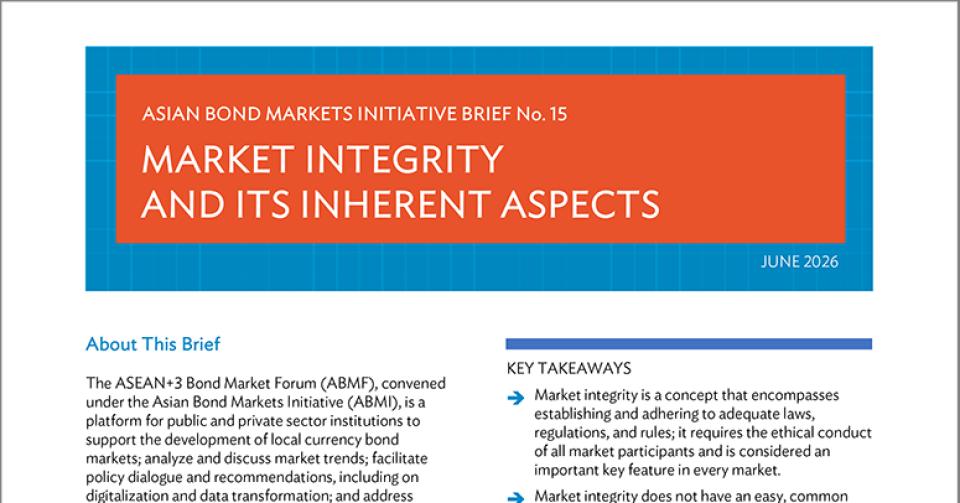
Market integrity is essential for the development of regional financial and capital markets, encompassing key elements like soundness, fairness, transparency, accountability, efficiency, and safety. Its maintenance is a shared responsibility among market institutions and participants, demanding vigilance, collaboration, and ethical commitment. Given the complexity and immediacy of modern economic systems, continuously ensuring market integrity is critical. This brief contributes to strengthening the integrity of regional financial and capital markets by exploring foundational components, challenges, lessons learned, and emerging issues.
Financial services
Market Integrity and Its Inherent Aspects

Hybrid digital fraud networks spanning America and Nigeria operate by blurring romance fraud and business email compromise (BEC) tactics, using both emotional and transactional trust strategies. Fraudsters view victims as "clients," insulating themselves from guilt. They use multiple fluid identities tailored to different scams, while laundering millions through the same bank accounts and platforms as legitimate businesses. Money laundering involves rapid opening and dissolution of shell companies and transfers via luxury goods or informal hawala systems, converting illicit gains into socially accepted assets. Effective enforcement requires cross-jurisdictional data-sharing and analysis of communication patterns alongside financial transactions.
Latin America | Financial services
How ordinary business infrastructure supported a fraud network spanning America and Nigeria
Digital transformation enables governments to enhance public service delivery and strengthen state capacity. However, without clear guidelines, rapid and high-visibility efforts risk increasing exclusion, diminishing accountability, and creating systems misaligned with citizens' realities, which can erode trust and legitimacy. The GovTech Compass presents ten practical principles to ensure responsible implementation of GovTech and digital public infrastructure, providing a framework to guide decision-making, balance trade-offs, align incentives, and embed public value throughout the digital transformation process.
Germany | Financial services, Health, Education, ICT
The GovTech Compass: Ten Principles for the Responsible Implementation of GovTech and Digital Public Infrastructure

PACI Community

A World Economic Forum Initiative